5 thoughts on “Sea Ice Extent – Day 9 – Antarctic Breaks Daily Record By 700,000 sq km”
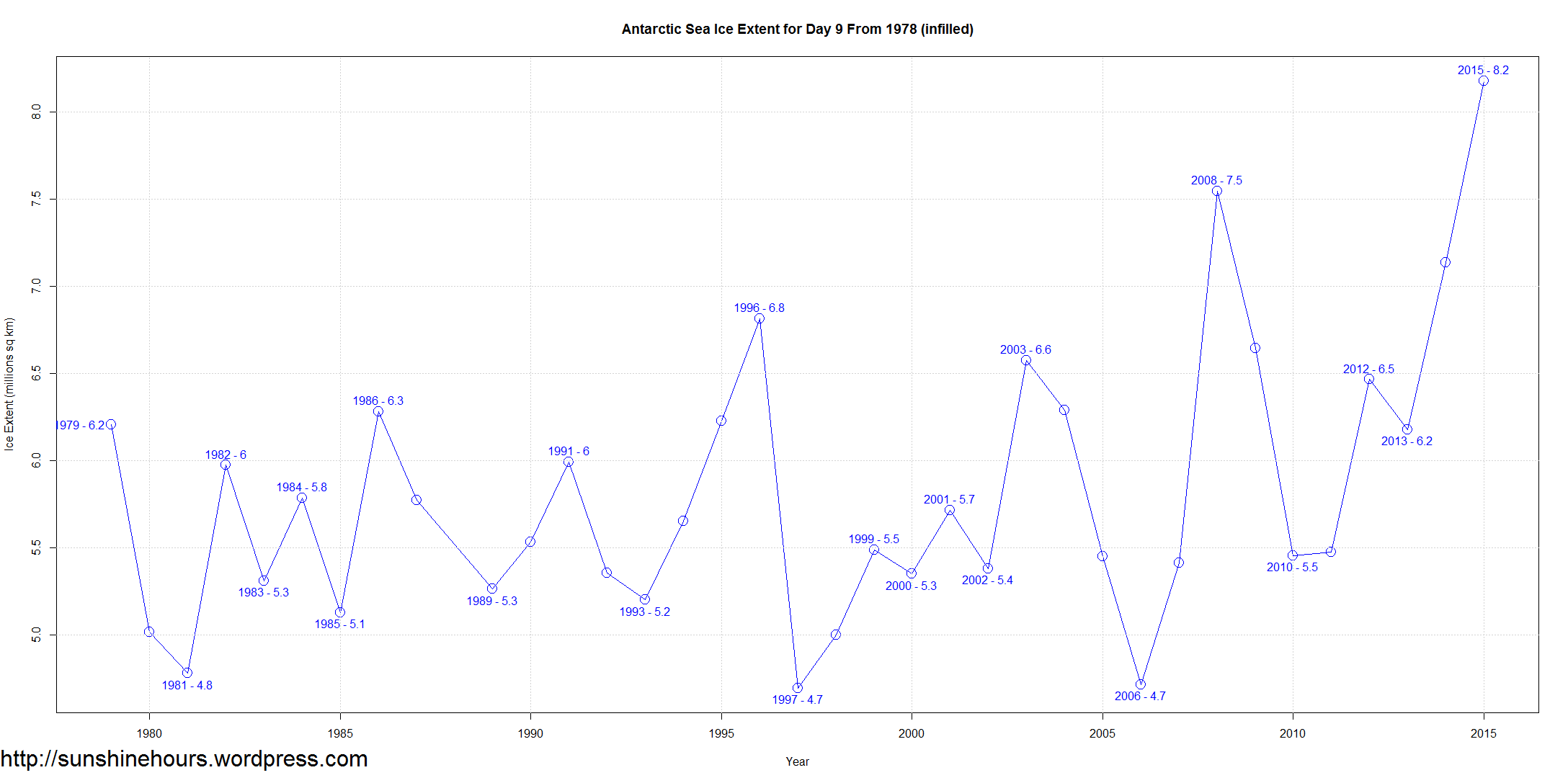
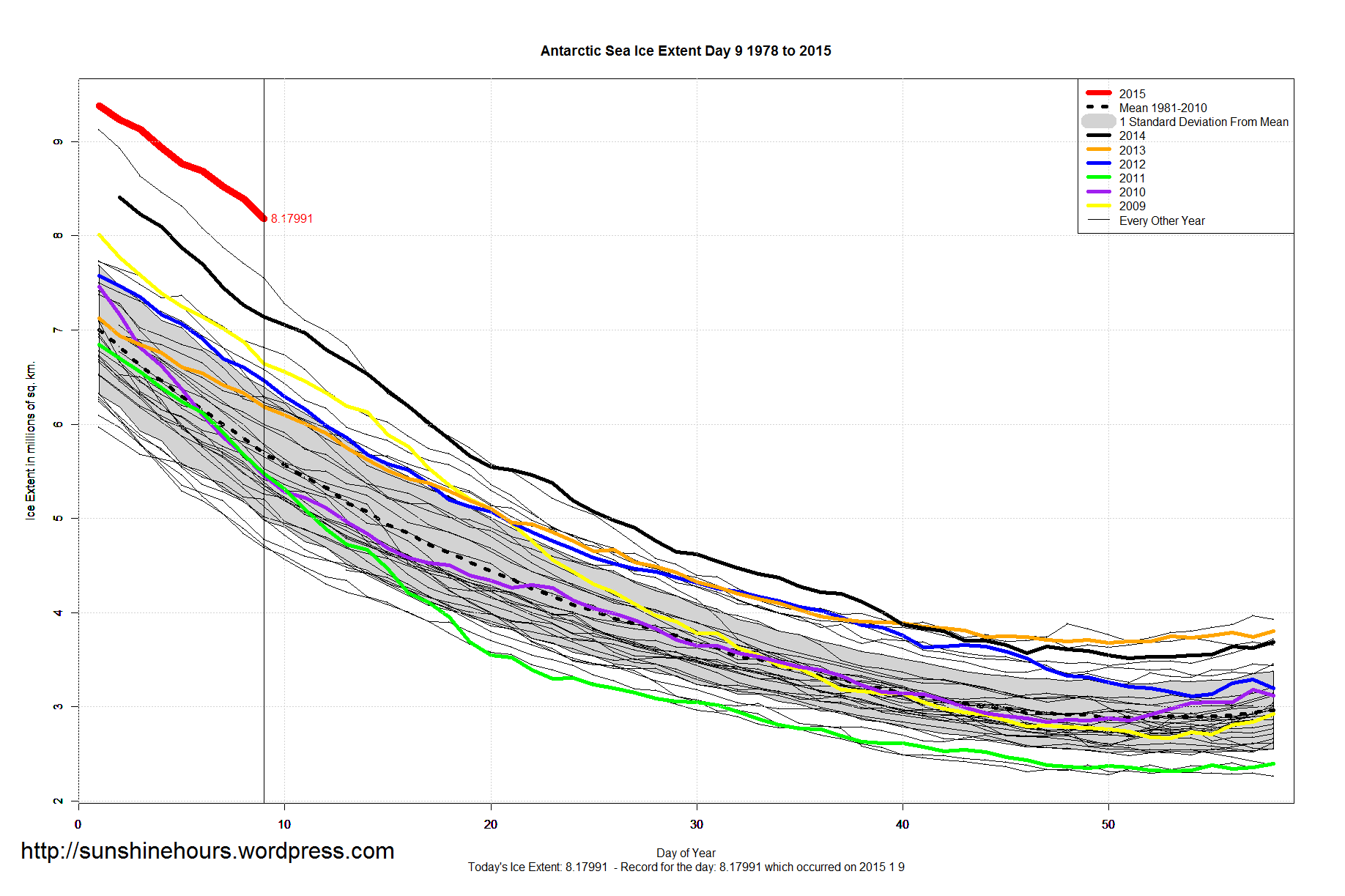
The SH has passed the winter solstice and days are now getting shorter. The sea ice will continue to shrink due to residual thermal gain in the oceans, but you HAVE to look at the albedo effect of all that extra sea ice *during the longest daylight hours of the year*. What are we to make of it? If sea ice (being “new” and not generally contaminated by black carbon soot) has a higher albedo than regular NH “dirty” ice, coupled with the higher angle of incidence, there’s a vast amount of ISI being reflected back to space that far offsets the amount of land-based loss of glaciation (i.e. solar gain). What happens if – as the graphs above point out – that Antarctic sea ice extent obliterates all old records by a wide margin? Could we safely assume a paradigm shift has taken place?
Exactly, we do need more satellite data. But compare the effects of adding more CO2 to the atmosphere ABOVE that of “historical” levels, versus that of direct solar irradiance on ocean surfaces and what’s being reflected back by the Antarctic sea ice extent. Which of the two adds or subtracts more from the net annual solar energy gain? I say increased albedo effect far outpaces that of a few ten-thousandths more CO2.


 sunshine hours
The SH has passed the winter solstice and days are now getting shorter. The sea ice will continue to shrink due to residual thermal gain in the oceans, but you HAVE to look at the albedo effect of all that extra sea ice *during the longest daylight hours of the year*. What are we to make of it? If sea ice (being “new” and not generally contaminated by black carbon soot) has a higher albedo than regular NH “dirty” ice, coupled with the higher angle of incidence, there’s a vast amount of ISI being reflected back to space that far offsets the amount of land-based loss of glaciation (i.e. solar gain). What happens if – as the graphs above point out – that Antarctic sea ice extent obliterates all old records by a wide margin? Could we safely assume a paradigm shift has taken place?
That would actually be something to fear. Cold is not good, mostly!
I don’t know. The satellite record is short, If we had 100 years of satellite data we would know more.
Exactly, we do need more satellite data. But compare the effects of adding more CO2 to the atmosphere ABOVE that of “historical” levels, versus that of direct solar irradiance on ocean surfaces and what’s being reflected back by the Antarctic sea ice extent. Which of the two adds or subtracts more from the net annual solar energy gain? I say increased albedo effect far outpaces that of a few ten-thousandths more CO2.
What say ye?
I agree.