From DMI
From DMI
From DMI
Bus sized sea vacuum!
Sometimes the sailors’ myths aren’t far off: The deep ocean really is filled with treasure and creatures most strange. For decades, one treasure—potato-size nodules rich in valuable metals that sit on the dark abyssal floor—has lured big-thinking entrepreneurs, while defying their engineers. But that could change next month with the first deep-sea test of a bus-size machine designed to vacuum up these nodules.
The trial, run by Global Sea Mineral Resources (GSR), a subsidiary of the Belgian dredging giant DEME Group, will take place in the international waters of the Clarion-Clipperton Zone (CCZ), a nodule-rich area the width of the continental United States between Mexico and Hawaii. The Patania II collector, tethered to a ship more than 4 kilometers overhead, will attempt to suck up these nodules through four vacuums as it mows back and forth along a 400-meter-long strip.
Ecologists worried about the effect of the treasure hunt on the fragile deep-sea organisms living among and beyond the nodules should get some answers, too. An independent group of scientists on the German R/V Sonnewill accompany GSR’s vessel to monitor the effect of the Patania II’s traverses. The European-funded effort, called MiningImpact2, will inform regulations under development for seafloor mining, says James Hein, a marine geologist at the U.S. Geological Survey in Santa Cruz, California. “That work is critical.”

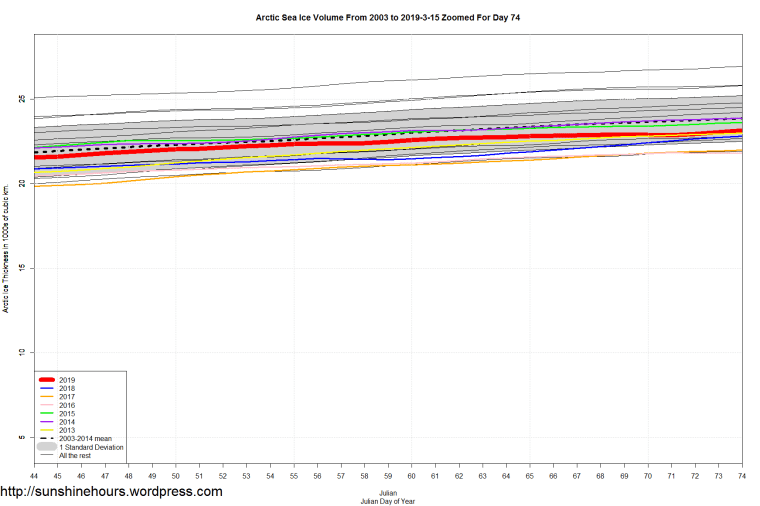
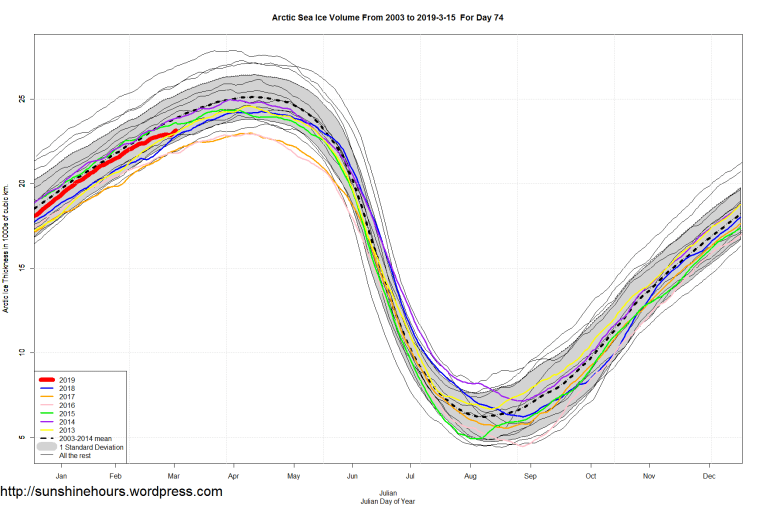
From DMI
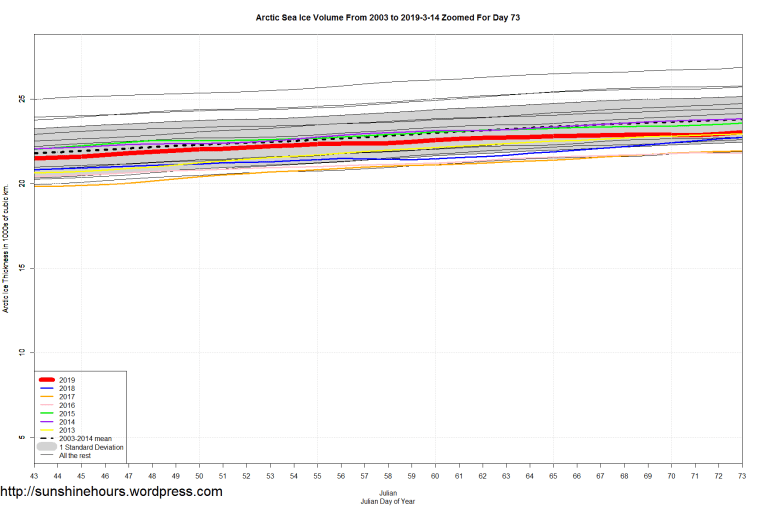
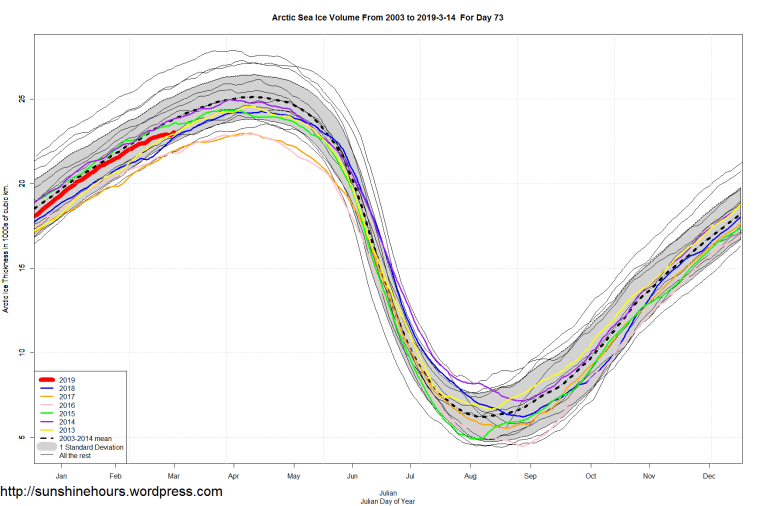
From DMI
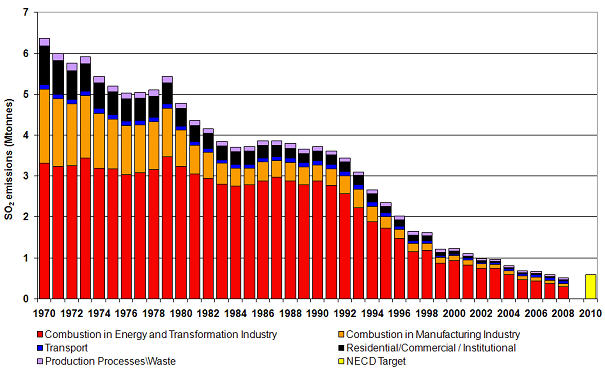
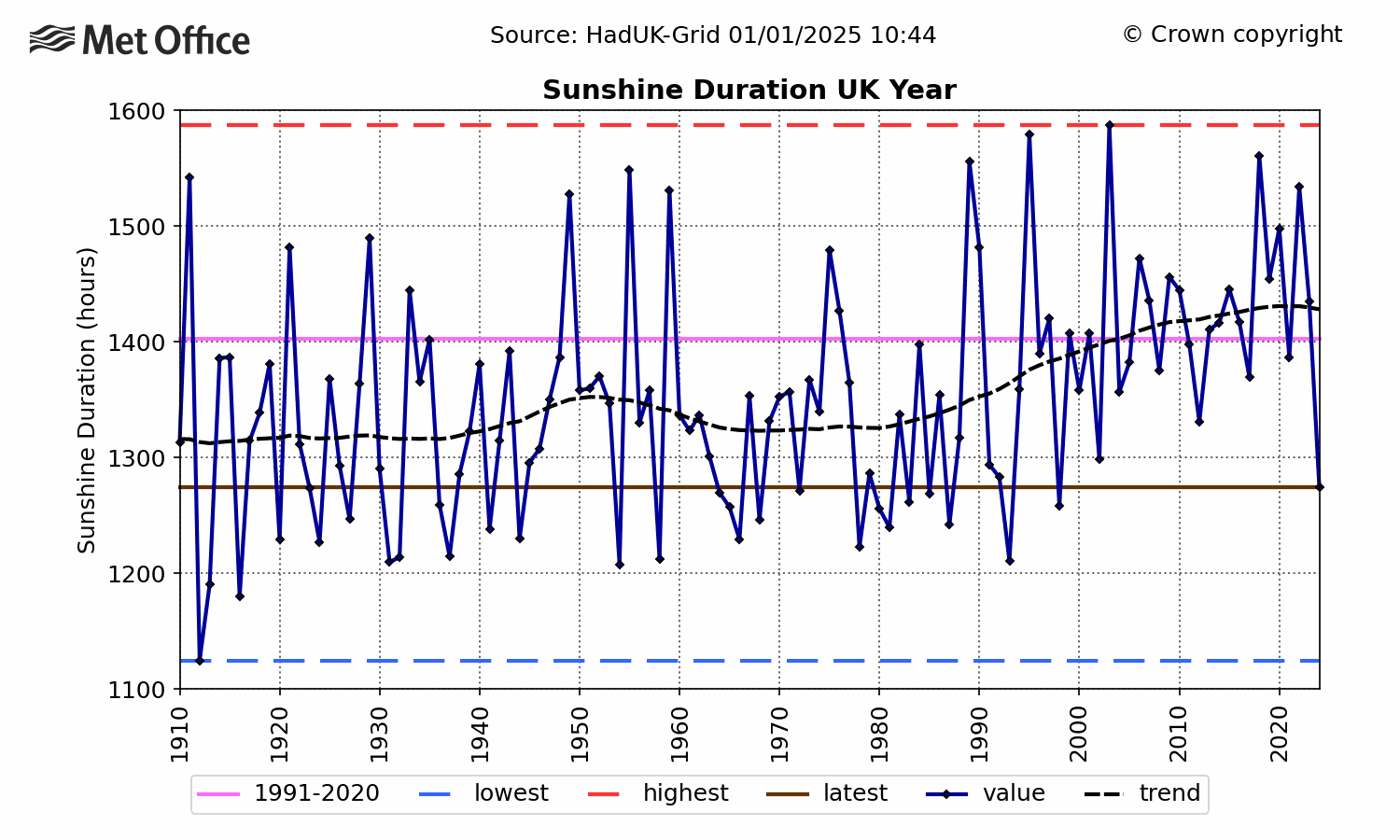
Less sulphates, cleaner air , more sunshine hitting the ground.
An observed decline of surface shortwave radiation (SSR) in Europe discovered from about 1950s until about the 1980s and many parts of the world is attributed to increasing emissions of anthropogenic aerosols (dimming phase). The followed increase of SSR in some regions (brightening phase) is a consequence of the clean air business in Europe.
The simulations with detailed treatment of aerosols and their interaction with clouds are needed for understanding the regional SSR trends. The NASA GISS ModelE2 is used in this study. It is based on transient simulations with natural and anthropogenic forcings.
We compare two simulations with transient aerosol emissions with the focus on aerosol effects on clouds. For the annual mean SSR, the dimming trends range between -4.4 W/m2 over the Mediterranean region and -1.7 W/m2 over the middle Europe. Brightening trends range from 5.9 W/m2 over France to 2.4 W/m2 over Russian European region, also for the annual average SSR.
Both dimming and brightening trends are stronger for summer with larger variability in SSR. The temperature trends are more consistent for summer, e.g. decreasing for dimming and increasing for brightening.
The cooling trends lead to increase in cloud cover for summer dimming, and the warming trend during the summer brightening is accompanied by cloud decreases. The increasing low clouds during the dimming accompanied by the upward tendency in the water cloud optical depth, e.g. an enhancement of negative cloud radiative forcing due to an increase in both cloud fractions and cloud optical depths during dimming.
Dimming periods are characterized by the positive trends in sulfate concentrations. Rapid reduction of sulfate aerosols have started in the last 20-25 years that allowed more solar radiation reach the Earth surface for the brightening periods over Europe.
This is so called direct sulfate aerosol effect on climate, more sulfates during dimming cause more reflection of sun light back to space and less solar flux reaching the ground. Cleaner air from sulfates during brightening allow more solar radiation at the surface and stronger warming. Increase of aerosols during dimming produced the enhancement of the reflective effect of aerosols on clouds while reduction of aerosols during brightening leads to decrease of aerosol effect on clouds.
Less sulphates
More sunshine
This post by The Chiefio correlates with my gut feel for the data.
Summers aren’t getting hotter except due to UHI.
Winters are less cold. According to Chiefio it is because high altitude thermometers are disappearing. I just believe in waste heat produced by billions of humans.
Here are the highlights:
Basically I [The Chiefio] found that for some Continents (regions) the Winter Data is vastly more volatile than the Summer data. Most (all?) of the “warming” comes out of a reduction of the volatility to the downside of those cool season data. Hot seasons are just not very volatile. Yet they DO have an up tilt at the very end with the advent of electronic thermometers and lots more asphalt around airports.
My conclusion (up here at the top 😉 is that this leans strongly toward “hot black asphalt in the sun” causing the summer “lift” and “loss of high cold volatile places” causing the cool season “lift”. Remove those stations at altitude that tend to have the strongest cold excursions, you get a flatter winter curve with the cold anomalies pruned. Have an airport add 10,000 foot more runway and 20 acres of paved parking for Jet Travel, you get hotter summer readings.
It is my opinion that accounts for most of whatever warming is in this the unadjusted data. (That then gets enhanced with “all one way warmer” adjustments in the adjusted version).
And:
What would happen if post W.W.II airports added more concrete and asphalt and more of the thermometers were placed at airports and inside the “Concrete Jungle” of cities? More solar heated pavement carryover into night warmth, less vegetation transpiration making cool and damp.
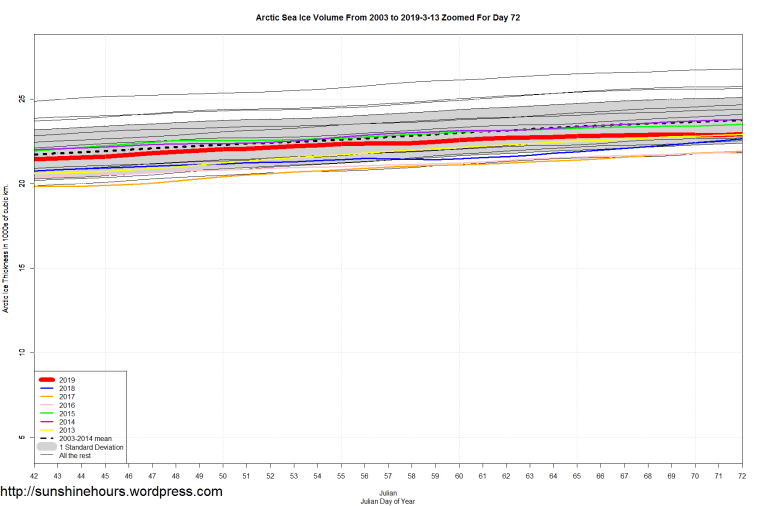
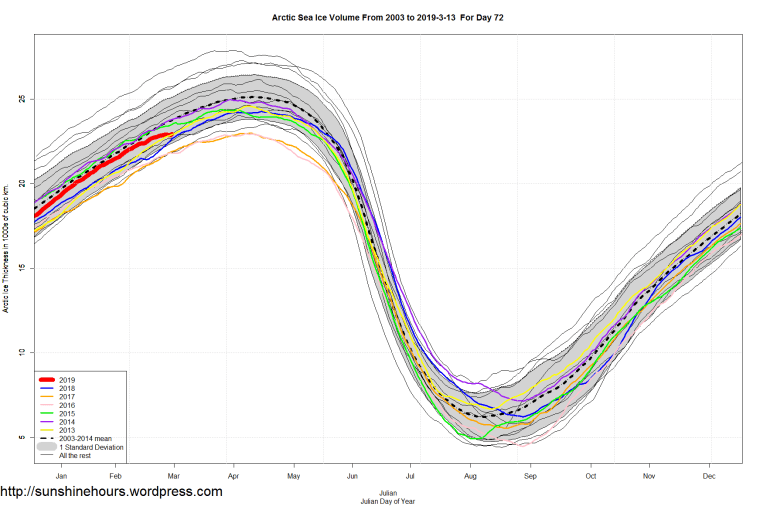
From DMI
Wave goodbye to your money. Its almost like the ocean is tough on equipment.
Just two years after revealing its grand vision to turn the West Australian town of Albany into a world-famous renewable energy hub by harnessing the power of waves, the WA Government is walking away.
It was touted as Australia’s first commercial-scale wave farm, but Carnegie Clean Energy could not even get the project past its first milestone.
Its failure has hurt not just the people of Albany — who were excited about the Government’s plan for their future — but their fellow WA taxpayers, who have got little to see for the $2.6 million they paid Carnegie.
There are many passionate believers in the potential of wave energy who have lost money or had their hopes shattered by the demise of the $16 million project.

Energy analyst Simon Holmes a Court said it was a huge setback for Australia’s fledgling wave industry as it struggled to compete with solar and wind energy.
“So while the potential is there, the economics of the [research and development] and bringing a solution to market is very difficult and very challenging,” he said.
“It’s very sad that such a lot of work has gone into the Carnegie solution, but they haven’t been able to bring it to market fast enough in order to compete with wind and solar.”
The axing of the project is also a huge loss of face for the WA Government, especially its Regional Development Minister Alannah MacTiernan, who rejected suggestions she had broken an election promise.
“No, we have honoured our commitment,” she said.
Sure.
But there are winners.
But not everyone has walked away a loser from the failed project.
Until recently, the cost of top-level executives has not been cheap for a company which has never made a profit.
Before Carnegie began to tighten its belt about six months ago, its annual bill for board and executive salaries was about $1.4 million.
Former chief executive and managing director Michael Ottaviano took home a pay package of more than $780,000 in 2016-17.
He was made redundant last year, taking with him a payout of six months’ salary.
 sunshine hours