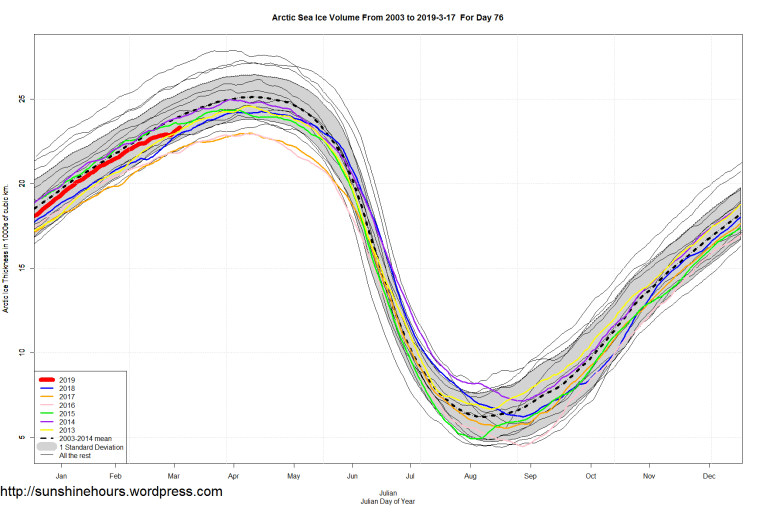
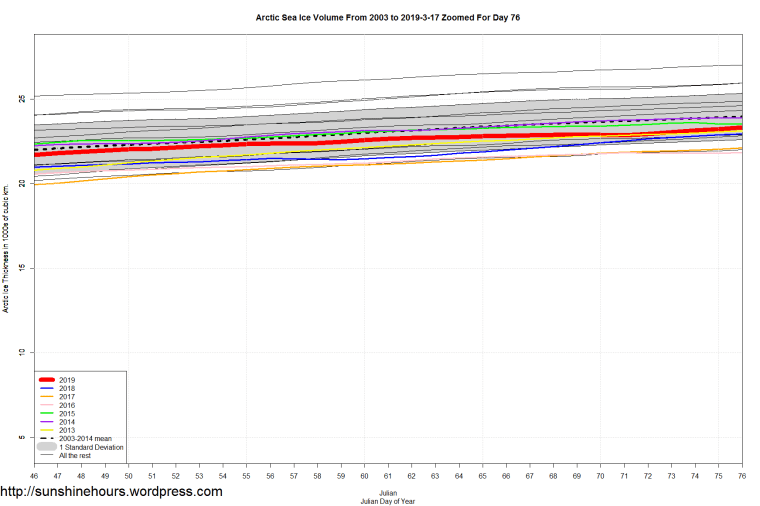
From DMI
From DMI
 A meteor caused a massive explosion over Earth last year, but nobody noticed until now. It is the second-largest recorded impact in the past century, after the meteor that exploded over the Russian region of Chelyabinsk in 2013.
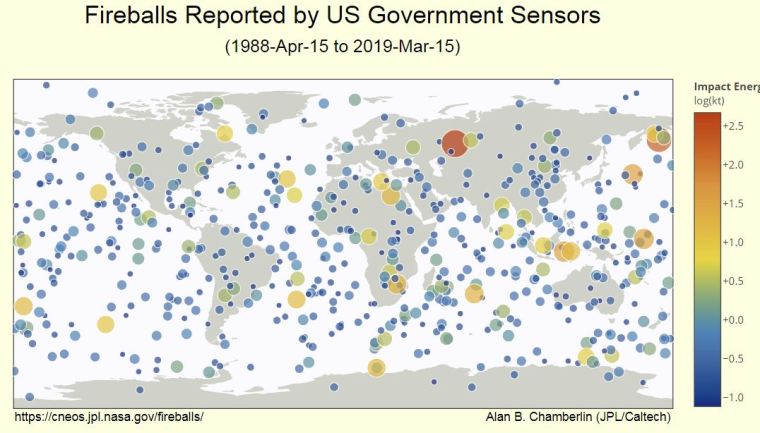
The giant fireball hit at 2350 GMT on 18 December over the Bering Sea, a part of the Pacific Ocean between Russia and Alaska. Peter Brown at the University of Western Ontario, Canada, spotted the meteor in measurements picked up by at least 16 monitoring stations globally. The meteor was 10 metres in diameter, had a mass of 1400 tonnes and impacted with an energy of 173 kilotons of TNT, he wrote on Twitter.
The impact energy was about 10 times that of the atomic bomb dropped on Hiroshima in 1945. The meteor exploded at altitude above Earth’s surface, says Alan Fitzsimmons of Queen’s University Belfast, UK. “It would have been quite spectacular,” he says.
The explosion was detected by infrasound stations around the world, which pick up low-frequency acoustic waves inaudible to humans. These stations were initially set up during the cold war to detect nuclear explosions.
It is the third-largest impact in modern times, after Chelyabinsk and a massive explosion that occurred in Siberia, Russia, in 1908. Known as the Tunguska event, the air burst flattened an estimated 80 million trees over an area of more than 2000 square kilometres. “When you see these infrasound waves, you know immediately that there has been an impact or a large release of energy,” says Fitzsimmons.
Triangulating the location and source of an explosion requires combining pressure wave data from multiple monitoring stations, which may explain the delay in the data being made public. The Bering Sea explosion was also picked up by US government monitors that detect fireballs: their sensors pick up electromagnetic radiation in the form of infrared and visible light.
JPL keeps a database of fireballs since 1988.
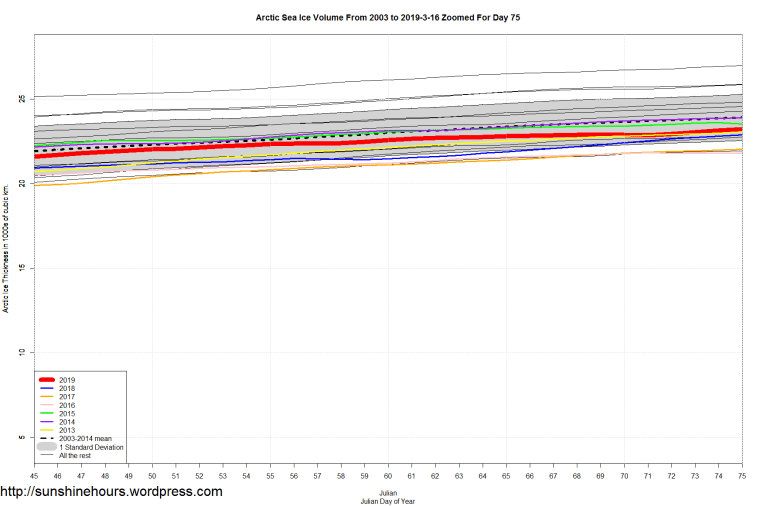
From DMI
Bus sized sea vacuum!
Sometimes the sailors’ myths aren’t far off: The deep ocean really is filled with treasure and creatures most strange. For decades, one treasure—potato-size nodules rich in valuable metals that sit on the dark abyssal floor—has lured big-thinking entrepreneurs, while defying their engineers. But that could change next month with the first deep-sea test of a bus-size machine designed to vacuum up these nodules.
The trial, run by Global Sea Mineral Resources (GSR), a subsidiary of the Belgian dredging giant DEME Group, will take place in the international waters of the Clarion-Clipperton Zone (CCZ), a nodule-rich area the width of the continental United States between Mexico and Hawaii. The Patania II collector, tethered to a ship more than 4 kilometers overhead, will attempt to suck up these nodules through four vacuums as it mows back and forth along a 400-meter-long strip.
Ecologists worried about the effect of the treasure hunt on the fragile deep-sea organisms living among and beyond the nodules should get some answers, too. An independent group of scientists on the German R/V Sonnewill accompany GSR’s vessel to monitor the effect of the Patania II’s traverses. The European-funded effort, called MiningImpact2, will inform regulations under development for seafloor mining, says James Hein, a marine geologist at the U.S. Geological Survey in Santa Cruz, California. “That work is critical.”

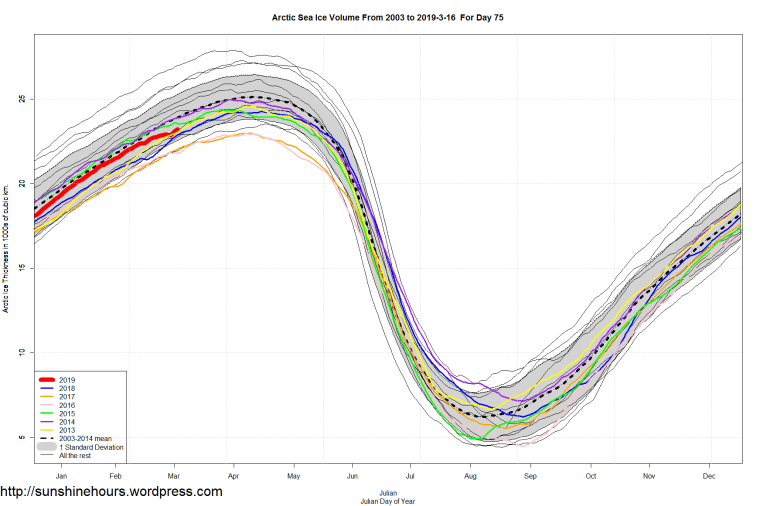
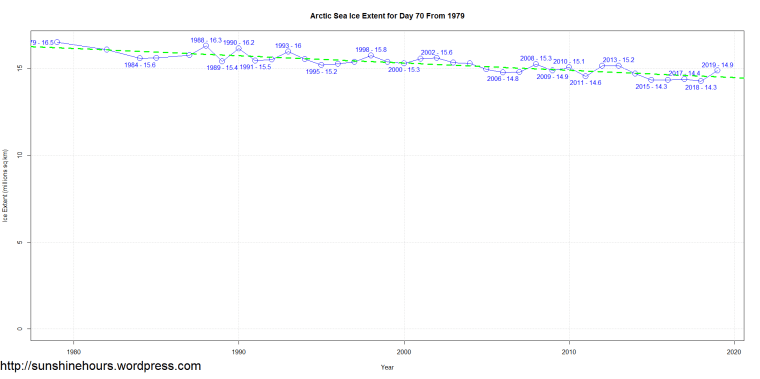
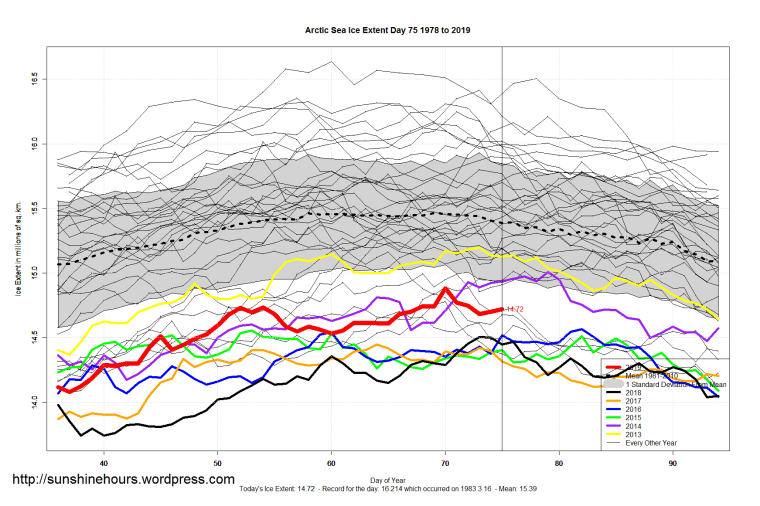
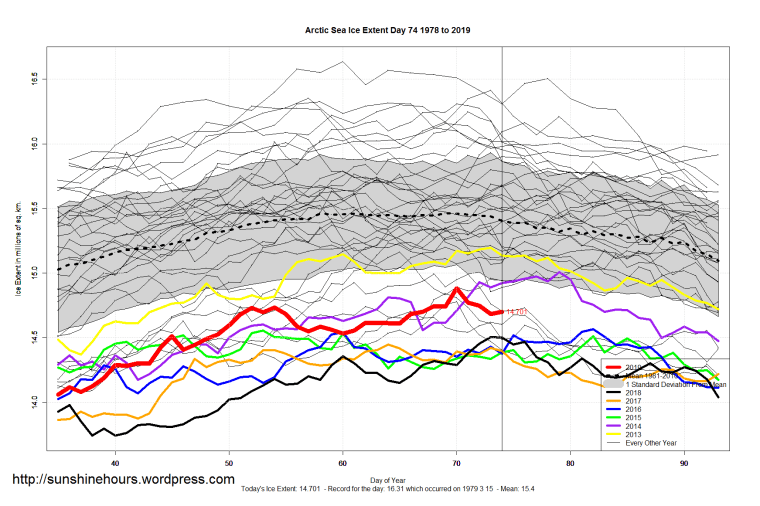
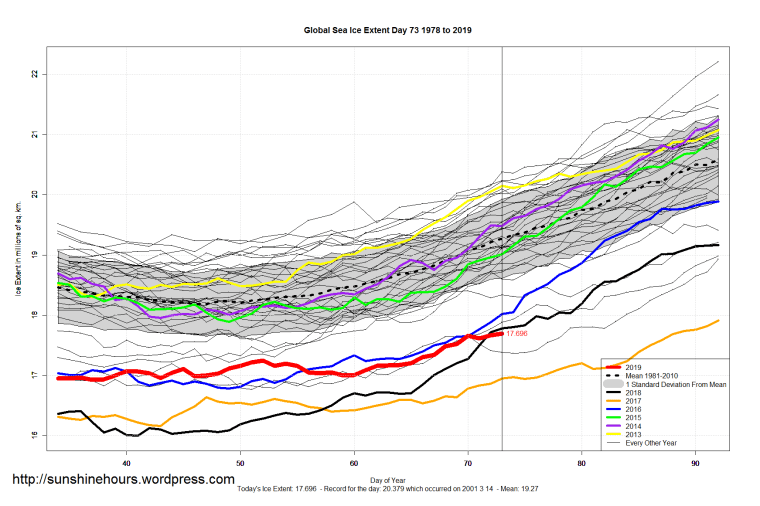
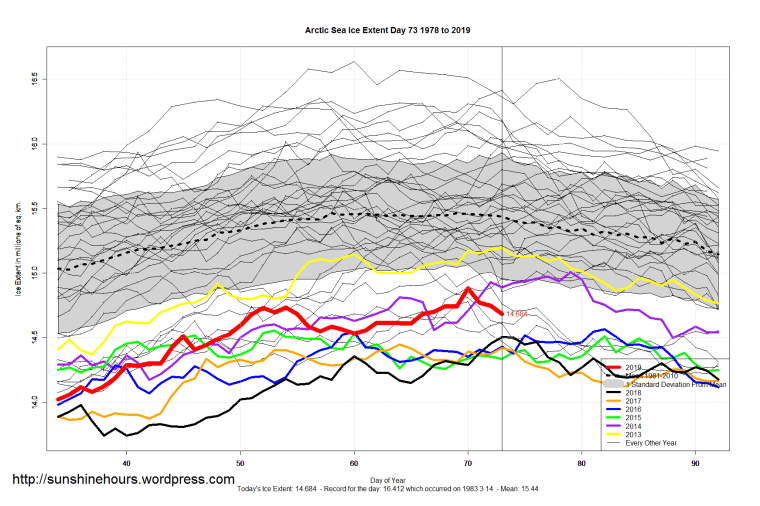
I’m not predicting that Arctic had reached maximum for 2019 on 70 (because that didn’t work out so well for Antarctica).
But if it had reached max it was the 8th lowest.
Not much of a climate emergency.
(in millions of sq km)
| Year | Min | Max | day of Max | day of Min | Avg_Anomaly |
| 2017 | 4.635 | 14.449 | 64 | 256 | -1.241855727322 |
| 2018 | 4.553 | 14.504 | 73 | 259 | -1.307592713623 |
| 2015 | 4.387 | 14.554 | 53 | 251 | -1.06869111545 |
| 2016 | 4.145 | 14.566 | 82 | 251 | -1.476420134 |
| 2011 | 4.333 | 14.704 | 66 | 251 | -1.151061206774 |
| 2006 | 5.746 | 14.777 | 70 | 257 | -0.861943398555 |
| 2007 | 4.147 | 14.842 | 69 | 257 | -1.160461206774 |
| 2019 | 14.883 | 70 | |||
| 2005 | 5.314 | 14.993 | 68 | 263 | -0.727581754719 |
| 2014 | 4.988 | 15.007 | 79 | 259 | -0.844061206774 |
| 2009 | 5.047 | 15.195 | 61 | 255 | -0.702587234171 |
| 2013 | 5.04 | 15.196 | 73 | 256 | -0.737442028692 |
| 2004 | 5.77 | 15.3 | 70 | 262 | -0.399463849847 |
| 2012 | 3.34 | 15.307 | 78 | 260 | -1.233799915421 |
| 2010 | 4.59 | 15.351 | 90 | 262 | -0.923165316363 |
| 2008 | 4.548 | 15.354 | 58 | 262 | -0.662051281541 |
| 1995 | 6.012 | 15.384 | 90 | 247 | -0.219447508144 |
| 1996 | 7.147 | 15.484 | 52 | 254 | 0.200888609169 |
| 2000 | 5.943 | 15.498 | 63 | 255 | -0.131723412688 |
| 1992 | 7.159 | 15.576 | 72 | 251 | 0.470582598241 |
| 2002 | 5.625 | 15.624 | 68 | 261 | -0.27169134376 |
| 1999 | 5.676 | 15.627 | 89 | 255 | 0.05690865624 |
| 2003 | 5.969 | 15.629 | 79 | 260 | -0.237335179377 |
| 1991 | 6.259 | 15.647 | 56 | 259 | 0.114700437062 |
| 1997 | 6.602 | 15.684 | 79 | 246 | 0.033056601445 |
| 2001 | 6.567 | 15.742 | 63 | 262 | -0.034540658829 |
| 1989 | 6.888 | 15.766 | 65 | 265 | 0.332297697336 |
| 1994 | 6.934 | 15.77 | 52 | 248 | 0.376760711034 |
| 1981 | 6.902 | 15.801 | 73 | 253 | 0.49516345076 |
| 1984 | 6.396 | 15.809 | 78 | 260 | 0.272841947825 |
| 1993 | 6.161 | 16.048 | 72 | 256 | 0.288494957609 |
| 1998 | 6.293 | 16.07 | 56 | 260 | 0.122823724733 |
| 1986 | 7.122 | 16.158 | 69 | 249 | 0.568586738431 |
| 1985 | 6.486 | 16.163 | 76 | 252 | 0.357959847693 |
| 1990 | 6.011 | 16.249 | 71 | 264 | 0.059283998705 |
| 1987 | 6.89 | 16.293 | 52 | 245 | 0.613975225596 |
| 1980 | 7.533 | 16.302 | 65 | 249 | 0.694625094596 |
| 1988 | 7.048 | 16.309 | 70 | 255 | 0.534692920098 |
| 1982 | 7.16 | 16.325 | 58 | 256 | 0.810824861467 |
| 1983 | 7.204 | 16.412 | 73 | 251 | 0.696560711034 |
| 1979 | 6.895 | 16.635 | 60 | 264 | 0.689988773313 |
From DMI
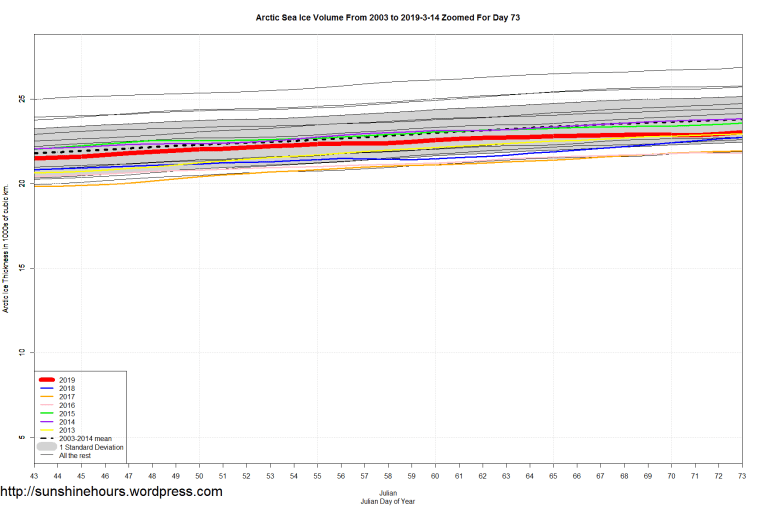
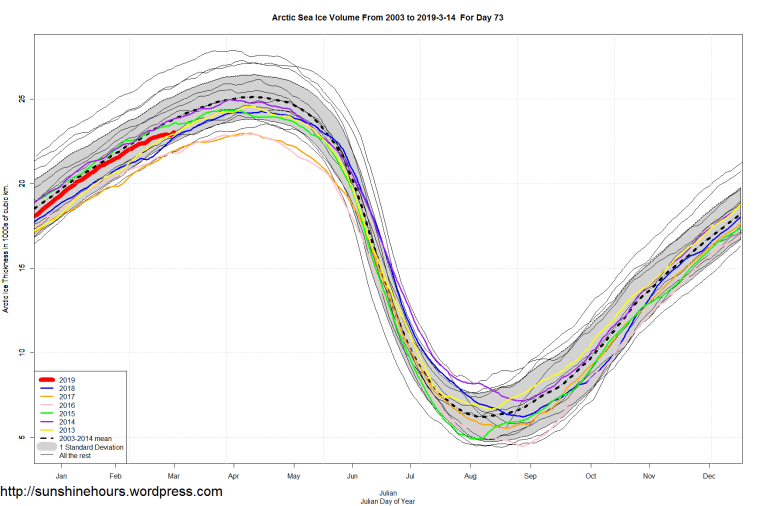
From DMI
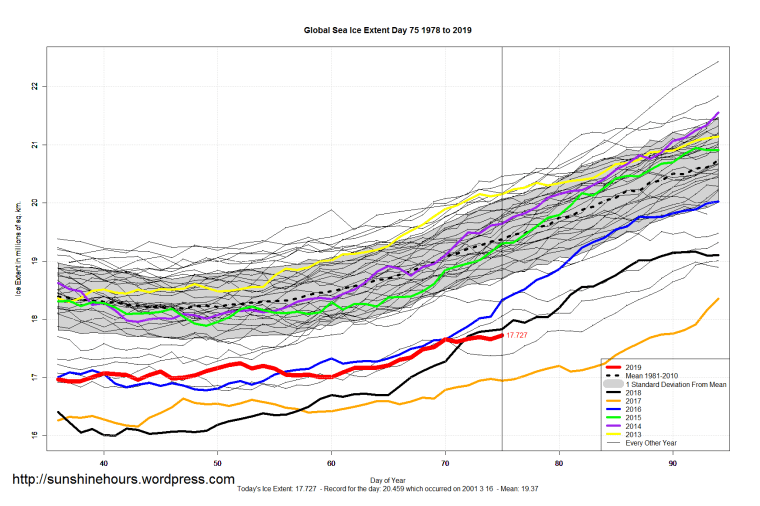
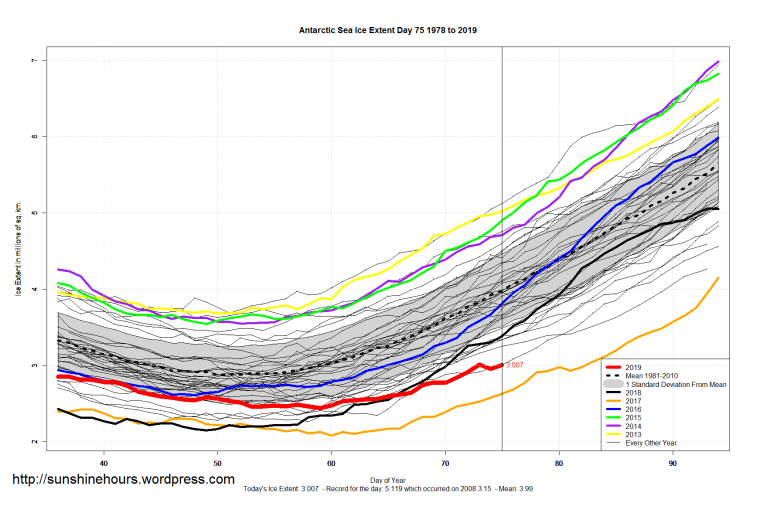

 sunshine hours