Popcatepetl eruption April 18th.
Popcatepetl eruption April 18th.
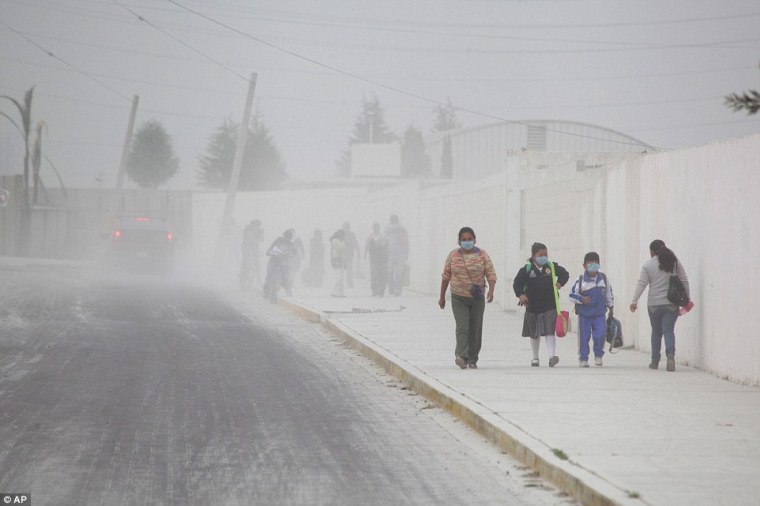
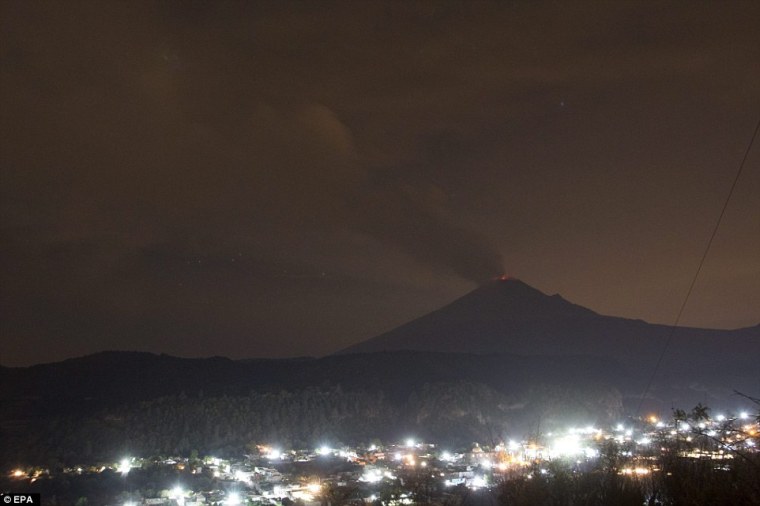
Popcatepetl has erupted again.
The Popocatépetl volcano began erupting around 2.30am on Monday, sending ash two miles into the air.
The eruption sent glowing rock hurling through the air as far as a mile away from the crater.
There is an AGW site called RealClimate (I’m not going to link to them). They have a post up mocking the use of volcano’s as a source of CO2/SO2 etc compared to human sources.
I did a post a while back looking at the amount of SO2 produced by one volcano.
Here is another news snippet from the same period.
“The sulfur dioxide (SO2) emitted from the Holuhraun eruption has reached up to 60,000 tons per day and averaged close to 20,000 tons since it began. For comparison, all the SO2 pollution in Europe, from industries, energy production, traffic and house heating, etc., amounts to 14,000 tons per day.”
Admittedly this is unusual. But there are 3,000,000 undersea volcanoes.
And they could have pumped out a lot of CO2 in the past.
The climate-driven rise and fall of sea level during the past million years matches up with valleys and ridges on the seafloor, suggesting ice ages influence underwater volcanic eruptions, two new studies reveal. And because volcanic chains suture some 37,000 miles (59,500 kilometers) of ocean floor, the eruptions could pump out enough carbon dioxide gas to shift planetary temperatures, the study authors suggest.
Mexican Volcano Popocatpetl Erupting Sunday.
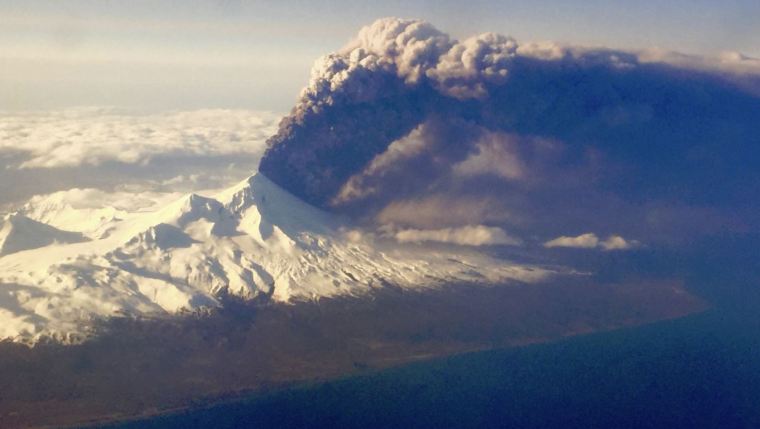
A “massive” ash cloud that erupted from an Alaskan volcano disrupted flights operating on flight paths in the region on Monday, The Associated Press reports.
The ash cloud spewed from the Pavlof Volcano – one of the most-active in the state – that sits about 625 miles southwest of Anchorage.
http://www.wkyc.com/news/nation-now/volcano-ash-cloud-disrupts-flights-over-alaska/108262623
Wow.
“Sulphur dioxide has been spurting too — 35,000 tons of it a day, more than twice the amount spewing from all of Europe’s smokestacks. The gas has spread across the Icelandic countryside, causing people to wheeze and trapping some indoors.
The record-setting amount of pollution has surprised even volcanologists in the middle of a major project funded by the European Union to understand the island’s fiery activity. They had been preparing for a repeat of the 2010 Eyjafjallajökull eruption, which led to a billowing ash plume that grounded planes across Europe. “Everybody was expecting a big ash cloud, and now we have something totally different,” says Anja Schmidt, an atmospheric modeller at the University of Leeds, UK, who studies how volcanic gases spread.”
http://www.scientificamerican.com/article/gas-spewing-icelandic-volcano-stuns-scientists/
(h/t Instapundit)
“The magma chamber under volcano Hekla is now almost full, according to Páll Einarsson, professor in geophysics at University of Iceland.
Hekla, which is the most active volcano in Iceland, could erupt with very short notice, Páll told Morgunblaðið, adding that people should not climb the mountain.
During the last eruption, in 2000, it took just 79 minutes from the first quake until eruption, and Páll says that was longer than in previous eruptions.
Hekla has erupted more than 20 times in the last 1,000 years. The last big eruption in Hekla was in 1947.”
http://icelandreview.com/news/2014/03/17/hekla-volcano-could-erupt-soon
The problem with Hekla is that it is a northern hemisphere volcano, and any significant eruption of material into the atmosphere would add more cooling.
In 1104 AD and 1100 BC and 2300 BC and 4110 BC and 6150 BC Hekla erupted with a VEI of 5. There have been numerous 3s and 4s as well.
A VEI5 is considered “very large” Mount Vesuvius and Mount St. Helens (1980) were VEI5.
Embed from Getty Images
 sunshine hours