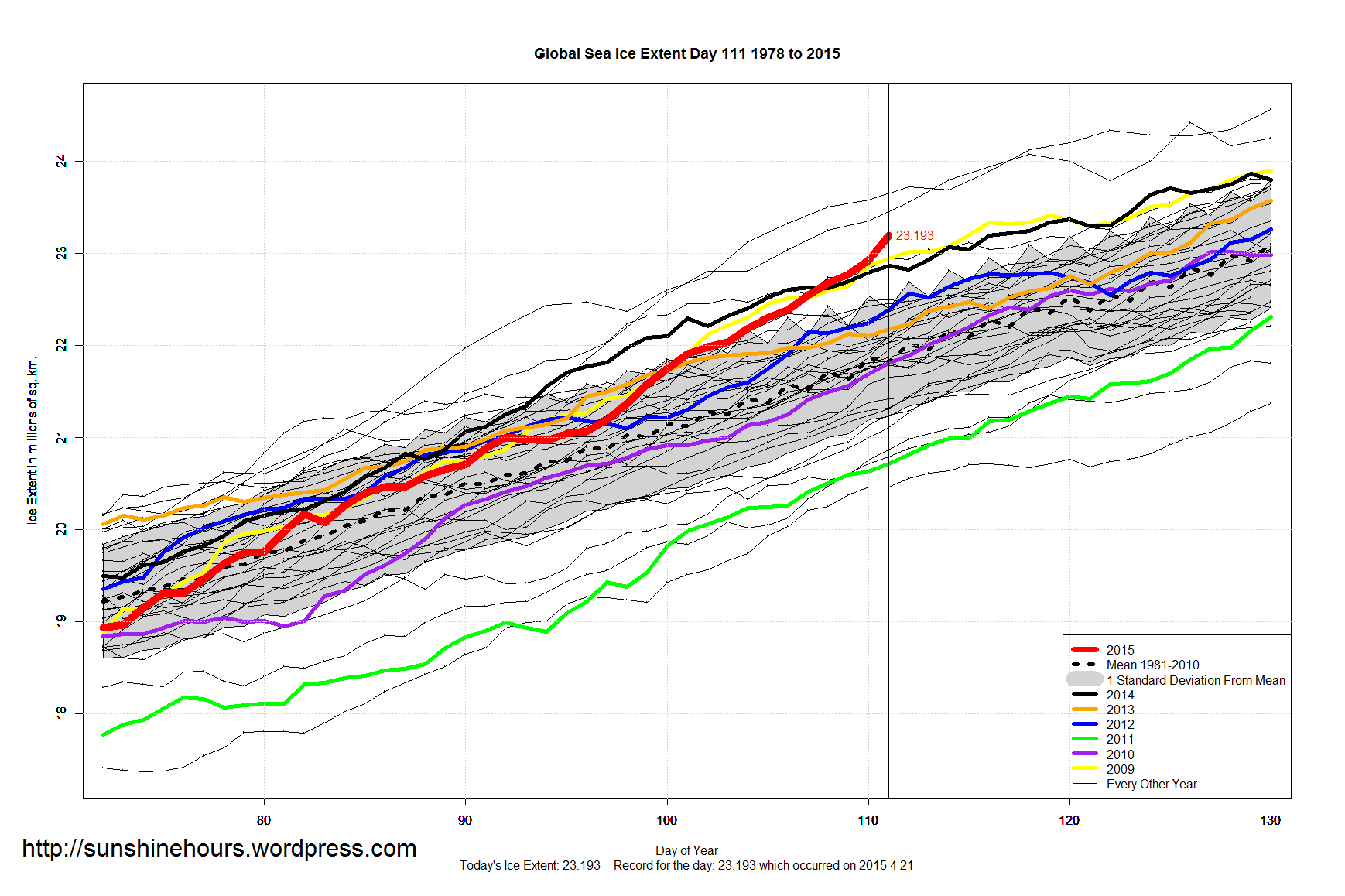
3rd Highest Global Sea Ice For This Day – Well above one standard deviation.
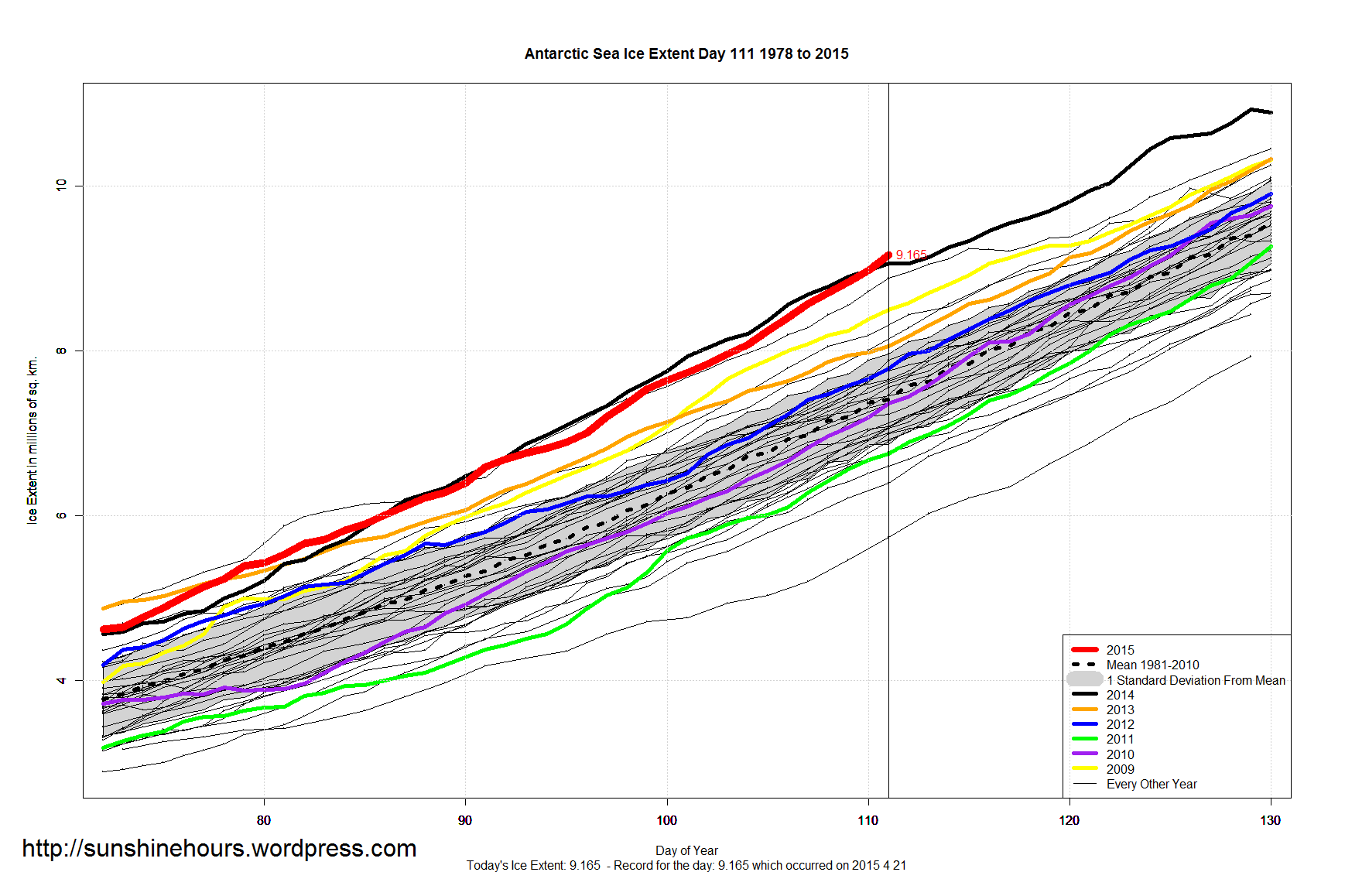
23rd Daily Record for Antarctic – 1.75 million above the 1981-2010 mean.
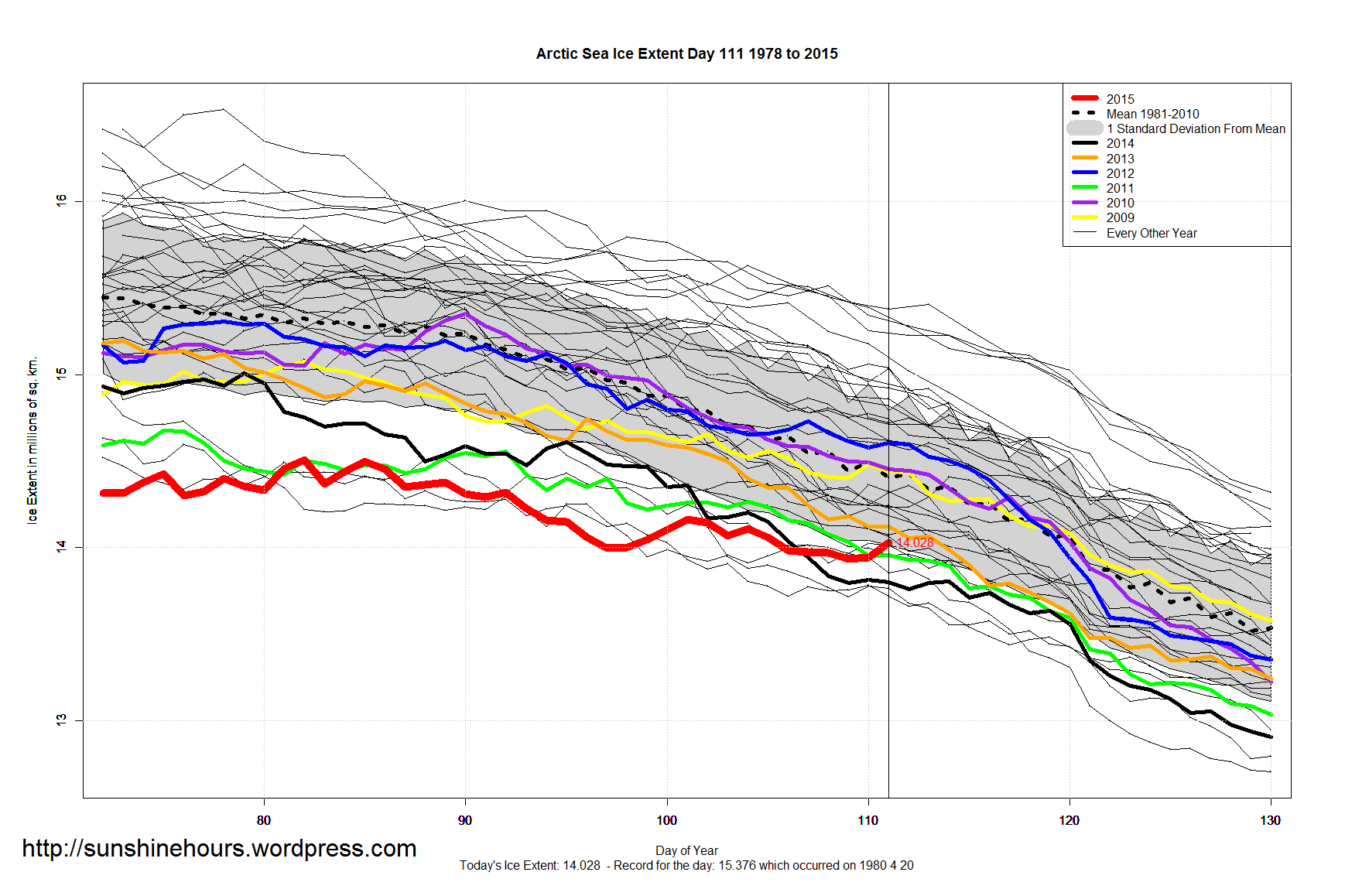
Arctic within one standard deviation. 6 years had less sea ice in the arctic on this day including 1989.
 sunshine hours
Thanks so much for this site. I check it first thing every day!
Regarding the Antarctic sea ice extent. I keep hearing from naysayers that all that is happening is that glaciers are melting, and the water is flowing to the sea and refreezing. This causes the extent to increase but overall ice volume is still decreasing.
This doesn’t sound right to me, but where can I get information to refute or verify those claims?
Thanks
Take a look at the map of the arctic. It is surrounded by glaciers and Greenland. Shouldn’t the “melting glaciers” create more sea ice in the arctic too?
I guess that would depend on the sea an air temperatures around each area. Or maybe something to do with the Arctic basically surrounded by land, while the Antarctic is surrounded by water?
They keep talking about the Antarctic being melted out from underneath, but they have no proof of that. In fact, the data from underwater drones shows that the ice is thicker than expected.
It sounds like they are really reaching to come up with reasons for the increase. None sound very plausible to me.
When do we become concerned about Global cooling?? When we have crop failure do to cold??
Reblogged this on CbFool.
I believe a short while ago, i indicated that if the Arctic crosses into the standard deviation area, there would be wailing and ghashing of teeth by the alarmists….i hear crickets only….BUT..I believe there will be a tipping point….! 🙂
Erueka is still sitting at -20 C range…
The dramatic upsurge in both Arctic and Antarctic, on the same day, is somewhat “alarming”. Just think how scary it would be if we didn’t have all this “global warming” happening!
(Yup, sarc)
Alright boys and girls, we are having entirely too much fun here!
Your data is just slightly different from the Charctic site – where do you get it. I like that you have the combined value for Arctic and Antarctic.
NSIDC data link is at bottom of the post.