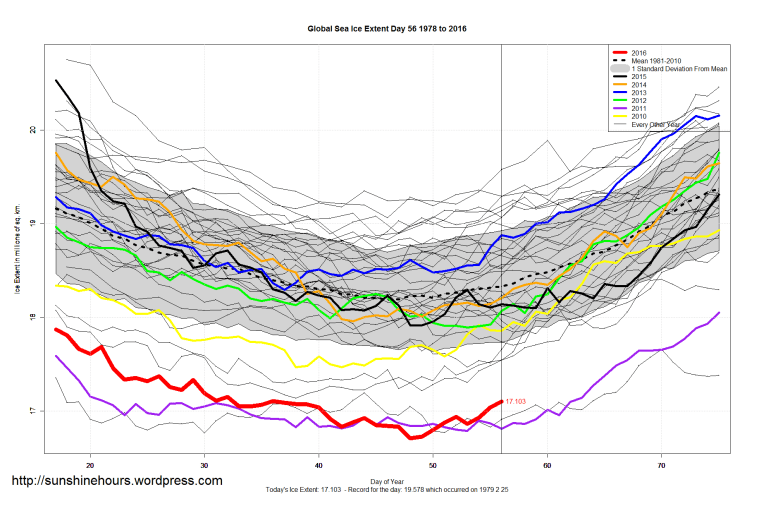
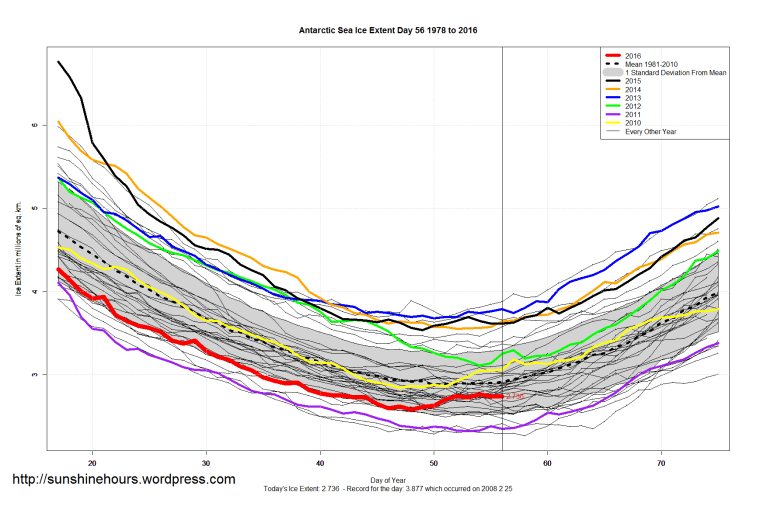
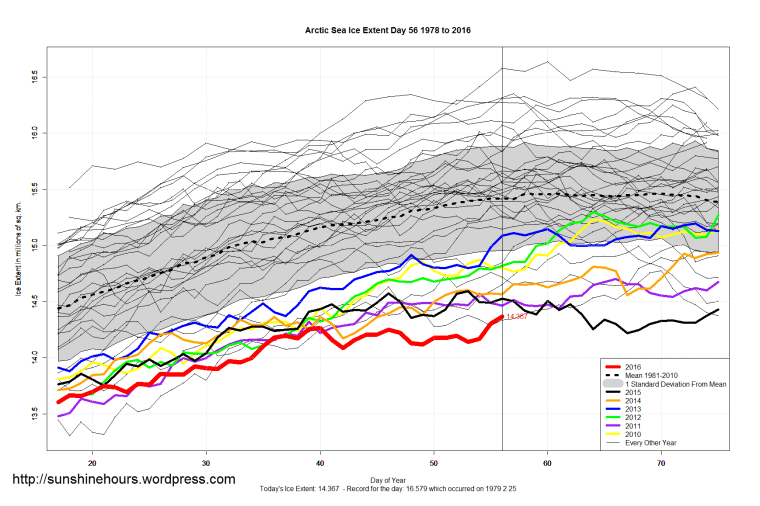
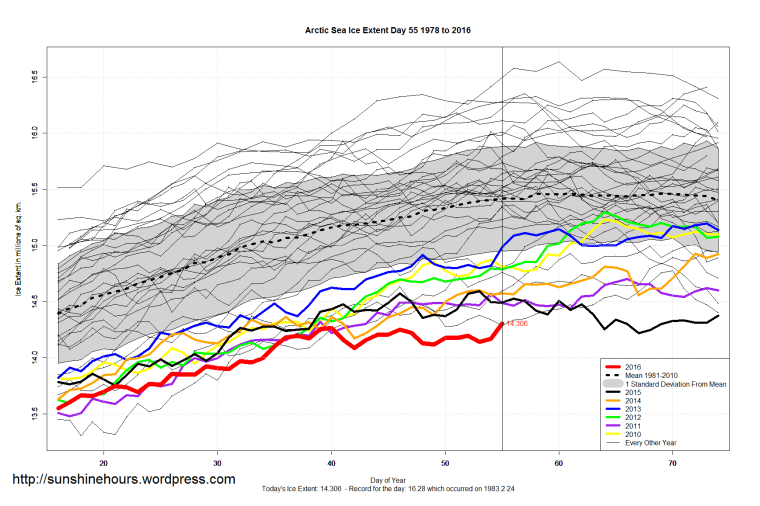
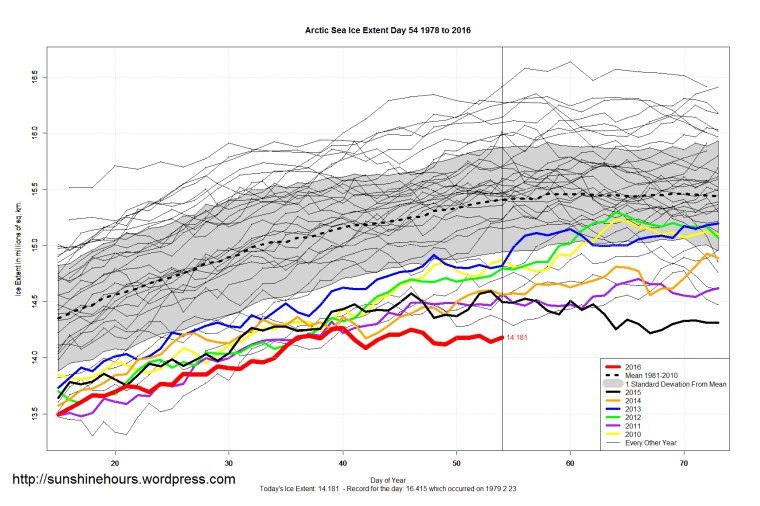
The Arctic needs 70,000 sq km to avoid setting a record for lowest maximum. It has gained 380,000 sq km in last 6 days.
Month: February 2016

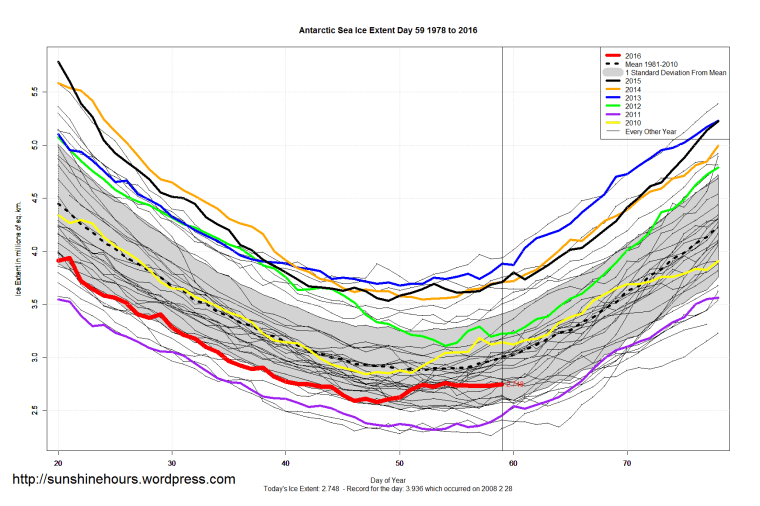
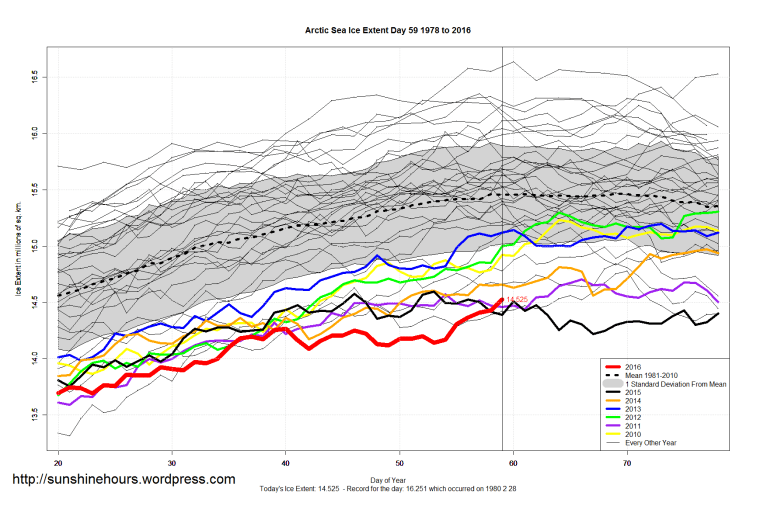
Sea Ice Extent (Global Antarctic and Arctic) – Day 58 – 2016
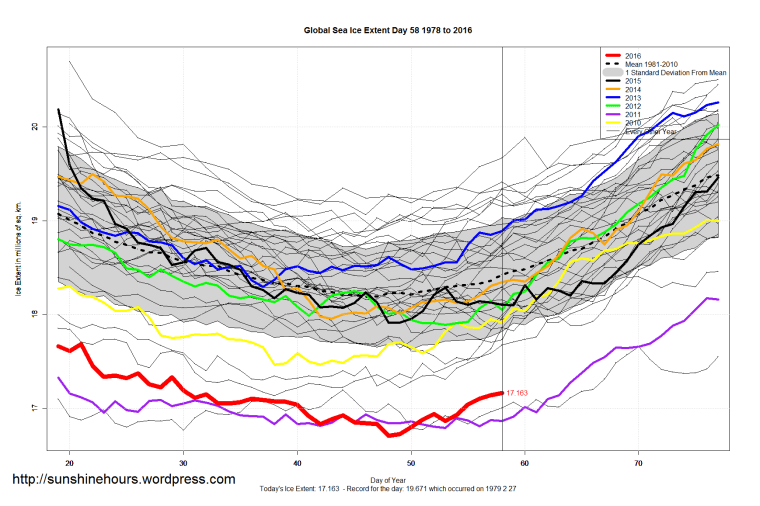
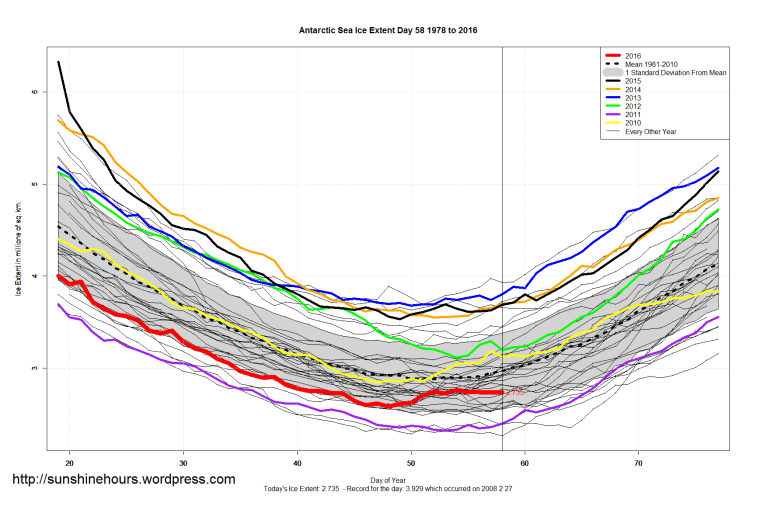
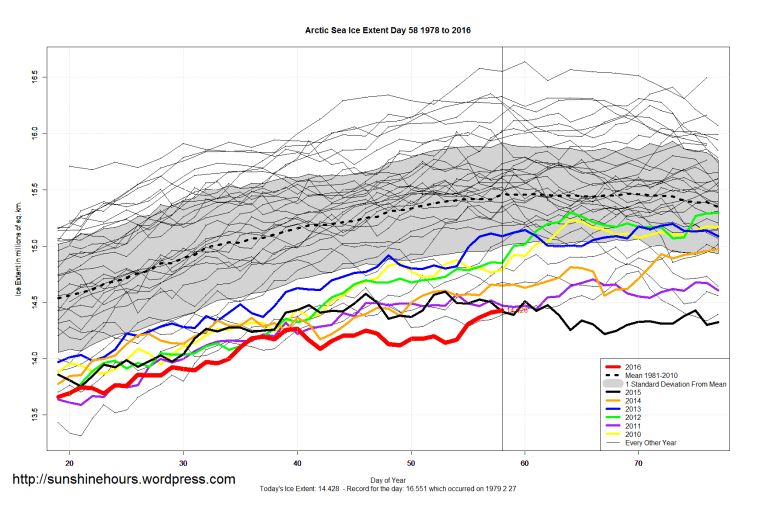
Sea Ice Extent (Global Antarctic and Arctic) – Day 57 – 2016
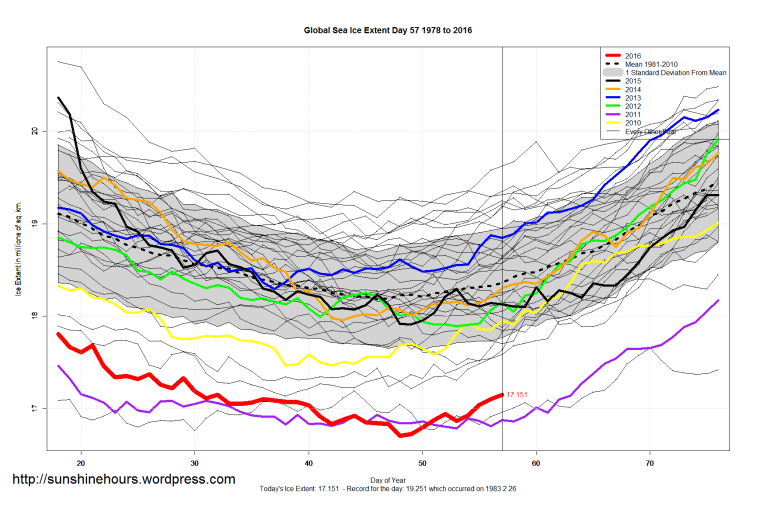
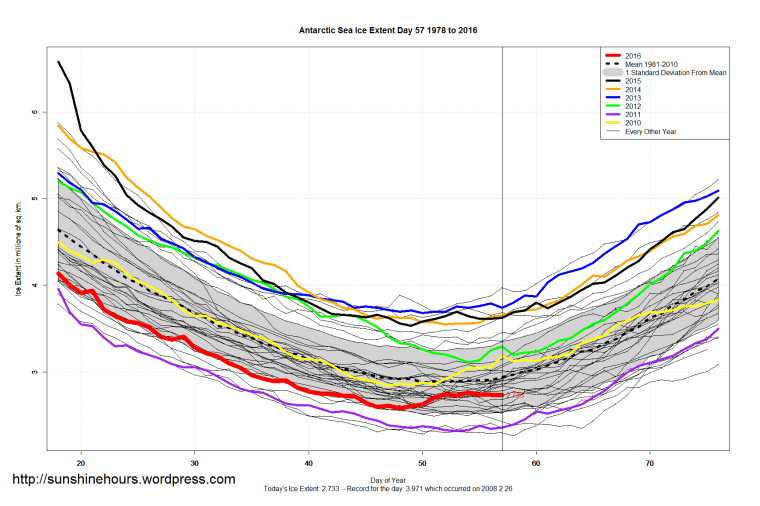
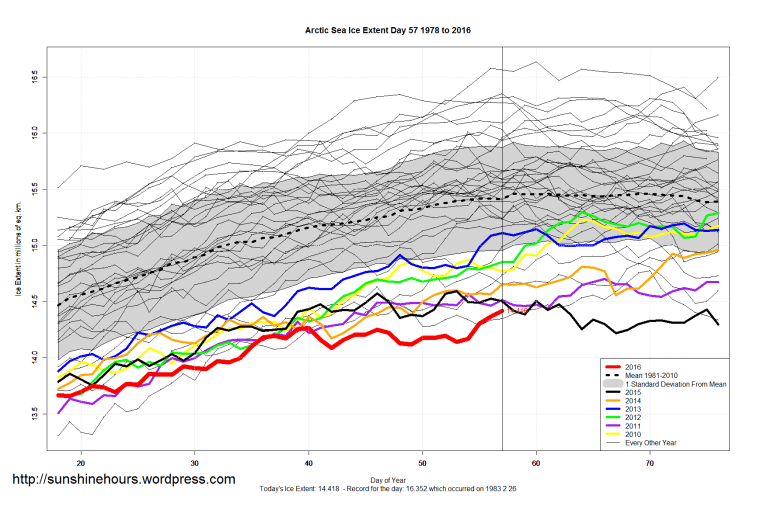
Sea Ice Extent (Global Antarctic and Arctic) – Day 56 – 2016
Sea Ice Extent (Global Antarctic and Arctic) – Day 55 – 2016

Sea Ice Extent (Global Antarctic and Arctic) – Day 54 – 2016
Sea Ice Extent (Global Antarctic and Arctic) – Day 52- 2016

Sea Ice Extent (Global Antarctic and Arctic) – Day 51 – 2016


MASIE versus NSIDC – Day 50 – 2016
I explained the difference between MASIE and NSIDC here.
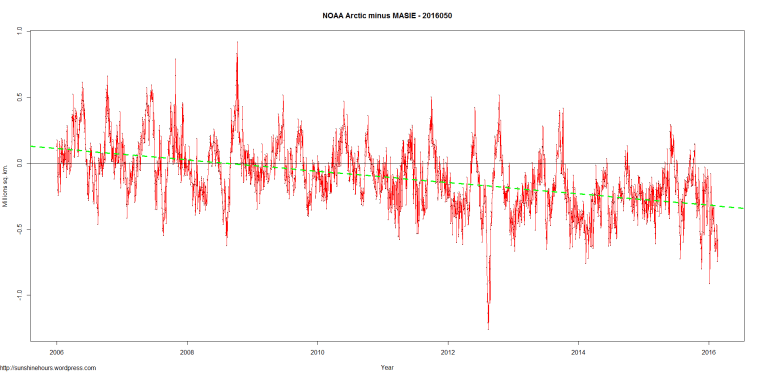
I still don’t understand why the divergence over time is in one direction only.
The latest graph (showing that as time has passed NOAA’s data is showing less and less ice compared to MASIE) is below.
Sea Ice Extent (Global Antarctic and Arctic) – Day 50 – 2016
Update: Missed a few days. My advice … don’t get the flu.
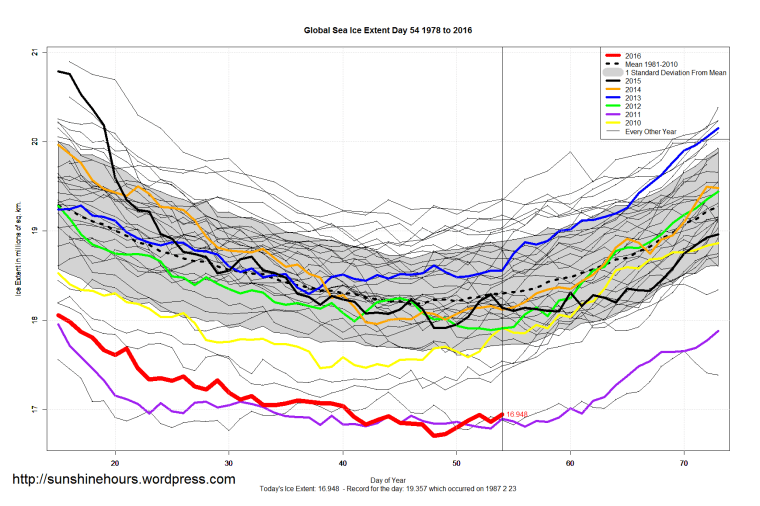
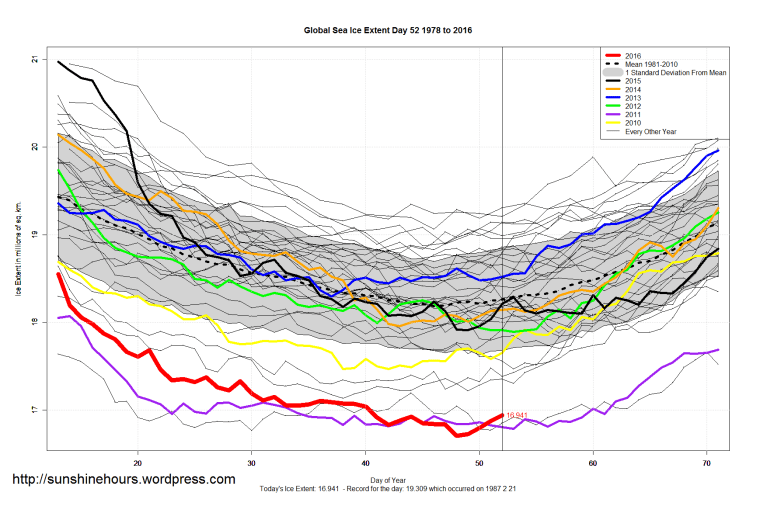
A new global lowest minimum record has been set: 16.709 million sq km on day 48.
(This post is using day 50 data for the graphs. I missed day 48))
The previous global lowest minimum record was from 2006 at 16.766 million sq km. on day 30.
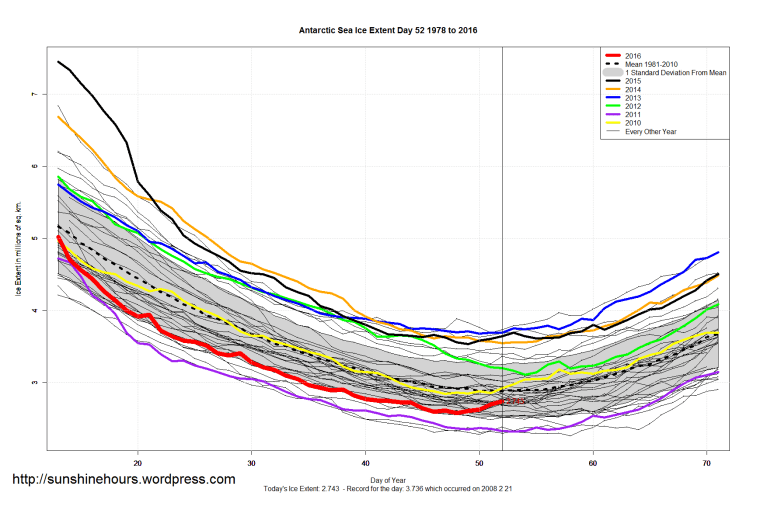
The Arctic may also set a record for lowest maximum unless 330,00 sq km of ice can be found.


 sunshine hours