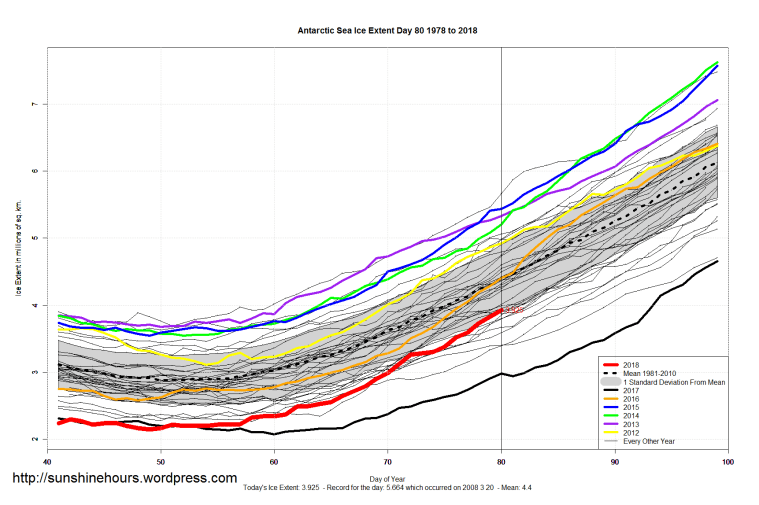
Indeed, quite a change from 2017—and all due to winds, not warmer atmospheric temperatures. One only has to look back to 2013-15 to see that Antarctic extents were at or near record high levels. This turn-around is a return to more normal wind patterns.
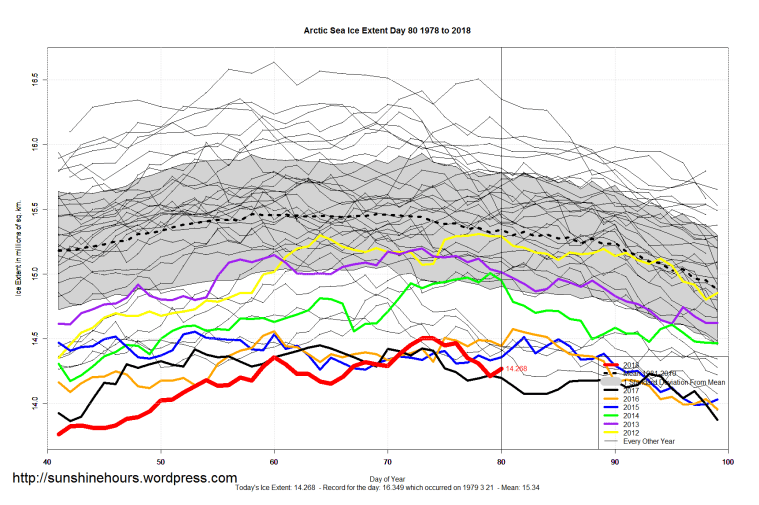
As far as the Arctic is concerned, I’m sure much will be made about the decline in extent but the more important fact that will be ignored is that sea ice volume is at the same level as it was 10 years ago in 2008. Thick ice means less melting, and if Arctic wind patterns maintain a good holding pattern through the melt season, there will be more left going into next winter, where potentially far more sea ice will continue to rebuild what’s been lost.

 sunshine hours
Reblogged this on Climate Collections.
Indeed, quite a change from 2017—and all due to winds, not warmer atmospheric temperatures. One only has to look back to 2013-15 to see that Antarctic extents were at or near record high levels. This turn-around is a return to more normal wind patterns.
As far as the Arctic is concerned, I’m sure much will be made about the decline in extent but the more important fact that will be ignored is that sea ice volume is at the same level as it was 10 years ago in 2008. Thick ice means less melting, and if Arctic wind patterns maintain a good holding pattern through the melt season, there will be more left going into next winter, where potentially far more sea ice will continue to rebuild what’s been lost.