


Month: April 2018
Canadians Are Killing Forests – Biofuels, and especially wood pellets, actually worsen climate change
Canada is ramping up turning forests into wood pellets for Europe and Asia.
And generating a lot more CO2.
“Wood pellets are considered carbon neutral because as forests grow they can retrap carbon, but the designation has drawn criticism from environmentalist and academics who have questioned the equation.
John Sterman, a professor at the MIT Sloan School of Management, published a paper earlier this year that argued burning pellets would release more carbon dioxide than coal in the short term because it was a less efficient source of energy.
The lag for when the carbon would potentially be reabsorbed to eventually make it carbon neutral is too long when emissions reduction is needed now, said Sterman in an interview.
“The next few decades, the rest of this century, this is the critical period,” said Sterman. “Biofuels, and especially wood pellets, actually worsen climate change over this period.”
There are also significant concerns about the reliability of the forest retrapping the carbon, since climate change is expected to increase the risks of forest fires and insect infestations, said Sterman.
“The EU has made this error, and accounting error. It’s just a false statement to say that biofuels are carbon neutral. They’re not neutral in the short run, and whether they’re neutral in the long run depends on the fate of the land.” “
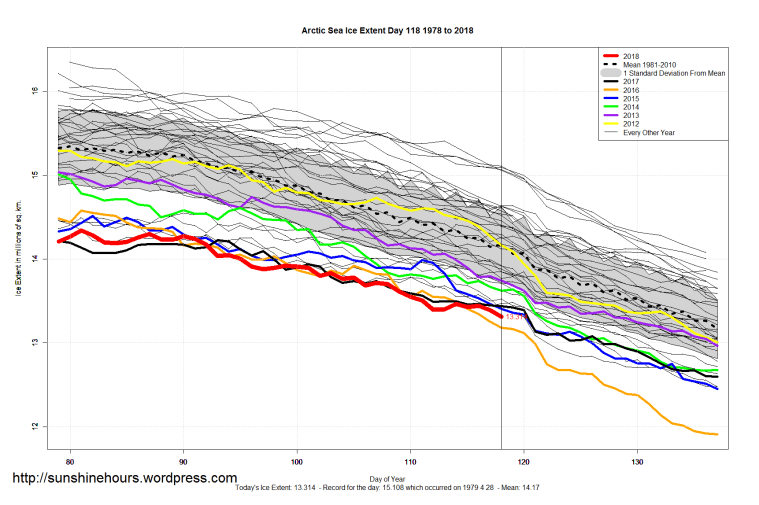
Sea Ice Extent (Global Antarctic and Arctic) – Day 118 – 2018


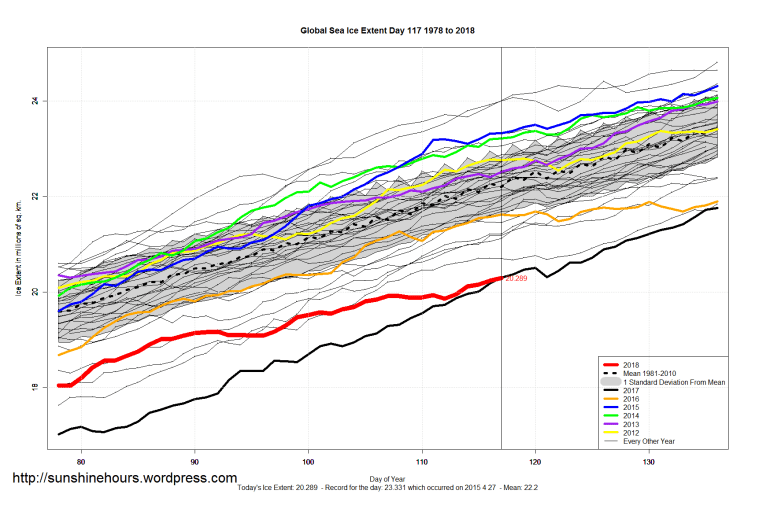
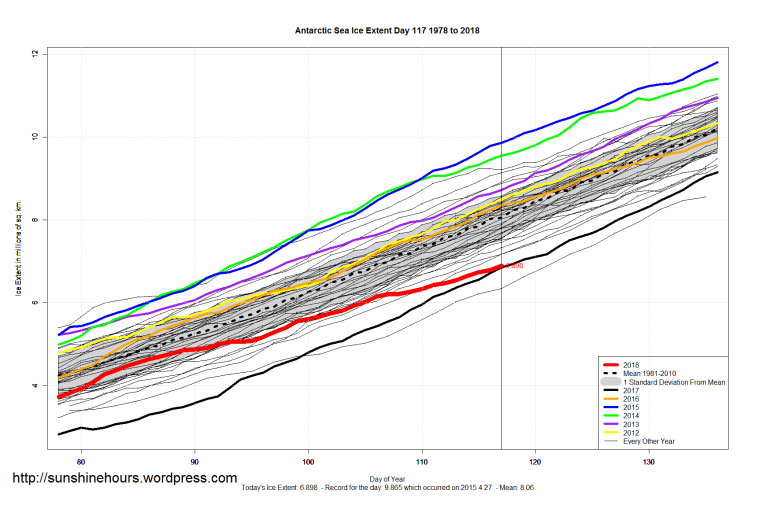
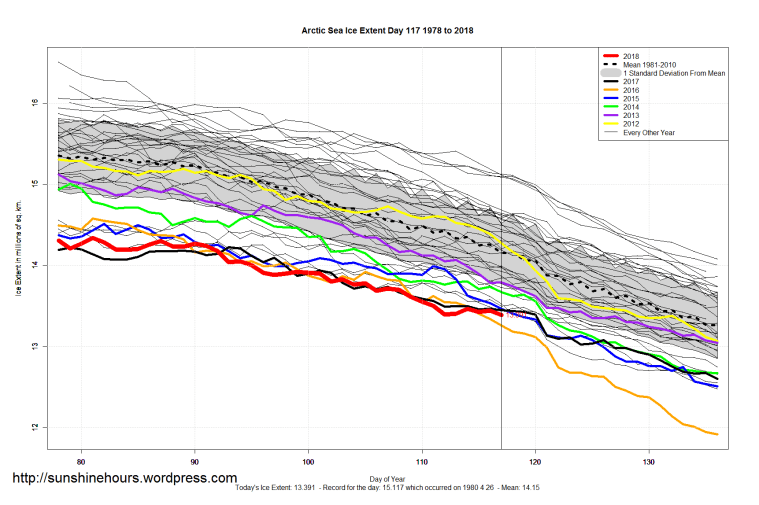
Sea Ice Extent (Global Antarctic and Arctic) – Day 117 – 2018
Sea Ice Extent (Global Antarctic and Arctic) – Day 116 – 2018
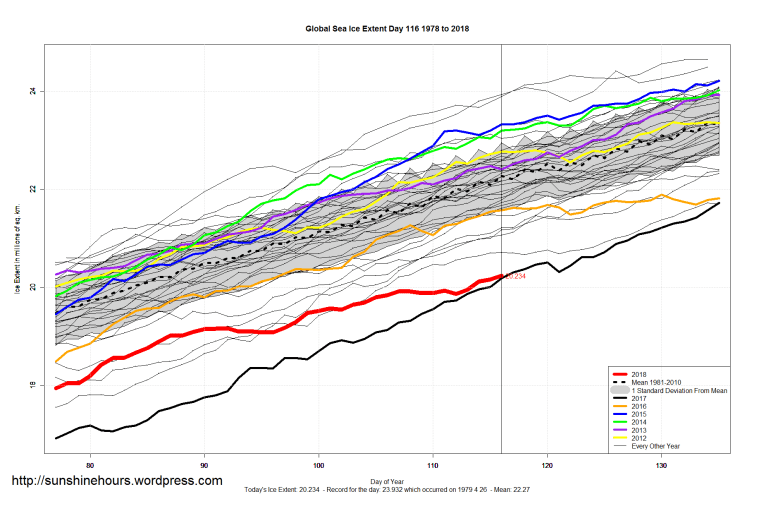

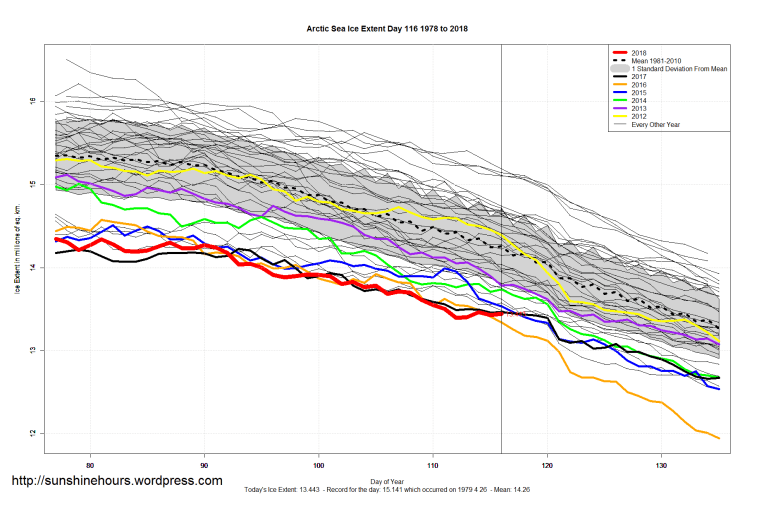
Sea Ice Extent (Global Antarctic and Arctic) – Day 115 – 2018
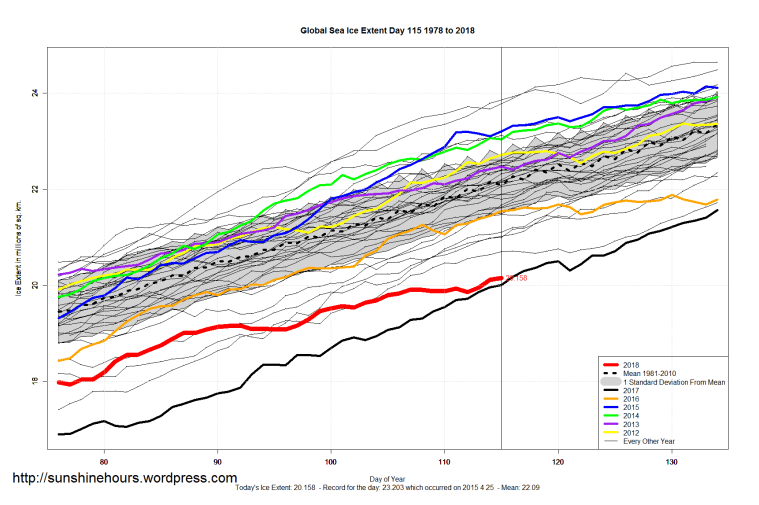
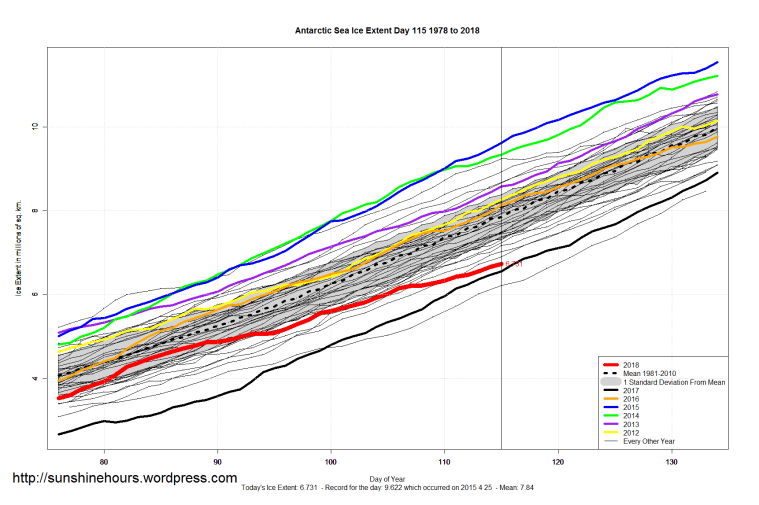
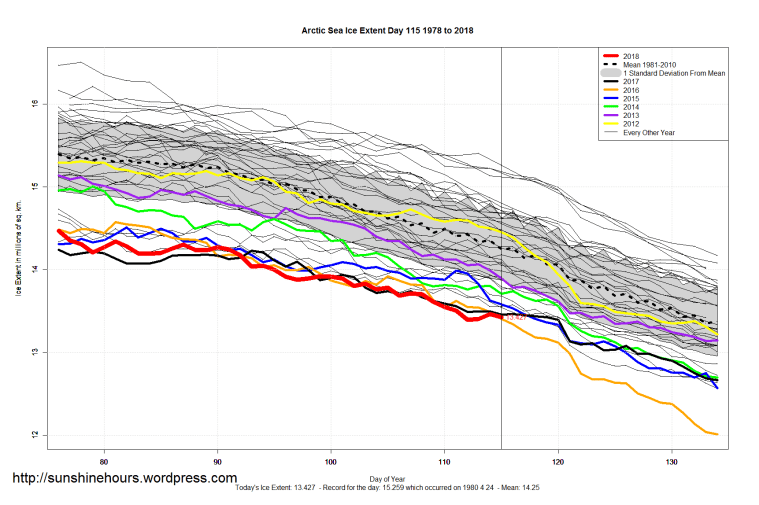
Sea Ice Extent (Global Antarctic and Arctic) – Day 114 – 2018
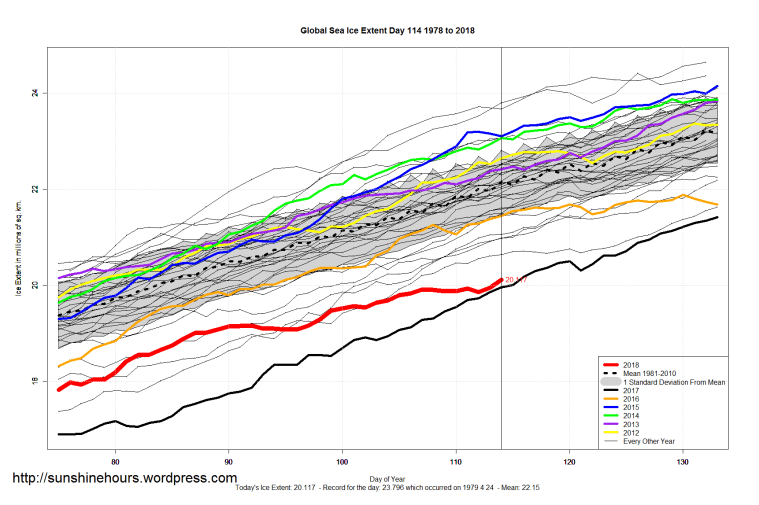
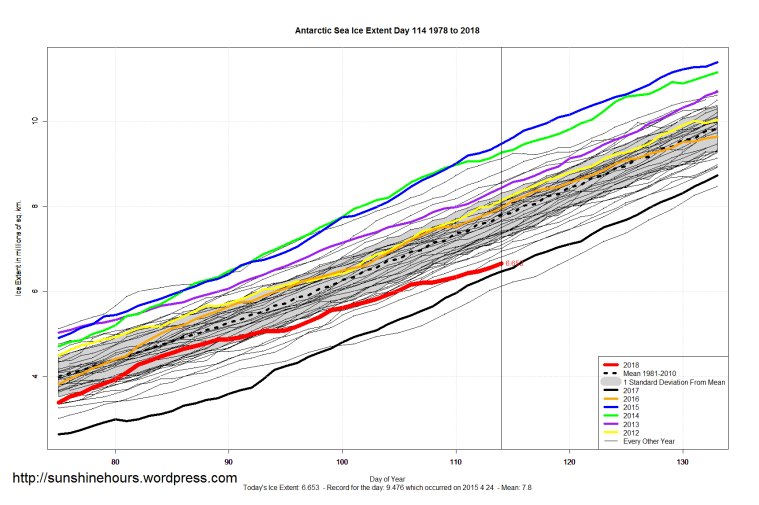
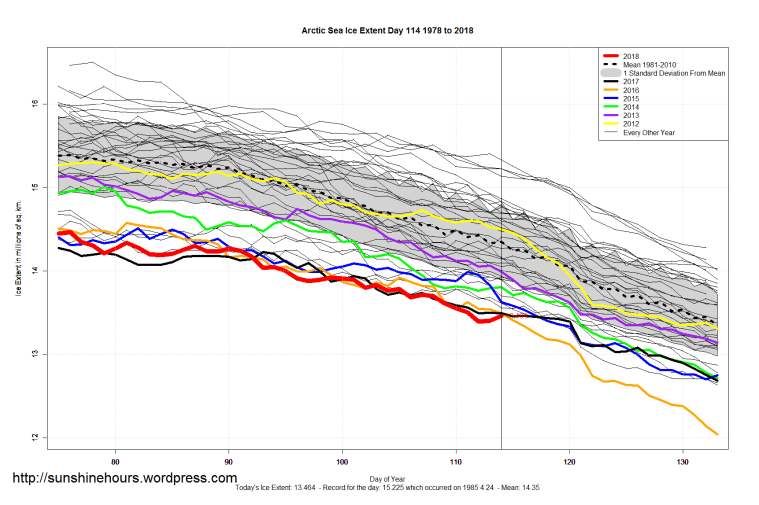
Waterspout
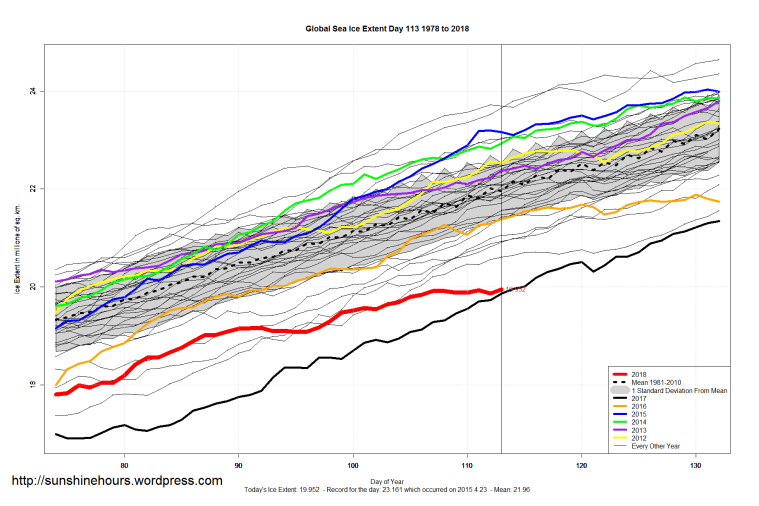
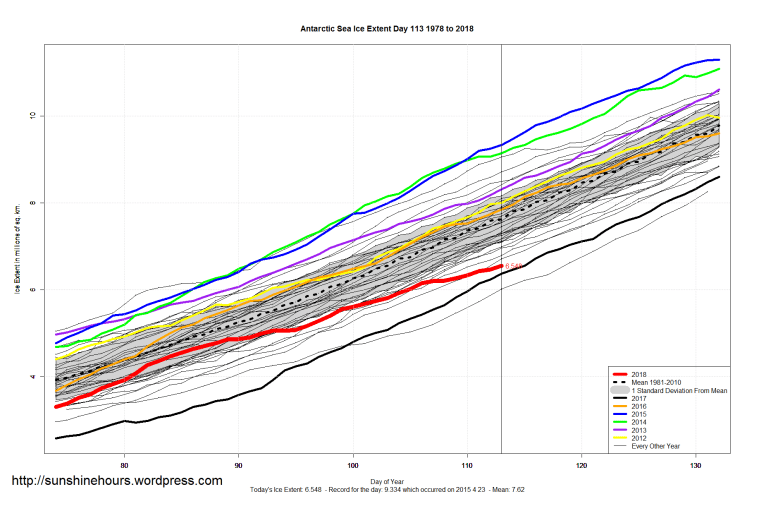
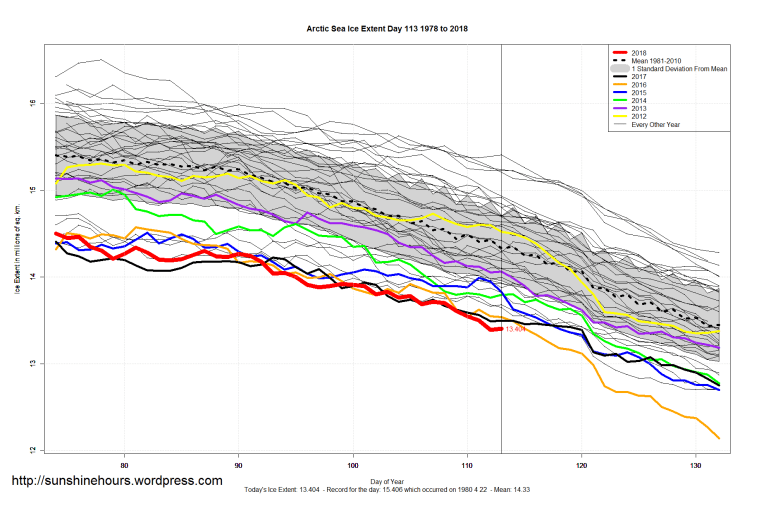
Sea Ice Extent (Global Antarctic and Arctic) – Day 113 – 2018
Polar Bears Are Doing Fine – Except For the Ones Who Are Shot
Polar Bears in northern Canada are doing fine.
Except for the ones shot and skinned and pelts shipped to Asia.
One of the people who oversees an Indigenous hunt of polar bears says the population is doing well, despite heart-wrenching photos online suggesting some bears are starving.
Every year, the Nunatsiavut government awards polar bear licences to Inuit hunters living in the northern Labrador settlement area.
The Inuit set a quota of 12 polar bears this winter. Nunatsiavut wildlife manager Jim Goudie said all 12 were taken within the first seven days of the season.

A 2007 study showed that there were roughly 2,150 bears in the Davis Strait region, which was nearly 1,300 more than previously thought. A new study is currently underway to determine if that trend has continued. (pbsg.npolar.no)
Goudie said it’s just the latest evidence that polar bears are on the rebound in northern Canada — a trend he said officials have been recording for years.
“There are lots of signs of bears,” he told CBC Radio’s Labrador Morning. “Lots of bears and a continuation of what we’ve seen over the last three or four years.”
Those who hunt bears are legally obligated to donate any meat they don’t use, but they are free to do what they want with the pelts.
Most opt to sell them to wealthy buyers from Canada to East Asia, and each pelt is embedded with a computer chip to prove it was acquired through a legal hunt.
http://www.cbc.ca/news/canada/newfoundland-labrador/polar-bear-population-hunt-nunatsiavut-1.4628156
 sunshine hours