
A 1922 newspaper. The article was dead wrong. Today's Arctic is melting news stories? Right or Wrong? I am confident they are just as wrong pic.twitter.com/gkHnt21LyQ
— John Coleman (@JohnColemanMRWX) November 30, 2016
This is interesting.
Researchers found that ice conditions in the 19th century were remarkably similar to today’s, observations falling within normal variability. The study is Accounts from 19th-century Canadian Arctic Explorers’ Logs Reflect Present Climate Conditions (here) by James E. Overland, Pacific Marine Environmental Laboratory/NOAA, Seattle,Wash., and Kevin Wood, Arctic Research Office/NOAA, Silver Spring, Md.
This article demonstrates the use of historical instrument and descriptive records to assess the hypothesis that environmental conditions observed by 19th-century explorers in the Canadian archipelago were consistent with a Little Ice Age as evident in proxy records. We find little evidence for extreme cold conditions.
It is clear that the first-hand observations of 19th-century explorers are not consistent with the hypothesized severe conditions of a multi-decadal Little Ice Age. Explorers encountered both warm and cool seasons, and generally typical ice conditions, in comparison to 20th-century norms.
Antarctic sea ice had barely changed from where it was 100 years ago, scientists have discovered, after pouring over the logbooks of great polar explorers such as Robert Falcon Scott and Ernest Shackleton.
Experts were concerned that ice at the South Pole had declined significantly since the 1950s, which they feared was driven by man-made climate change.
But new analysis suggests that conditions are now virtually identical to when the Terra Nova and Endurance sailed to the continent in the early 1900s, indicating that declines are part of a natural cycle and not the result of global warming.
(h/t https://notalotofpeopleknowthat.wordpress.com/)
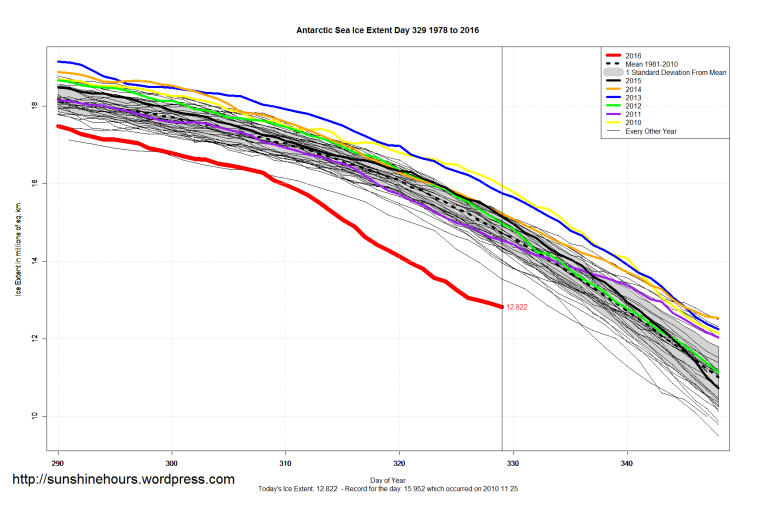
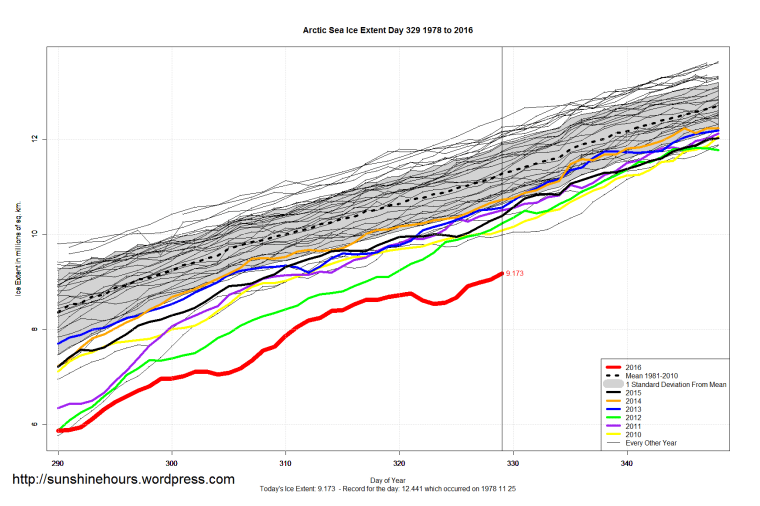
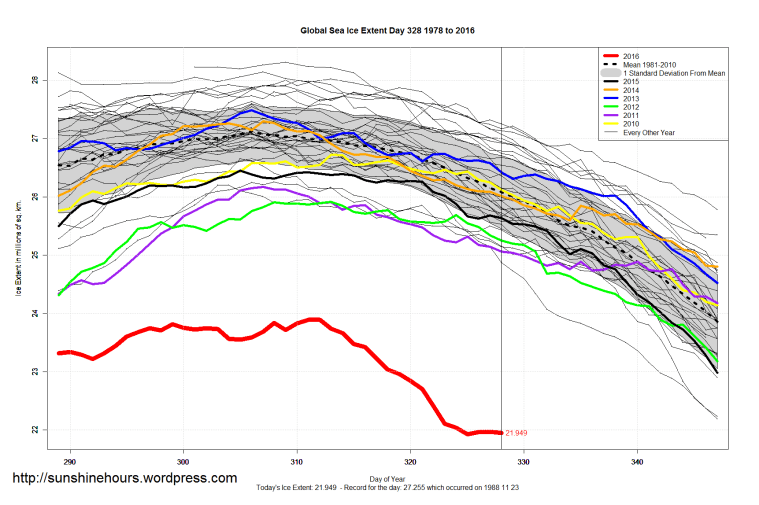
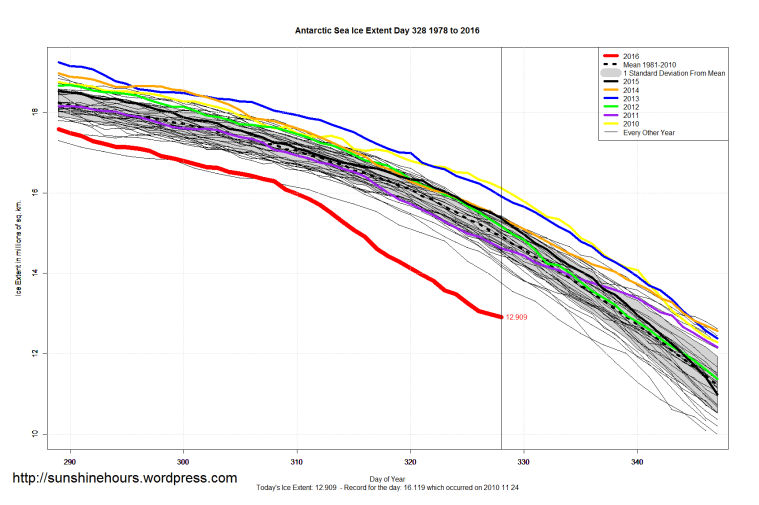
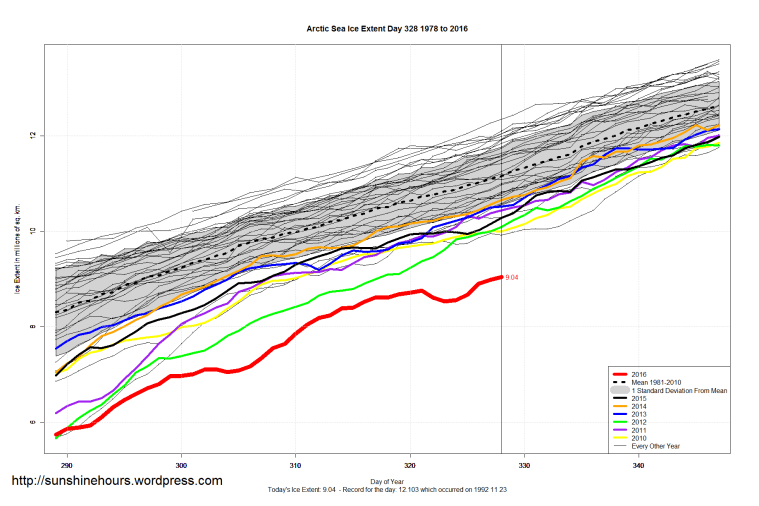
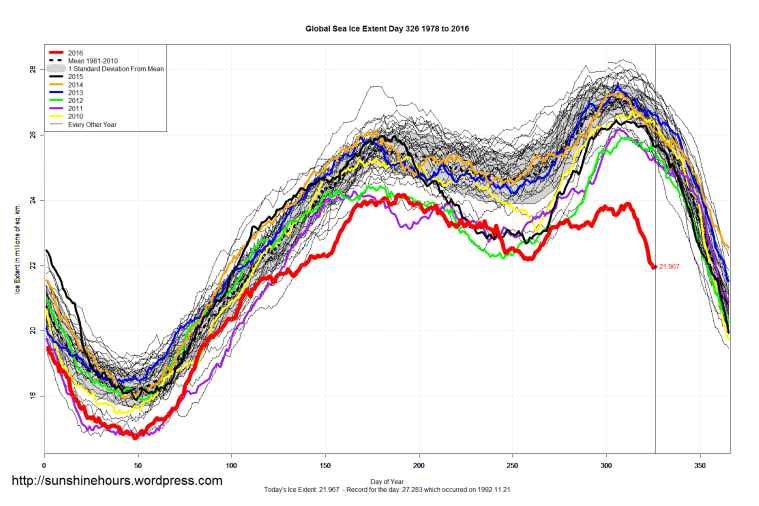
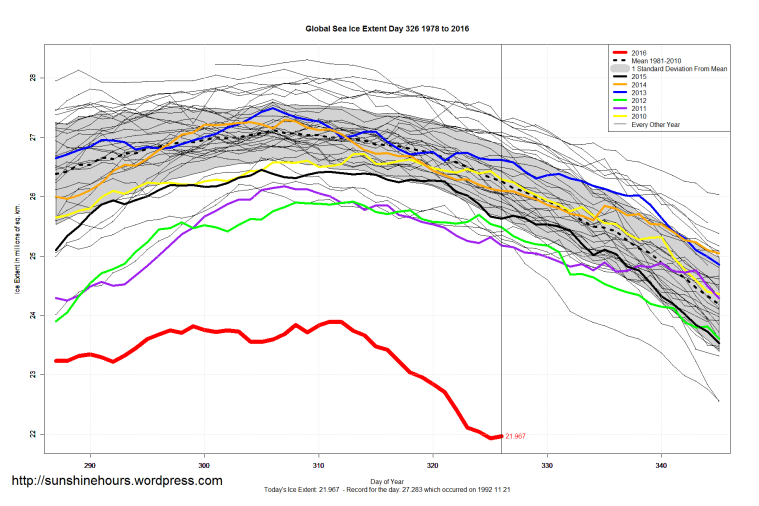
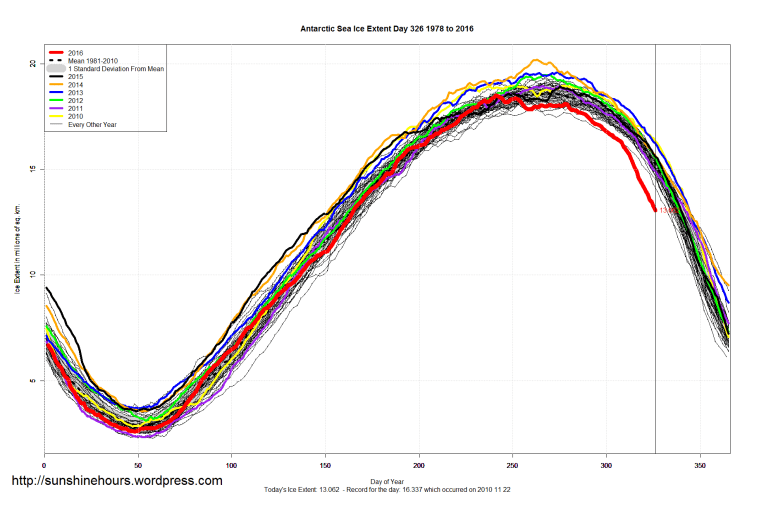
Update: You might ask why don’t I publish JAXA data. The data page now just redirects to a twitter page with this:

Excerpt from June 14 2016 statement from NSIDC:
“On 05 April 2016, the vertically polarized 37 GHz (37V) channel of the SSMIS instrument on the DMSP-F17 satellite began yielding compromised brightness temperature data. This channel is one of those used to estimate sea ice concentration shown in the Sea Ice Index, so data processing was temporarily suspended.
NOAA@NSIDC is pleased to announce that, today, Sea Ice Index processing has resumed and the time series now uses the SSMIS instrument on the DMSP-F18 satellite beginning 01 April 2016. These sea ice concentration values come from the NSIDC Near-Real-Time DMSP SSMIS Daily Polar Gridded Sea Ice Concentrations product. Prior to transitioning this near-real-time data set to the F18 SSMIS instrument, NSIDC investigated whether or not algorithm parameters would need to be calibrated to minimize the difference between sea ice extents derived from F17 and F18.
Because each sensor and spacecraft orbit is slightly different, algorithm parameters called tie points sometimes need adjustments so that the time series is consistent. Inconsistencies would be marked by sudden false jumps or drops in derived ice extent at the point when the algorithm started using data from the new instrument.“
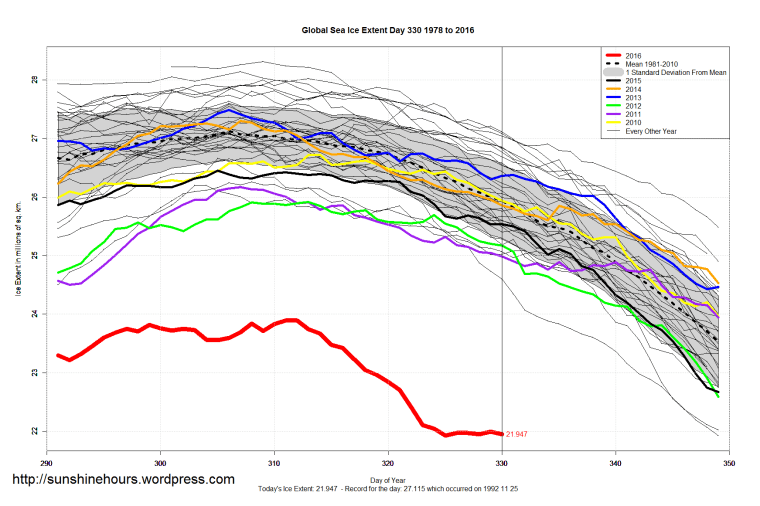
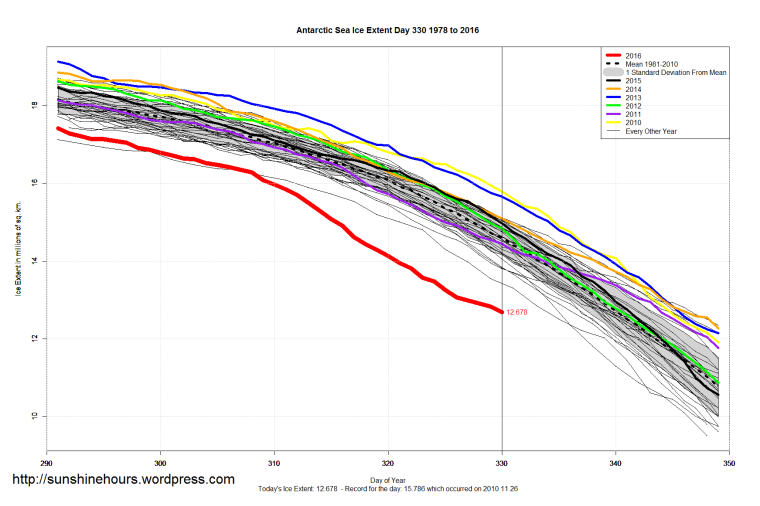
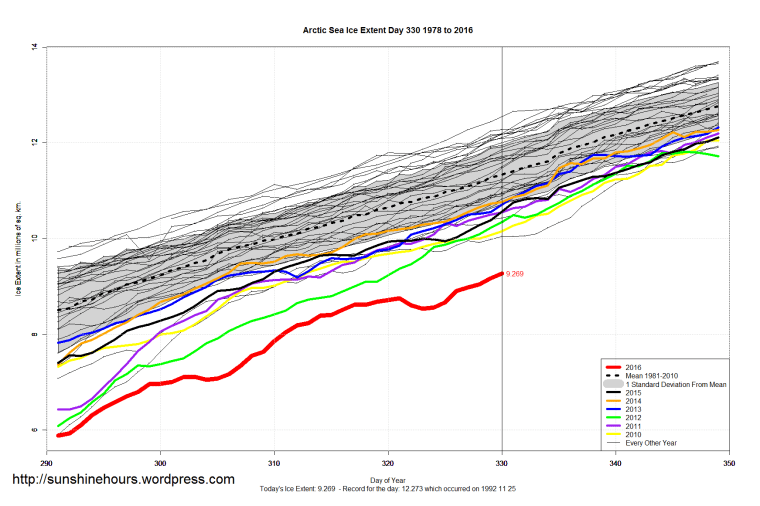
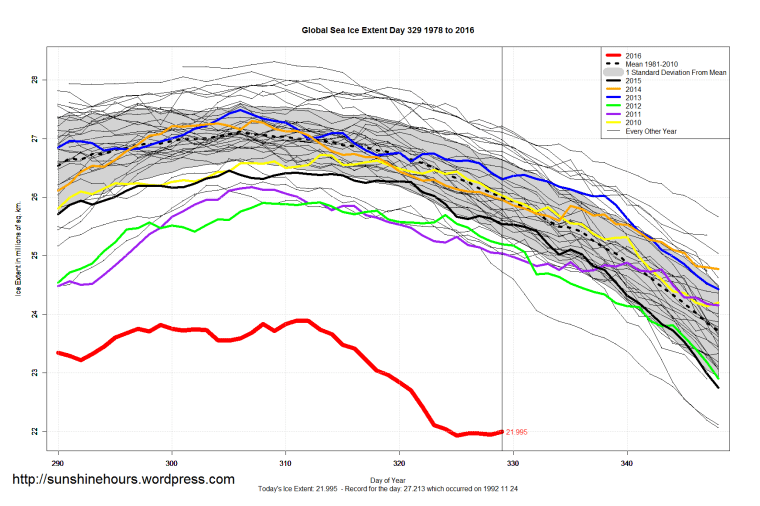
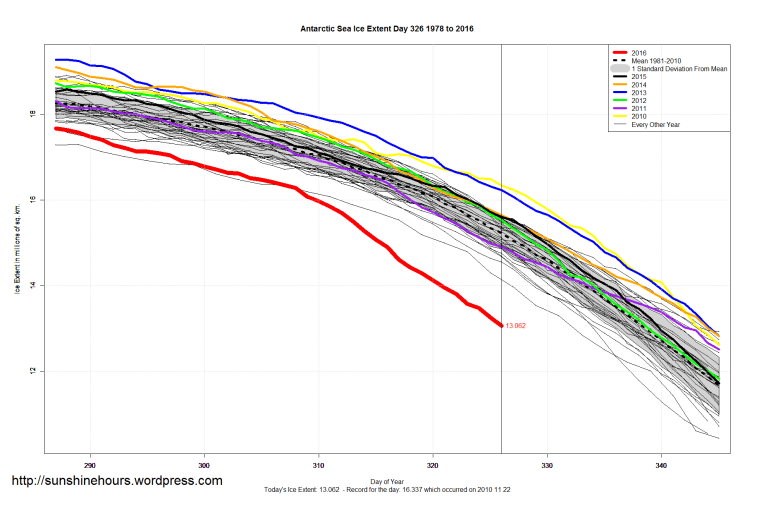
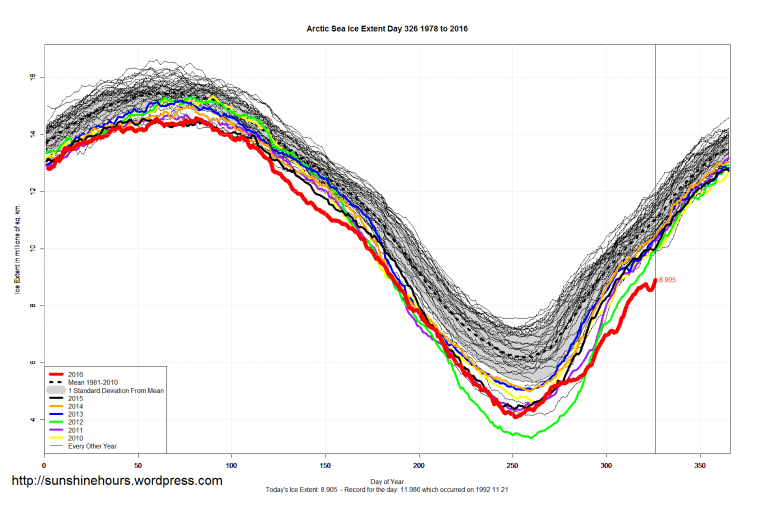
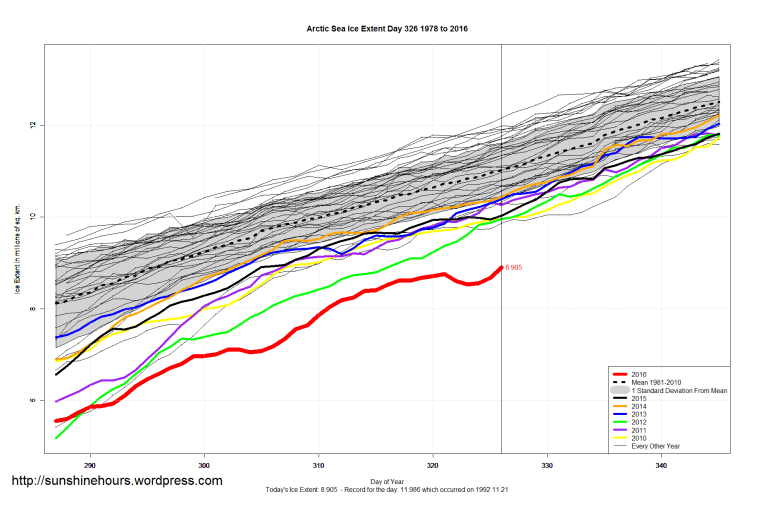
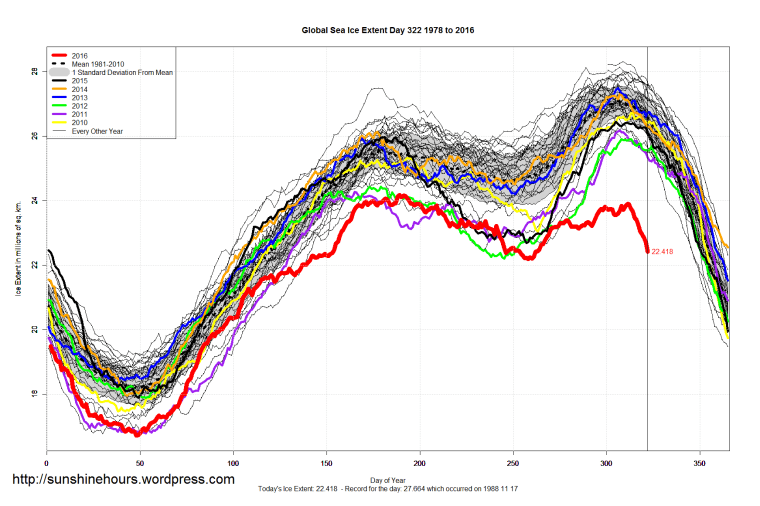
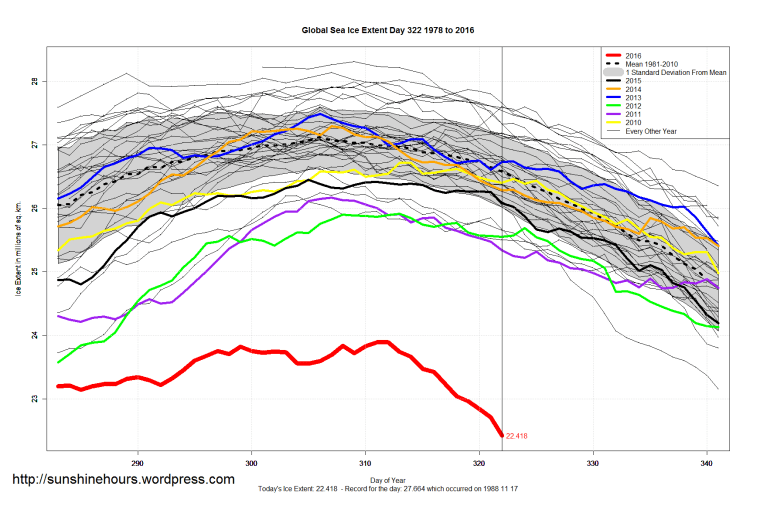
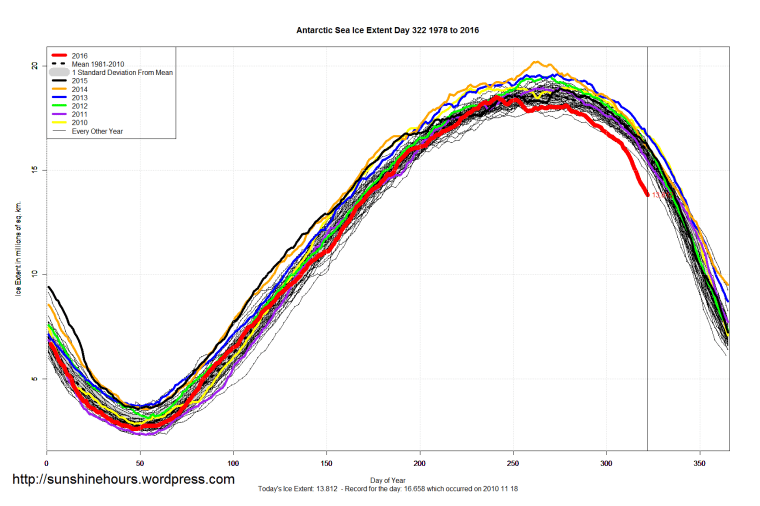
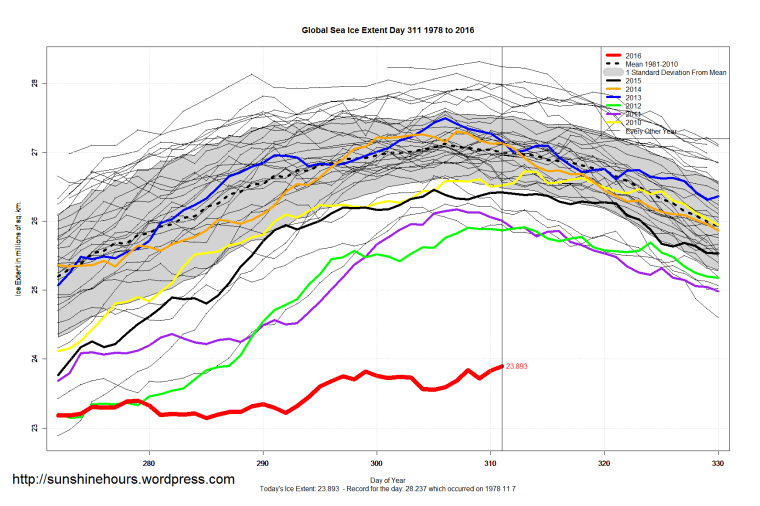
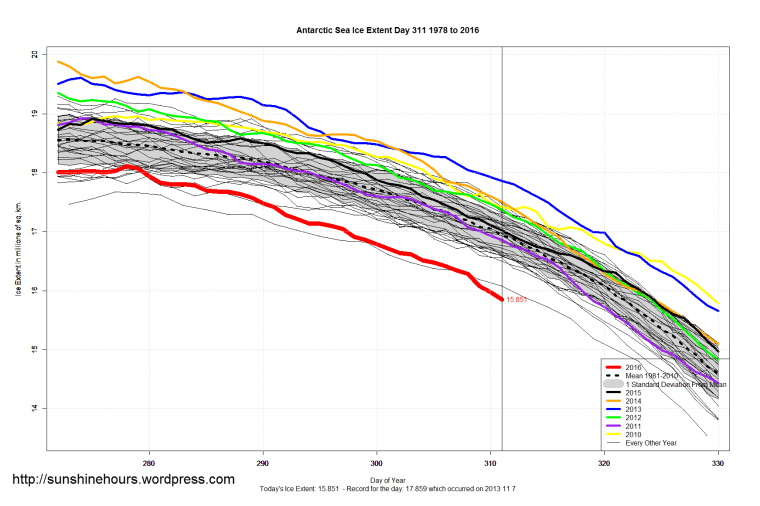
I’m starting to think that F18 isn’t working right. The data just looks so wrong.



 sunshine hours