

From DMI
From DMI
Thats a lot of money.
The cabinet has admitted it used old figures when calculating the impact of energy tax hikes and underestimated the impact on families. On Monday, the national statistics agency CBS said the average household energy bill would go up by some €334 this year, more than double the earlier government estimate of €150. However, economic affairs ministry officials now say they used statistics on energy consumption from 2017, which underestimated the amount of gas and electricity households actually use, much to the fury of MPs. ‘This is undermining trust in the government,’ Labour MP William Moorlag said. ‘It would appear that spending power estimates are based on mathematical models designed by magician Hans Klok.’
The ministry spokesman told the AD that Dutch environmental assessment agency staff were too busy working on plans to tackle climate change to come up with specific estimates last year. In addition, the agency and the CBS use different definitions of what constitutes the average household, the spokesman said. The price of gas and electricity has been pushed up by higher levies on CO2 emissions and the accelerated scaling back of gas extraction in Groningen, as well as a €50 rise in the amount households contribute towards sustainable energy subsidies (ODE).
Read more at DutchNews.nl:
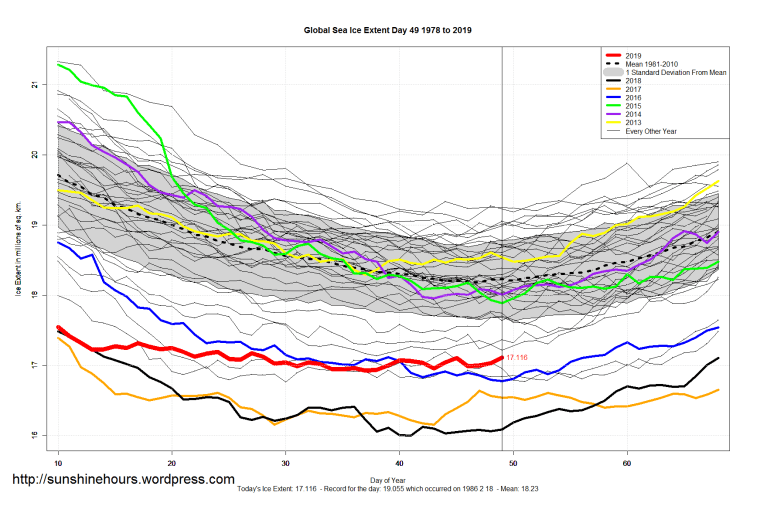
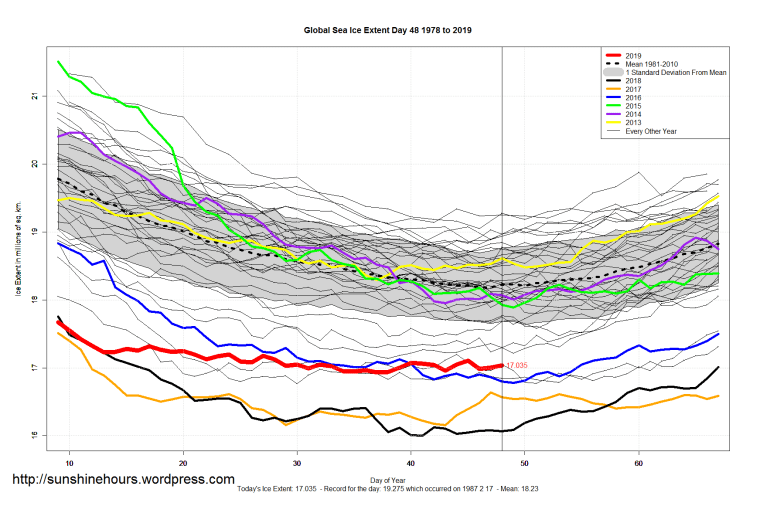
Yesterday I did the Antarctic Minimum. I should have done Global first because it occurred on day 37. 2019 is the 6th lowest and 2nd earliest. (However global is fluctuating enough that it might set a lower minimum)
| Year | Min | Max | dMax | dMin | Avg_Anomaly |
| 2018 | 16 | 25.297 | 308 | 41 | -1.999859551707 |
| 2017 | 16.159 | 25.514 | 301 | 43 | -2.122856811981 |
| 2006 | 16.766 | 27.121 | 298 | 30 | -1.030958181844 |
| 2016 | 16.782 | 24.34 | 189 | 49 | -1.891595298443 |
| 2011 | 16.789 | 26.173 | 307 | 53 | -1.28041571609 |
| 2019 | 16.931 | 37 | |||
| 2005 | 17.137 | 27.383 | 308 | 38 | -0.66262941472 |
| 2007 | 17.238 | 26.257 | 308 | 47 | -1.103281469515 |
| 2010 | 17.467 | 26.72 | 313 | 38 | -0.446300647597 |
| 2009 | 17.471 | 26.2 | 303 | 53 | -0.283922565405 |
| 2000 | 17.642 | 26.972 | 302 | 49 | -0.001786555273 |
| 1997 | 17.705 | 27.047 | 310 | 57 | -0.206818455816 |
| 1984 | 17.784 | 27.234 | 316 | 40 | 0.104608166493 |
| 1996 | 17.844 | 27.505 | 293 | 57 | 0.352727105929 |
| 1993 | 17.877 | 27.994 | 310 | 57 | 0.078507571581 |
| 2012 | 17.891 | 25.914 | 313 | 53 | -0.846652675492 |
| 2015 | 17.891 | 26.453 | 305 | 49 | -0.284566401022 |
| 2014 | 17.957 | 27.3 | 307 | 43 | 0.302137708567 |
| 1985 | 17.97 | 27.636 | 306 | 50 | 0.348808166303 |
| 1999 | 17.983 | 27.626 | 295 | 62 | 0.187663735965 |
| 1991 | 18.003 | 27.067 | 291 | 63 | 0.029647297608 |
| 1992 | 18.013 | 27.608 | 322 | 60 | 0.251910166038 |
| 1989 | 18.038 | 27.536 | 299 | 48 | 0.128050037334 |
| 2002 | 18.123 | 26.83 | 297 | 55 | -0.680010236638 |
| 1988 | 18.197 | 27.872 | 319 | 45 | 0.415307757873 |
| 1981 | 18.245 | 27.531 | 291 | 45 | 0.294626749663 |
| 2013 | 18.295 | 27.49 | 306 | 37 | 0.156236338704 |
| 2004 | 18.341 | 27.094 | 316 | 51 | -0.055256500629 |
| 1990 | 18.407 | 27.407 | 294 | 46 | -0.161048592803 |
| 2008 | 18.488 | 27.312 | 310 | 46 | -0.039934096257 |
| 1998 | 18.521 | 27.603 | 297 | 47 | 0.231269215417 |
| 1995 | 18.543 | 27.135 | 306 | 45 | -0.054618455816 |
| 1995 | 18.543 | 27.135 | 306 | 46 | -0.054618455816 |
| 1980 | 18.59 | 28.145 | 307 | 57 | 0.314510311307 |
| 2001 | 18.602 | 26.748 | 319 | 38 | 0.00815688665 |
| 1994 | 18.614 | 28 | 309 | 47 | 0.520803461992 |
| 2003 | 18.781 | 27.105 | 306 | 37 | 0.1020253798 |
| 1982 | 18.819 | 27.871 | 302 | 42 | 0.827232408727 |
| 1983 | 18.848 | 27.911 | 307 | 41 | 0.448918530485 |
| 1986 | 18.863 | 27.019 | 317 | 45 | 0.020082914047 |
| 1987 | 19.055 | 27.157 | 317 | 46 | 0.429053635272 |
| 1979 | 19.127 | 27.49 | 178 | 38 | 0.768569874292 |
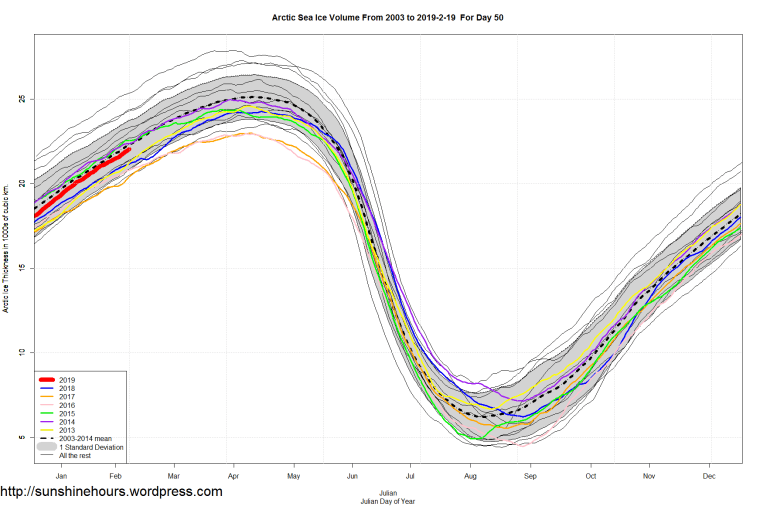
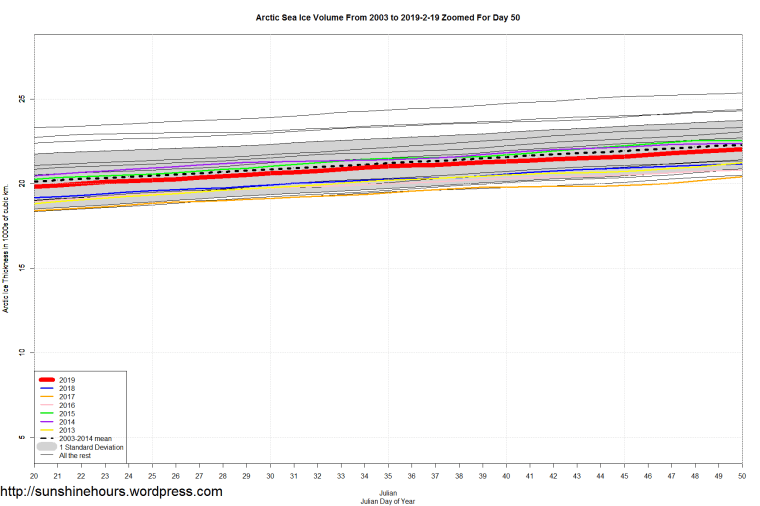
From DMI
UPDATE: The post was premature. It may be day 59.
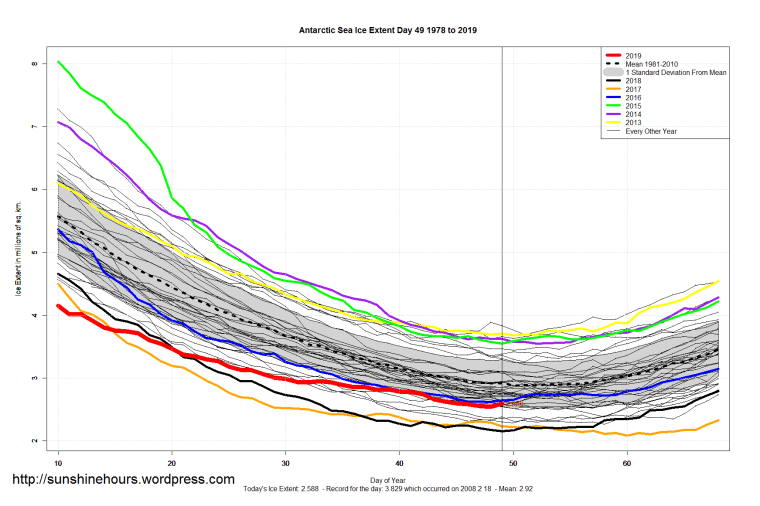
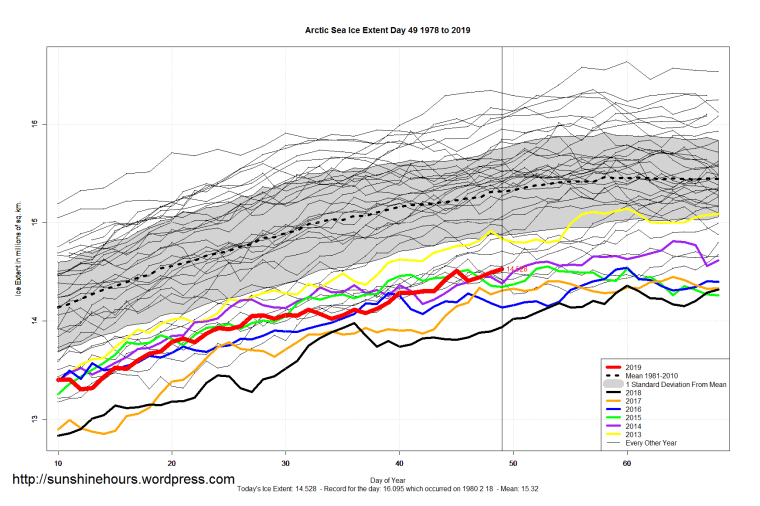
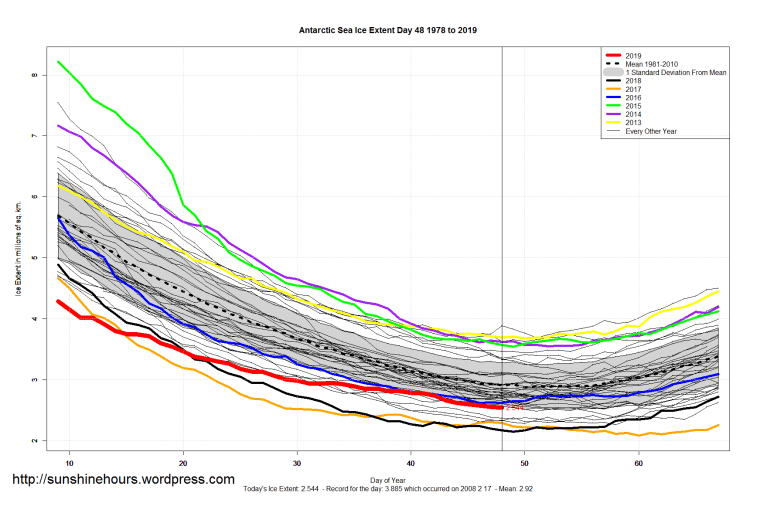
Antarctic minimum is approaching (or may have occurred) 2017 and 2018 were lowest minimums. 2019 is 10th lowest (although that may change a bit).
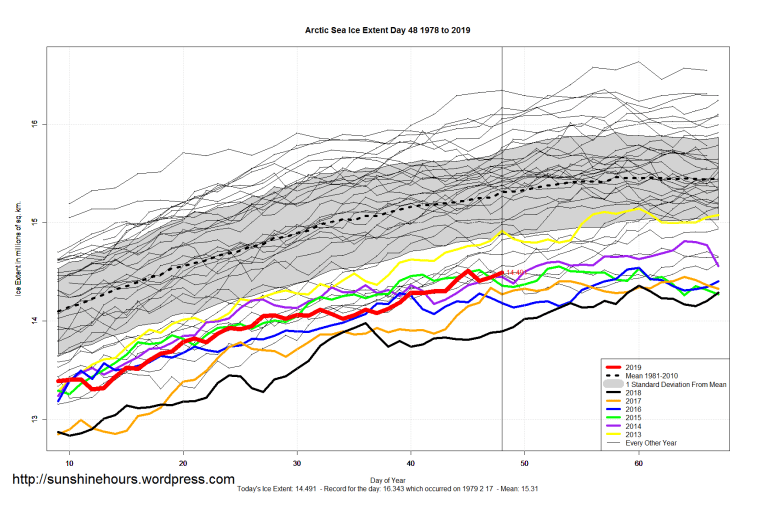
That kind of oscillation is “normal” and getting larger. The oscillation graph is just Day 49 but thats close to the normal day of min.
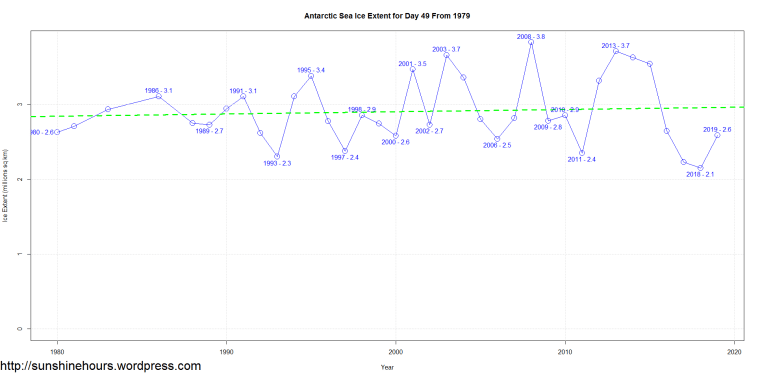
| Year | Min | Max | day of Max | day of Min | Avg_Anomaly |
| 2017 | 2.08 | 18.145 | 282 | 60 | -0.904021753581 |
| 2018 | 2.15 | 18.222 | 273 | 49 | -0.715287507005 |
| 1997 | 2.264 | 18.792 | 265 | 58 | -0.262895726184 |
| 1993 | 2.281 | 18.71 | 263 | 50 | -0.233008054951 |
| 2011 | 2.319 | 18.954 | 266 | 53 | -0.152375178238 |
| 1984 | 2.382 | 18.37 | 266 | 58 | -0.20397636284 |
| 2006 | 2.487 | 19.36 | 264 | 51 | -0.192035452211 |
| 1992 | 2.492 | 18.467 | 255 | 54 | -0.241630203122 |
| 1980 | 2.521 | 19.092 | 267 | 57 | -0.390551802967 |
| 2019 | 2.544 | 48 | |||
| 1991 | 2.554 | 18.671 | 273 | 58 | -0.108073808375 |
| 2000 | 2.582 | 19.159 | 272 | 49 | 0.106979086495 |
| 1996 | 2.597 | 18.831 | 267 | 56 | 0.12888072584 |
| 1985 | 2.602 | 18.931 | 254 | 50 | -0.045367912714 |
| 2016 | 2.616 | 18.581 | 242 | 48 | -0.438132935363 |
| 1988 | 2.639 | 18.785 | 277 | 55 | -0.142789879716 |
| 2009 | 2.671 | 19.299 | 267 | 53 | 0.395643999844 |
| 1981 | 2.694 | 18.856 | 261 | 51 | -0.210032677284 |
| 2002 | 2.697 | 18.116 | 252 | 51 | -0.4313395618 |
| 1999 | 2.707 | 18.981 | 273 | 51 | 0.107734410803 |
| 1989 | 2.723 | 18.274 | 266 | 51 | -0.227268328923 |
| 2007 | 2.723 | 19.086 | 272 | 50 | 0.034159068337 |
| 1998 | 2.772 | 19.244 | 258 | 56 | 0.085424821762 |
| 1990 | 2.784 | 18.379 | 273 | 53 | -0.24335326043 |
| 2005 | 2.804 | 19.295 | 272 | 49 | 0.041931671077 |
| 2010 | 2.842 | 18.998 | 249 | 47 | 0.453843999844 |
| 1983 | 2.843 | 18.811 | 263 | 55 | -0.256928852148 |
| 1982 | 2.89 | 18.55 | 246 | 54 | -0.021131648978 |
| 1979 | 2.911 | 18.361 | 256 | 48 | 0.039939779594 |
| 1986 | 2.953 | 18.027 | 261 | 65 | -0.555519016082 |
| 1987 | 3.01 | 18.524 | 258 | 52 | -0.249198161098 |
| 1994 | 3.083 | 18.827 | 243 | 43 | 0.121022082036 |
| 2012 | 3.111 | 19.478 | 266 | 54 | 0.364189469009 |
| 2004 | 3.259 | 19.124 | 252 | 51 | 0.321249578299 |
| 1995 | 3.33 | 18.762 | 269 | 55 | 0.141808383406 |
| 2001 | 3.441 | 18.494 | 271 | 50 | 0.019676876556 |
| 2015 | 3.544 | 18.912 | 275 | 49 | 0.761153588885 |
| 2014 | 3.548 | 20.201 | 263 | 52 | 1.123178246419 |
| 2003 | 3.626 | 18.68 | 268 | 48 | 0.316339890255 |
| 2013 | 3.679 | 19.608 | 274 | 50 | 0.870657698474 |
| 2008 | 3.692 | 18.298 | 247 | 51 | 0.599159414364 |
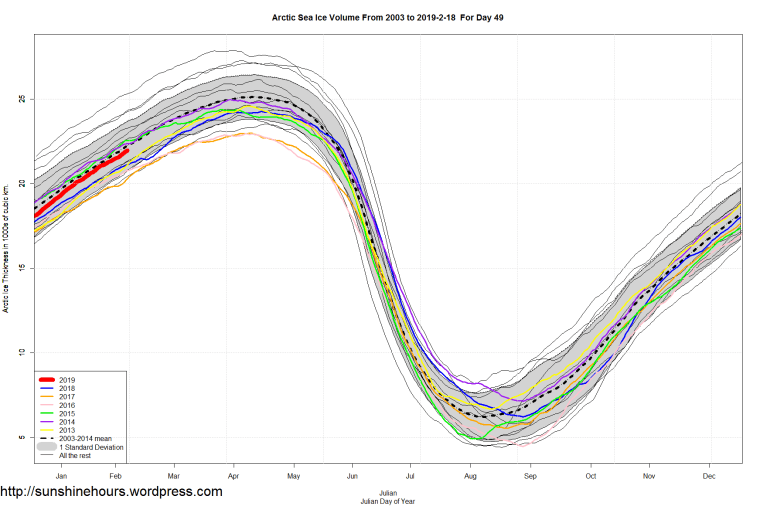
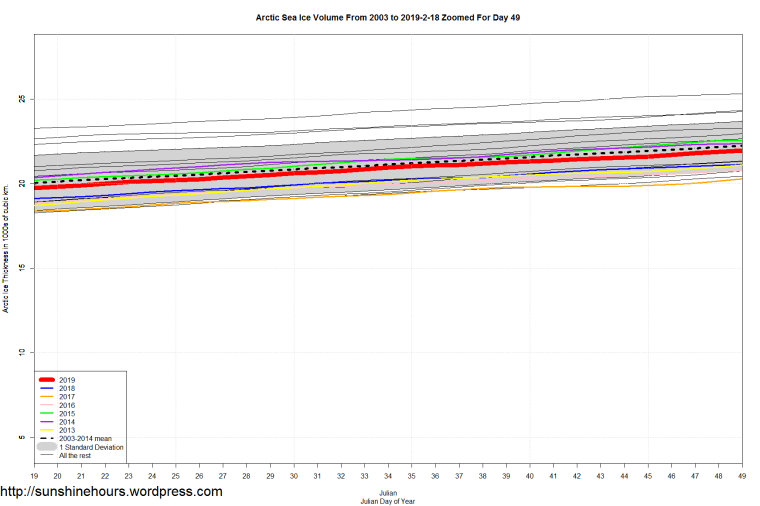
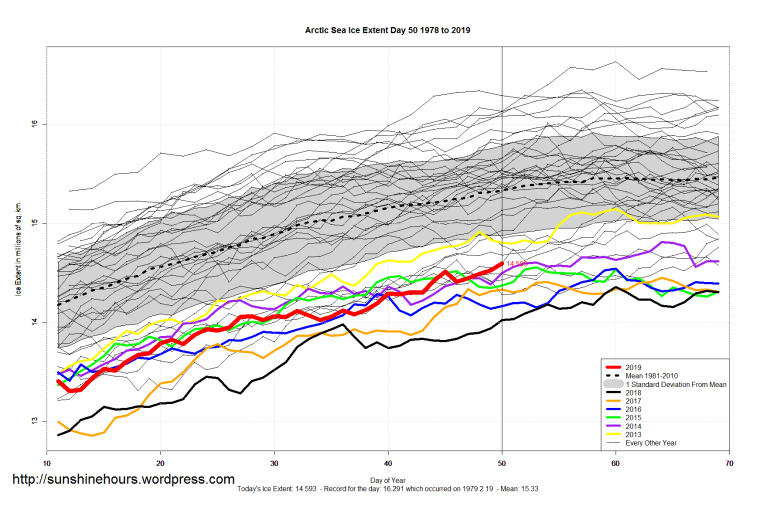
From DMI
Oh No!!!! (This is soooo damaging to the “Experts” claim that PM 2.5 is bad for you)

 Burnt toast could expose people to more toxic air than if they were standing near a busy road, and cooking a Sunday roast can raise pollution levels to above those in city centres, research suggests.
Experts found pollutant levels after cooking a roast turkey – with trimmings – were 13 times higher than those in central London.
And toasting two slices of bread caused twice as much air pollution as is seen in the city for 15 to 20 minutes – meaning three times the World Health Organisation’s safety limit.
Experts issued a public warning to families to open windows and turn on extractor fans to avoid exposure to dangerous levels of toxic airborne particles – which can trigger breathing problems and pose risks to the heart and circulation.


 sunshine hours