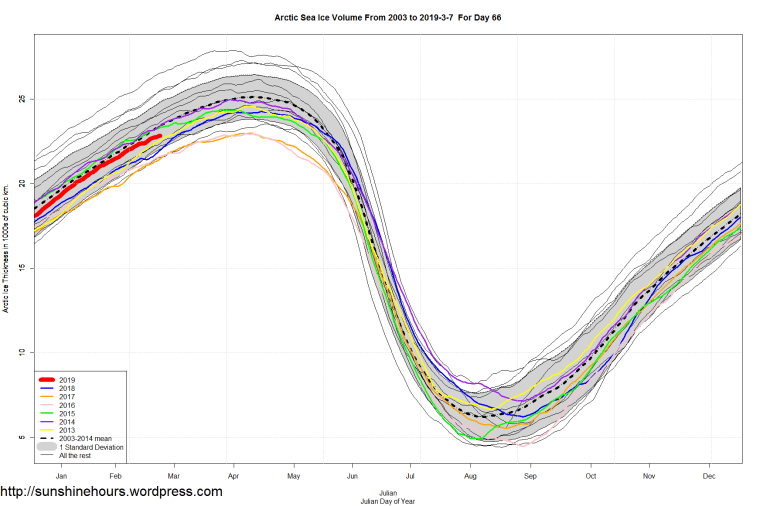

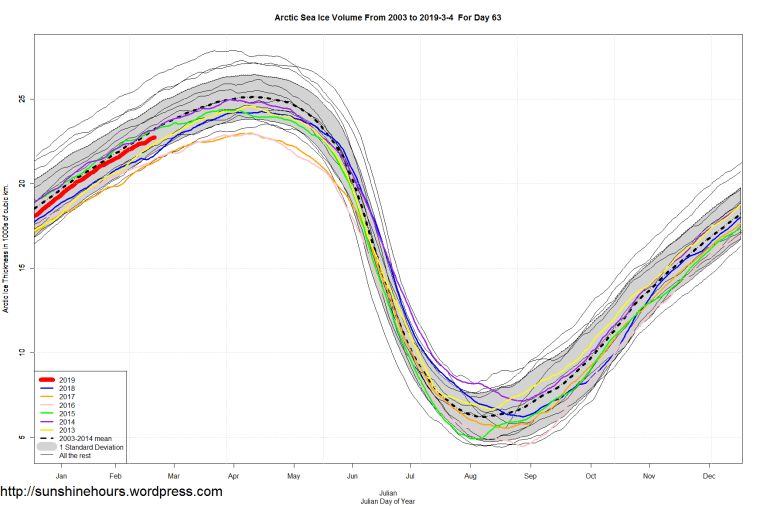
From DMI
From DMI
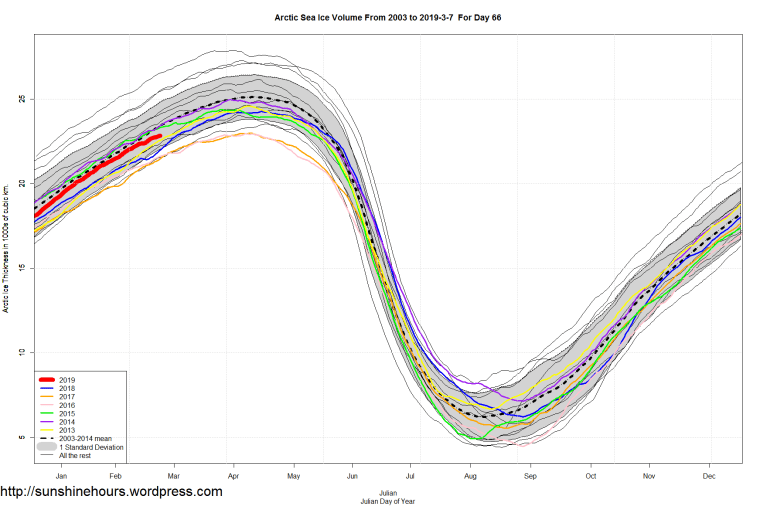

From DMI
I’m amazed the word climate change isn’t in this article.
The homes we live in and the food we eat might contain chemicals that reduce male fertility – and that goes for both men and their dogs, new research suggests.
Recently, experts have grown ever more worried by what appears to be a ‘shocking‘ drop in human male fertility.
According to the team behind the latest research, some studies show that in the past 80 years alone, there has been a 50 percent global reduction in sperm quality, and no one can figure out why this is happening.
Then, we looked at dogs – and this could be an important clue. In 2016, a team at the University of Nottingham found that sperm quality had also taken a plummet in domestic dogs over the course of several decades.
Unlike the research on humans, this time the scientists could trace back the sperm quality decrease to dangerous chemicals in the dogs’ environment and food.
The results had the team curious: did this mean there was something in the shared environment of dogs and people that was to blame?
Their new research certainly suggests this might be the case. Specifically, the team identified two human-made chemicals, commonly found in homes and diets, that had the same adverse effects on both human sperm and dog sperm.
“This new study supports our theory that the domestic dog is indeed a ‘sentinel’ or mirror for human male reproductive decline,” says Richard Lea, a reproductive biologist at the University of Nottingham.
Using sperm samples from 11 men and 9 dogs in the same region, the researchers tested the effects of two human-made chemicals. One was the common plasticiser DEHP, which is commonly found in carpets, flooring, clothes and toys, and which can leach into our food and drink.
The other is polychlorinated biphenyl 153 (PB153), which belongs to a group of industrial chemicals found to be persistent organic pollutants in the 1960s and 70s.
Using the sperm samples and these two chemicals at concentration levels that are commonly found in our current environments, the researchers carried out identical experiments for the men and the dogs. In both subjects and with both chemicals, the effect was reduced sperm motility and increased fragmentation of DNA.
Read the rest here

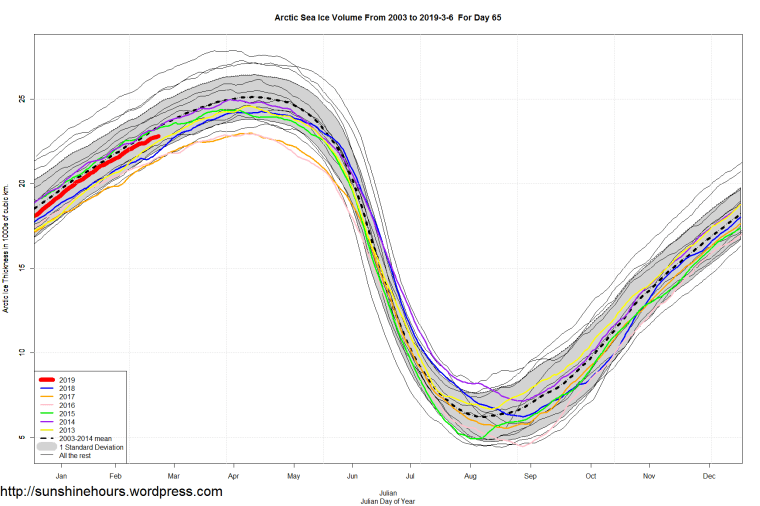
From DMI
It ain’t easy being green.
Campaigners are seeking to stop the EU counting wood as a renewable energy source, in a lawsuit which has been filed at the Court of Justice.
Plaintiffs from six European countries and the US argue that burning biomass for heat and power is a false solution to climate change. The EU Renewable Energy Directive promotes logging of ancient forests, according to the brief, contravening the bloc’s higher principles and individuals’ rights.
The suit challenges a major plank of efforts to generate 32 percent of EU energy from renewable sources by 2030. Nearly two thirds of EU renewables come from various forms of bioenergy, with more projects in planning.
Carbon sinks
“We are burning up our forest carbon sink and injecting it into the atmosphere,” said Mary Booth, lead science advisor to the case and president of the US-based Partnership for Policy Integrity.
“There is forest biomass being shipped thousands of miles to meet biomass demand in the EU. We think that needs to stop.”
At the point where it is burned, wood emits more carbon dioxide than coal. However, the EU treats wood burning as carbon neutral, on the basis trees will grow back, absorbing carbon dioxide from the air.
A spokesperson for the European Commission climate change division would not comment on the legal merits of the case.
The commission’s policy framework aimed to guarantee “sustainable development of bioenergy, while at the same time enhancing the role of land and forests as carbon sinks,” she said.
Renewables
That was endorsed by member states and the European Parliament when they adopted the directive last year.
Carbon accounting of forest management has long been fraught with controversy, as scientists like Booth warn it does not reflect the true climate impact. Instead of being harvested, she said in a press call, trees should be allowed to mature and store carbon.
The plaintiffs will also raise concerns about damage to biodiversity, cultural heritage and human health in their regions. These range from the deterioration of peat bogs in Ireland to threats to Estonia’s pagan religious traditions.
From a legal perspective, counsel Peter Lockley explained, the case needed to demonstrate the renewables directive clashes with higher law – enshrined in the Treaty on the Functioning of the European Union – in a way that directly concerned individuals.
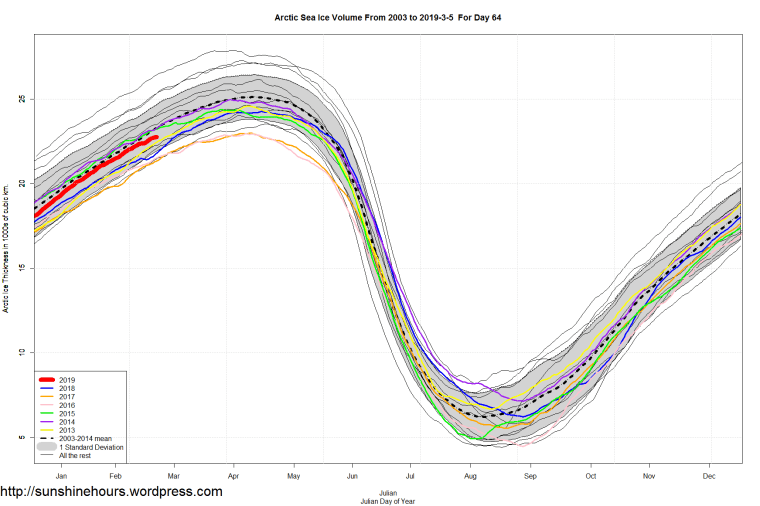

From DMI
Good article!
Not being a climatologist myself, I’ve always had trouble deciding between these arguments. And then I met Judith Curry at her home in Reno, Nevada. Curry is a true climatologist. She once headed the department of earth and atmospheric sciences at the Georgia Institute of Technology, until she gave up on the academy so that she could express herself independently. “Independence of mind and climatology have become incompatible,” she says. Do you mean that global warming isn’t real? I ask. “There is warming, but we don’t really understand its causes,” she says. “The human factor and carbon dioxide, in particular, contribute to warming, but how much is the subject of intense scientific debate.”
…
In 2005, I had a conversation with Rajendra Pachauri, an Indian railway engineer, who remade himself into a climatologist and became director of the IPCC, which received the 2007 Nobel Peace Prize under his tenure. Pachauri told me, without embarrassment, that, at the UN, he recruited only climatologists convinced of the carbon-dioxide warming explanation, excluding all others. This extraordinary collusion today allows politicians and commentators to declare that “science says that” carbon dioxide is to blame for global warming, or that a “scientific consensus” exists on warming, implying that no further study is needed—something that makes zero sense on its face, as scientific research is not based on consensus but on contradictory views.
Read the rest

From DMI
Nukes to the rescue.
“low stream flows, high natural gas prices and the very cold weather and low wind.”
RICHLAND, WA
For most of the month of February the Northwest’s only nuclear power plant has been under a “no touch” order to help keep the heat on across the region.
The Bonneville Power Administration, which markets the electricity produced at the nuclear plant near Richland, asked for the restriction during an unusually cold February across the state that increased the demand for electricity.
The policy limits any maintenance activity that would either require a reduction in power or would pose a risk to sustaining 100 percent production, said Mike Paoli, spokesman for Energy Northwest.
“No touch” is occasionally requested by BPA when unusually hot or cold weather increases demand for electricity.
For instance, in August 2017 the nuclear power plant was under the policy for about a week.

But in February the plant was under a no touch policy for 23 of the past 26 days.
It restricted maintenance activities not only at the nuclear reactor, but also on its turbine generator and in the transformer yard.
The exception was for an hour or so on Feb. 16 when BPA agreed that it would be a good idea to do one of the periodically scheduled nuclear plant control rod adjustments.
Although the plant powered down by 30 percent, the change helped optimize power production, Paoli said.
Columbia Generating Station has the capability to produce 1,207 megawatts, which is typically enough energy to power Seattle and part of its metro area. It is the third largest electricity generator in the state.
The nuclear plant helps protect BPA from having to go out on the open market to buy power, said David Wilson, a BPA spokesman.
“We asked them for the “no touch order,” because of low stream flows, high natural gas prices and the very cold weather,” he told the Herald.
The cold snap comes as water flows that spin dam turbines are low and wind generation is not at peak production.
 sunshine hours