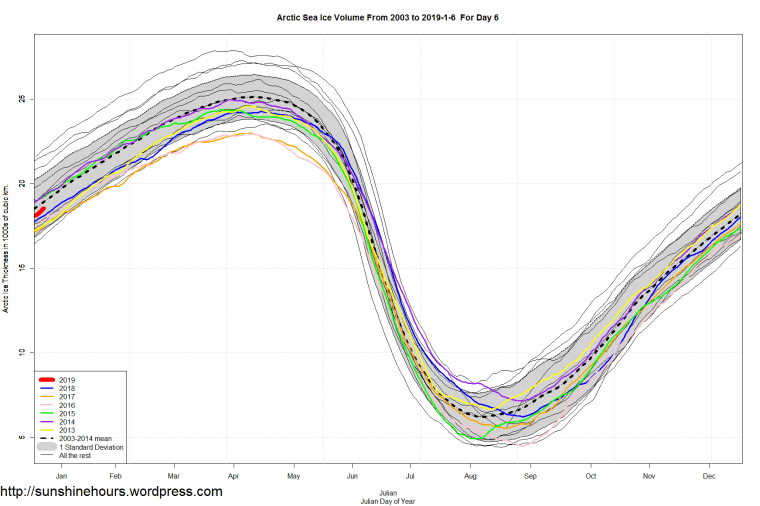
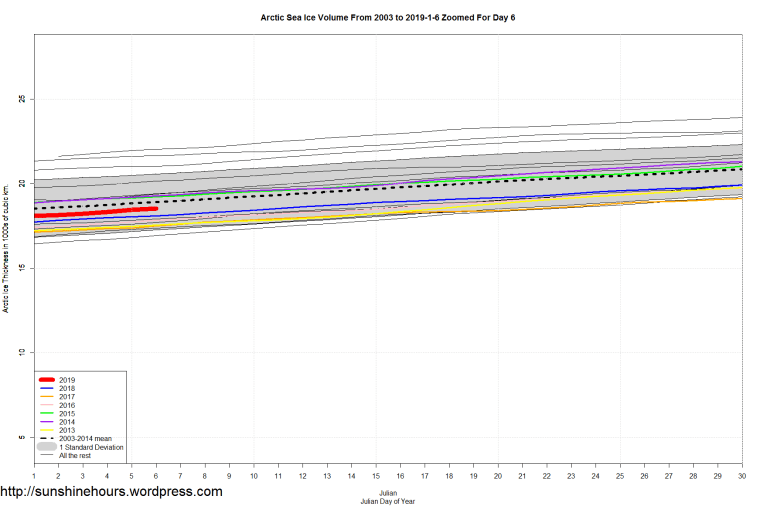
From DMI
It’s always a surprise when they actually do experiments on the main tenets of the church of climate change.
Tropical forests store about a third of Earth’s carbon and about two-thirds of its above-ground biomass. Most climate change models predict that as the world warms, all of that biomass will decompose more quickly, which would send a lot more carbon dioxide into the atmosphere. But new research presented at the American Geophysical Union’s 2018 Fall Meeting contradicts that theory
Stephanie Roe, an ecology Ph.D. student at the University of Virginia, measured the rate of decomposition in artificially warmed plots of forest in Puerto Rico. She found biomass in the warmed plots broke down more slowly than samples from a control site that wasn’t warmed.
Her results indicate that as the climate warms, forest litter could pile up on the ground, instead of breaking down into the soil. Less decomposition means less carbon dioxide released back into the atmosphere. But it also means less carbon taken up by the soil, where it’s needed to fuel microbial processes that help plants grow.
The money quote:
But instead of seeing faster rates of decomposition, Roe observed the warming produced a drying effect in the plots, which slowed decomposition. “What we found is actually it went the other way because moisture was impacted so much,” Roe said. Moisture in the litter from the treatment sites was reduced by an average of 38 percent.
Read more at: https://phys.org/news/2019-01-climate-unexpected-results.html#jCp
Interesting article about Camp Century.
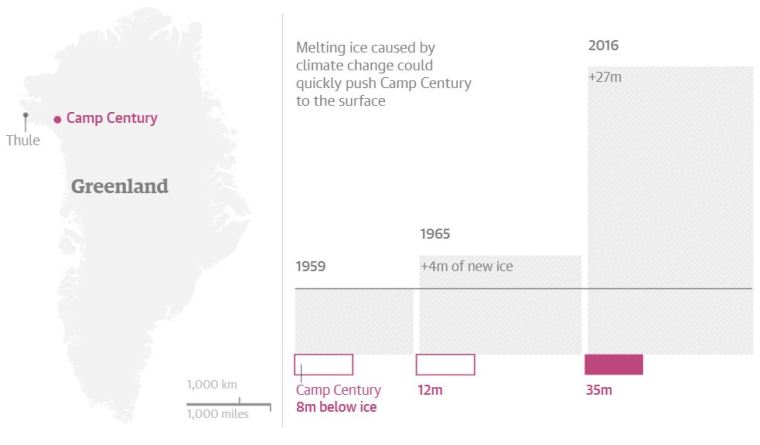
Howerever the funny part is where the Guardian tries to claim that “climate change” is going too melt the ice and expose radioactive materials when in fact the ice cover has gone from 8m in 1959 to 27m in 2016.
I don’t see any melting!
The US army engineering corps excavated Camp Century in 1959 around 200km (124 miles) from the coast of Greenland, which was then a county of Denmark.
Powered, remarkably, by the world’s first mobile nuclear generator and known as “the city under the ice”, the camp’s three-kilometre network of tunnels, eight metres beneath the ice, housed laboratories, a shop, a hospital, a cinema, a chapel and accommodation for as many as 200 soldiers.
Read the rest
Lag: a period of time between one event or phenomenon and another
Little Ice Age Still Cooling Pacific
As much of the ocean responds to the rising temperatures of today’s world, the deep, dark waters at the bottom of the Pacific Ocean appear to be doing the exact opposite.
A Harvard study has found that parts of the deep Pacific may be getting cooler as the result of a climate phenomenon that occurred hundreds of years ago.
Around the 17th century, Earth experienced a prolonged cooling period dubbed the Little Ice Age that brought chillier-than-average temperatures to much of the Northern Hemisphere.
Though it’s been centuries since this all played out, researchers say the deep Pacific appears to lag behind the waters closer to the surface, and is still responding to the Little Ice Age.
In the deep Pacific Ocean, however, temperatures are dropping. This effect could be seen at a depth of around 2 kilometers (1.2 miles).

Read the rest
“… out-of-hospital cardiac arrest (OHCA) is “an on-going public health issue with a high case fatality rate and associated with both patient and environmental factors,” including temperature. And recognizing the concern that exists over the potential impacts of climate change on human health, the two scientists set out to investigate the population attributable risk of OHCA in Japan due to temperature, and the relative contributions of low and high temperatures on that risk, for the period 2005-2014.
To accomplish their objective, Onozuka and Hagihara obtained OHCA data from the Japanese Fire and Disaster Management Agency of the Ministry of Internal Affairs and Communications, which data amounted to over 650,000 cases in the ten-year period from all across the 47 Japanese prefectures. Thereafter, using climate data acquired from the Japan Meteorological Agency, they conducted a series of statistical analyses to determine the temperature-related health risk of OHCA.
Results of their study, in the words of the authors, “showed that temperature accounted for a substantial fraction of OHCAs, and that most of [the] morbidity burden was attributable to low temperatures.” Indeed, out of the nearly 24 percent of all OHCAs that were attributable to non-optimal temperature, low temperature was responsible for 23.64 percent. The fraction of OHCAs attributed to high temperature, in contrast, amounted to a paltry 0.29 percent — a morbidity burden that is two orders of magnitude smaller than that due to low temperature.
In further breaking down the temperature-OHCA relationship, Onozuka and Hagihara also examined the impact of extreme vs moderate temperatures, as well as the effects of gender and age on OHCA risk. With respect to extreme vs moderate temperatures, as shown in the figure below, the two scientists report that “the effect of extreme temperatures was substantially less than that of moderate temperatures.” For gender, they determined the attributable risk of OHCA was higher for females (26.86%) than males (21.12%). For age, they found that the elderly (75-110 years old) had the highest risk at 28.39%, followed by the middle-aged (65-74 years old, 25.24% attributable risk) and then the youngest section of the population (18-64 years old, 17.93% attributable risk).”

UAH Satellite Global Lower Temperature shows 2018 as 6th warmest.


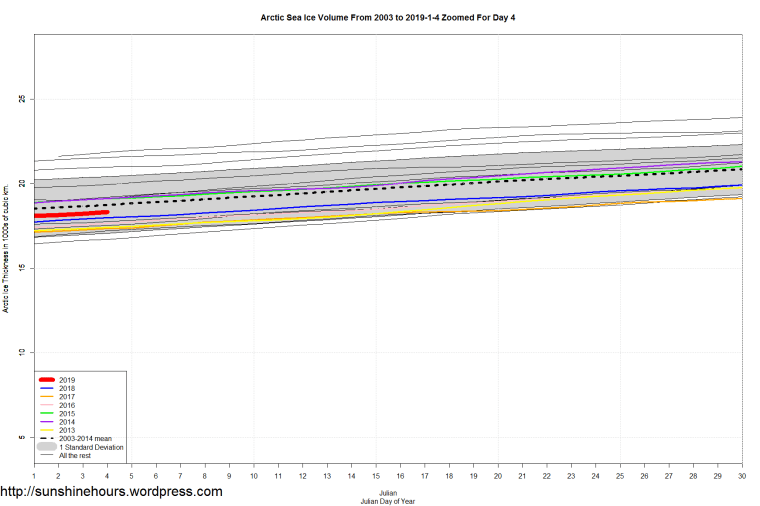



 sunshine hours