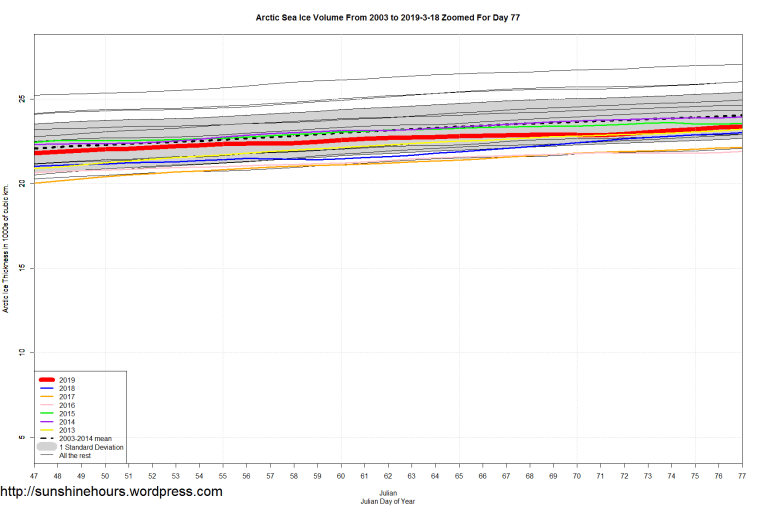
From DMI
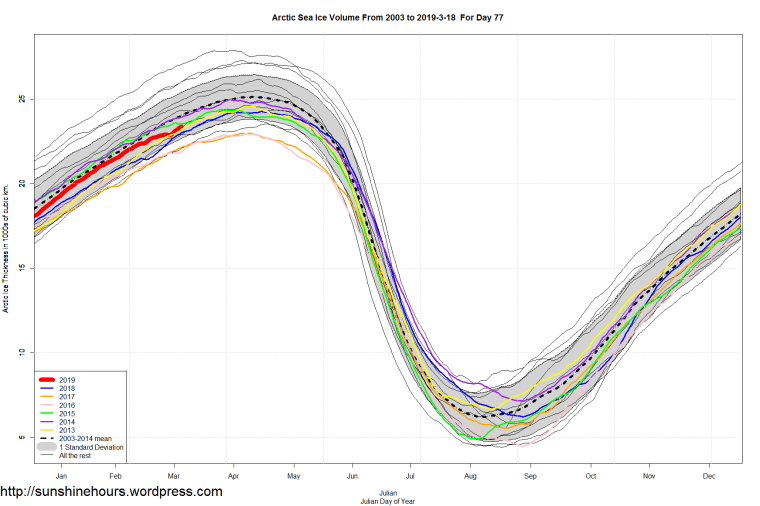
From DMI
Solar minimum anyone? Or an energy efficiency screwup where they bought a vessel with better fuel mileage to cut back on the carbon footprint? I vote for both.
The new ferry in the Strait of Belle Isle doesn’t have the same horsepower as the old Apollo, so even with an ice breaker, it’s risky to travel in this year’s ice conditions, says the Canadian Coast Guard.
But the province says this year’s severe ice conditions are unprecedented, and even an icebreaker got stuck in the thick ice.
The Qajaq W has spent numerous days tied up in the dock, with passengers waiting on either side of the strait for clear conditions to sail.
Coast guard’s Henry Larsen is en route to the area and, assuming weather conditions are suitable, will be able to break ice Friday morning.
But even with an ice breaker, it’s no guarantee the Qajaq will sail, says Brad Durnford, who is with the coast guard.
“The ice conditions are just too severe for this ferry to run. It’s a new ferry, it has less power than the Apollo, so we’re very cautious, everyone’s being very cautious, as they should be,” Durnford said.
“Don’t want to get that ferry out there and then get stuck for days with people on board, because that’s a potential that could happen in this situation.”
In January, Peter Woodward, president of the Woodward Group, said the Qajaq had half the horsepower and half the carbon footprint of the Apollo, burning half the fuel of the old ferry, but that the Qajaq had two ice-strengthened bows.
Government is defending its new 7,500-horsepower vessel, saying the new vessel is “designed and built to operate in severe sea ice conditions.”
The 48-year-old Apollo’s horsepower was rated at 9,000 — more than its new replacement — but only “operated at 6,000 horsepower in its later years,” reads a statement from the Department of Transportation and Works.
Minister Steve Crocker said even the coast guard’s icebreaker Molly Kool, with a horsepower of 18,000, got stuck in the ice this year.
“The fact that it’s a newer vessel brings more thrust, so, you know, the reality we have here right now is we’re battling ice conditions that we haven’t seen in 30 years,” Crocker said.
Also, the Qajaq has more agility and ability when compared with the Apollo, Crocker’s department said.
“The MV Qajaq W is stronger in ice, has a more durable hull, has better maneuverability,” according to the department.
The new vessel has “modern technology that makes it much more efficient and capable than its predecessor,” says the statement provided to CBC News.
Durnford and the government do agree on one thing — that the ice this year is incredibly thick.
Conditions are “the worst they have been in 30 years,” says the statement from the transportation department.
Durnford acknowledges the ice breakers themselves are having a hard time.
I smell smoke …
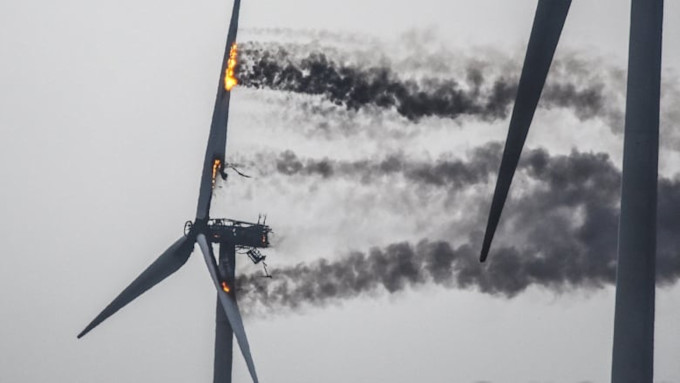
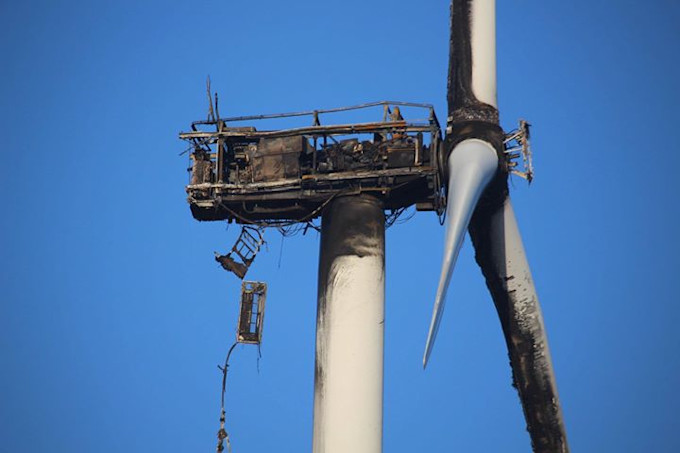
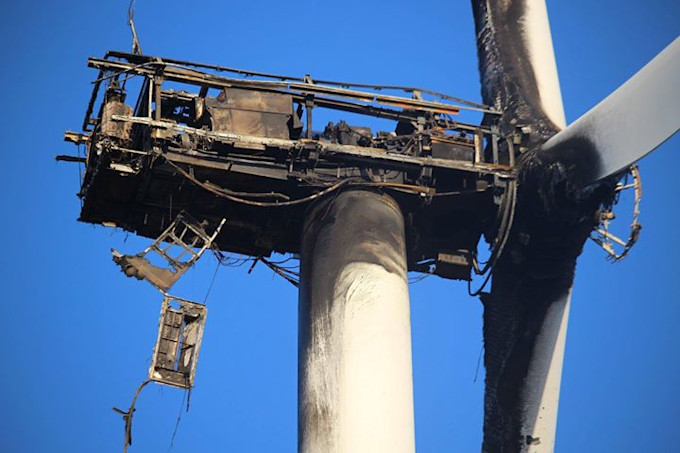
A wind turbine caught fire in West Pubnico, N.S., late Friday afternoon, throwing huge, burning pieces of material to the ground.
Firefighters were called to the scene around 5 p.m., but West Pubnico fire department Chief Gordon Amiro said there was little firefighters could do to douse the flames.
“We couldn’t get nowhere near because the blades was still turning, so, and pieces was breaking off the blades,” he said. “So if a piece was to fall off, it would go a long ways with the wind and that. So it wasn’t safe to go nowhere near the tower at all.”
No one was injured.
Amiro said when the blades turn, the tips are more than 100 metres up in the air — too high to fight the fire from the ground.
Firefighters stayed at the scene for about an hour to ensure no one got too close.
Amiro said it’s a good thing it was raining and the ground was covered with snow.
“If that would have been August, we’d still be there trying to put wood fire out,” he said Saturday morning.
From DMI
From DMI
Bus sized sea vacuum!
Sometimes the sailors’ myths aren’t far off: The deep ocean really is filled with treasure and creatures most strange. For decades, one treasure—potato-size nodules rich in valuable metals that sit on the dark abyssal floor—has lured big-thinking entrepreneurs, while defying their engineers. But that could change next month with the first deep-sea test of a bus-size machine designed to vacuum up these nodules.
The trial, run by Global Sea Mineral Resources (GSR), a subsidiary of the Belgian dredging giant DEME Group, will take place in the international waters of the Clarion-Clipperton Zone (CCZ), a nodule-rich area the width of the continental United States between Mexico and Hawaii. The Patania II collector, tethered to a ship more than 4 kilometers overhead, will attempt to suck up these nodules through four vacuums as it mows back and forth along a 400-meter-long strip.
Ecologists worried about the effect of the treasure hunt on the fragile deep-sea organisms living among and beyond the nodules should get some answers, too. An independent group of scientists on the German R/V Sonnewill accompany GSR’s vessel to monitor the effect of the Patania II’s traverses. The European-funded effort, called MiningImpact2, will inform regulations under development for seafloor mining, says James Hein, a marine geologist at the U.S. Geological Survey in Santa Cruz, California. “That work is critical.”

From DMI
From DMI
This post by The Chiefio correlates with my gut feel for the data.
Summers aren’t getting hotter except due to UHI.
Winters are less cold. According to Chiefio it is because high altitude thermometers are disappearing. I just believe in waste heat produced by billions of humans.
Here are the highlights:
Basically I [The Chiefio] found that for some Continents (regions) the Winter Data is vastly more volatile than the Summer data. Most (all?) of the “warming” comes out of a reduction of the volatility to the downside of those cool season data. Hot seasons are just not very volatile. Yet they DO have an up tilt at the very end with the advent of electronic thermometers and lots more asphalt around airports.
My conclusion (up here at the top 😉 is that this leans strongly toward “hot black asphalt in the sun” causing the summer “lift” and “loss of high cold volatile places” causing the cool season “lift”. Remove those stations at altitude that tend to have the strongest cold excursions, you get a flatter winter curve with the cold anomalies pruned. Have an airport add 10,000 foot more runway and 20 acres of paved parking for Jet Travel, you get hotter summer readings.
It is my opinion that accounts for most of whatever warming is in this the unadjusted data. (That then gets enhanced with “all one way warmer” adjustments in the adjusted version).
And:
What would happen if post W.W.II airports added more concrete and asphalt and more of the thermometers were placed at airports and inside the “Concrete Jungle” of cities? More solar heated pavement carryover into night warmth, less vegetation transpiration making cool and damp.
From DMI
 sunshine hours