UK Energy Policy = Economic Suicide

Doom for the UK

In view of the shambles engulfing our politics in all directions, it might seem appropriate that last Thursday MPs should blithely have accepted that, within a few years, our lights will go out and our economy will grind to a halt. What they allowed to be nodded through was something called the “Fifth Carbon Budget”, committing us to an energy policy so insanely unworkable that it can only result in Britain committing economic suicide.

As I predicted and explained in more detail on May 14, what the MPs tacitly agreed to was that, between 2028 and 2033, we should cut our emissions of CO2 by a far greater amount than any other country in the world. We will put an end to any use of gas for cooking and heating. Sixty per cent of all our transport will be powered not by fossil fuels but by electricity. And to achieve this, we will double the amount of electricity we need (two thirds of which still comes from those same hated “carbon emitting” fossil fuels).

Much of this electricity, the Government fondly imagines (on advice from the fantasists on Lord Deben’s Climate Change Committee), will come from tens of thousands more lavishly subsidised wind turbines, solar farms, new nuclear power stations unlikely ever to be built and woodchips imported at vast expense from forests in North America.

Not one of the MPs who accepted this could plausibly explain what is to happen to all those electric cookers, heating systems, cars, cashpoints etc, when the wind isn’t blowing and the sun isn’t shining. Furthermore, none seemed to notice that key ingredients in that make-believe scenario dreamt up months ago by the Climate Change Committee are based on assuming that by 2030 we shall still be in the EU, whose own energy policy is now falling apart in all directions, as Germany, Poland and other countries rush to build new coal-fired power stations.


UK Told to Brace For Power Shortages

Oh Oh.

Britain should brace itself for a winter of tight electricity supplies that will force National Grid to use its last-resort measures and push wholesale prices up, according to a new analysis.

Figures from Enappsys, which monitors wholesale electricity market data, show the grid will have an even more difficult job keeping the lights on than last year, when it took new emergency measures for the first time.

They show that for long periods, generators are likely to be able to charge dozens of times the usual wholesale price — costs that will filter down to consumers. Enappsys warned that some small suppliers may not be able to afford a sudden rise in costs and may even be driven out of business.

UK Electricity Grid is a Mess


A month ago I blogged about the big risk for blackouts in the UK.

Yesterday the grid got into trouble :

series of power plant breakdowns and the partial failure of a key electricity import cable forced National Grid to issue an urgent call for more power to keep the lights on on Monday night.

One power plant was paid more than 30 times the usual price of power after the Grid issued the “Notification of Inadequate System Margin” (Nism) requesting more electricity be generated.

A Nism alert has not been issued in summer months since 2008 as the warm weather means power demand is normally lower.

But the combination of a large number of power plants being shut down for maintenance, the series of unplanned shutdowns and wind power being lower than expected together forced Grid to take the unusual step.

Experts said the multiple breakdowns – believed to be primarily old coal and gas plants – showed the urgent need for more investment in reliable new power plants.

National Grid said about  1,700 megawatts of capacity was unexpectedly taken off the system yesterday.

In addition, a problem forced the part closure of a National Grid-owned interconnector cable importing power from France, with the loss of another 500 megawatts.

At the same time, Britain’s wind farms generated about 500 megawatts less power than expected.

National Grid issued an alert at 7pm calling for 1,500 megawatts of power plant capacity to start generating between 7pm and 9.30pm.

National Grid said the highest price it paid to a plant to help it through the crunch was £1,250 per megawatt-hour of power. It is understood this was to E.On’s  Connah’s Quay power plant.

Nism alerts used to be relatively common but had barely been used in the last few years due to a healthy surplus of power plants on the electricity grid. However, that surplus is being eroded as old coal plants are mothballed and shut.

In November, National Grid issued its first Nism since February 2012 and was forced to use “last resort” measures to keep the lights on by paying businesses to use less power.


UK Supermarket Builds Own Power Plants In Fear of Blackouts

Wow. Isn’t one of the signs of a first world economy a stable reliable electrical grid?

Not anymore. Green stupidity is amazing.

Sainsbury’s has cast doubt on the UK’s ability to keep the lights on, revealing it has built a string of new power plants for its supermarkets in part due to fears of a looming energy crunch.

Paul Crewe, a senior executive at the supermarket giant, said he had sleepless nights over energy security and feared UK electricity demand could soon outstrip supply.

The new gas-fired power generators – already supplying electricity for 10 supermarkets, and due to be built at a further six this year – would enable the stores to keep trading even in the event of a blackout, he said.

“It gives us energy security,” Mr Crewe said. “Energy security is extremely important, it keeps me awake at night if I’m honest thinking about it – especially as we use just under one per cent of power in the UK. We know UK grid infrastructure is at an extremely stretching period of time.”

He raised concerns about the UK being “reliant on interconnectors from Europe and gas from the Baltic and Russia”.

“Having the ability to generate our own power at a local level gives us surety of supply at these locations as the availability of electricity becomes more stretched across the national grid infrastructure, with demand potentially outstripping supply in the near future,” he said.

– See more at: http://www.thegwpf.com/sainsburys-builds-its-own-power-plants-amid-energy-shortage-fears

Electricity prices for UK Industry Will Soar

Economic suicide is stupid.business-graph

Electricity prices to UK industry will soar by the end of the decade, offering little comfort to those already concerned about the impact they’re currently having on sectors such as steel.

Depending on your news source or how you filter your personal prejudices, energy prices are either the cause of the UK steel crisis or peripheral to it.

One thing which is not in dispute, however, is that electricity costs to industry are set to rise sharply over the coming years.

New research by Tyneside firm Utilitywise highlights this stark reality – the consequence of measures to combat climate change such as the Renewables Obligation, Contracts for Difference and the Capacity Market levies.

The North Tyneside firm believes the wholesale electricity cost to industrial users will stay flat at around £40 Per MW/h between now and 2021.

However, taking into account climate change mitigation policy costs, network and transmission charges, the total charge for a MW/h of electricity will rise to more than £110 over the same period.

A UK Government compensation scheme will limit the rise to around £82 per MW/h for the most energy intensive industries, but this is still prompting further concerns about ‘carbon leakage’, while casting a shadow over hopes to attract further investment into the North East.

Stan Higgins, chief executive of NEPIC (North East Processing Industry Cluster), says high energy costs are damaging all British industry.


UK Gatwick Gusher

Just one shale formation could produce 25% of the UK’s oil. Isn’t this better than financing Russia or Saudi Arabia?

The so-called Gatwick Gusher, a shale basin in the United Kingdom, could add as much as $74 billion to the nation’s economy, a study finds.

U.K. Oil & Gas Investments commissioned Ernst & Young to examine the future potential of oil production from the Weald shale basin.

“Assuming it can be extracted from a development site at the volumes projected by U.K. Oil & Gas, has the potential to generate significant economic value to the U.K. economy,” the report read.

Oil & Gas U.K., the industry’s lobbying group, said the North Sea oil sector is in for a long period of decline, with less than $1.4 billion in new spending expected in 2016. Inland shale, meanwhile, has the potential to add between $10 billion and $74.6 billion to the British economy in gross value, the commissioned report said.

Operators are working to assess the potential in the shale area by testing the Horse Hill-1 oil discovery. Preliminary estimates made by the company last year put the entire Horse Hill reserve total as high as 100 billion barrels of oil. If its full potential is reached, the future production from the area could provide as much as a quarter of the nation’s total oil demand over its lifespan, based on 2014 demand levels.

UK Blackout Emergency Plan Costs Soar

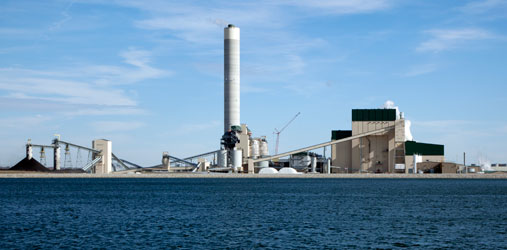
Coal will come to the rescue in the UK at a cost.Plant-wide_Slider02

The cost of ensuring Britain could turn its lights back on after a catastrophic nationwide blackout has soared by at least £12m this year, as National Grid is forced to pay struggling old coal plants to “keep warm” in case of an emergency.

Britain’s so-called “black start” plans are designed to ensure that electricity supplies could be swiftly restored in the event of an unprecedented power failure plunging all or part of the country into darkness.

As most power plants need to draw some electricity from the grid to start generating, National Grid has to ensure the UK retains a certain number of black start plants that are able to fire up independently using their own generators.

Historically, several of the UK’s coal plants have been relied upon to form part of the black start plan.

But rising green taxes, cheap gas prices and the growth of renewables are together rendering the coal plants increasingly uneconomic, with some closing down for good and most others now only running for parts of the day.

This poses a threat to Britain’s emergency plans because if the plants are not generating when a catastrophic power failure hits, they will take far longer to start up.

Energy regulator Ofgem has now given National Grid permission to pay the plants millions of pounds to keep “warm”, so that they would be ready to start up quickly in an emergency.


EU/UK Steel: A Tiny Bit Of Sanity (That Won’t Go Anywhere)


Cheap Chinese steel is killing the EU/UK steel industry. The reasons are pretty simple. China relies on cheap coal for most of its energy needs while the UK and EU are squandering trillions to build wind farms and solar farms (in a northern climate?). And fossil fuels are punished.

I’ve been going on about this for a while. It is amazingly stupid to drive all the jobs from the UK/EU (or Canada) to China where the energy is dirtier and the labor conditions are appalling.

So there is this German Government minister who maybe finally got it.

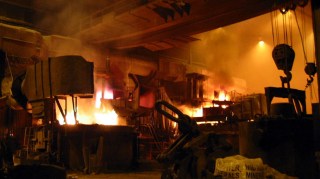
In the fight against cheap steel from China, German Economics Minister Sigmar Gabriel (SPD) is proposing a ‘climate MOT’ for imported products: “At the level of the World Trade Organization there are forms of certification, for example, where the environment, nature or health are at risk. I can imagine a similar certification for steel products, a kind of `climate MOT` for steelmaking, Gabriel told the Westdeutsche Allgemeine Zeitung on Wednesday. “The basic idea: Only those are allowed onto the European market who comply with the same standards that we meet in the EU.” Gabriel called on the EU to adopt a tougher stance in the dispute with China over cheap steel.SteelMill_interior

MOT = Ministry of Transport. This is shorthand for: “To drive a car it must be tested and running at a certain level of safety and air cleanliness.”

The same should be true for importing any goods. If it is steel imported from China to the UK, the energy used in China must be as “clean” as the energy mix forced onto steelmakers in the UK and the wages must be comparable.

The sane should be true for all manufactured goods.

But what really happens is that the coal power plants producing cheap electricity are shut down in the UK and the steel is made in China. And the jobs (paying much less) go to China. And more CO2 (which I don’t care about … but some do) is produced than if the steel was made in the UK. And 40,000 jobs disappear. While the rich laugh.


.

EU Subsidized Cheaper Energy For China Steel


Every once in a while I joke that China has a spy high up in the EU making the EU do stupid stupid things … then I read these stories and I think I might be right.

British taxpayers have been forced to subsidise the very Chinese steel companies that are threatening 40,000 UK jobs, critics say.

It comes after revelations that the European Investment Bank has given so-called “soft loans” to China of £80million as part of a climate policy intended to lower emissions.

The astonishing figures include a loan of £40million to one of the world’s worst “steel dumping” culprits, the Wuhan Iron & Steel Corporation.

To add insult to injury Wuhun, the world’s eighth largest steel producer, boasts the Chinese state as its main shareholder. Wuhun is such a prolific steel dumper that it has now been especially targeted by the European Commission, which wants to slap it with 36.6 per cent tariffs.

Just five years ago, however, EU bankers decided to lend it €50million (£40million) to put towards a €207million (£167million) Euro Combined Cycle Plant.

The loan was paid out under the China Climate Change Framework Loan II. The money is supposed to persuade the steel giants to invest in lower emission technology.

Furious critics last night pointed out the irony that the loan was concerned with reducing the cost of power generation while one of the complaints of Tata Group is the high cost of energy associated with its steel production operation in South Wales.

UK Industry Facing Massive ‘Green’ Power Costs


UK industry is facing  massive energy ‘policy’ cost increases. This article summarizes the estimated costs for energy intensive users (like steel mills) and the businesses that rely on them:

In 2014 DECC estimated that prices to Energy Intensive users were 26% higher than they would be in the absence of policies.

By 2020, in the Low Fossil Fuel price scenario, which now seems more likely than not, a large Energy Intensive Industry (EII) with a full cost relief package would face electricity prices (p/kWh) that are 22% higher than they would be in the absence of policies.

Those unable to qualify for relief would see prices 76% higher than they would be without policies. No estimates are available for 2030, perhaps because DECC does not expect there to be any Energy Intensive Industries remaining in that year.

The electricity price impacts on other parties trading with EIIs are also large.

Medium sized businesses would see prices 77% higher than they would be in the absence of policies in 2020, and 114% higher in 2030.

Small sized businesses would see prices 61% higher in 2020 and 95% higher in 2030.

Domestic households would see prices 42% higher than they would otherwise be in 2020 and 60% higher in 2030.

To these must be added electricity system costs, for grid expansion and management, and in the presence of large renewable fleets these could easily reach totals not much less than the subsidy costs themselves.

– See more at: http://www.thegwpf.com/climate-policies-and-the-future-of-manufacturing/