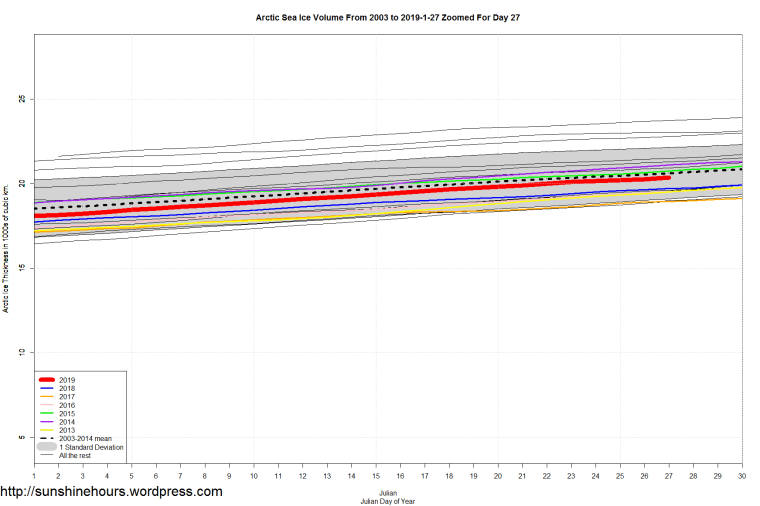
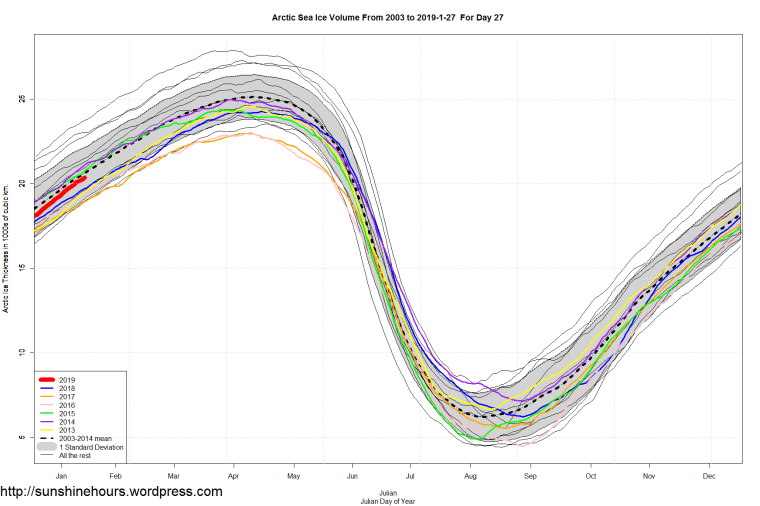
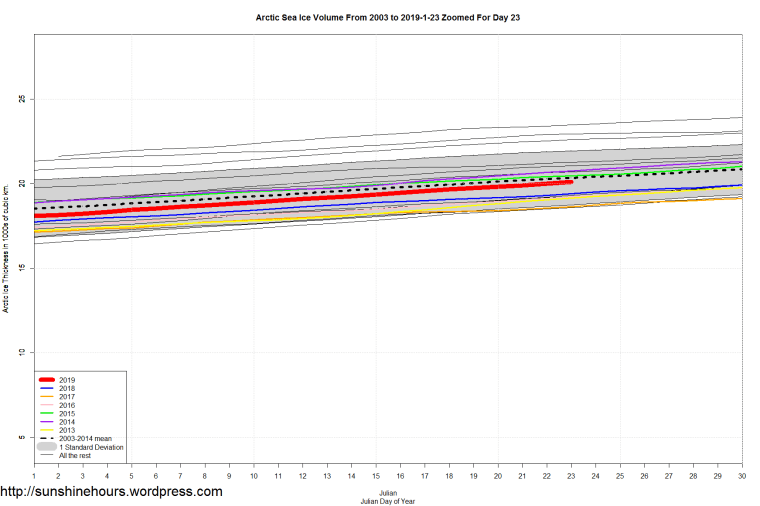
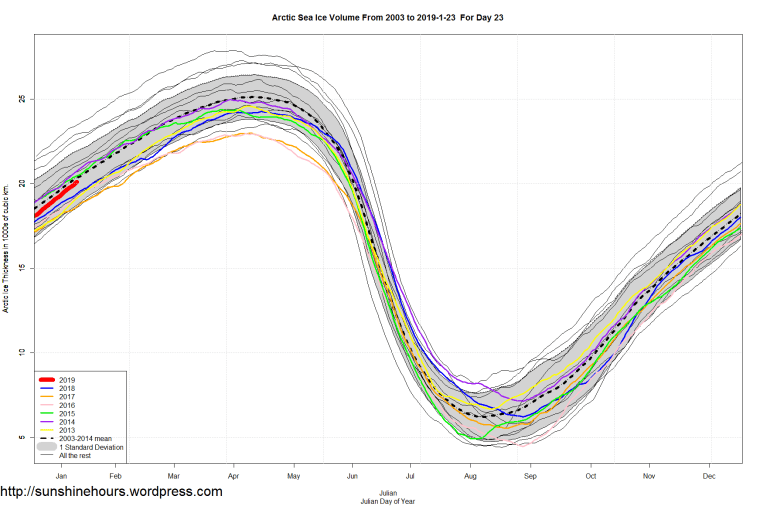
From DMI
When some green cult member complains about water used in fracking read this:
(A lakh = 100,000)
RAMANATHAPURAM: The world’s largest solar power plant, installed by the Adani Group in 2,500 acres in Kamuthi taluk of Tamil Nadu, is not as green or sustainable as it seems. Local residents claim the 648 MW renewable energy plant is a water guzzler.
It takes as much as 2 lakh litres of good quality water to keep its 25 lakh solar modules clean each day. That water is sourced from borewells 5 km away without permission from the district authorities, the villagers allege.
Near the dried Gundar riverbed on Kamuthi-Mudukulathur road at Kottai Medu, one can find borewells functioning round the clock, filling 6,000-8,000 litre tanks that are attached to tractors.
Around 40 tractors are said to have been contracted by Adani Green Energy (TN) for cleaning the giant solar modules, each of which is approximately 125 ft long and 28 ft wide. Two contract workers in each vehicle fetch water and clean the modules, often twice a day. The panels need to be kept clean, else production could drop by as much as 25 per cent.

From GWPF
Every so often the Pentagon comes up with a thumbsucker about how climate change is going to alter the geopolitical landscape. The intriguing Norwegian TV show “Okkupert” (“Occupied”) might be a better guide to understanding how such instability could already be brewing on our own northern border.
Americans might be forgiven for not knowing that Norway, with a population of five million, is the world’s 11th largest oil exporter and the third largest exporter of natural gas. They might also need a second or two to realize that this sounds a lot like the Canadian province of Alberta, with four million people and fossil energy reserves second only to Saudi Arabia’s and Venezuela’s.
In the show, which is available on Netflix , Norway’s Greens come to power and announce plans to end fossil energy production. Norway’s European Union neighbors, while keen to seem green, are not keen to do without Norway’s energy. They quietly support a Russian campaign of intimidation that amounts to a creeping takeover, while Norway’s politicians, eager to avoid outright fighting, straddle and prevaricate. Anyone who remembers the name Vidkun Quisling will appreciate why this theme might resonate with a Norwegian audience.
Now back to Alberta: In the provincial capital of Edmonton, house prices have been falling for three years. Car sales are drying up. One-third of Calgary’s office buildings are empty. Though production is booming, Alberta’s oil was recently selling for barely $10 a barrel—an 80% discount to the world price. Why? Because opposition from neighboring provinces has blocked construction of needed pipelines.
In a drastic effort to prop up prices, Alberta Premier Rachel Notley in December imposed mandatory production cuts on her province’s largest oil producers. She also announced plans, using taxpayer money, to buy 7,000 railcars to get oil to market, never mind that shipping by rail is expensive and risky.
In the middle is Prime Minister Justin Trudeau, dithering between his green supporters and his desire to placate Alberta and keep its money flowing.
He impulsively committed to spend $4.5 billion to rescue a U.S.-backed pipeline whose expansion has been blocked by a Canadian court. At the same time, he has mused that Alberta’s oil-sands production should be phased out in a “generation.” His party is pushing a bill to empower greens to block future pipelines. It supports a U.N. treaty that would increase the veto power of native tribes. It backs a continuing ban on supertankers in Canadian ports.
Unlike the U.S., where secession was shown to be illegal in the 1860s, a 2000 Canadian law spells out the steps for provinces to declare independence. Ms. Notley has tried to play down secession talk, but the politics are complicated. Fellow Canadians may not be ready to give up their energy-rich lifestyles, or the foreign oil imports that make them possible. But they disapprove of Alberta’s participation in an acrid industry and their voters are willing to pay a price for it.
To the east, Quebec’s premier says Alberta’s “dirty energy” has no “social acceptability.” To the west, British Columbia’s premier was elected on a platform of killing a new pipeline project favored by Alberta.
Meanwhile, protest rallies have become a near-daily occurrence in the oil-rich province. Two truck convoys to Ottawa are planned for February, including one explicitly modeled on the French “yellow vests” movement. Ms. Notley herself faces an uphill re-election fight in May. She was already wrong-footed once into backing a carbon tax scheme that was supposed to ease the way for more pipelines. Now her opponent is challenging Canada’s highly symbolic “equalization” scheme, which has shifted hundreds of billions from Alberta to Quebec over two decades.
Only a quarter of Albertans say they favor independence, but that may be beside the point. The province’s future promises to be one of barely contained civil war with its fellow Canadians. If $13 billion a year in payola can’t appease Quebec, the cause is probably beyond salvaging. A Donald Trump re-election could invite talk of becoming the 51st U.S. state. If Obama-like pipeline opponents are returned to power in Washington in 2020, the squeeze will be even worse.
Then what? A weak state with enormous fossil energy resources caught in the West’s culture wars over climate and energy? The cash cow of Canada up for grabs? We could spin lots of scenarios.
Australian Electrical Grid is a Shambles.
Rachel Baxendale, The Australian
h/t Des Moore
More than 200,000 Victorian households had their power cut off yesterday in a bid to protect the state’s energy system from shutting down, as the Andrews government was forced to admit there was not enough power to keep up with soaring demand in sweltering summer heat.
Homes were blacked out, traffic lights across Melbourne were switched off and businesses were forced to close for up to two hours after the Australian Energy Market Operator enforced rolling power outages to make up a 250 megawatt shortfall in supply.
The State Energy Minister (Lily D’Ambrosio) said there would “absolutely” be no blackouts this morning and the rolling blackouts started 90 minutes later.
Welcome to the USS Australia where we hope to make your 150th Birthday Party 0.001 degrees cooler but we can’t predict our electricity grid for the next hour and a half.
Dark ages — get used to it
Read more.
A sad story about a town trying to feel good about itself and squandering 12 million + and wrecking peoples health.
“We had the best of intentions … ” and didn’t really care about cost, neighbors, rules.
“FALMOUTH — For nearly a decade, the giant blades have loomed over this seaside town, stirring hope and fear in the salty air.
To proponents, the twin wind turbines proved that residents could act on their ideals, producing their own clean energy and relying less on fossil fuels. To critics, they were mechanical monstrosities, blinking eyesores whirring at such a frequency that some neighbors said they became ill.
Nine years after the first was built beside Falmouth’s waste treatment plant, both turbines now stand idle, no longer producing a kilowatt of electricity, totems of good intentions gone awry.”

Facing fierce neighborhood opposition and multiple lawsuits, selectmen last week voted to remove the turbines, which had cost the town about $10 million to build, saddling residents with years of debt.
“The town was warned,” he said. “The damage can never be reversed for many of us wind turbine victims. Some of my friends have serious health issues now.”
Neighbors complained that the churning of the turbines and the resulting flickering light and vibrations produced dizziness, nausea, depression, or anxiety — a set of symptoms that critics call “wind turbine syndrome.”
In 2012, with both 1.65-megawatt turbines operating and the opposition becoming increasingly vocal, state environmental officials took the unprecedented action of recommending that one be shut down. They found that turbine, which was fewer than 1,500 feet from the nearest home, had repeatedly exceeded allowable noise levels.
Read the rest.
 sunshine hours