UK Electricity Grid – Reliability For the Rich – Screw the Poor

Is this a surprise? Of course the poor will get screwed.

Britain’s increasing reliance on “intermittent” renewable energy means that the country is facing an unprecedented supply crisis, a senior Ofgem executive has warned.

Andrew Wright, a senior partner at Ofgem and former interim chief executive, warned that households could be forced to pay extra to keep their lights on while their neighbours “sit in the dark” because “not everyone will be able to use as much as electricity as they want”.

He warned that in future richer customers will be able to “pay for a higher level of reliability” while other households are left without electricity.

Mr Wright said that because Britain has lost fuel capacity because of the closure of coal mines, there is now “much less flexibility” for suppliers.

In a stark warning about the future of energy supply in Britain, Mr Wright said that consumers could be forced to pay more if they want to ensure they always have power.

“At the moment everyone has the same network – with some difference between rural and urban – but this is changing and these changes will produce some choices for society,” he told a recent conference.

 “We are currently all paying broadly the same price but we could be moving away from that and there will be some new features in the market which may see some choose to pay for a higher level of reliability.

Wind Service Technician

A bunch of “scientists” and “grad students” singed a petition essentially begging for the gravy train of money to keep flowing to them despite Trump being elected.

Item #1 was: Make America a clean energy leader

And then they said:

“Wind technician” is the fastest growing job category in America, and the solar industry has hired more veterans than any other sector9.”

The reference:

Shah, J. Clean Energy Jobs Are Exploding in America. Why Don’t Mainstream Reporters Know? Greentech Media (Sept. 2, 2016). [link]

The relevant section:

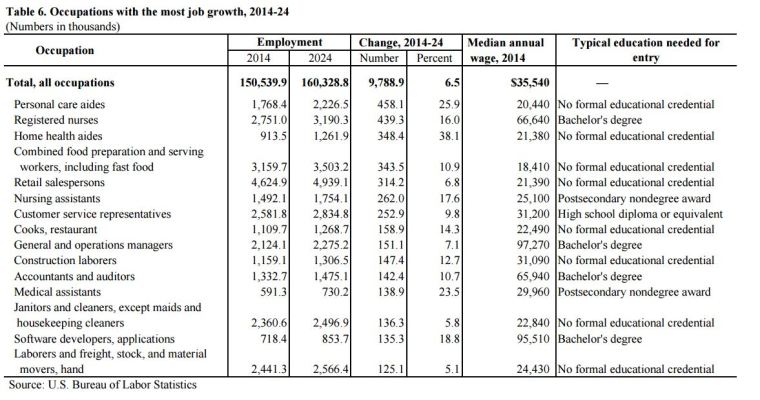
According to the U.S. Bureau of Labor Statistics, “wind technician” is the fastest-growing job category — expanding twice as much as the next-fastest growing job, occupational therapy assistant.

What did I find when I sent searching?

It was a projection to 2024. Not actual numbers.

And the numbers are pitifully small. An increase of 4800 jobs over the next 10 years. 1.3 jobs a day!

Occupation Therapy Assistants (which pay better) are projected to have a 14,100 increase.

There are 9 careers in that list that pay better than Wind Turbine Service Technicians and most will supposedly have way more jobs in 2024.

But its a projection. And we know how good climate scientists are at making projections!

capture

The occupations with the most job growth (total jobs … not percentage):

Personal Care Aides 458,100 ,Registered Nurses 439,300  etc

capture

Old Plan: More Diesel Cars – New Plan: Ban Diesel

In Europe: “diesel has been favored by public policy because it produces less carbon emissions than petrol, and is therefore better in the fight against climate change. But diesel produces far more air pollution – up to 15 times more than petrol (or unleaded gasoline).”

“The French and British capitals are grappling with dangerous levels of air pollution this week – conditions in winter help smog stick around. The mayor of Paris wants to ban diesel cars to stem it. Will London follow?”

http://www.dw.com/en/paris-takes-on-winter-smog/a-36663652

Remember, this is all going on at the same time the UK is building diesel farms to save their electricity grid from the stupid decision to rely on wind.

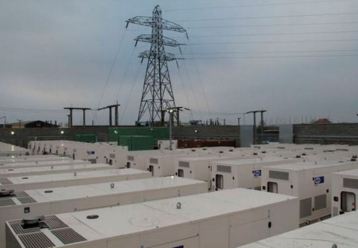
UK Electricity Grid – Diesel Farms – It Ain’t Easy Pretending To Be Green

Diesel farms aren’t green at all.capture

The owner of Britain’s energy network is gearing up to buy more power from suppliers to ensure the country’s lights stay on, with polluting diesel generators among the providers vying for contracts.

The National Grid needs back-up electricity sources that kick in when, for instance, demand is high but the weather is not breezy enough to power wind farms. It secures this back-up power through the annual capacity market auction that begins on Tuesday and will see controversial “diesel farms” taking part.

This auction process has created lucrative investment opportunities for people to invest in diesel farms, rows of noisy and polluting generators that operate for up to 15 years. In fact, financiers have set up companies specifically to access payments from the National Grid. And while the government is weighing up plans to limit the attractiveness of such investments, many diesel farms have been built and are already delivering returns. Still more could land multimillion-pound contracts this week.

Industry sources said one farm can easily make £5m a year, while non-profit climate analysis firm InfluenceMap today claims the diesel farm industry could pick up £500m in a matter of years. In some cases, investors are also eligible for generous tax breaks. Gas has become an increasingly important part of the UK’s energy mix as coal, due to be phased out by 2025, has been scaled back. Diesel farms are not there to provide power on a routine basis, but to fire up at times of peak use or to help balance second-by-second changes in demand.

While the farms offer a profitable investment, those who live nearby say their lives are blighted by noise pollution and fear of toxic emissions. In Ernesettle, Plymouth, locals told the Guardian they are fed up with generators being built in their quiet neighbourhood.

DDT Has Been Killing Mosquitoes and Saving Lives for Decades

DDT has been killing mosquitoes and saving lives for decades. But it is wearing off.

Mosquito populations have increased as much as ten-fold over the past five decades in New York, New Jersey, and California, according to long-term datasets from mosquito monitoring programs. The number of mosquito species in these areas increased two- to four-fold in the same period.

A new study finds the main drivers of these changes were the gradual waning of DDT concentrations in the environment and increased urbanization. The findings were published December 6 in Nature Communications.

The potential effects of climate change on the spread of insect-borne diseases is a major public health concern, but this study found little evidence that mosquito populations in these areas were responding to changes in temperature or precipitation.

The morons who banned DDT were evil.

In 1970, the U.S. National Academy of Sciences estimated that DDT saved more than 500 million lives during the time it was widely used.  http://www.wnd.com/2004/07/25428/  Banning DDT has resulted in about 100 million deaths, many of whom were pregnant women and children.  By comparison: Hitler killed about 6-7 million, Stalin killed around 10-14million, and Mao killed between 60-68 million.

FYI: The ban on DDT is why the US is currently having infestations of bed bugs; most people born after 1940 thought these were eradicated like polio.


Microwaving Kerogen

4 trillion barrels of oil in the Green River Found locked up in oil shale (not shale oil).

In Kearl’s playbook, you’d leave the kerogen in the ground and bring its oil to the surface. Producers would microwave oil shale formations with a beam as powerful as 500 household microwave ovens, cooking the kerogen and releasing the oil. It also would turn the water found naturally in the deposits to steam, which would help push the oil to the wellbore. “Once you remove the oil and water,” Kearl continues, “the rock basically becomes transparent” to the microwave beam, which can then penetrate outward farther and farther, up to about 80 feet from the wellbore. It doesn’t sound like much, but a single microwave-stimulated well, which would be drilled in formations on average nearly 1,000 feet thick, could pump about 800,000 barrels. Qmast plans to have its first systems deployed in the field in 2017 and start producing by the end of that year.

UK Electricity Grid – No Gas For You

The morons in charge of the UK electricity supply have screwed things up so much no one wants to build new gas power plants even while old power plants are being closed.

As a result of Britain’s energy policies, building new gas-fired power plants is no longer economic. Now, the Government has to subsidise gas investors to keep the lights on.

Four years ago this week, the Government unveiled plans for a bold new dash for gas.

New gas-fired power stations, then-energy secretary Ed Davey said, would be required to “provide crucial capacity to keep the lights on”.

A new Gas Generation Strategy backed “significant investment” in up to 26 gigawatts (GW) of new plants by 2030.

Since then, energy ministers have come and gone, support for solar and onshore wind has been scrapped and the drive for new nuclear has faced security and cost worries. But support for gas had been unwavering.

Relatively cheap and quick to build, much cleaner than coal, and able to generate even when the wind doesn’t blow or the sun doesn’t shine, gas plants tick all the Government’s boxes.

“In the next 10 years, it’s imperative that we get new gas-fired power stations built,” Amber Rudd, Davey’s successor, declared last year.

There’s just one problem: pretty much no one’s building them.

The huge problems is all the other plants closing down.

23GW of conventional thermal power plant capacity has been closed or mothballed since 2010. “That’s more than a third of peak demand,” says Howard.

“And a further 24GW of coal and nuclear is expected to close between now and 2025.

They held auctions … and nobody built any big gas power plants.

Instead, the big winners both times were existing coal, gas and nuclear plants – as well as an unexpected boom in new small diesel and gas engines.

All that shale gas coming and nowhere to burn it.

The UK is screwed.