Update: You might ask why don’t I publish JAXA data. The data page now just redirects to a twitter page with this:

Excerpt from June 14 2016 statement from NSIDC:
“On 05 April 2016, the vertically polarized 37 GHz (37V) channel of the SSMIS instrument on the DMSP-F17 satellite began yielding compromised brightness temperature data. This channel is one of those used to estimate sea ice concentration shown in the Sea Ice Index, so data processing was temporarily suspended.
NOAA@NSIDC is pleased to announce that, today, Sea Ice Index processing has resumed and the time series now uses the SSMIS instrument on the DMSP-F18 satellite beginning 01 April 2016. These sea ice concentration values come from the NSIDC Near-Real-Time DMSP SSMIS Daily Polar Gridded Sea Ice Concentrations product. Prior to transitioning this near-real-time data set to the F18 SSMIS instrument, NSIDC investigated whether or not algorithm parameters would need to be calibrated to minimize the difference between sea ice extents derived from F17 and F18.
Because each sensor and spacecraft orbit is slightly different, algorithm parameters called tie points sometimes need adjustments so that the time series is consistent. Inconsistencies would be marked by sudden false jumps or drops in derived ice extent at the point when the algorithm started using data from the new instrument.“
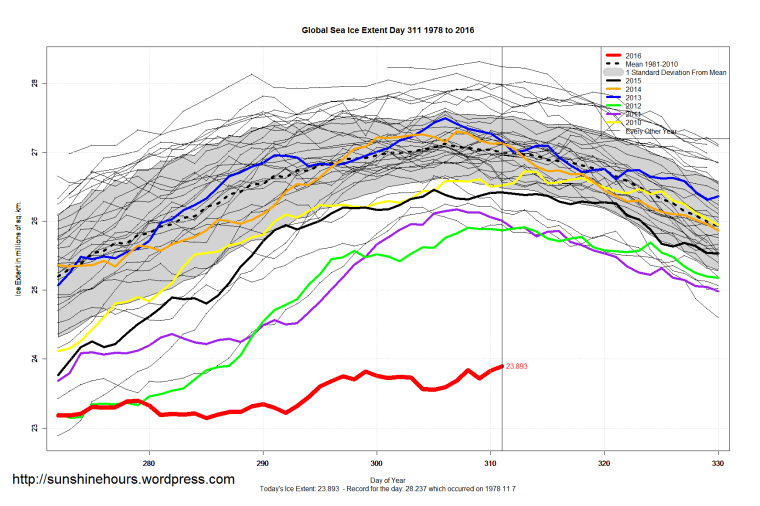
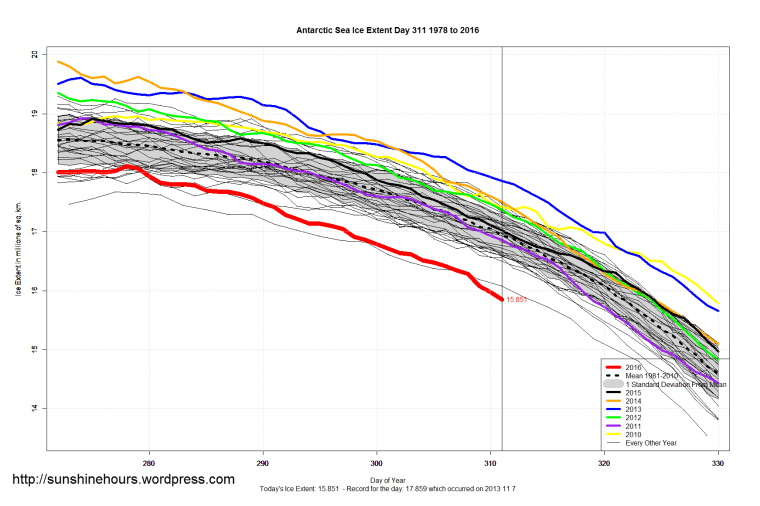
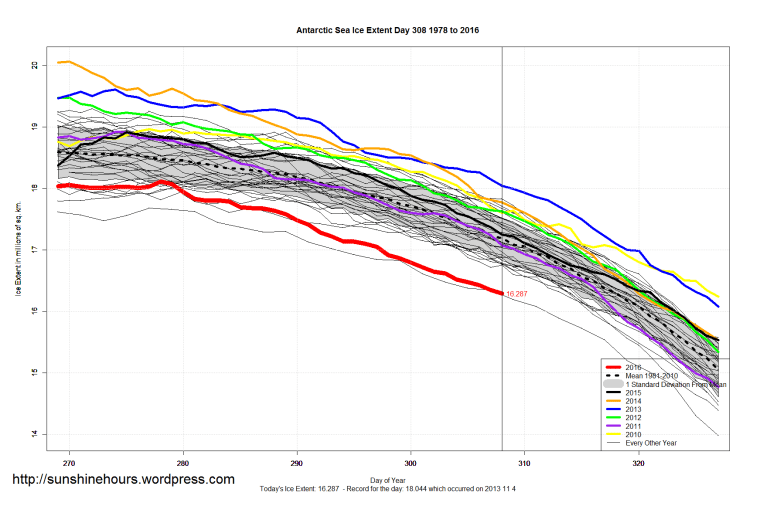
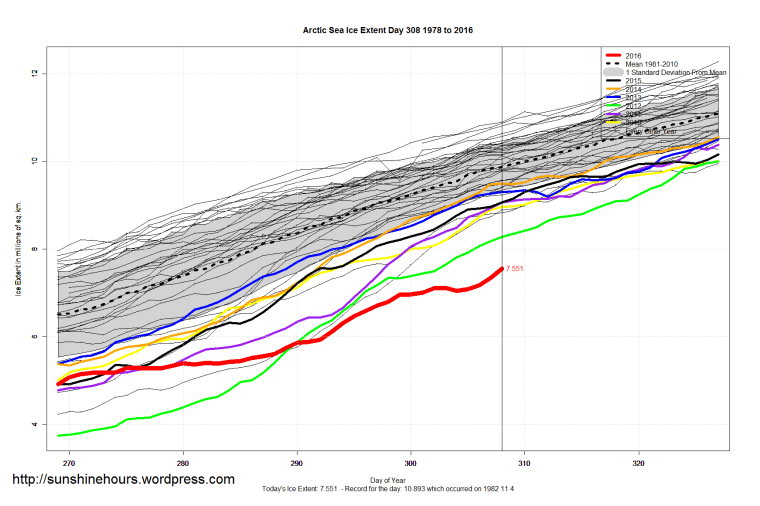
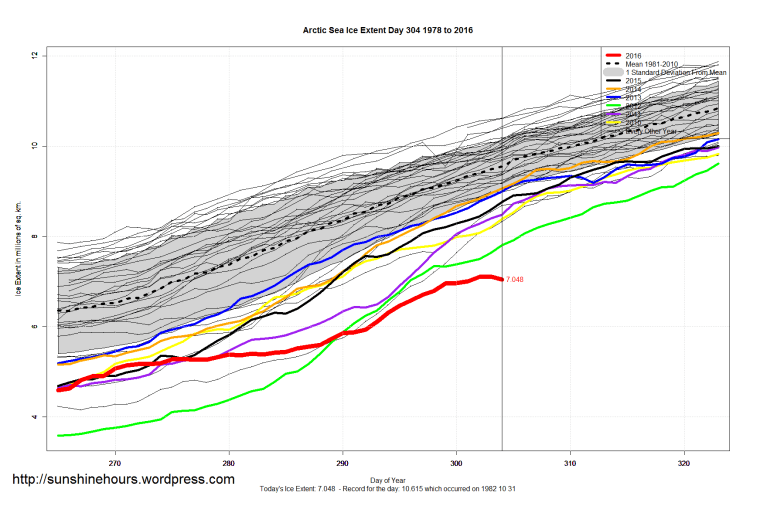
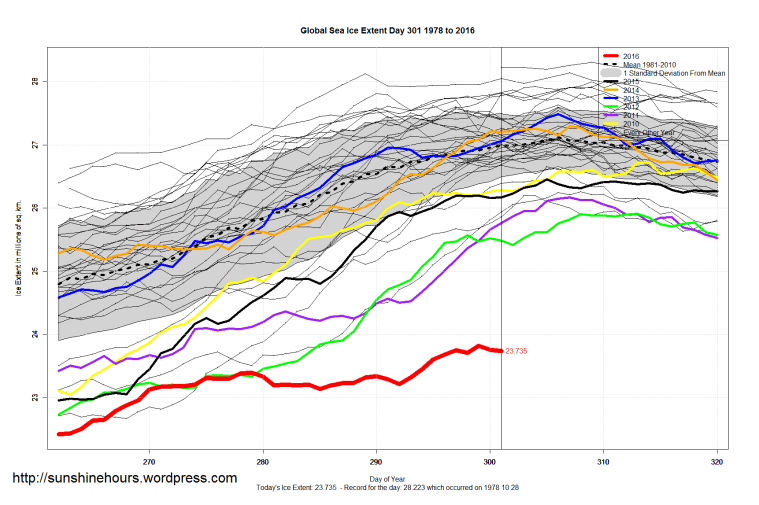
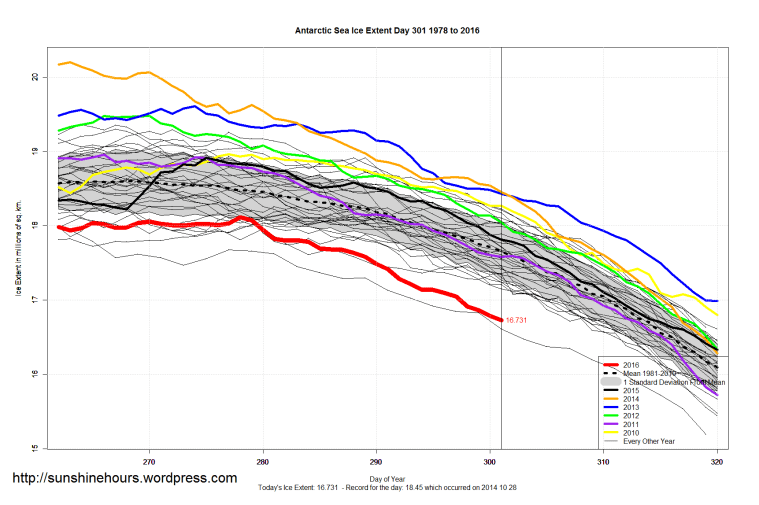
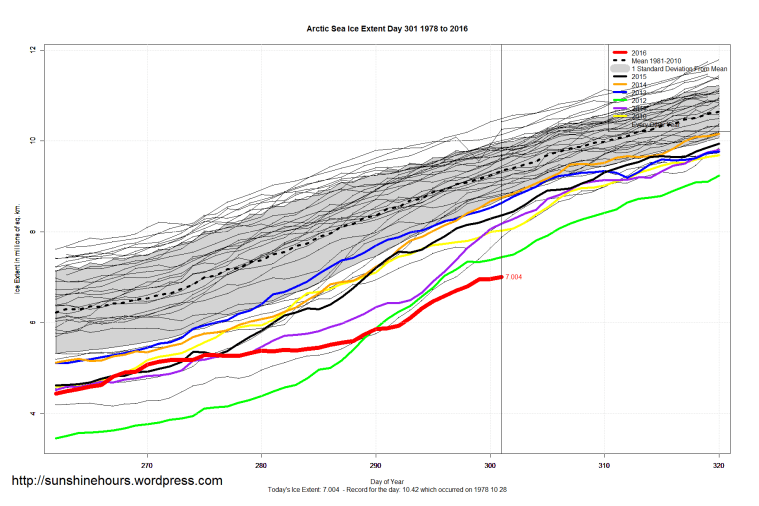
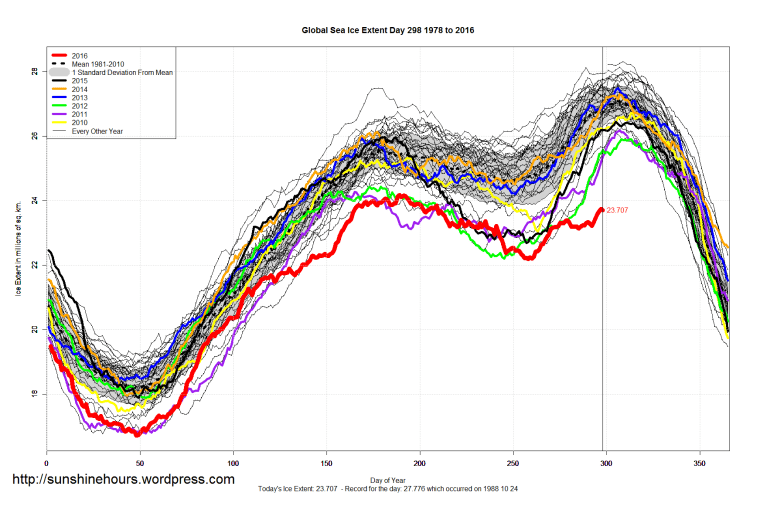
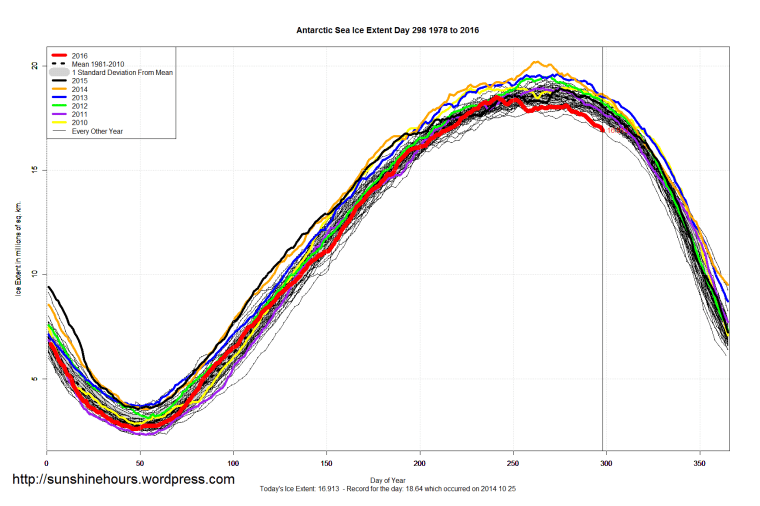
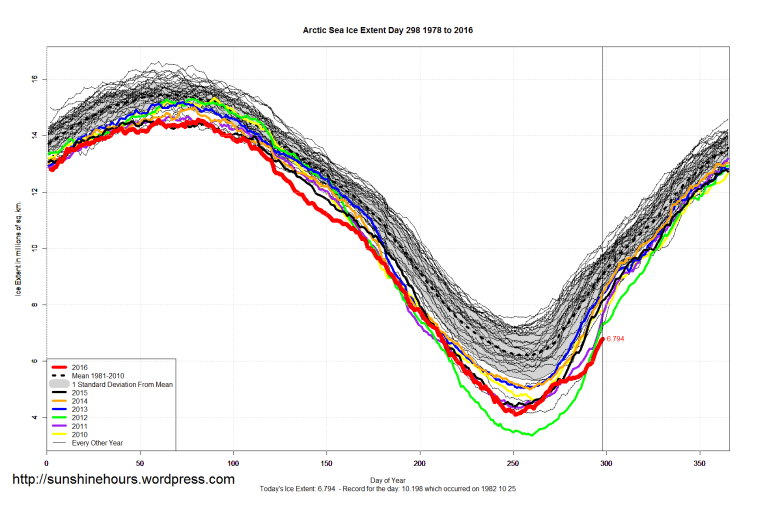
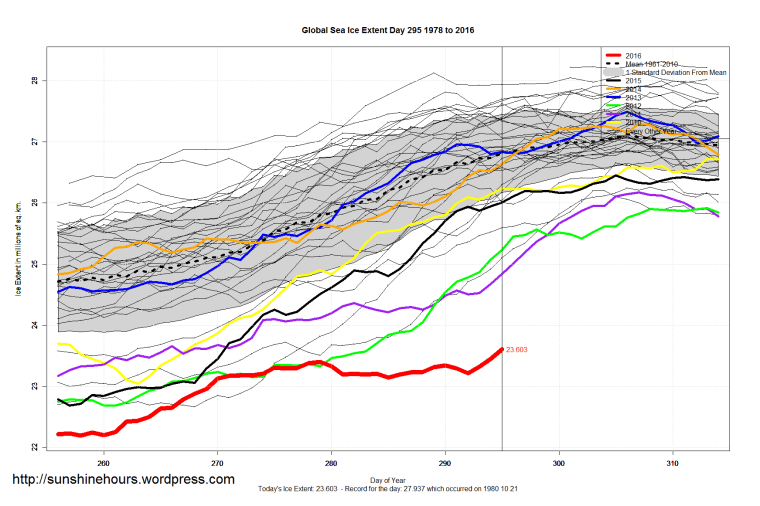
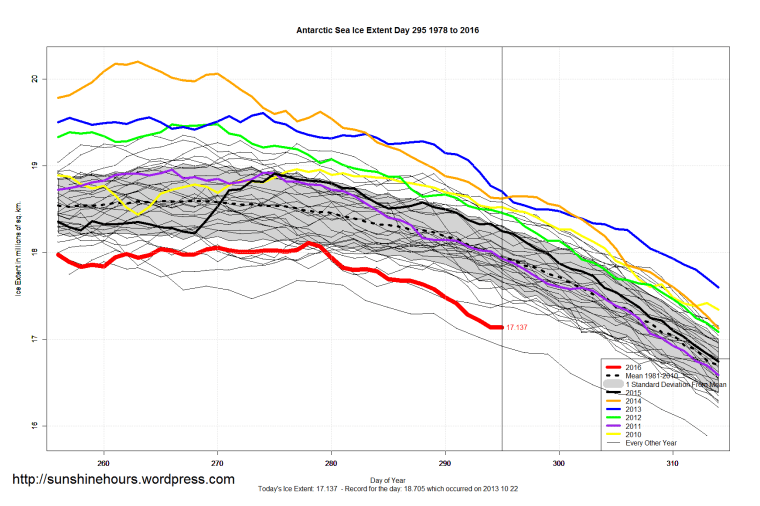
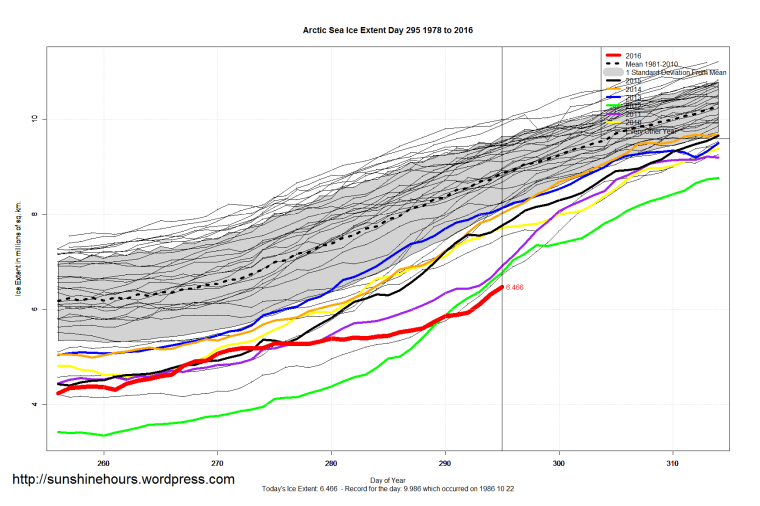
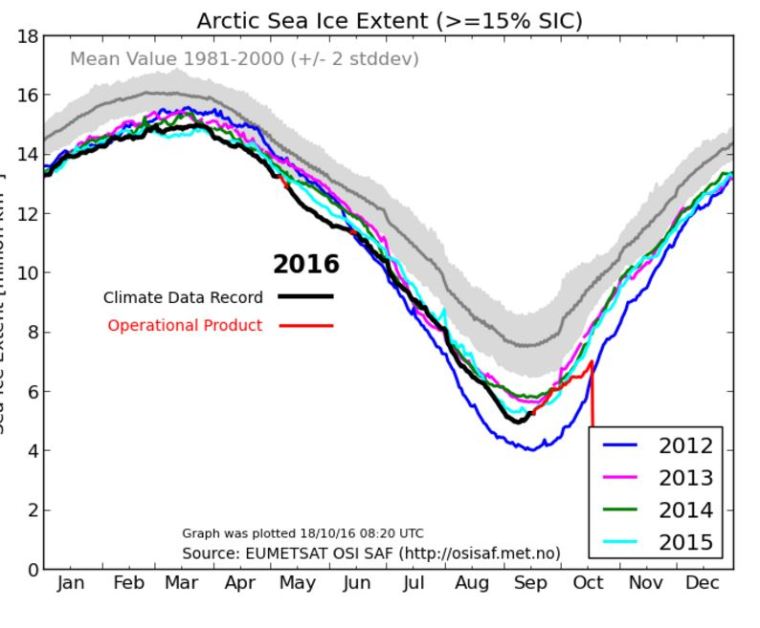
I’m starting to think that F18 isn’t working right. The data just looks so wrong.





 sunshine hours