Ontario spills cheap hydro for expensive wind – And Wants More

Idiots are running Ontario. (Ruining … running … same difference)

Ontario continues its buy-high, sell-low policy for electricity by wasting cheap hydro in favour of expensive, intermittent wind. And the government is contracting for more, says Parker Gallant.

Calculations are:

Wind generation cost @ $133/MWh (1.7 TWh @ $133 million per TWh = $226 million)

+ gas generation backup of 330 MW (assuming an average of $12,500 per MW per month and 60% capacity generation per MW) = $150 million

+ the cost of spilled hydro @ $44 million per TWh = $75 million for 1.7 TWh.

The total cost (without inclusion of steamed-off nuclear, cost of solar power, losses of revenue for exports, etc.) is

$451 million for the 1.7 TWh OPG spilled.

Cost to Ontario ratepayers for the 1.7 TWh OPG spilled cost ($451 million/1.7 TWh) = an average of 26.5 cents per kWh.

What this means: the Green Energy Act and its many flaws has created a situation where publicly and privately owned generators suffer no consequences from producing power “out of sync” with demand, and as a result, electricity ratepayers are penalized by paying six times the actual cost for a kilowatt of electricity (including a built-in profit).
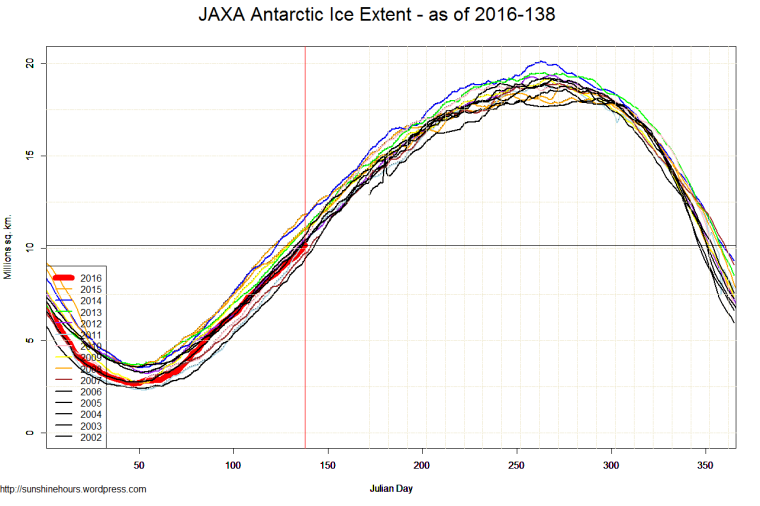
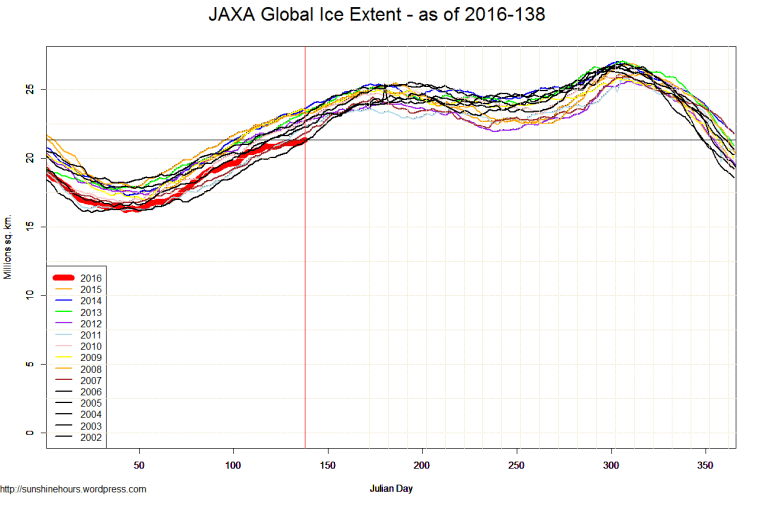
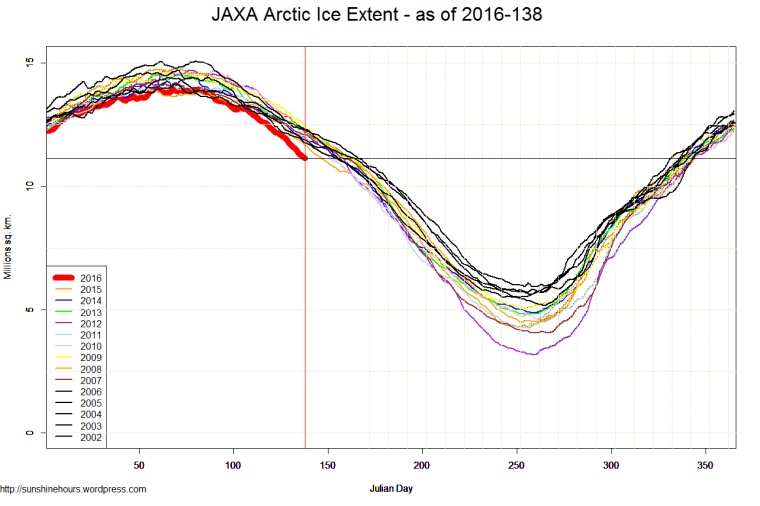
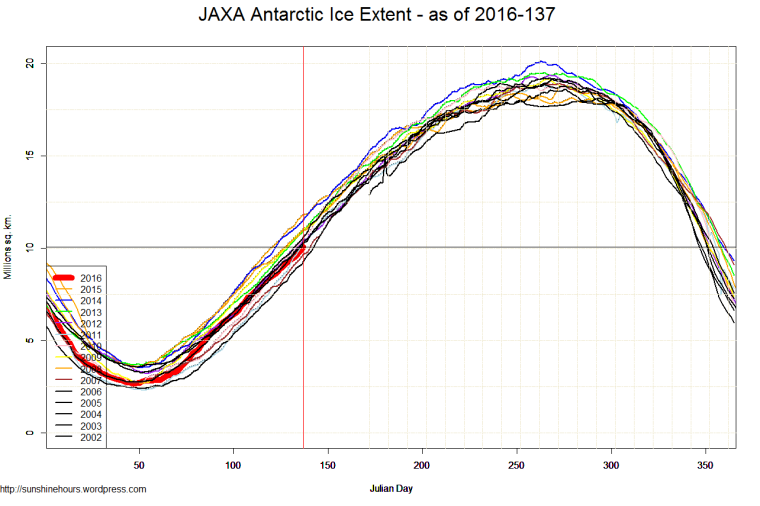
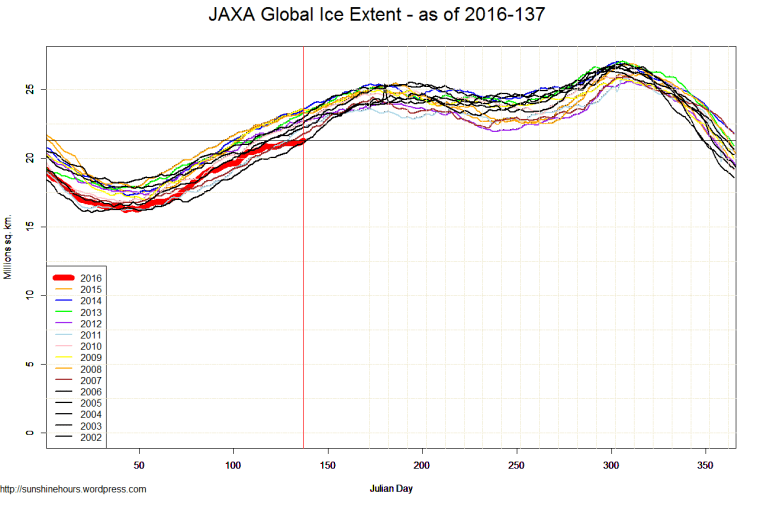
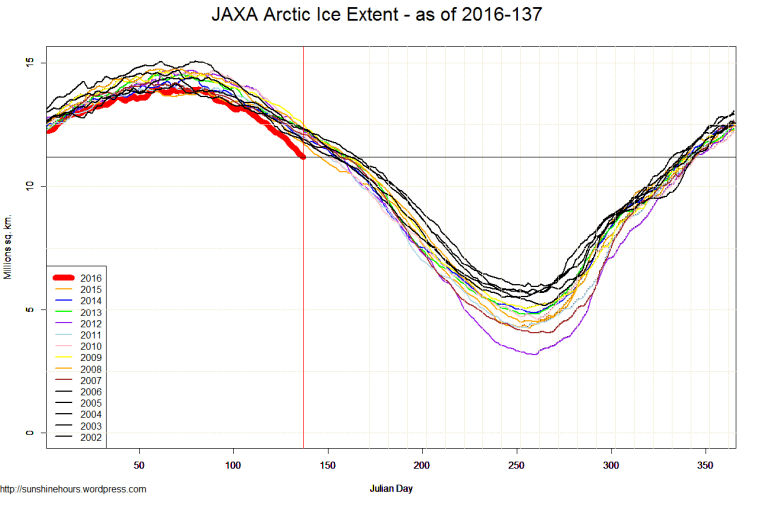
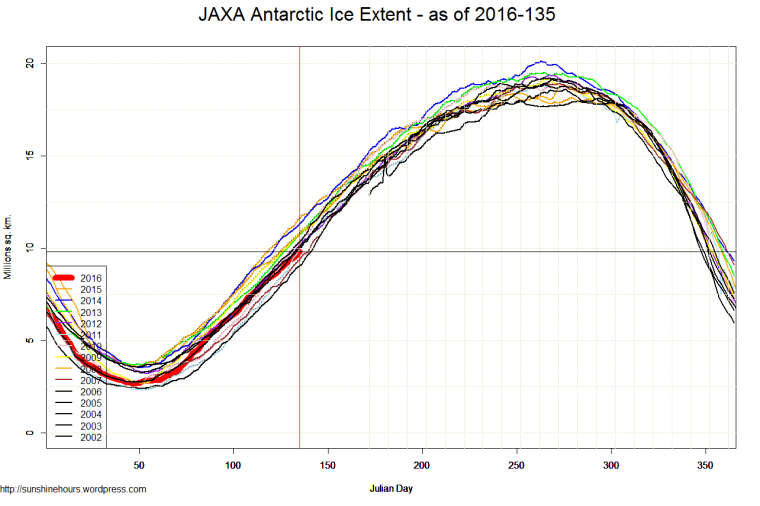
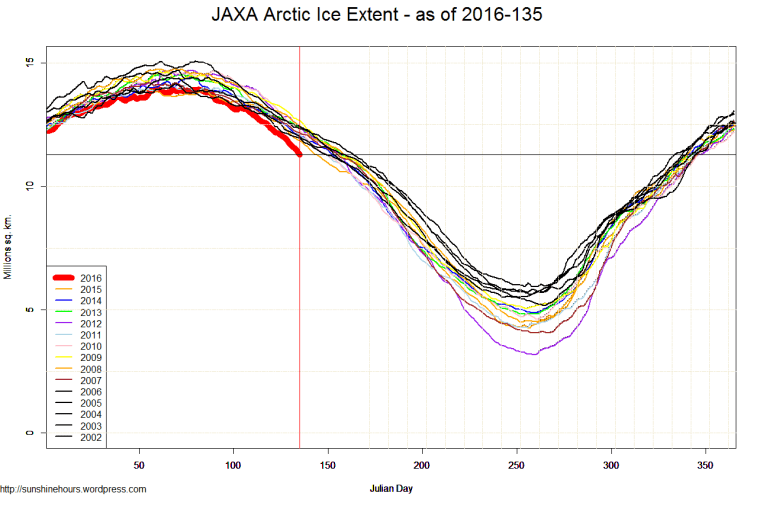
JAXA Sea Ice Extent (Antarctic and Arctic and Global) – Day 138 – 2016

JAXA sea ice extent data from Japanese Aerospace Exploration Agency.

JAXA Antarctic Ice Extent - as of 2016-138 JAXA Global Ice Extent - as of 2016-138 JAXA Arctic Ice Extent - as of 2016-138


Stop Farming? And Why blame combusition?

Interesting study demonizing “combustion emissions” and farm emissions”

Emissions from farms outweigh all other human sources of fine-particulate air pollution in much of the United States, Europe, Russia and China, according to new research. The culprit: fumes from nitrogen-rich fertilizers and animal waste combine in the air with combustion emissions to form solid particles, which constitute a major source of disease and death, according to the new study.

The good news is if combustion emissions decline in coming decades, as most projections say, fine-particle pollution will go down even if fertilizer use doubles as expected, according to the new study published in Geophysical Research Letters, a journal of the American Geophysical Union.

Agricultural air pollution comes mainly in the form of ammonia, which enters the air as a gas from heavily fertilized fields and livestock waste. It then combines with pollutants from combustion—mainly nitrogen oxides and sulfates from vehicles, power plants and industrial processes—to create tiny solid particles, or aerosols, no more than 2.5 micrometers across, about 1/30 the width of a human hair.

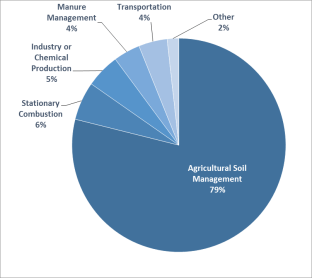
Notice how combustion is evil.gases-n2o

Yet, according to the EPA:

Agricultural soil management is the largest source of N2O emissions in the United States, accounting for about 79% of total U.S. N2O emissions in 2014. Nitrous oxide is also emitted during the breakdown of nitrogen in livestock manure and urine, which contributed to 4% of N2O emissions in 2014.


It isn’t combusion emissions creating N2O!!!!!!!!

JAXA Sea Ice Extent (Antarctic and Arctic and Global) – Day 137 – 2016

JAXA sea ice extent data from Japanese Aerospace Exploration Agency.

JAXA Antarctic Ice Extent - as of 2016-137

JAXA Global Ice Extent - as of 2016-137

JAXA Arctic Ice Extent - as of 2016-137

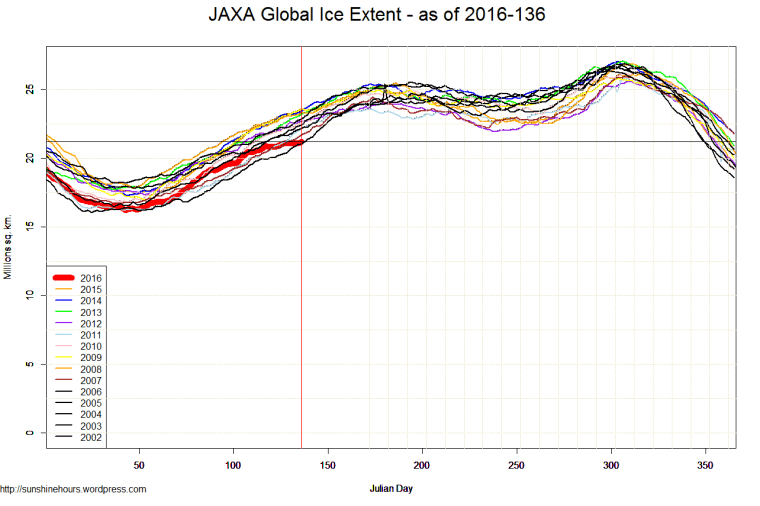
JAXA Sea Ice Extent (Antarctic and Arctic and Global) – Day 136 – 2016

JAXA sea ice extent data from Japanese Aerospace Exploration Agency.

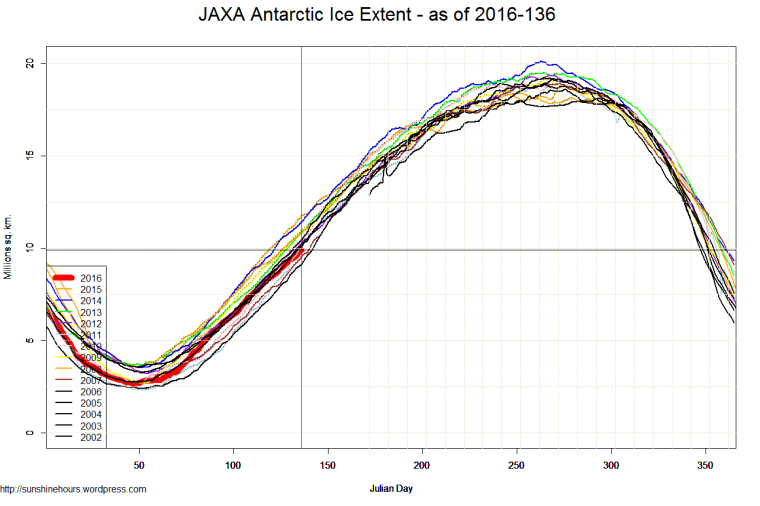
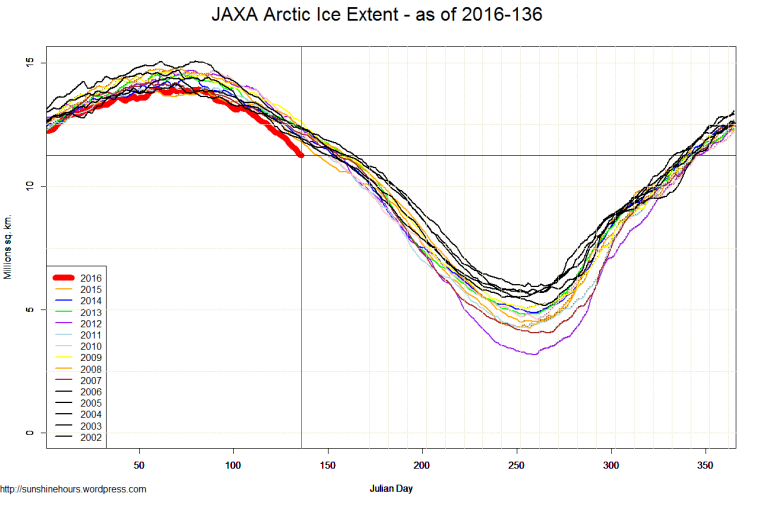
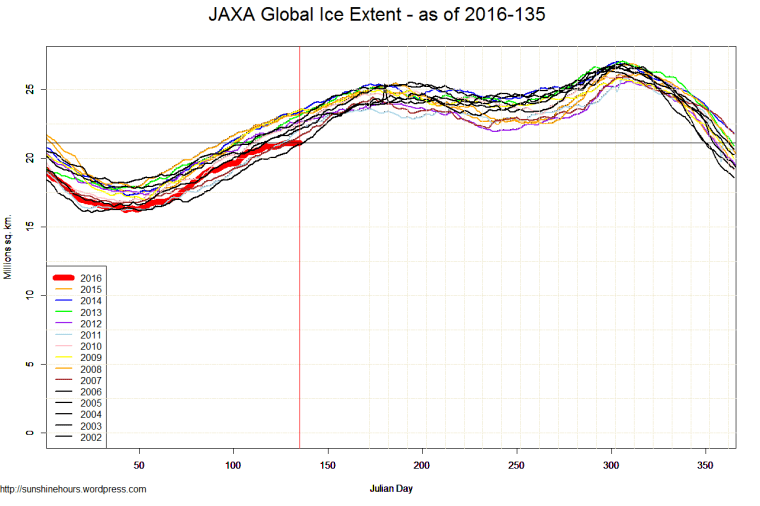
JAXA Global Ice Extent - as of 2016-136 JAXA Antarctic Ice Extent - as of 2016-136 JAXA Arctic Ice Extent - as of 2016-136


USA: CO2 Down 21% Since 2005 – Thanks Fracked Natural Gas!

Fracking is amazing.

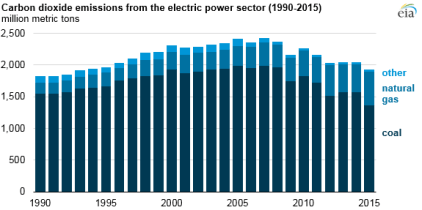
A new report by the Energy Information Administration (EIA) found hydraulic fracturing, or fracking, has pushed CO2-Cutscarbon dioxide (CO2) emissions from electricity generation to the lowest levels since 1993.

Fracking created immense amounts of natural gas, lowering the price and causing the amount of electricity generated from natural gas to pass the amount of electricity generated from coal for seven of the months in 2015, according to the new EIA report. The report specifies that natural gas power plants produce about 40 percent of the CO2 emitted from a coal plant creating the same amount of electricity. This caused U.S. CO2 from the electricity sector to fall by 21 percent since their high in 2005.

“[T]he drop in natural gas prices, coupled with highly efficient natural gas-fired combined-cycle technology, made natural gas an attractive choice to serve baseload demand previously met by coal-fired generation,” read the report. “Coal-fired generation has decreased because of both the economics driven by cost per kilowatthour compared to that of natural gas and because of the effects of increased regulation on air emissions.”