Alberta Electrical Generation: Apr 10, 2016 14:35

As some of you my have noticed I like to mock the idea that wind can take over for fossil fuels.

The mainstream media will generate lots of stories of the maximum amount of power wind can generate. They never show minimums.

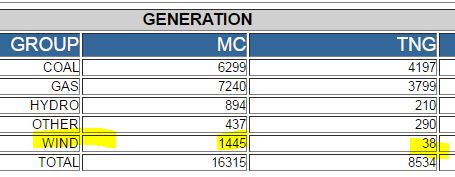
As Apr 10, 2016 14:35  (MC=Maximum Capability / TNG=Total Net Generation)

Wind 38MW out of 8534MW being generated and 38 out of 1445 capability for wind.

AESO_Capture

BC and Alberta – Coal and Hydro

Canada has a lot of hydro power. BC (on the west coast) has about 14GW of capacity and Alberta has about 0.9GW.

Alberta gets 65% of its power from coal. Coal power plants do not easily change power output. Hydro can. And does.CHA-map-CapacityPotential-2015-940px
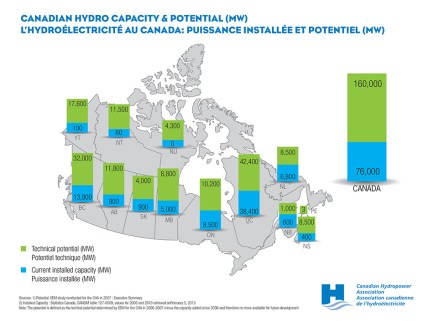
So there are some interesting power trading going on. And things will change if the Alberta NDP succeeds in its plan to shutdown all of Alberta’s coal power plant.

The following is some excerpts for an interesting insight into power trading (a little over a year old). Yes it is an ad for software … but it is darned interesting.

A major obstacle for power traders is the inability to store generated power. However, hydro power has a unique flexibility that most other power producers do not: operators can turn these facilities on and off in the blink of an eye. This practice can turn hydro dams into huge storage facilities.

Ninety percent of British Columbia’s power comes from hydro dams, and the aforementioned “power storage” ability of these units gives BC Hydro greater flexibility when deciding to sell or buy power. As in every business, in the power industry energy producers want to sell their final products at the highest possible rate. At night, power demand, and therefore cost, is low, making energy producers less profitable.

On the other hand, more than 50% of the power generated in Alberta in 2013 came from coal-powered plants. The major downside of this type of power production is the long and costly shut down procedure. This makes the export of surplus power mandatory, since production cannot be tailored to consumption, as is the case with hydro-produced power. Alberta’s unused production is exported to other provinces (mostly to British Columbia: 87%),[1] and mostly in off-peak hours when there is a surplus of production. This power is being exported at unfavorable terms for Alberta plants, given that they need to get rid of the power they cannot store. Prices of exported power are therefore much lower than prices of power imported during peak hours.
1

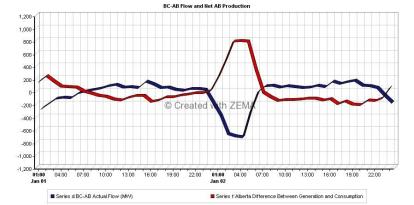
In the graph above, the dark blue strip represents traded (flow) power between British Columbia and Alberta. As we can see, there is a trough that starts at 1 a.m. on January 2 and ends at 7 a.m. At the same time, the red stripe represents the difference between production and consumption in Alberta. The graph clearly shows that abundant power is being exported to British Columbia, given that it cannot be consumed or stored in Alberta. After 7 a.m., though, the opposite occurs. The difference between production and consumption becomes negative, meaning that Alberta needs to import the shortfall amount of power. As the red stripe becomes negative, the blue stripe becomes positive—a mirror image. This is just one example how imports from British Columbia grow in proportion to the gap between production and consumption in Alberta.

Glacier Girl

This is a nice set of pictures I’d never seen before.

On 15 July 1942, due to poor weather and limited visibility, six P-38 fighters of 94th Fighter Squadron/1st FG and two B-17 bombers of a bombardment squadron were forced to return to Greenland en route to the British Isles during Operation Bolero, the buildup of American forces in the United Kingdom.Glacier Girl2

The aircraft were forced to make emergency landings on the ice field. All the crew members were subsequently rescued. However, Glacier Girl, along with the unit’s five other fighters and the two B-17s, were eventually buried under 268 feet of snow and ice that had built up over the ensuing decades.

Fifty years later, in 1992, the plane was brought to the surface by members of the Greenland Expedition Society after years of searching and excavation.

Sea Ice Extent (Global Antarctic and Arctic) – Day 100 – 2016

Another day… more strange jumps in the data. Today it is the Antarctic. I have my doubts about a 2,500,000 sq km jump in one day.

The satellite image seems to have found large areas of imaginary something.

APr_10_2016

Antarctic_Sea_Ice_Extent_Zoomed_2016_Day_100_1981-2010


Arctic_Sea_Ice_Extent_Zoomed_2016_Day_100_1981-2010


South / North

Canada’s Federal NDP to Alberta: “Drop Dead”

What a surprise. The Federal NDP (the socialist party that wants to run Canada) wants to kill the oil and gas industry in Alberta (which is governed by the Provincial NDP).

Alberta’s Environment Minister attacked a proposed NDP policy road map known as the “Leap Manifesto” on Friday, calling the sweeping climate-change plan a betrayal of Albertans who voted for Rachel Notley’s New Democrats.

Speaking a few city blocks away from where 1,500 NDP delegates were gathered for the federal party’s convention, Shannon Phillips said the proposed plan was unworkable in the short term and didn’t recognize Alberta’s climate efforts.

“A lot of people can say a lot of things and talk a lot of things from their downtown Toronto perch, but in Alberta our focus is on ensuring that we’ve got good-paying jobs,” Ms. Phillips said. “That is not talking, that’s doing.”

Party members will vote Sunday on a resolution that would adopt the Leap Manifesto as a reference point to shape the NDP’s policy discussions over the next two years. The document is at the centre of the struggle for the federal party’s leadership. It calls for a speedy transition away from fossil fuels, the rejection of new pipelines and a ban on trade deals.

Isn’t it time for Alberta to ban all purchases of goods from Ontario?

China: 1,000 More Coal Power Plants Exporting Power All The Way To Germany

1,000 more coal power plants for China. And then power exports all the way to Germany.

Coal!!!!

China’s proposed investments in long-distance, ultra-high voltage (UHV) power transmission lines will pave the way for power exports as far as Germany, the head of the national power grid said on Tuesday as he launched an initiative for cross-border power connections

Exporting power to central Asia and beyond falls into China’s “one belt, one road” ambitions to export industrial overcapacity and engineering expertise as it faces slowing growth at home. The plan would allow enormous hydropower dams, coal-fired power plants and wind farms in frontier regions such as Xinjiang to sell into higher-priced markets overseas. The “belt” refers to the land route from Asia to Europe, while the “road”, curiously, refers to the sea route via the Indian Ocean.

Talk of exporting power is a reversal for China, which as recently as 2004 suffered rolling blackouts across its manufacturing heartland. But huge investments in power in the decade since, and the construction of a number of dams, nuclear reactors and coal-fired plants due to begin operating in the next 10 years, mean the country faces a growing surplus.

Liu Zhenya, chairman of State Grid, told reporters that wind and thermal power produced in Xinjiang could reach Germany at half the current cost of electricity there. “There are so many resources, but no market. We need to find it externally.”


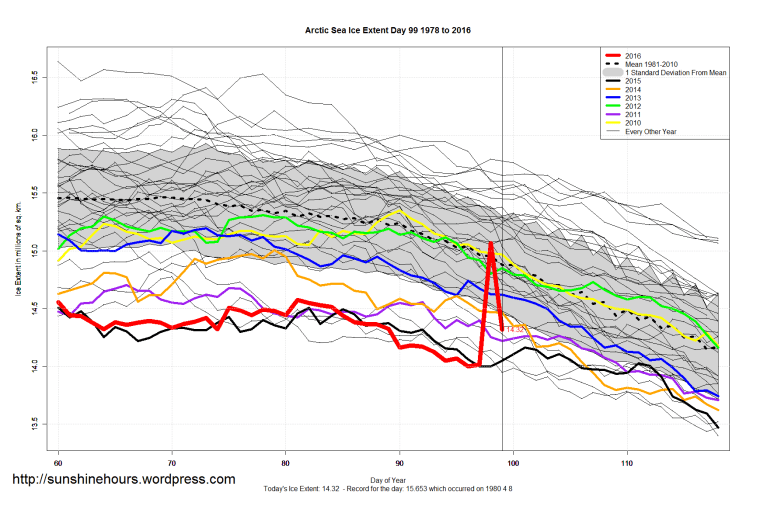
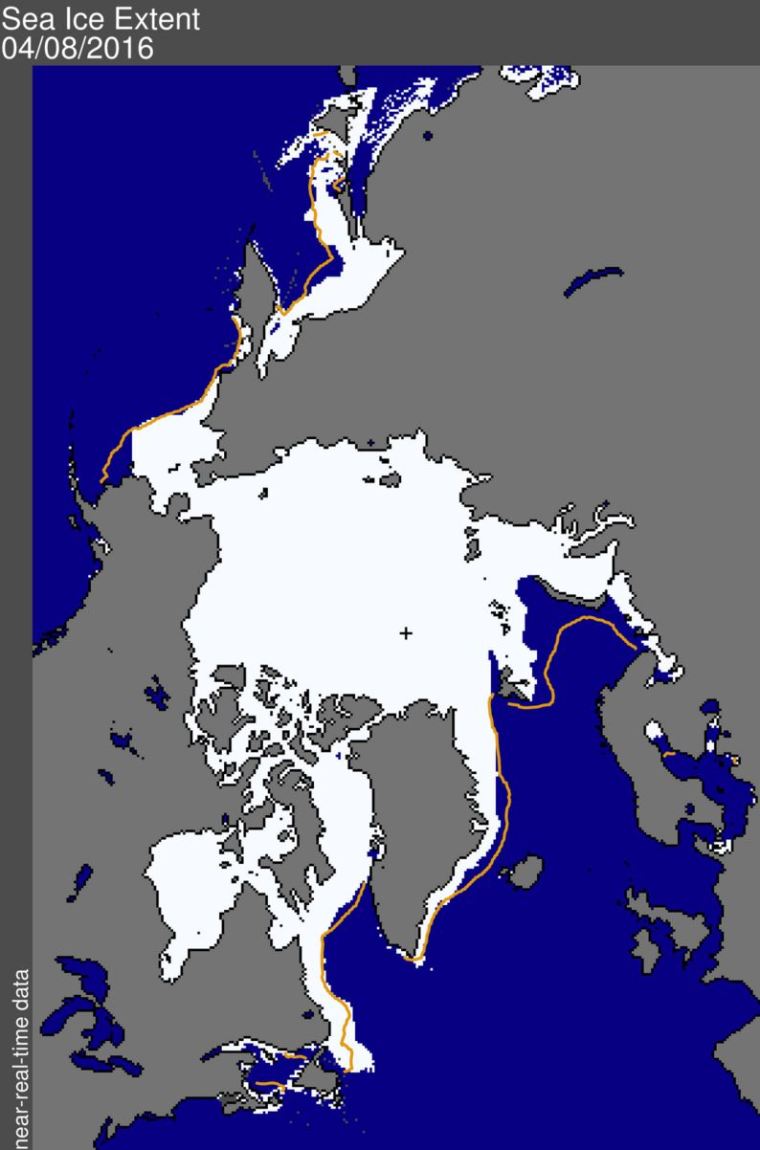
Sea Ice Extent (Global Antarctic and Arctic) – Day 99 – 2016

Another day… still more strange jumps in the data. Today it is the Arctic.

Arctic_Sea_Ice_Extent_Zoomed_2016_Day_99_1981-2010

APr_9_2016


South / North

Word of the Day: Dunkelflaute

Word of the day:

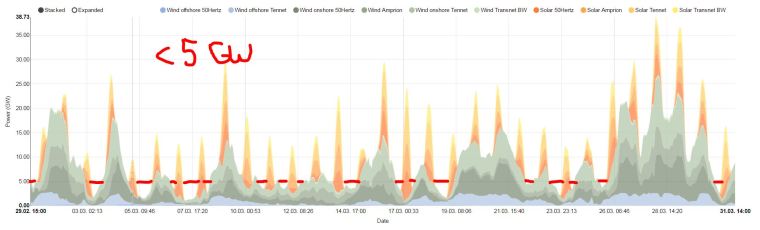
In German, the term Dunkelflaute is used to describe the predicament. Dunkel means “dark”; solar is simply not available half the time, and solar power production is significant for only around six hours a day even when the sun is shining. Flaute is “doldrums” – when the wind is not blowing. So the “dark doldrums” are times when solar and wind power is not available in sufficient amounts.

This chart is just wind+solar for March in Germany. Red lines are periods less than 5GW.

APr_8_2016

California: 14 Days of Blackouts This Summer Possible

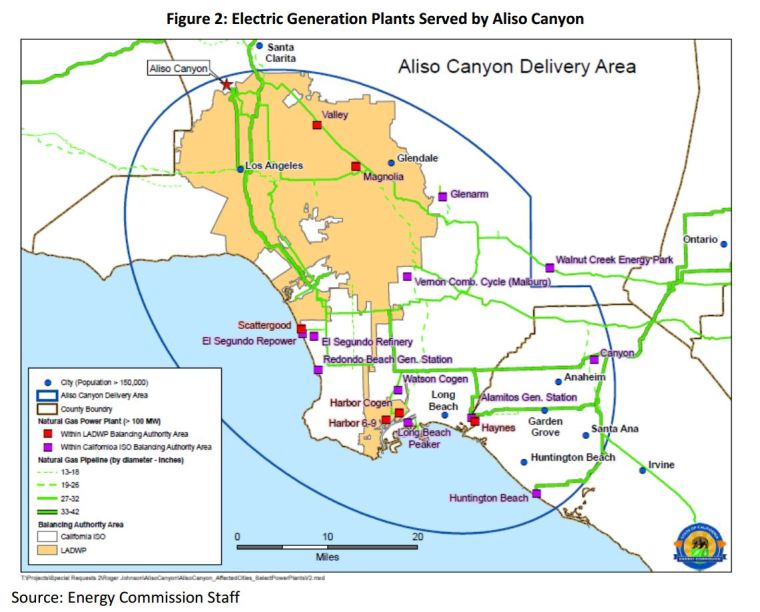
The  Aliso Canyon gas storage facility has a leak. That could mean 14 days of blackouts. (UPDATE: Affected Region Map at bottom)

And if they empty the gas, and the leak is nor fixed by the winter, things will be worse in the winter.

Several actions are underway to respond to the major natural gas leak that occurred at the Aliso Canyon Natural Gas Storage Facility on October 23, 2015. With the leak now stopped, there is a moratorium that prohibits the operator of the facility, Southern California Gas (SoCalGas), from injecting natural gas into the underground reservoir until a comprehensive safety review of the facility is completed. This safety review requires that all 114 wells in the facility are either thoroughly tested for safe operation or removed from operation and isolated from the underground reservoir.

The implementation of these safety measures means that the Aliso Canyon facility is not operating as it normally does to provide gas for the energy demands in the Greater Los Angeles area. Only 15 billion cubic feet of natural gas remains in the Aliso Canyon underground reservoir—less than one-fifth of the capacity of the facility—for use to maintain electrical and gas service in the region if it is needed.

The Aliso Canyon facility has operated for decades as a critical part of the natural gas transmission and distribution system in the Los Angeles region. Aliso Canyon provides gas supplies to 11 million customers for home heating, hot water and cooking fuel. The facility also provides gas supplies to natural gas-fired power plants that play a central role meeting regional electrical demand. Aliso Canyon is critical to meeting peak gas usage demands in winter months and helping to meet peak electrical demands during the summer months.

The engineering analysis, which applied complex industry standard hydraulic modeling to simulate operations on the SoCalGas system suggests that without any gas supply from Aliso Canyon, there are 14 days this coming summer during which gas curtailments could be high enough to cause electricity service interruptions to millions of utility customers. Factors leading to gas curtailments, even 3 on days with only moderately high demand, include differences between gas scheduled and received into the SoCalGas system (receipts) versus actual customer demand (sendout) as small as 0.15 Bcf; gas storage and pipeline maintenance work planned for this summer, and unplanned outages.

Using the 15 billion cubic feet of gas currently stored at Aliso Canyon as directed by the CPUC and taking several other actions described below can reduce – although not eliminate – the possibility of these electric interruptions. It is also important to note that, using most or all the gas remaining in Aliso Canyon during this summer would result in greater risk of shortages next winter if normal operations of the facility are not restored in time to store new gas there for winter use.

This map shows the Aliso Canyon Delivery Area:

APr_8_2016

Generating Your Own Electricity Cheaper

I do a lot of reading on climate and electricity generation.  Sometimes I come across stuff that surprises me.

One of those is a couple of blog posts / news articles that show that generating your own electricity may be way cheaper than getting it from the grid. That’s because NG is cheap and bulk electricity from power companies forced to subsidize renewables is not.

The data from this one is from the end of 2014. But a quick check shows costs would be similar today. The scale of generation is condo building sized using CHP natural gas — the hot water is used too.

If you have read my blog entitled, “What is the Best Kind of Generator For a Condominium Building” you will know that the cost of electricity from the grid is increasing and that the most cost effective way to generate our own electricity is by using a natural gas powered combined heat and power (CHP) generation system.

We will recall that when we use the waste heat from the generator for space heating or hot water heating in the building. We then get heat and electricity from the gas we burn in the generator. Using the combined heat and power (CHP) approach the efficiency of natural gas generators is boosted into the 70 to 90% range.Cost of Electricity 2006-2014

So, let’s do some calculations and see if it makes financial sense for a condominium to generate its own electricity.

If we know that the energy consumption rate of a typical 65kW gas generator is 900 Mega joules per hour and that the energy content of natural gas is typically about 40 Mega Joules per cubic metre, then the generator will consume about 900 Mega joules per hour divided by 40 Mega joules per cubic metre or 22.5 cubic metres of gas per hour. Since 35% of the energy is used to generate electricity and the generator total fuel efficiency is 85%, we can divide 35% by 85% to determine that 41% of the fuel is being used to generate the 65kW of electricity. So, if we multiply 22.5 cubic metres per hour total gas consumption by the 41% portion used to generate electricity, we find that the generator is consuming 22.5 times 41% or 9.23 cubic metres per hour to generate 65 kilowatt Hours (kWHr) of electricity.  If we use the 18.5¢ per cubic metre 2014 cost for natural gas we can determine that the generator is using 9.23 cubic metres per hour times 18.5¢ or about $1.71 per hour to generate 65 kWhr of electricity. We can determine the cost per kilowatt hour by dividing the hourly cost by amount of electricity or $1.71 per hour for gas divided by 65 kWHr electricity generated, which equals about 2.6¢ per kilowatt hour.   (These calculations are made on the basis that the other 59% of the fuel is being used to generate useful heat that will have the same value as the cost of the natural gas used to create the 50% heat.)

This 2.6¢ per kilowatt hour electricity cost will fluctuate with cost of natural gas and from generator to generator and we need to add about 1.2¢ per kilowatt hour for operation and maintenance, giving us a total cost of about 3.8¢ per kilowatt hour. It is easy to see that 3.8¢ will be much less than the current mid-peak cost of 11.4¢ per kilowatt hour from your local electrical utility.

This article is about a new grocery store, but the key paragraphs are here:

But the 19,000 square foot Sunripe is the centerpiece.

“It will have a little more of a modern look than the existing London and Sarnia stores” says Willemsen. With LED lighting and a natural gas generator Willemsen says the store will be able to go off the Provincial power grid.

“Natural gas is so inexpensive that we will be able to produce our own electricity cheaper than buying it from Hydro One”.

Willemsen says he is taking steps to make the new store as energy efficient as possible. Cooking equipment will be natural gas and the store will have a white roof to reflex the sun. Heat from refrigeration compressors will be reclaimed and directed back into the heating system.

CHP for greenhouses (and don’t forget the subsidies and incentives)

Then there are the sites touting micro-CHP that would be eligible for feed-in-tariffs in the UK.