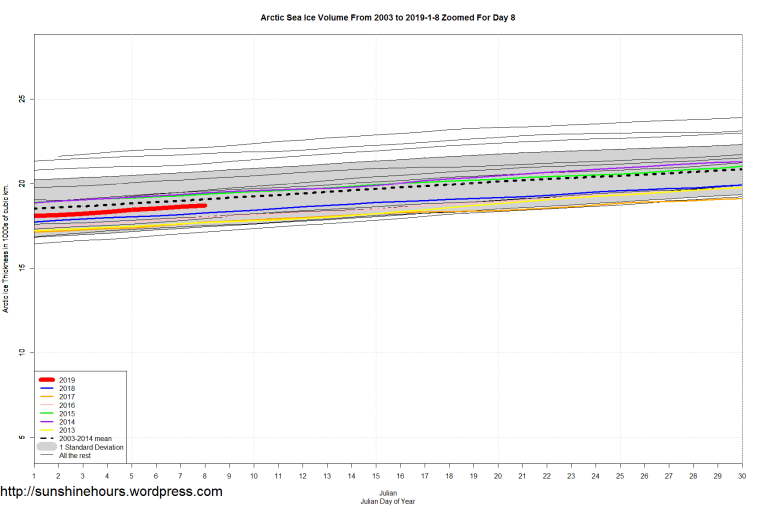
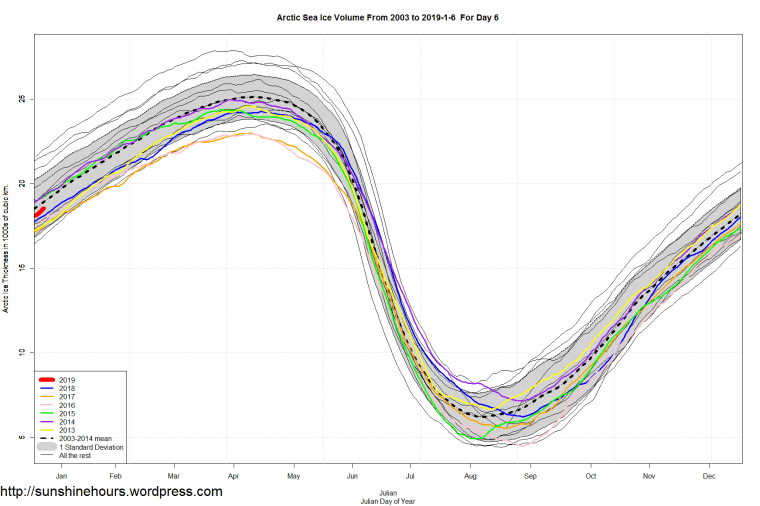
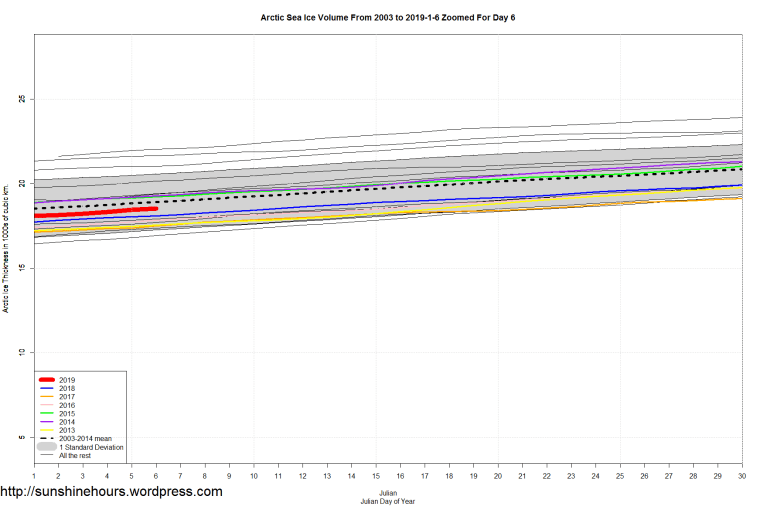
Arctic Sea Ice Volume 8-Jan-2019

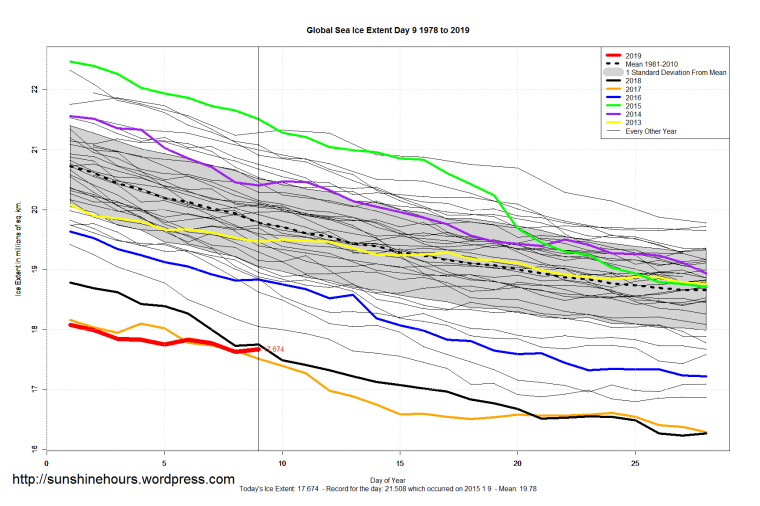
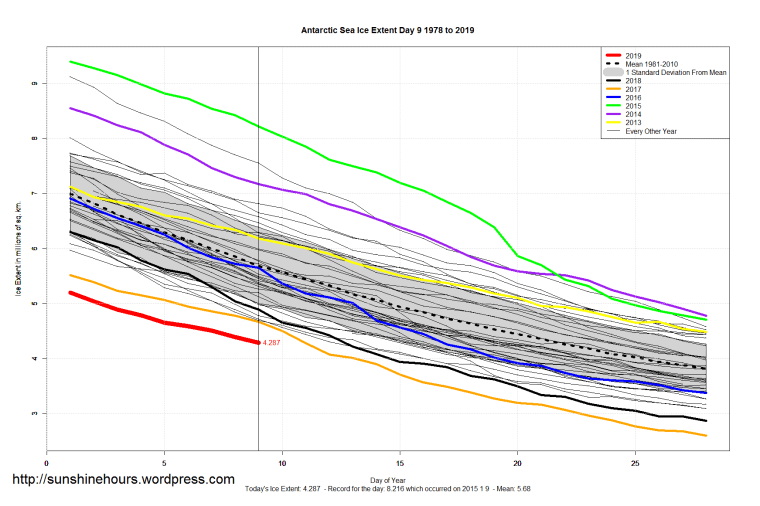
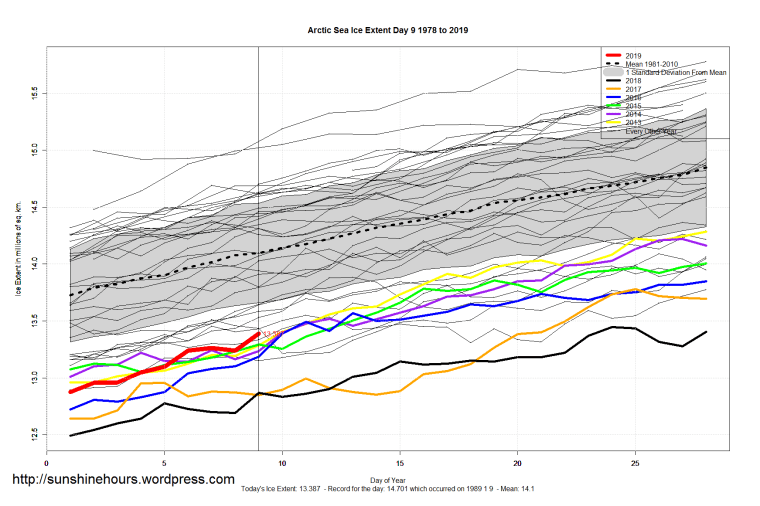
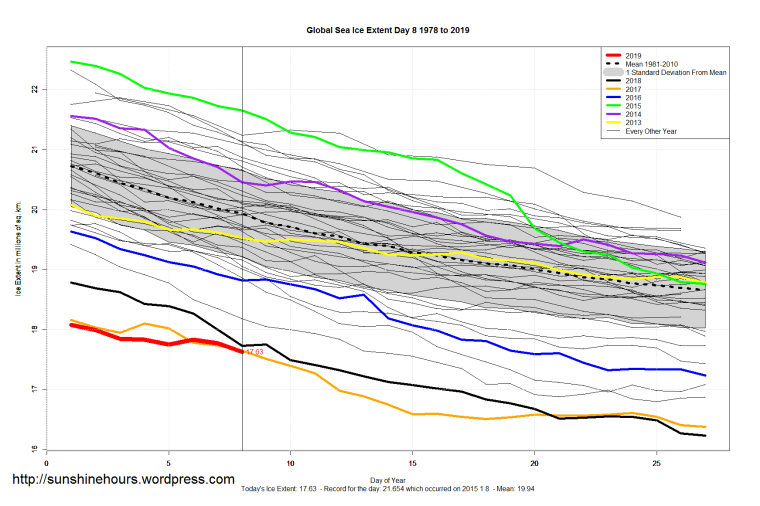
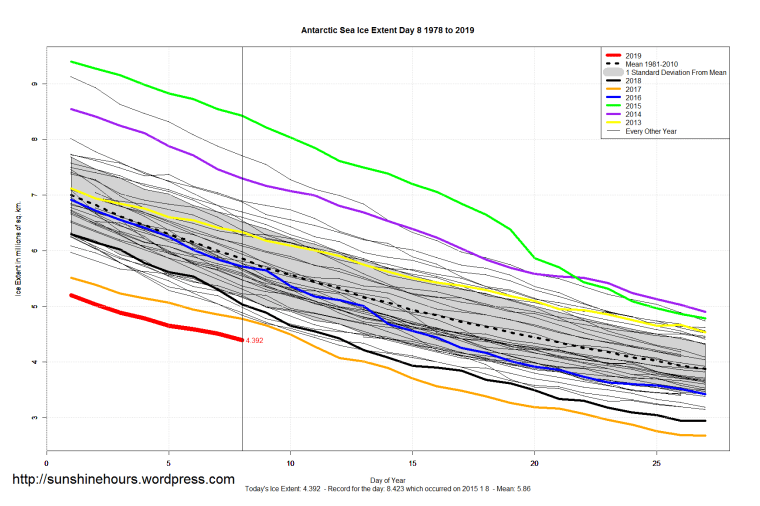
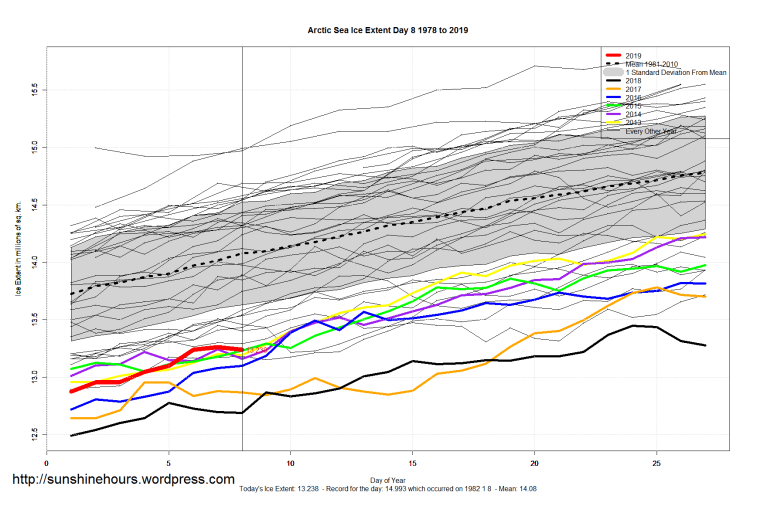
Sea Ice Extent (Global Antarctic and Arctic) – Day 8 – 2019
SpaceX Fairing Capture Test — So Close!
“SpaceX just missed catching the faring on the last launch. The faring is waterproof and can still be reused.
Catching the faring will make reusing the farings cheaper. There will be less work needed for reuse.”
NZ ‘Meteor’ Was Russian Space Junk
The other day I posted about a meteor over New Zealand.
It appears to have been Russian space junk.

It was an astronomically exciting weekend for stargazers – people from around the North Island witnessed a possible meteor or space junk sighting about 9pm on Saturday.
The rare event tore across the sky above the Sri Lanka versus New Zealand cricket match at Bay Oval, Mount Maunganui. Footage from the match captured several pieces moving in a bright cluster, breaking up before being swallowed into the dark of the night sky.
Aficionados were quick to dispel theories it was a meteor, claiming it was more likely to be space junk. But what was it?
Experts have named a Russian military satellite – Kosmos 2430, a satellite launched in 2007 as part of Russia’s Oko space programme – as the most likely object that lit up the sky.
While some satellites stay above the same spot on Earth, Kosmos 2430 orbited an area above the northern hemisphere giving it time to look over the United States. Its entire orbit would take about 12 hours.
SO WHERE DID IT LAND?
As ships, stations, and other satellites come crashing down to Earth, many end up making planet-fall at the same spot in the Pacific Ocean just south of New Zealand, according to Atlas Obscura.
For years these downed science vessels have simply sunk down to the bottom of the sea in a place now known as the Spacecraft Cemetery.
Arctic Sea Ice Volume 7-Jan-2019
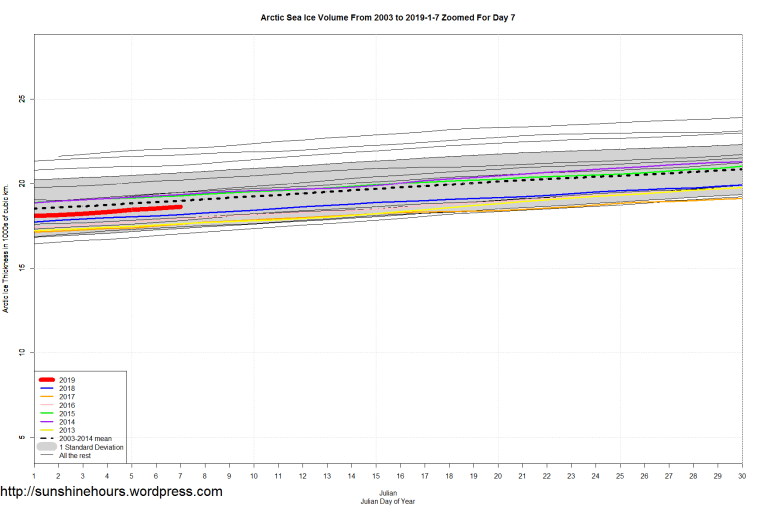
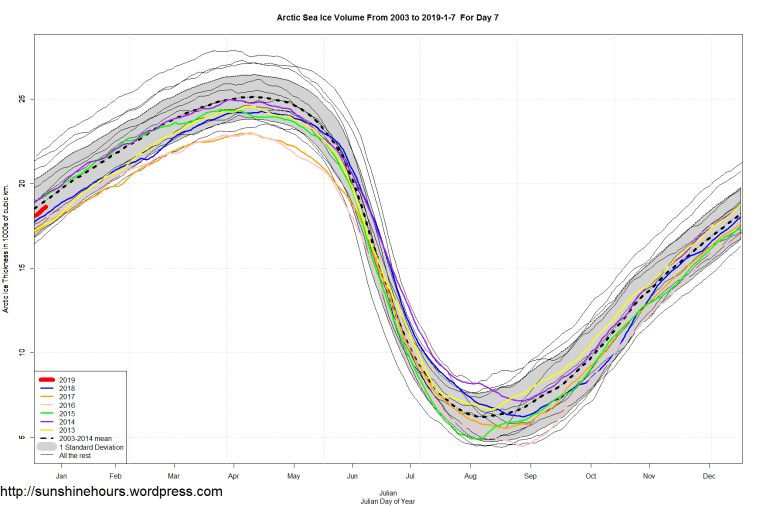
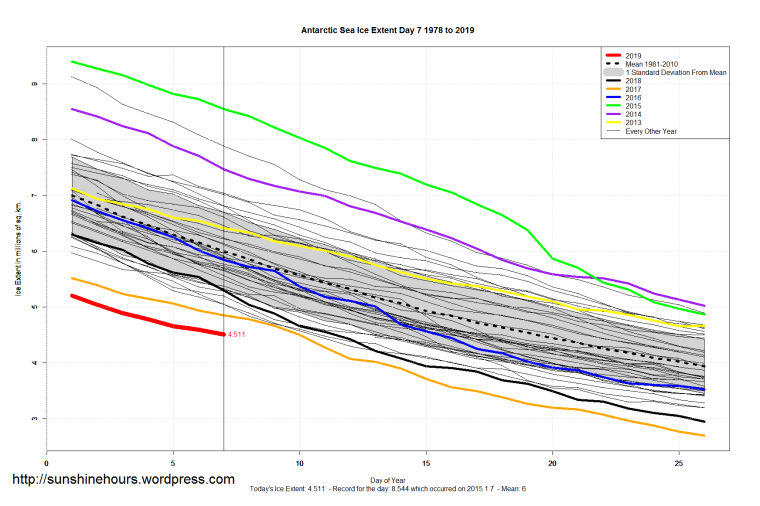
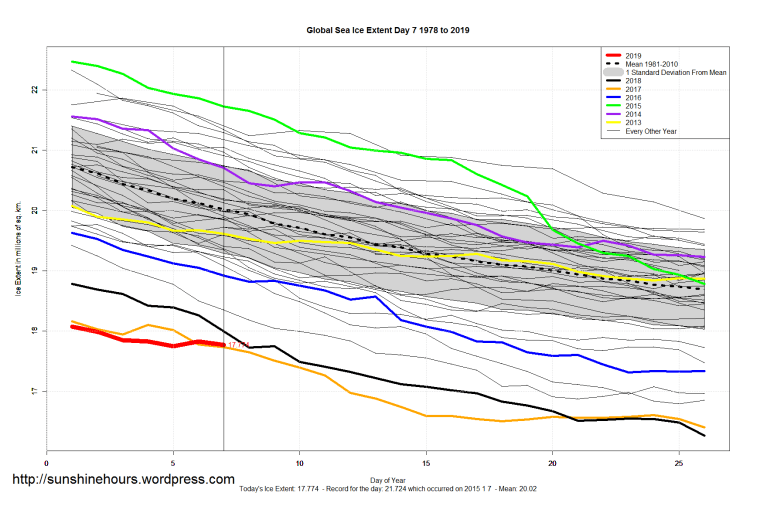
Arctic 564,000 sq km Higher Than 2018 – Sea Ice Extent (Global Antarctic and Arctic) – Day 7 – 2019

PBS: Wash Your Clothes In Cold Water – Reality: Bacteria Like It Cooler
PBS is ranting away at people for not doing enough to fight climate change.
“Washing clothes in cold water can save up to 15 pounds of carbon emissions per load, depending on your washing machine and your energy supplier.”
“Lower the water heater temperature from the normal preset of 140 degrees Fahrenheit to 120,” Heede said. “That’s easy enough, and it prevents scalding by friends and visitors.”
PBS are idiots.
The average pair of clean underwear still contains about 0.1 grams of feces and could hold up to 10 grams, according to a Journal of Infection study led by Charles Gerba, PhD, microbiology professor at the University of Arizona. (Could the fact that this surprisingly high percentage of people don’t wash their underwear be to blame?)
If you aren’t already doing your laundry in hot water, it might be time to start. Anything below a hot cycle of 140 degree Fahrenheit won’t do much against bacteria, says Dr. Gerba. Cold water is “designed to get clothing clean but not eliminate microorganisms,” he says. Using an activated oxygen bleach detergent like OxiClean or Clorox 2 can sanitize your clothes, even if you don’t want to throw your delicates in hot water, says Dr. Gerba. (Don’t miss these other 7 tricks for washing clothes without ruining them.)
Without hot water and bleach, bacteria from your underwear can spread to other clothes in the wash too. Unloading that “clean” laundry into the dryer gets bacteria on your hands, which means you could spread it to other fabrics or even up your risk of infection by spreading the bacteria to everything you touch. Keep your underwear separate from the rest of your laundry to avoid spreading the germs, suggests Dr. Gerba. (Find out how often you should be washing your towels—most people don’t clean them enough.)
Even those best practices might not get rid of bacteria completely, though, because those germs don’t just disappear after your clothes have been in the laundry. (Learn how to tell if you use too much laundry detergent.) Some of that bacteria—including E. coli—stick around in the machine after the cycle is over, says Dr. Gerba. Washing your underwear last will keep that away from your other loads, but you should clean the machine itself by running an empty cycle after every underwear load. “Give the washing machine a mouth wash by running bleach through it and killing bacteria left,” he says.
And then there is Legionnaires Disease, which is temperature sensitive.
* 70 to 80 °C (158 to 176 °F): Disinfection range
* At 66 °C (151 °F): Legionellae die within 2 minutes
* At 60 °C (140 °F): Legionellae die within 32 minutes
* At 55 °C (131 °F): Legionellae die within 5 to 6 hours
* Above 50 °C (122 °F): They can survive but do not multiply
* 35 to 46 °C (95 to 115 °F): Ideal growth range
* 20 to 50 °C (68 to 122 °F): Legionellae growth range
* Below 20 °C (68 °F): Legionellae can survive but are dormant
UK Sunshine and Temperature Anomalies 2018
In general, more sunshine in winter made it colder and more sunshine in summer made it warmer.
2018 is the 2nd highest sunshine hours with 1580.7 hours. Only 6.1 hours below 2003.


 sunshine hours