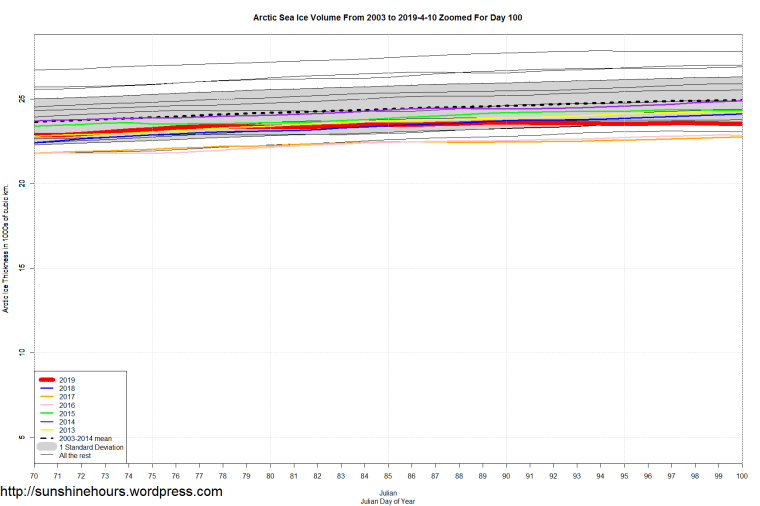
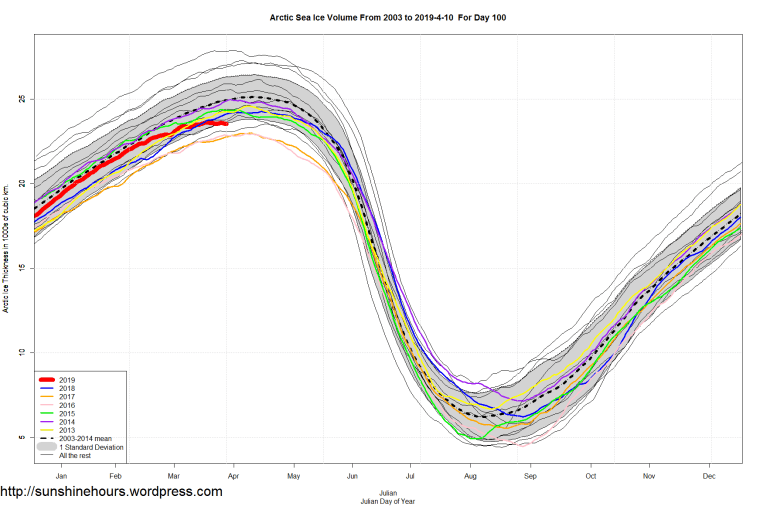
From DMI
From DMI
A recent report, commissioned by Environment and Climate Change Canada (also known as the federal Department of the Environment), sparked a feverish bout of media coverage. Much of it keyed off the headline statement that Canada warmed “twice as fast” as the entire planet since 1948. If that is self-evidently a bad thing, what to make of the finding that the Canada’s Atlantic region warmed twice as fast as the Prairies? Or that Canadian winters warmed twice as fast as summers?

I’ll bet you didn’t know that the Maritimes warmed twice as fast as the Prairies. But now that I’ve told you, you might tell yourself it makes sense based on what you’ve seen or heard — that’s called confirmation bias. In fact, I was lying. It’s the other way around. The Prairies warmed almost three times faster than the Maritimes.
The warming we have had over the last 100 years is so small that if we didn’t have meteorologists and climatologists to measure it we wouldn’t have noticed it at all
— Climatologist Lennart Bengtsson
Would you have known either way? One of the psychological effects of a report like this, and the attendant media hype, is that it puts ideas in peoples’ heads. Tell everyone over and over that the climate is changing, and soon they will see proof of change everywhere. Rain, snow, wind, floods or dry spells; it will all seem to eerily confirm the theory, even though we have always had these things.
Most of what people are noticing, of course, are just natural weather events. Underneath, there are slow trends, both natural and (likely) human-caused. But they are small and hard to separate out without careful statistical analysis. A few years ago, climatologist Lennart Bengtsson remarked “The warming we have had over the last 100 years is so small that if we didn’t have meteorologists and climatologists to measure it we wouldn’t have noticed it at all.”
And so we get reports with charts and graphs to tell us about the changes we didn’t notice. Remember last summer when the media hyped a report from the Intergovernmental Panel on Climate Change warning that warming 1.5 degrees Celsius (compared to preindustrial times) was a disaster threshold we must avoid crossing at all costs? Now we learn that Canada warmed 1.7 degrees Celsius since 1948. Far from leaving the country a smoking ruin, we got wealthier and healthier, our population soared, and life improved by almost any measure of welfare you can imagine. If only every so-called catastrophe was like this.
Read it all here
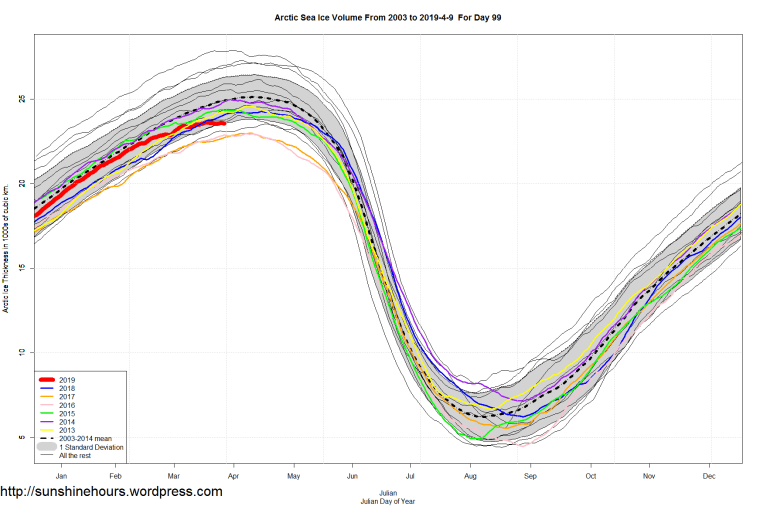
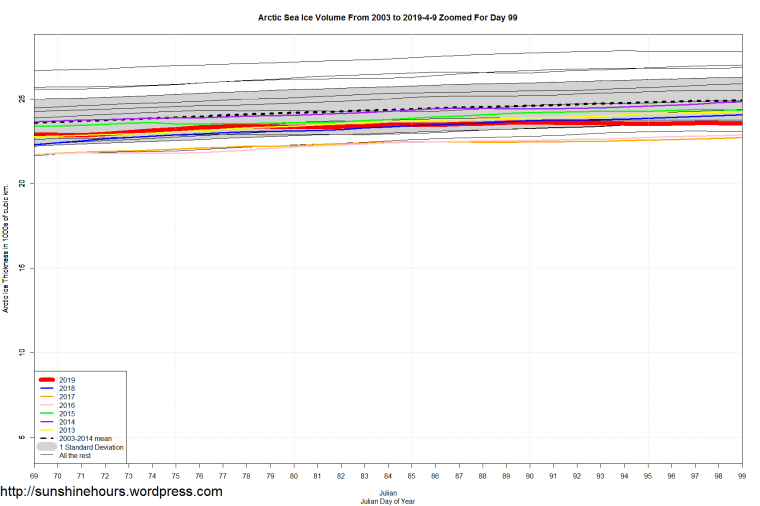
From DMI
From DMI
I referenced this paper a few days ago. This blog post extrapolates the numbers to Canada.
After collecting reams of data, and performing careful calculations, the researchers conclude that US heating bills declined noticeably between 2005 and 2010 “due to the boom in shale production of natural gas.”
That price decline, they write, “caused a 1.6% decrease in the winter mortality rate for households using natural gas for heating.”
Only 58% of American households heat with natural gas, so the drop in the death rate for the US population as a whole over a full calendar year works out to about half a percentage point. The bottom line: lower energy prices saved 11,000 lives annually.
Which brings us to the carbon tax recently imposed on all sources of home heating here in more northerly Canada. Enbridge, the company which supplies natural gas to Ontario homes, says it needs to raise the price it charges households by 11% just to pay for this carbon tax.
If deaths drop when heating costs decline, they’ll surely increase when heating costs spike. So let’s not beat around the bush: Canada’s carbon tax is going to kill people.
Extrapolating from those US numbers, 1,100 Canadians will die unnecessarily next winter. And the winter after that. And the one after that. As the size of the carbon tax increases, the number of annual victims may well rise in tandem.
I think the title of the article is obvious and isn’t new.
But what interested me was the UHI effect and causes and the admission it it huge.
9C
Cities are generally a few degrees warmer than the countryside, due to the urban heat island effect. This effect is caused partly by a lack of moisture and vegetation in cities compared with rural landscapes, and because urban building materials store up heat. During heatwaves, daytime temperatures can get dangerously high in cities, leading to serious health effects and increasing mortality risk.
The idea of ‘cool’ roofs is to make roof surfaces more reflective to sunlight (for example by painting roofs a lighter colour) thereby reducing local temperatures.
Scientists used a regional weather model to look at how temperatures changed across the study city of Birmingham and the West Midlands, depending on the extent of cool roof deployment. They looked at the hot summers of 2003 and 2006, and found that the intensity of the urban heat island (the urban-rural temperature difference) reached up to 9oC for Birmingham city.
Previous work has shown that the extra heat associated with the urban heat island is responsible for around 40-50% of heat related mortality in the West Midlands during heatwaves.
This latest study, published in Environment International, suggests that implementing cool roofs across the city can reduce peak daytime local temperatures by up to 3oC during a heatwave. This reduction in temperature could potentially offset around 25% of the heat-related mortality associated with the urban heat island during a heatwave.
The urban heat island effect is most pronounced at night time, because urban materials slowly release their stored heat overnight, however, the biggest benefits of cool roofs were seen to be during the hottest part of the day where sunlight was reflected away. The type of building made a difference too: modifying only half of all the industrial and commercial buildings had the same impact on lowering temperatures as modifying all the high-intensity residential buildings.
From DMI
The shocking thing is …. they tell people it is natural!
Now academics from Northumbria University, in Newcastle upon Tyne, UK, in collaboration with scientists from ENVEO, a remote sensing company in Austria, have submitted new research to the journal The Cryosphere, which shows that the break-off is part of the ice shelf’s natural lifecycle, and that similar events may have occurred in the past.
As Professor Hilmar Gudmundsson of Northumbria explains: “I have been carrying out research in this area for more than 15 years and have been monitoring the growth of the cracks since they first emerged in 2012.
“Satellite images of the changes in the ice shelf have been shared online and there has been much speculation about the cause of this movement and the impact the iceberg will have when it breaks away.
“However, what many people do not realise is that this is a natural process and something which has happened time and again. We recognise that climate change is a serious problem which is having an impact around the world, and particularly in the Antarctic. However, there is no indication from our research that this particular event is related to climate change.
Read it all here.
Maybe someone should hold a fundraiser for the poor guy about to be kicked out of the cult.
Climate deaths are way down
TUCKER CARLSON: I keep hearing from watching television in this country that many people are dying of climate change in the United States. Is it a leading cause of death here?
BJORN LOMBERG: No, by no means and, look, we actually have pretty good data for how many people die from weather-related disasters, so climate-related disasters, and the truth is over the last 100 years it’s dropped dramatically. Every year in the 1920s, we estimate about half a million people died around the world. Now, we quadrupled the population and, yet, the number has dropped like a stone. It’s 95% reduced. We are now down to about 20,000 people that die every year. This is not because of global warming. This is simply because getting richer means you stop being in trouble when the weather is bad.
Watch the video here.
I’m dreaming of a wet California …
“With full reservoirs and a dense snowpack, this year is practically a California water supply dream,” California DWR Director Karla Nemeth said April 2, 2019, after latest Sierra snowpack measurement.
California state officials made their monthly snowpack measurement at Phillips Station in the Sierra and confirmed there will be no lack of water this year.
Snowpack at the station was at 200% of average while statewide snowpack is 162% of average.
“This is great news for this year’s water supply, but water conservation remains a way of life in California, rain or shine,” California Department of Water Resources said.
The state has experienced more than 30 atmospheric rivers since the start of the water year, six in February alone, and statewide snow water equivalent has nearly tripled since February 1, officials said.
Phillips Station now stands at 106.5 inches (270.5 cm) of snow depth and a snow water equivalent of 51 inches (129.5 cm), which is 200% of average for the location. Statewide, the Sierra Nevada snowpack is 162% of average.
While this is great news, there are some risks involved.
“Based on snowpack numbers, we have the potential for some minor flooding due to melting snow so we remind folks to always stay vigilant and aware,” said Jon Ericson, DWR Chief of the Division of Flood Management.

The state’s largest six reservoirs currently hold between 106% (Oroville) and 132% (Melones) of their historical averages for this date. Lake Shasta, California’s largest surface reservoir, is 109% of its historical average and sits at 89% of capacity.
 sunshine hours