Fuel Efficient GDI Engines Are Dirtier

Oh no … what a surprise …

Researchers at the University of Toronto’s Faculty of Applied Science & Engineering looked at the emissions from gasoline direct injection (GDI) engines, which are smaller and more efficient than traditional petrol engines.

Car manufacturers have adopted GDI engines in models to satisfy demand for more miles per gallon, and increased power output. According to the team, the number of GDI engines found in new cars between 2009 and 2015 has jumped to from five per cent to 46 per cent.

But their analysis revealed while carbon dioxide emissions were lower in GDI engines, they pumped out more soot and harmful organic compounds such as benzene and toluene.

‘The whole motivation for creating these engines in the first place was fuel efficiency. But what we haven’t considered are the other climate-related emissions,’ explained Professor Greg Evans, an engineer and applied chemist at Toronto.

If a vehicle emits a small amount of soot, it can completely negate the lower amount of CO2 that it’s emitting.

Read more: http://www.dailymail.co.uk/sciencetech/article-3688189/Not-green-Fuel-efficient-cars-churning-pollutants-previously-thought.html


NOT CO2????

Wait. It isn’t CO2 causing an early spring?

Human use of artificial light is causing spring to come at least a week early in the UK, researchers at the University of Exeter in Cornwall have found.

New research led by a team of biologists based at the University’s Penryn campus highlights for the first time and at a national scale the relationship between the amount of artificial night-time light and the date of budburst in woodland trees.

The study, the result of a long term collaboration with independent environmental consultants Spalding Associates, in Truro, made use of data collected by citizen scientists from across the UK, after the Woodland Trust asked them to note down when they first saw sycamore, oak, ash and beech trees in leaf as part of the charity’s Nature’s Calendar initiative. The research team analysed this, information, correlated with satellite images of artificial lighting.

The research, published in the journal Proceedings of the Royal Society B, found that buds were bursting by up to 7.5 days earlier in brighter areas and that the effect was larger in later budding trees.

https://www.sciencedaily.com/releases/2016/06/160628221707.htm


Arctic is Greening

The arctic is greening. So says NASA. Its probably all that extra CO2.

Scientists from America’s space agency have found that nearly a third of the land cover in Canada and Alaska has greened in recent decades as a result of climate change.

As the far north warms as a result of climate changes, plants are moving north as well, “greening” the far north.

It also shows that the boreal forest is “browning” as a result of hotter and drier weather.

Greening is unmistakeable

NASA analyzed some 87,000 images captured by the Landsat satellite showing a trend towards much more plant life across the north. Their findings were reported in the science publication Journal of Remote Sensing under the title- The vegetation greenness trend in Canada and US Alaska from 1984–2012 Landsat data.

The data shows that about a third of the previously mostly barren tundra had become covered with plants. Areas that were previously grassland showed small shrubs had moved in, and in turn larger shrubs then took over even as the grasslands and other small plants moved further north.

The article also says:

a warming Arctic could release massive amounts of carbon stored in the Arctic soil and permafrost

Hey! Doesn’t more vegetation suck CO2 out of the air and store it in the ground?


Antarctic Ice Cores Are Useless To Detect Global Warming

A new paper is out trying to explain why Antarctica isn’t warming.

“These findings suggest the Southern Ocean responds to greenhouse gas forcing on the centennial, or longer, timescale over which the deep ocean waters that are upwelled to the surface are warmed themselves. It is against this background of gradual warming that multidecadal Southern Ocean temperature trends must be understood.

There is a little name calling aimed at deniers (who happen to be right)

Those who said there was a conundrum were just deniers. It’s right there in the press release, paragraph two:

The study resolves a scientific conundrum, and an inconsistent pattern of warming often seized on by climate deniers.

Which rather begs the question: If there was a conundrum then the skeptics who pointed it out were not deniers, but correct. And if there was no conundrum, and deniers were denying something, then this is not a new finding at all. Alternately perhaps some researchers “knew” the answer they were going to find, and the other researchers, who can’t see the future, are deniers?


But the thought that came to me was … if there have been episodes of global warming in the past that last a few hundred years …. the ice cores would have missed them completely. Right?


More Plant Life = More CO2

Lets parse a couple of statements from this article:

April’s carbon dioxide level of 407.42 was a record 2.59 ppm rise from March.

More plant life caused by warmer weather caused by El Nino. OK.

Carbon dioxide levels are cyclical, peaking in May and then dropping until fall.

OK. More vegetation in the Northern Hemisphere (which has more land mass) dominates the annual cycle.

That’s on top of a steady 2.5 to 3 ppm yearly increase from the burning of fossil fuels, which means each year the world sets new record for levels of heat-trapping gas in the air.

Wait!

What if more vegetation = more plant life which means more CO2?

How much of that 2.5 to 3 ppm is more plant life?


USA: CO2 Down 21% Since 2005 – Thanks Fracked Natural Gas!

Fracking is amazing.

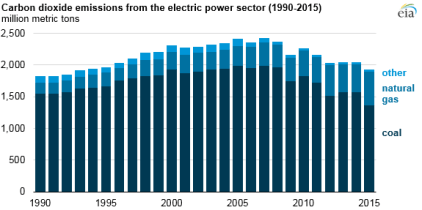
A new report by the Energy Information Administration (EIA) found hydraulic fracturing, or fracking, has pushed CO2-Cutscarbon dioxide (CO2) emissions from electricity generation to the lowest levels since 1993.

Fracking created immense amounts of natural gas, lowering the price and causing the amount of electricity generated from natural gas to pass the amount of electricity generated from coal for seven of the months in 2015, according to the new EIA report. The report specifies that natural gas power plants produce about 40 percent of the CO2 emitted from a coal plant creating the same amount of electricity. This caused U.S. CO2 from the electricity sector to fall by 21 percent since their high in 2005.

“[T]he drop in natural gas prices, coupled with highly efficient natural gas-fired combined-cycle technology, made natural gas an attractive choice to serve baseload demand previously met by coal-fired generation,” read the report. “Coal-fired generation has decreased because of both the economics driven by cost per kilowatthour compared to that of natural gas and because of the effects of increased regulation on air emissions.”


Fracking Causes Green unCivil War

It appears that fracking is causing a split in the green movement. Its about time.

If you are sane and you read the studies you know that fracking and cheap natural gas has actually lowered CO2 emissions in the USA by a significant amount by replacing coal.

“In 2015, U.S. energy-related carbon dioxide emissions were 12% below the 2005 levels, mostly because of changes in the electric power sector.

Energy-related CO2 emissions can be reduced by consuming less petroleum, coal, and natural gas, or by switching from more carbon-intensive fuels to less carbon-intensive fuels. Many of the changes in energy-related CO2 emissions in recent history have occurred in the electric power sector because of the decreased use of coal and the increased use of natural gas for electricity generation.”

Back to the green war …

Anti-fracking environmentalists, led by 350.org, Greenpeace and The Sierra Club, claim that natural gas is actually accelerating global warming more than coal due to methane emissions, even if it does cut carbon dioxide (CO2) emissions. These activists heavily doubt the official Environmental Protection Agency (EPA) figures on methane leaks, largely because of an article published by Bill McKibben, the leader of 350.org.

Pro-fracking environmentalists, led by The Breakthrough Institute, point out that McKibben misrepresented the scientific research on methane emissions to attack fracking. These environmentalists point out that a study published in the journal Science in March blames agricultural practices, not oil and natural gas, for increasing methane emissions. The same study points out that the American greenhouse gas emissions that cause global warming are declining largely due to fracking.

The split in the environmental movement has led to a green civil war over proposed EPA regulations intended to lower methane emissions from fracking. These regulations, however, would only lower the temperature by 0.0047 degrees Celsius by the year 2100, according to the EPA’s own data.

The anti-fracking zealots have done so much harm in most of Europe. In Canada and the USA fracking took off before the anti-frackers could get organized. The UK may (if it is lucky) win its fracking war (many years late).
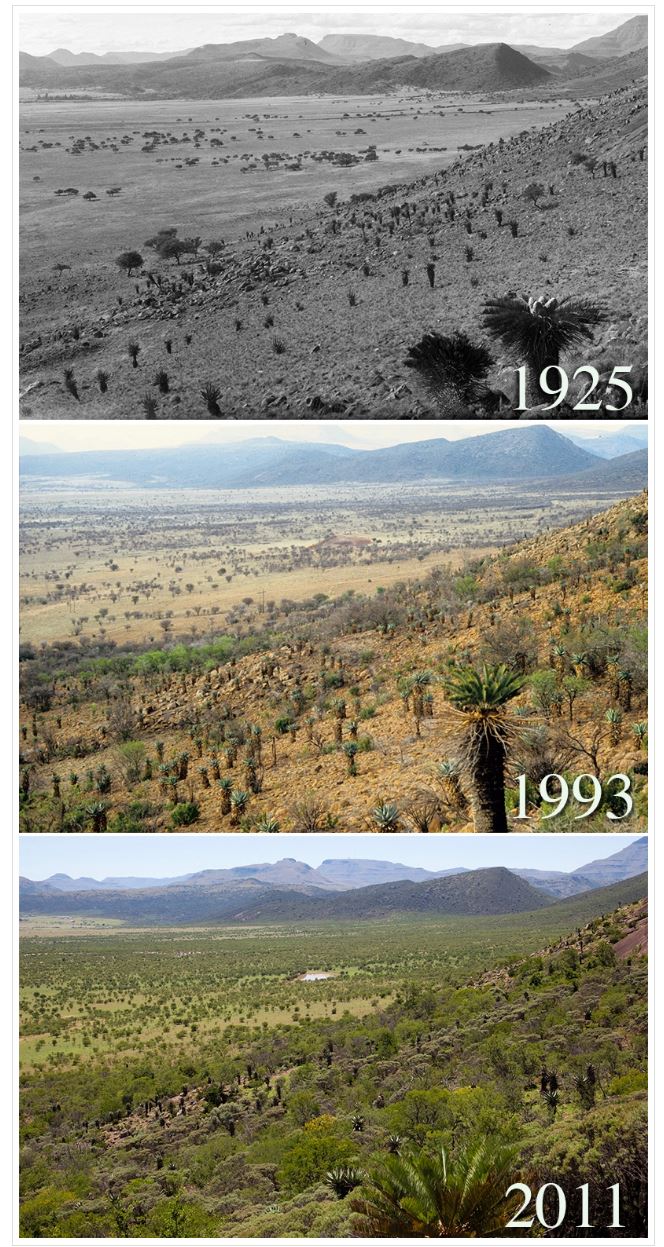


CO2 Greens The Western US

Another shocker. AGW predicts brown ….  and green happens.

A new study just gave people another reason to be skeptical of climate models relied upon by scientists to predict the future impacts of global warming.

Climate models have long predicted man-made global warming would cause the western U.S. to become more arid and brown, but that’s not what happened. A new study examining three decades worth of satellite data found the western U.S. — indeed, the world in general — is greening because of increased carbon dioxide emissions.

It’s another prediction failure from climate models, according to Chip Knappenberger, a scientist at the libertarian Cato Institute. Knappenberger pointed out on Twitter that climate models predicting “browning” in the western U.S. were dead wrong.

CO2: Wood versus Coal

How much CO2 does wood produce versus coal?

The results of our analysis shows that wood is generally about the same 
or slightly lower in CO2 emissions on a dry basis, 
but both wood and coal do not naturally have zero moisture content (MC).

The typical moisture content of coal is:
  • Anthracite Coal : 2.8% - 16.3% by weight
  • Bituminous Coal : 2.2% - 15.9% by weight
  • Lignite Coal : 39% or more by weight
It is the water that causes CO2 emissions to increase over the dry weight. 
The underlying cause that drives this is “the enthalpy of vaporization.” 
In simple terms, it takes energy to evaporate the water in wood or coal 
and convert it to vapor, and all of that energy is sent out the chimney 
and into the atmosphere in the form of water vapor, unless a condensing 
boiler is used which may claim part of the escaping energy. 
To get a million BTUs of useful energy from the fuel, 
a larger mass of wood or coal is necessary to compensate for the losses 
from vaporizing all that water. And more wood/coal burned means more CO2 produced. 

With coal, the higher water content grades also have lower carbon content 
and higher volatiles. The net effect of this is that, on average, CO2 
outputs are relatively consistent across grades (see Table 2). 

At 45 percent, the combustion of wood yields about 9.0 percent 
more CO2 per unit of useful energy than an average of the coal 
grades’ outputs.