A couple of days ago I did a post about December 2013 being the 21st coldest in USA history.
Do you want to know what real global warming looks like?
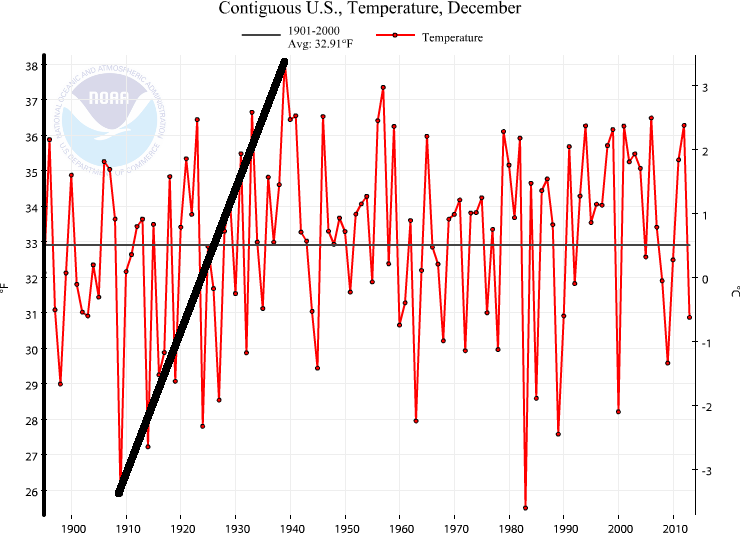
12 degrees Fahrenheit increase from 1909 to 1939.
A couple of days ago I did a post about December 2013 being the 21st coldest in USA history.
Do you want to know what real global warming looks like?
12 degrees Fahrenheit increase from 1909 to 1939.
According to the NOAA, December 2013 was only the 21st warmest out of 119. That means 98 Decembers (out of 119) were warmer.
The 5 warmest Decembers were 1939, 1957, 1933, 1941 and 1946.
OMG. 2.04°F Below Normal. We are all going to freeze to death if this keeps happening.

From 1895 to 1998 the Contiguous USA warmed at a very small rate of .78F per century. The NOAA graph is here.
The interesting thing is that 34% of the warming occurred in the month of February. January even had a slight cooling trend.
From 1998 to 2013, the USA cooled at a rate of -3.33F per century. February was responsible for 66% of the cooling.
Any ideas? Is it an NOAA artifact or something else? It seems strange that CO2 would prefer February for 100 years and then forsake it. 🙂
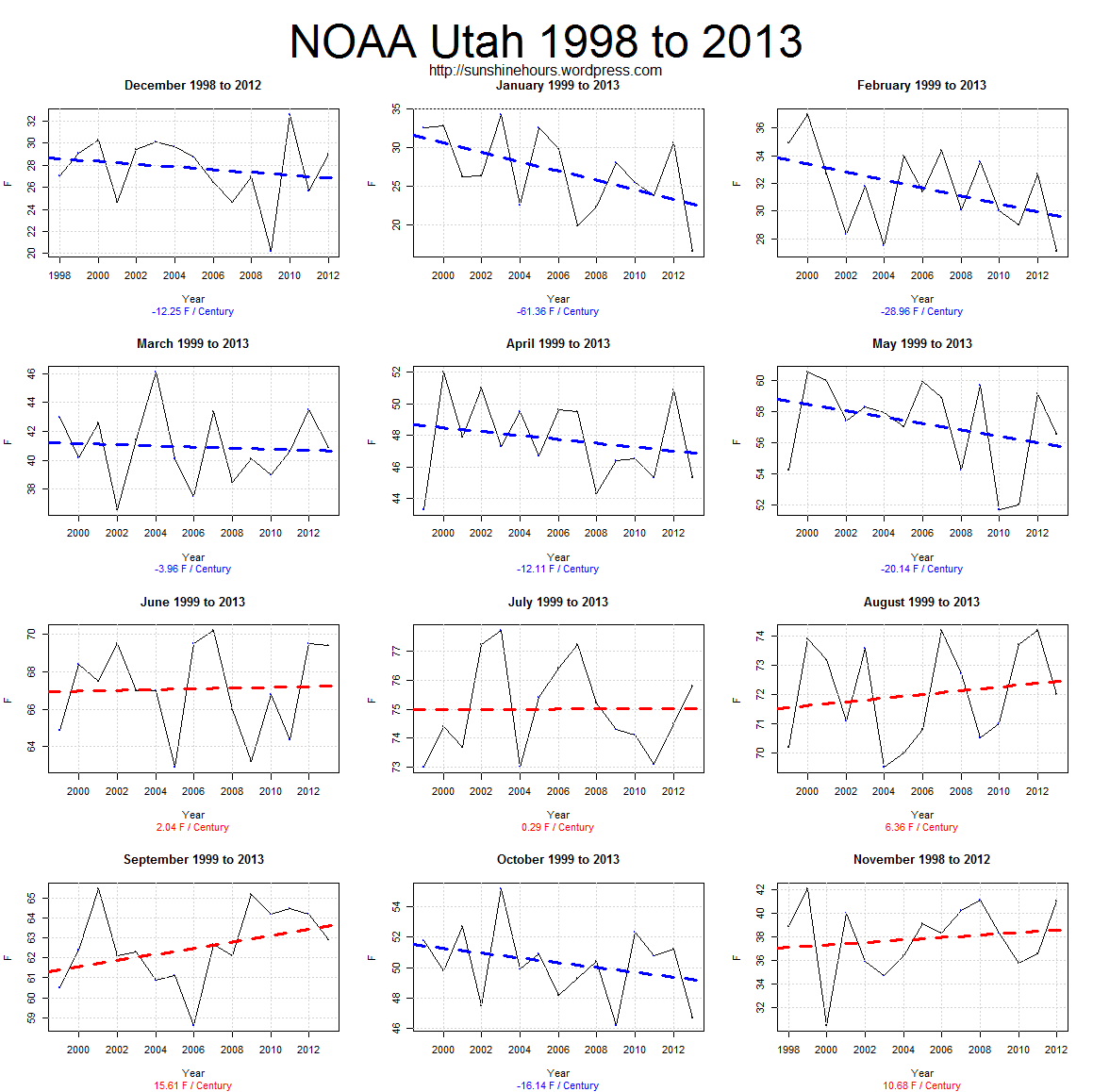
Graphs for each month/period below. (The percentages do not add up properly because some months were going in opposite direction of overall trend, but they give an idea of the magnitude)
Click for bigger.


According to the NOAA November 2013 was 49th warmest out of 119. The following 70 Novembers were warmer:
1899,1900,1901,1902,1904,1905,1908,1909,1912,1913,1914,1915,1917,1921,1922,1923,1924,1927,1928
and 1931,1933,1934,1939,1941,1942,1944,1945,1946,1948,1949,1953,1954,1958,1960,1962,1963,1964,1965,1966,1967,1969
and 1971,1973,1974,1975,1977,1980,1981,1983,1984,1987,1988,1989,1990,1994,1995,1998,1999,2001,2002,2003,2004,2005,2006,2007,2008,2009,2010,2011,2012
Only 4 states were “Above Normal”. Tennessee, for example, was over 3F below the 1901-2000 average and was 15th warmest out of 119.

The USCRN is the US Climate Research Network. I had not looked at the data in a little while. So I was confused by the state code of SA.
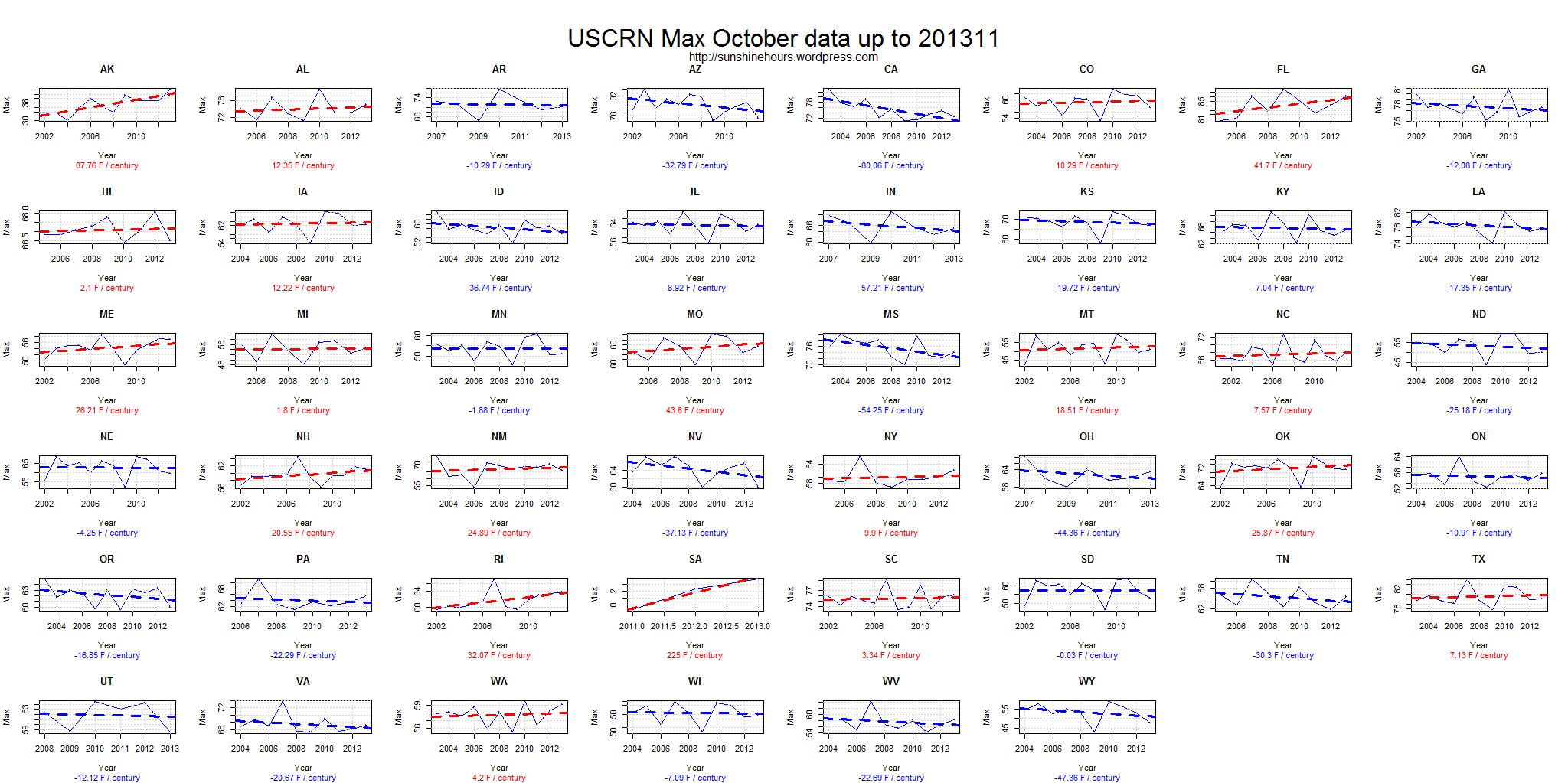
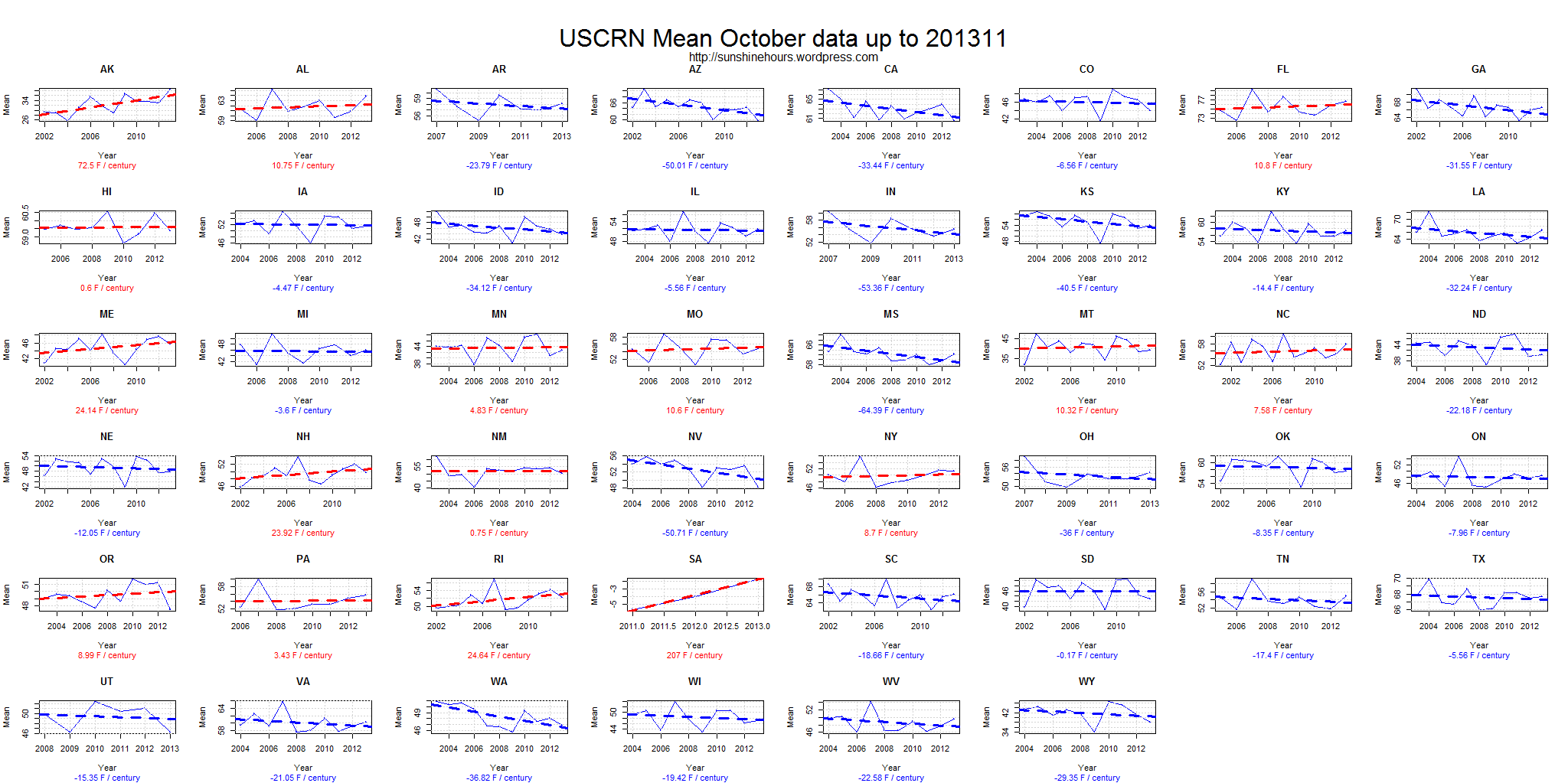
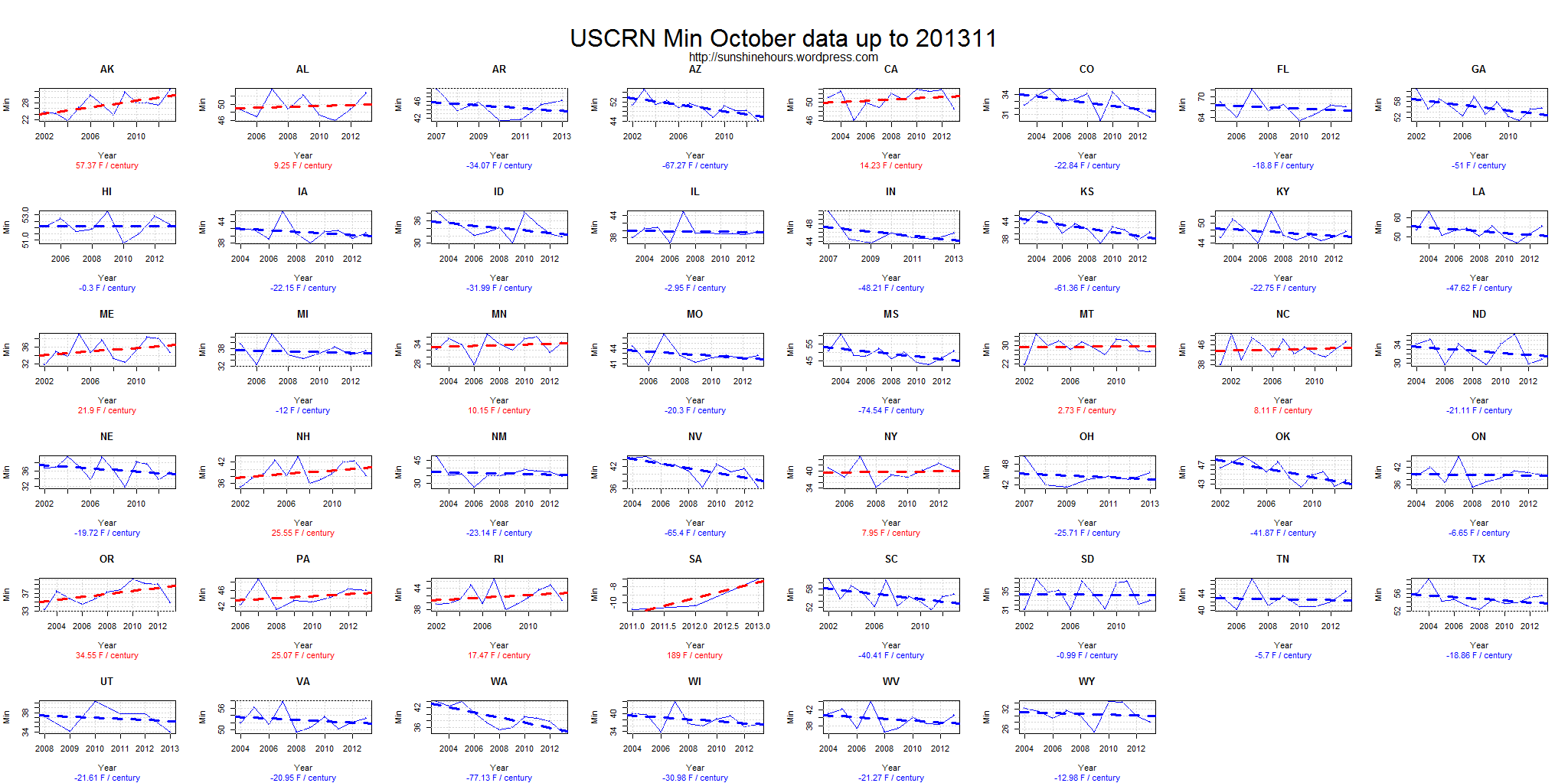
Well, it turned out that the NOAA has added a station in Tiksi, Russia. Which has been warming (Tmax) at 225F/century over the last 3 Octobers.
The USCRN has no stations in Connecticut or Delaware or New Jersey, but it now has one in Russia. Bizarre.
Anyway, the data is not that old, but here is the USCRN Tmax, Tmean and Tmin trends for October for most of the states in the USA and Tiksi.
Click for bigger.
Tmax
Tmean
Tmin
This is just awful. The Wildlife Society estimates 83,000 raptor fatalities at wind farms in the USA for 2012.
“I used national averages from hundreds of carcass placement trials intended to characterize scavenger removal and searcher detection rates, and I relied on patterns of carcass distance from wind turbines to develop an adjustment for variation in maximum search radius around wind turbines mounted on various tower heights. Adjusted fatality rates correlated inversely with wind-turbine size for all raptors as a group across the United States, and for all birds as a group within the Altamont Pass Wind Resource Area, California. I estimated 888,000 bat and 573,000 bird fatalities/year (including 83,000 raptor fatalities) at 51,630 megawatt (MW) of installed wind-energy capacity in the United States in 2012.”
I’ve had a request to show Winter (Dec/Jan/Feb) temperatures by state. I am showing from 1998. That would be to Dec 2012 / Jan+Feb 2013.
Only two states have a warming trend. Maine and Vermont. South Dakota is cooling at -41F/Century. The full list is below the graph.
Click for bigger.
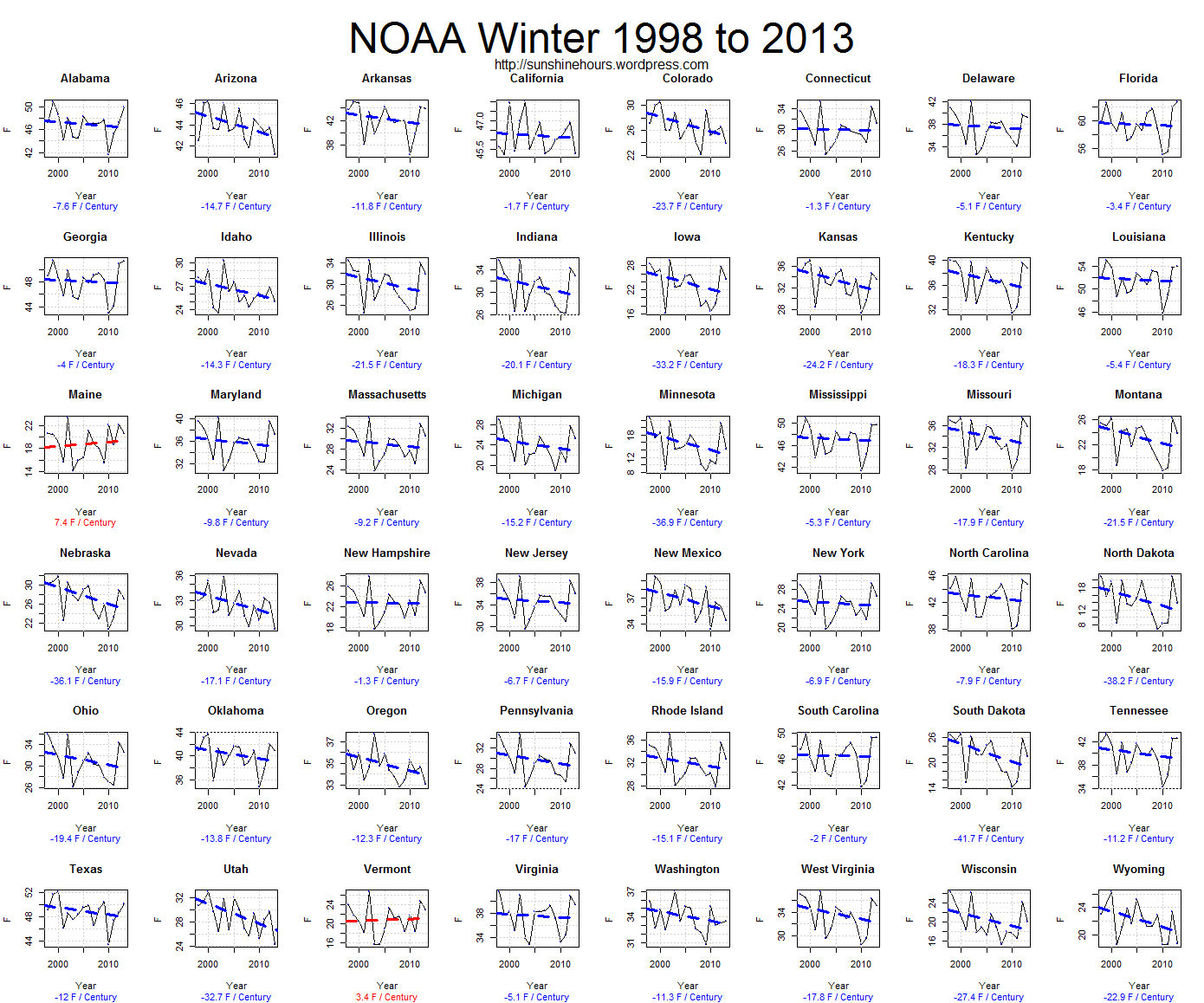
| State | Trend in F/Decade |
| South Dakota | -41.7 |
| North Dakota | -38.2 |
| Minnesota | -36.9 |
| Nebraska | -36.1 |
| Iowa | -33.2 |
| Utah | -32.7 |
| Wisconsin | -27.4 |
| Kansas | -24.2 |
| Colorado | -23.7 |
| Wyoming | -22.9 |
| Illinois | -21.5 |
| Montana | -21.5 |
| Indiana | -20.1 |
| Ohio | -19.4 |
| Kentucky | -18.3 |
| Missouri | -17.9 |
| West Virginia | -17.8 |
| Nevada | -17.1 |
| Pennsylvania | -17 |
| New Mexico | -15.9 |
| Michigan | -15.2 |
| Rhode Island | -15.1 |
| Arizona | -14.7 |
| Idaho | -14.3 |
| Oklahoma | -13.8 |
| Oregon | -12.3 |
| Texas | -12 |
| Arkansas | -11.8 |
| Washington | -11.3 |
| Tennessee | -11.2 |
| Maryland | -9.8 |
| Massachusetts | -9.2 |
| North Carolina | -7.9 |
| Alabama | -7.6 |
| New York | -6.9 |
| New Jersey | -6.7 |
| Louisiana | -5.4 |
| Mississippi | -5.3 |
| Delaware | -5.1 |
| Virginia | -5.1 |
| Georgia | -4 |
| Florida | -3.4 |
| South Carolina | -2 |
| California | -1.7 |
| Connecticut | -1.3 |
| New Hampshire | -1.3 |
| Vermont | 3.4 |
| Maine | 7.4 |
Over the last few days I have presented data for Arizona, Washington and Utah showing massive cooling trends in January for the last 15 years. I did something similar for HADCET last month.
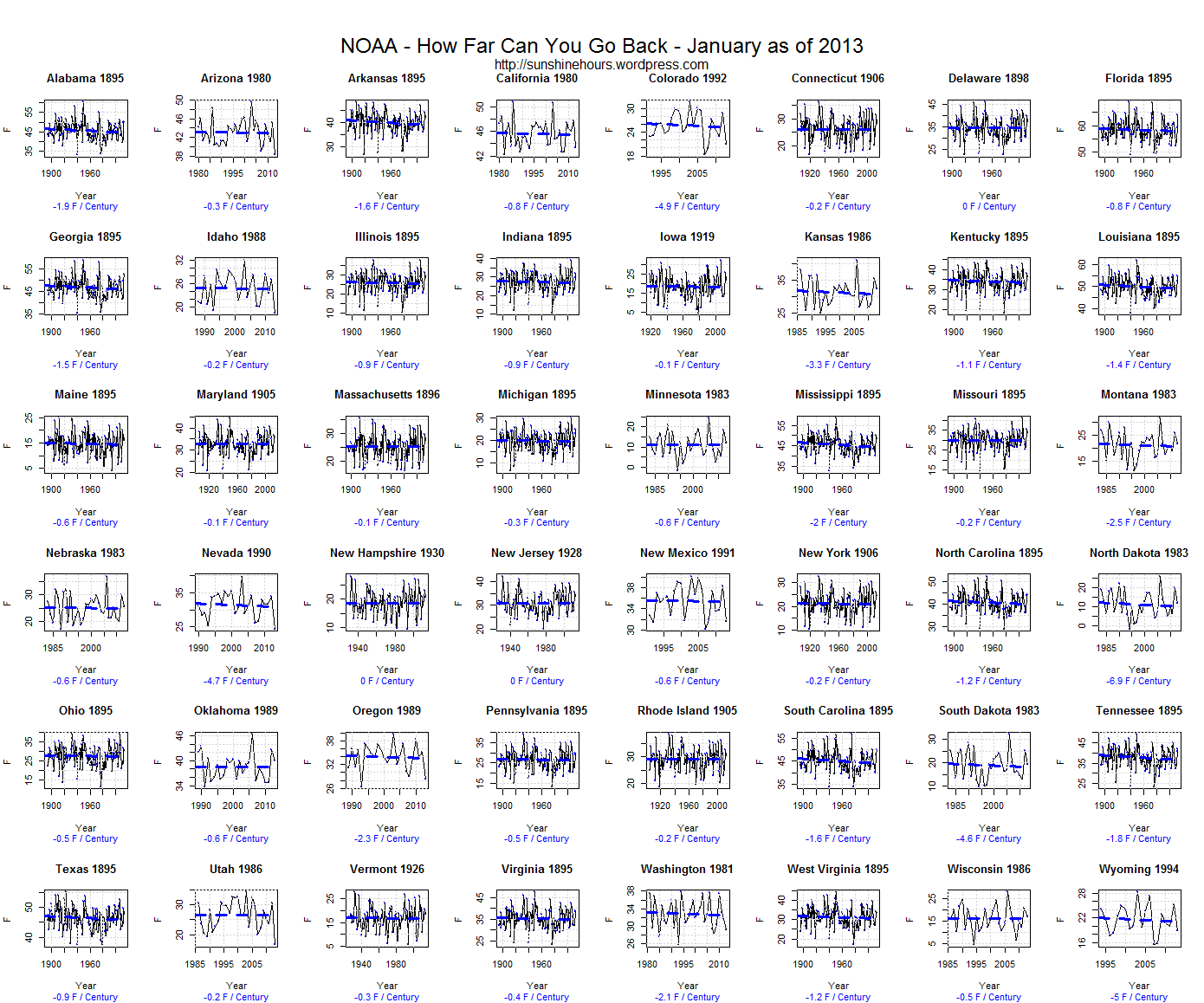
So I thought I would do the same “How Far Can You Go Back” for the lower 48 states for January. I was somewhat surprised. 20 states have a negative trend from 1895 (the beginning of the NOAA data).
Alabama in January (for example) is cooling at -1.9F/Century since 1895. You can check NOAA’s data here if you like. I did, just to make sure.
The top 6 cooling trends:
From 1983 North Dakota -6.919 F/Century
From 1994 Wyoming -4.992
From 1992 Colorado -4.862
From 1990 Nevada -4.704
From 1983 South Dakota -4.613
From 1986 Kansas -3.344
Click to make the graph bigger:
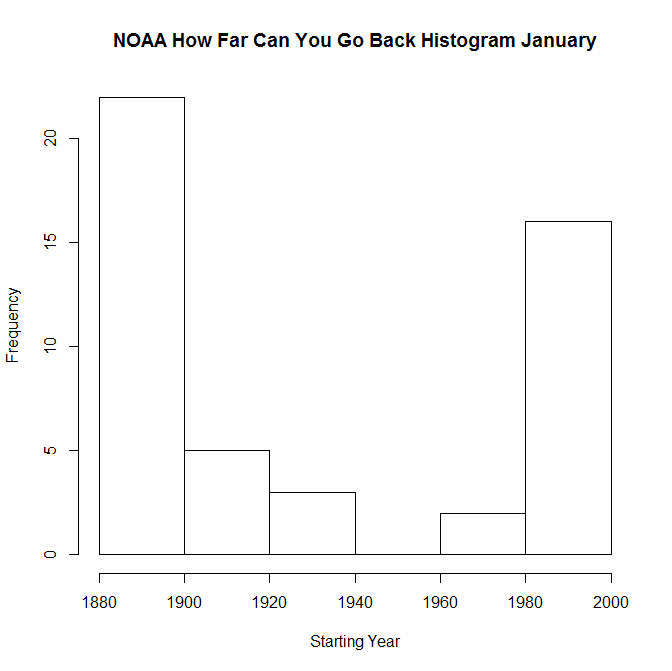
And the distribution:

 sunshine hours