UK Blackout Emergency Plan Costs Soar

Coal will come to the rescue in the UK at a cost.Plant-wide_Slider02
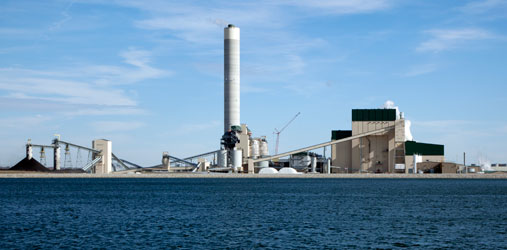
The cost of ensuring Britain could turn its lights back on after a catastrophic nationwide blackout has soared by at least £12m this year, as National Grid is forced to pay struggling old coal plants to “keep warm” in case of an emergency.

Britain’s so-called “black start” plans are designed to ensure that electricity supplies could be swiftly restored in the event of an unprecedented power failure plunging all or part of the country into darkness.

As most power plants need to draw some electricity from the grid to start generating, National Grid has to ensure the UK retains a certain number of black start plants that are able to fire up independently using their own generators.

Historically, several of the UK’s coal plants have been relied upon to form part of the black start plan.

But rising green taxes, cheap gas prices and the growth of renewables are together rendering the coal plants increasingly uneconomic, with some closing down for good and most others now only running for parts of the day.

This poses a threat to Britain’s emergency plans because if the plants are not generating when a catastrophic power failure hits, they will take far longer to start up.

Energy regulator Ofgem has now given National Grid permission to pay the plants millions of pounds to keep “warm”, so that they would be ready to start up quickly in an emergency.
 

UHV – Ultra High Voltage Transmission

China is building a network of Ultra High Voltage power lines to move electricity long distances. They even have plans to build UHV lines to Germany so they can sell the Germans cheap electricity generated by coal.

“There are 2300 new coal plants with 1400GW of capacity planned worldwide”

“China’s proposed investment in long-­distance, ultra-high voltage power transmission lines will pave the way for power exports from China to as far away as Germany.”

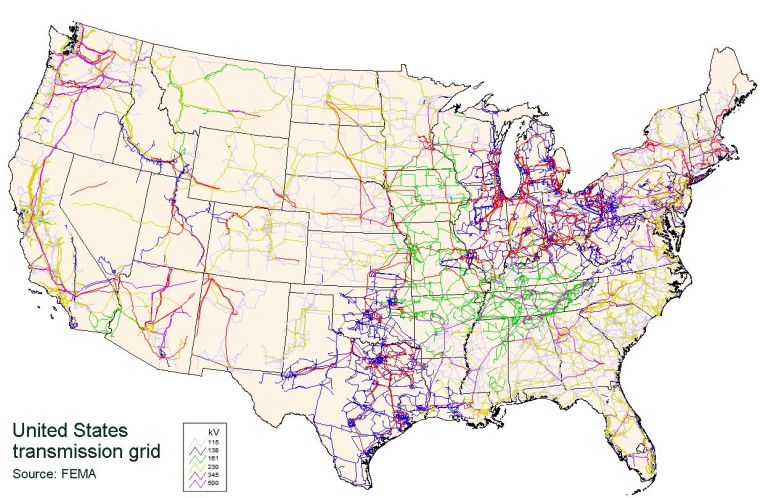
While UHV has been used in Russia and other counties in the past, China is perfecting it. The US grid, for example, operates at 500kv or lower.

UnitedStatesPowerGrid


UHV allows the transmission of very large amounts of electricity with more efficiency. What are the advantages of UHV?

Increased Transmission Capacity: A single 1000 kV UHV-AC circuit can transmit +/-5 GW, approximately 5 times the maximum transmission capacity of a 500 kV AC line. An 800 kV UHV-DC transmission line is even more efficient, with a capacity to transmit 6.4 GW.

Extended Transmission Distance: A 1000 kV UHV-AC line will economically transmit power distances of up to 2,000 km (1240 miles), more than twice as far as a typical 500 kV AC line . An 800 kV UHV-DC power line can economically transmit power over distances of up to 3,000 km (1,860 miles).

Reduced Transmission Losses: If the conductor cross-sectional area and transmission power are held constant, the resistance losses of a 1000 kV UHV-AC line is 25% that of the 500-kV AC power line. The resistance loss of an 800 kV UHV-DC transmission line is an even more remarkable 39% of typical line power erosion.

Reduced Costs: The cost per unit of transmission capacity of 1000 kV UHV-AC and 800 kV UHV-DC transmission is about 75% of 500 kV AC costs.

Reduced Land Requirements: A 1000 kV UHV-AC line power line saves 50% to 66% of the corridor area that a 500 kV AC line would require. An 800 kV UHV-DC line would save 23% of the corridor area required by a 500 kV DC line.


China: 1,000 More Coal Power Plants Exporting Power All The Way To Germany

1,000 more coal power plants for China. And then power exports all the way to Germany.

Coal!!!!

China’s proposed investments in long-distance, ultra-high voltage (UHV) power transmission lines will pave the way for power exports as far as Germany, the head of the national power grid said on Tuesday as he launched an initiative for cross-border power connections

Exporting power to central Asia and beyond falls into China’s “one belt, one road” ambitions to export industrial overcapacity and engineering expertise as it faces slowing growth at home. The plan would allow enormous hydropower dams, coal-fired power plants and wind farms in frontier regions such as Xinjiang to sell into higher-priced markets overseas. The “belt” refers to the land route from Asia to Europe, while the “road”, curiously, refers to the sea route via the Indian Ocean.

Talk of exporting power is a reversal for China, which as recently as 2004 suffered rolling blackouts across its manufacturing heartland. But huge investments in power in the decade since, and the construction of a number of dams, nuclear reactors and coal-fired plants due to begin operating in the next 10 years, mean the country faces a growing surplus.

Liu Zhenya, chairman of State Grid, told reporters that wind and thermal power produced in Xinjiang could reach Germany at half the current cost of electricity there. “There are so many resources, but no market. We need to find it externally.”


Ontario Wood Pellets Would Have Produced Less Than Half Of The (net) CO2 as Norwegian Wood Pellets

Ontario is importing “advanced biomass” wood pellets from Norway. See the post here is you are coming in late.

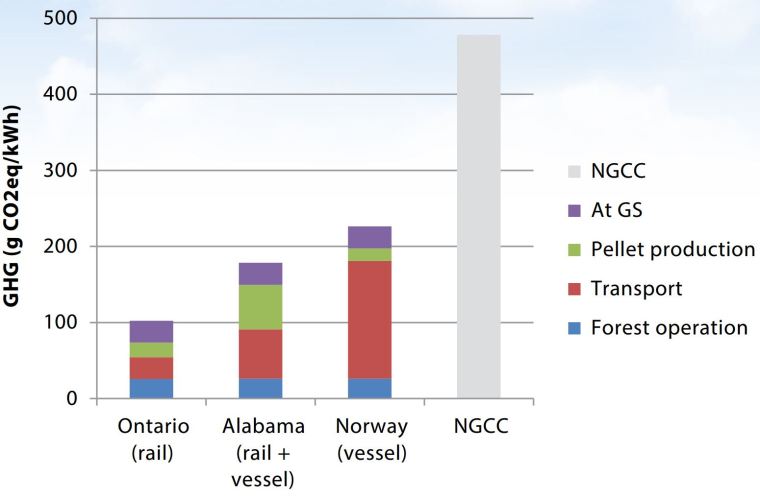
I was looking for total CO2 figures for the Atikokan plant. I haven’t found any yet. But I did find an OPG document showing CO2 production of 4 scenarios at Thunder Bay (which is also burning Norwegian Wood). One of those scenarios is a Natural Gas Combined Cycle power plant. It showed that plant producing a huge amount of CO2 compared to wood pellets. I know that isn’t true from this article.

Then I realized the the wood pellet CO2 numbers are based not on actual amount of CO2, but on the “net CO2” which is CO2 minus the fudge factor applied by the AGW cult to claims that since the trees are renewable most of the CO2 doesn’t really count. (page 10  and 11 here)

The key is where they use the term (net) as in “Green House Gas (GHG) Life Cycle Assessment (net)”

Anyway … back to comparing Ontario Wood Pellets to Norway Wood Pellets.

From this OPG document:

Capture_Norway_CO2

See all that CO2 produced by transporting all those pellets from Norway!


Ontario Spent 170 million to Convert a Coal Power Plant to burn Norwegian Wood Pellets

Ontario has shut down its coal power plants. One of those coal power plants was Atikokan. What OPG decided to do (because they needed dispatchable power) was to convert the plant to biomass. And that biomass was wood pellets. Not just any wood pellets. It was “Advanced Biomass”.

Advanced biomass has been treated to withstand exposure to rain, and has handling and storage properties similar to those of coal. It is still in the early stages of development, which is why OPG purchases advanced biomass fuel from Norway.

Before we get to CO2 and squandering hundreds of millions to change from one fuel you burn to anther fuel you burn …. you may ask yourself why you need to make wood pellets waterproof.

Wet biomass catches on fire. Or explodes.

Biomass fuel has a wide range of possible refuse items: pellets, chip logs, forestry, sewage sludge, methane, meat and bone, palm kernels, cereal, sawdust, bioenergy crops, or landfill gas. When a biomass fuel is stored in a pile, waiting for transport or use, the biomass can spontaneously heat through oxidation. In order for this to happen, three conditions must sync: rate of heat generation, air supply, and insulation properties of the immediate surroundings. With most biomass material, there is a high moisture content combined with air and/or bacterial fermentation – both of which can cause spontaneous combustion through oxidation.

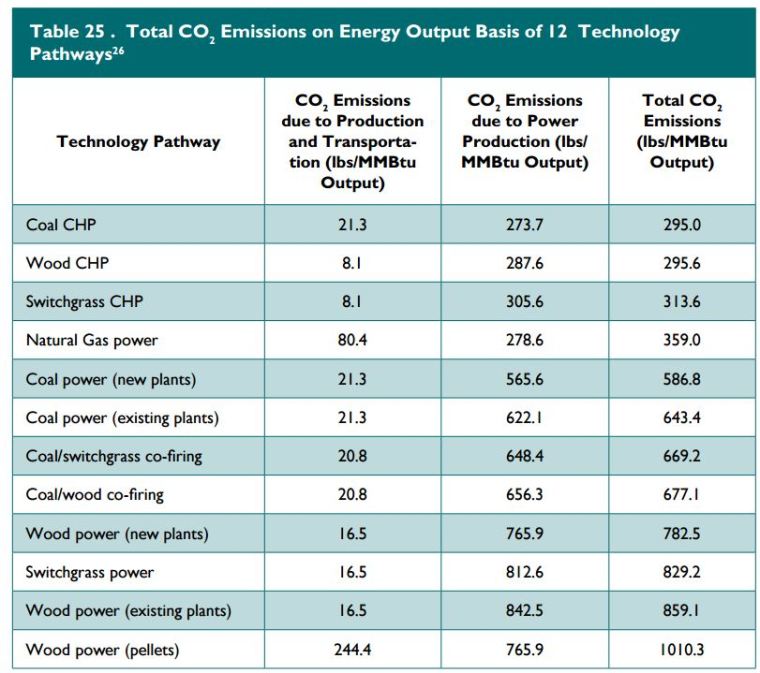
Back to CO2. The study I have referenced before told us that wood pellets (especially those transported long distances like USA to UK) produce way more CO2 than coal. So I would assume that if you buy wood pellets from Norway, your power plant is producing more CO2 than if you had not spent 170 million and were still burning coal.

CO2emissions


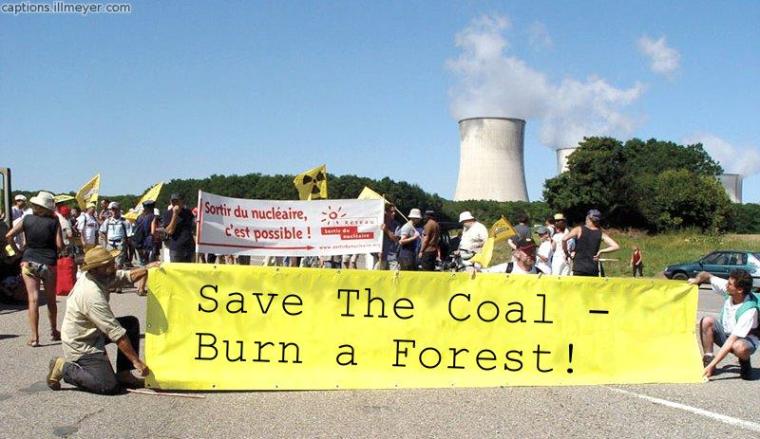
‘Green’ logic confuses me.Killing Norwegian forests and turning the wood into special waterproof pellets and then using a lot of fossil fuel to ship it to Ontario to burn in a closed down resurrected coal power plant seems crazy to me.


SaveTheCoal


Alberta NDP Coal Phaseout Could Triple Power Bills

If you live in Alberta Canada, get ready for a possible tripling of electricity costs.

“Whether you’re in oil and gas, forestry, agriculture, tourism, we need good, affordable, dependable power to be successful,” Coal Association of Canada president Robin Campbell said. “It’s one of the things we have in this province that allows us to compete globally and we’re about to lose that.”

The NDP says phasing out coal is necessary not only to reduce green house gases but also to improve air quality.

Campbell says all those concerns could be addressed through investing in clean coal technologies without jeopardizing base-load power.

New coal power plants generate more CO2 than natural gas but they generate way less CO2 than wood pellets.

Another study:

It found that the boost in renewables and the end of coal would mean a 45 per cent reduction in emissions, or 18.5 million fewer tonnes of carbon released into the atmosphere a year.

However, under the province’s privatized utility system, prices would have to be between $60 to $85 per megawatt hour to justify wind power construction.

And if solar power were to make up 50 per cent of the renewables mix “it would cost between $200 and $300 per megawatt hour,” the study found.

Alberta Energy Companies are bailing on contracts and leaving Alberta taxpayers to pay and pay and pay  for the NDP’s stupidity.

The NDP now have a “coal phaseout negotiator” for getting rid of coal. It will cost billions. And will make Alberta a have not province.


Ontario Converts 4,000MW of Coal Power Plant to 44MW of solar

Ontario Canada is converting a 4,000MW coal power plant to a 44MMW solar farm.

“Through the IESO’s new Large Renewable Procurement program, solar providers will receive an average of 15.67 cents/kWh for their clean energy.”

“The province’s pivot toward renewables has not come without significant economic ramifications, however. On-peak power cost consumers 17.5 cents/kWh in Nov. of 2015, compared to just 9.7 cents/kWh in the same month of 2006, according to the Ontario Energy Board—an 80 per cent hike. For off-peak power, Ontarians paid 8.3 cents/kWh in 2015, relative to 3.4 cent/kWh in 2006—or 144 per cent more.”

There was no mention in the story how 44MW of intermittent power can replace 4,000MW of dispatchable power.

There was no mention in the story of how many jobs will be transferred to China or India.


Japan … Coal Will Dominate!

To the anti-nuclear pro-Coal activists … THANKS!

“New coal power projects planned for Japan could emit carbon dioxide equal to about a 10th of the country’s total emissions, an environmental group said in a statement Thursday. Japan has 43 coal power projects either under construction or planned, representing combined capacity of 21,200 megawatts “

http://www.thegwpf.com/japan-to-build-40-new-coal-power-plants/


“Japan now appears set to embrace a dominant role for dirty coal in the country’s energy mix for decades to come.”

http://www.thegwpf.com/economy-first-japan-plans-dominant-role-for-coal-by-2030/


Japan … COAL!

To the anti-nuclear pro-Coal activists … THANKS!

“If all seven projects including the plant in Akita materialize, they will increase the nation’s coal-power generation by up to 7.26 gigawatts by around 2025.

That is equivalent to seven medium-size nuclear reactors.”


“All of Japan’s 48 reactors are offline over safety concerns following the Fukushima nuclear accident, though four of them are expected to come back online later this year.”


http://www.thegwpf.com/reality-check-japans-coal-boom-continues


Coal: China vs Germany

China’s economy continues to drive ahead powered by coal. They consume 50% of the world production. The use the cheap electricity produced by burning coal to manufacture inexpensive goods and then sell them all over the world.

Germany, on the other hand, has chosen to use cheap electricity to subsidize wind turbines and solar panels.

“At the center of Europe’s coal renaissance is the region around the German-Polish border, already home to five of Europe’s most polluting coal plants, says the report, which was compiled by CAN Europe, WWF, the European Environmental Bureau, the Health and Environment Alliance and Climate Alliance Germany. Swedish power firm Vattenfall GmbH is now planning to expand the number of open-cast mines in the Lausitz area to exploit its deposits of  lignite, a particularly polluting type of coal.

Vattenfall says the Lausitz mines, with their vast deposits, are there to take up the slack when renewable energy sources fail to meet Germany’s needs. “Without flexible and reliable brown coal, we wouldn’t be able to provide stable electricity supplies at stable prices,” the company says on its website.”

http://www.thegwpf.com/europes-coal-renaissance-undermines-it-green-credentials/