2nd Highest Antarctic Sea Ice For This Day Ever
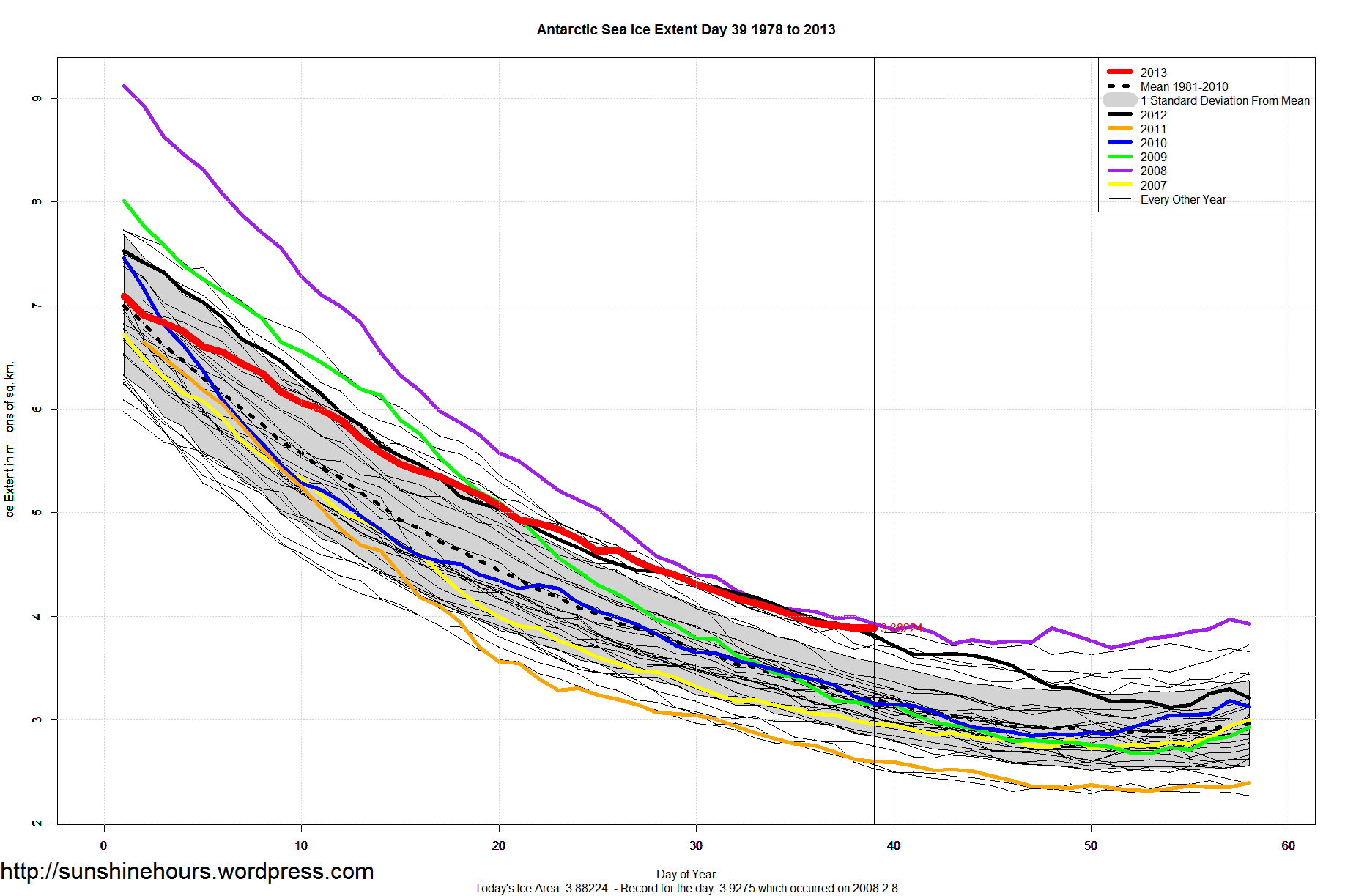
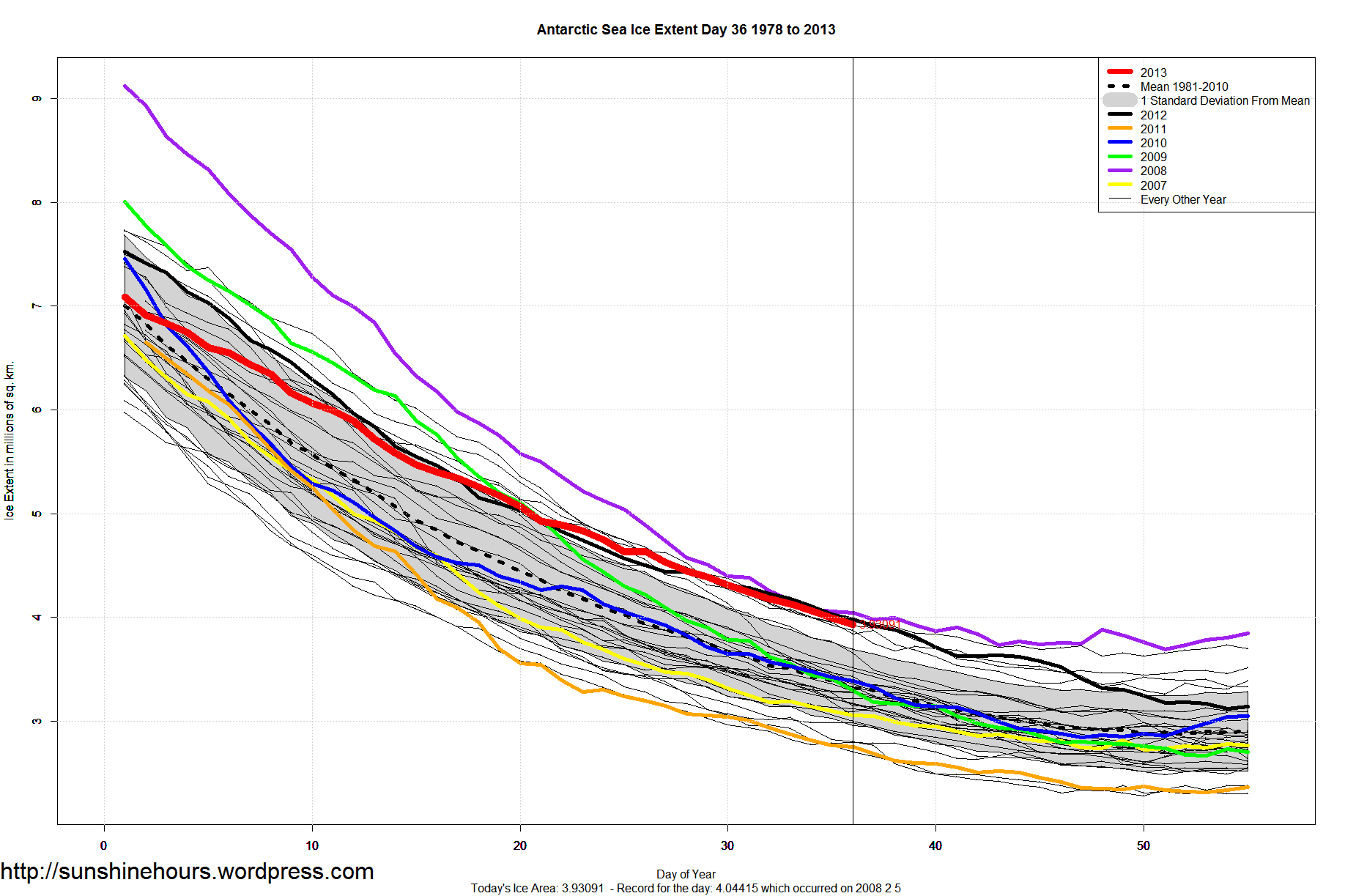
Antarctic Sea Ice almost almost set some records and averaged the 2nd or 3rd most ice at this time of year ever over the last week. Almost a record is definitive proof of the end of days … isn’t it?
Study: Global Warming Can Be Slowed By Working Less
“Want to reduce the effects of global warming? Stop working so hard. Working fewer hours might help slow global warming, according to a new study released Monday by the Center for Economic Policy and Research.
A worldwide switch to a “more European” work schedule, which includes working fewer hours and more vacation time, could prevent as much as half of the expected global temperature rise by 2100, according to the analysis, which used a 2012 study that found shorter work hours could be associated with lower carbon emissions.
The Center for Economic Policy and Research is a liberal think tank based in Washington.”
A “more European” work schedule???
Like Spain?
Spain unemployment rate hit a record: youth rate at 55%
Spain’s unemployment rate has hit a modern day record, and joblessness among young people has topped 55%.
Official data showed that the jobless rate in the last three months of 2012 rose 1% to 26%, or 5.97 million people.
The figure, the highest since the mid-1970s, follows Spain’s prolonged recession and deep spending cuts.Spain unemployment rate hit a record: youth rate at 55%
(h/t Tom Nelson)
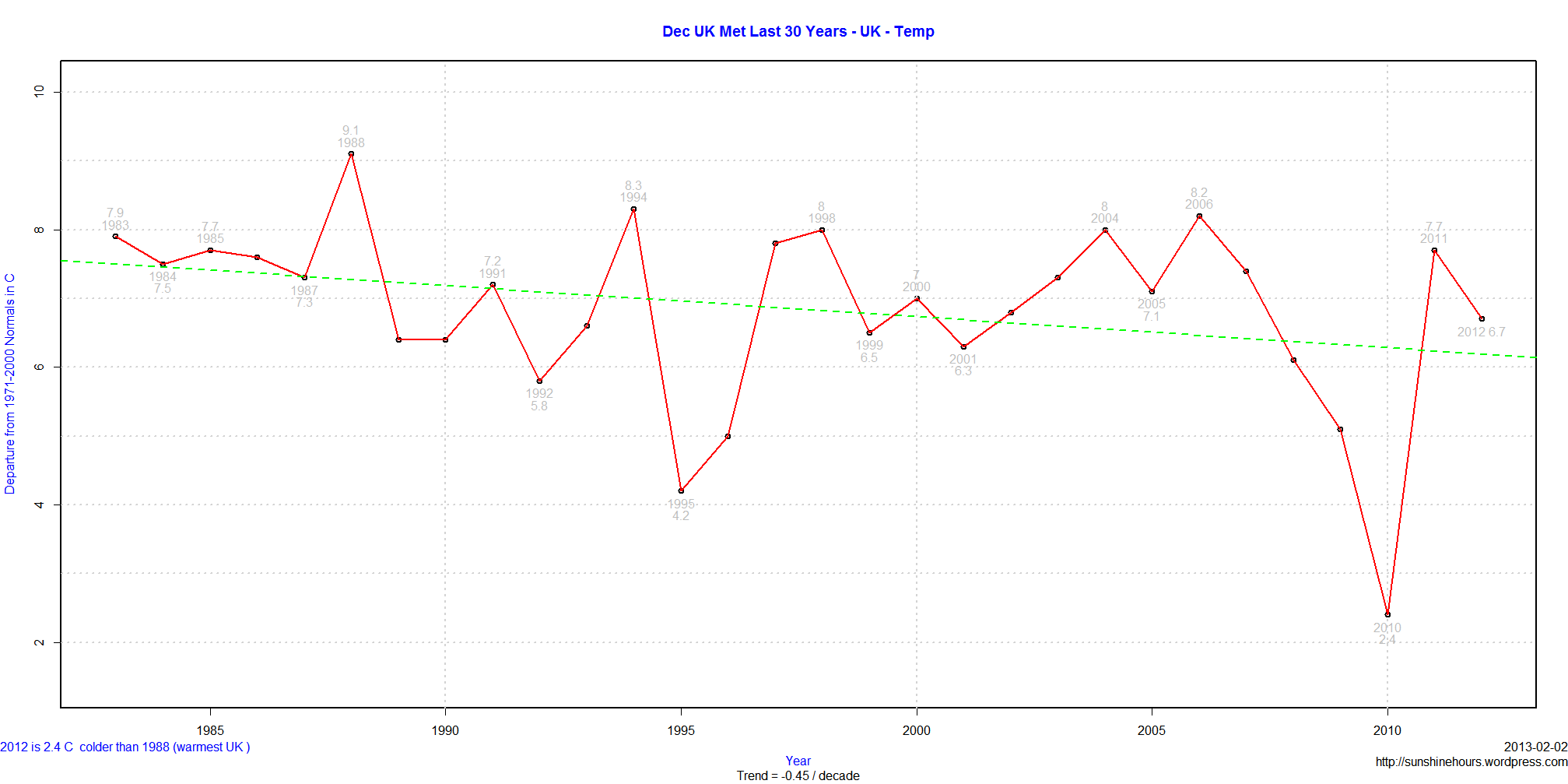
Using UK Met data from here, I noticed that Tmax for Decembers are cooling at -.45C / decade for 30 years. Thats a lot!
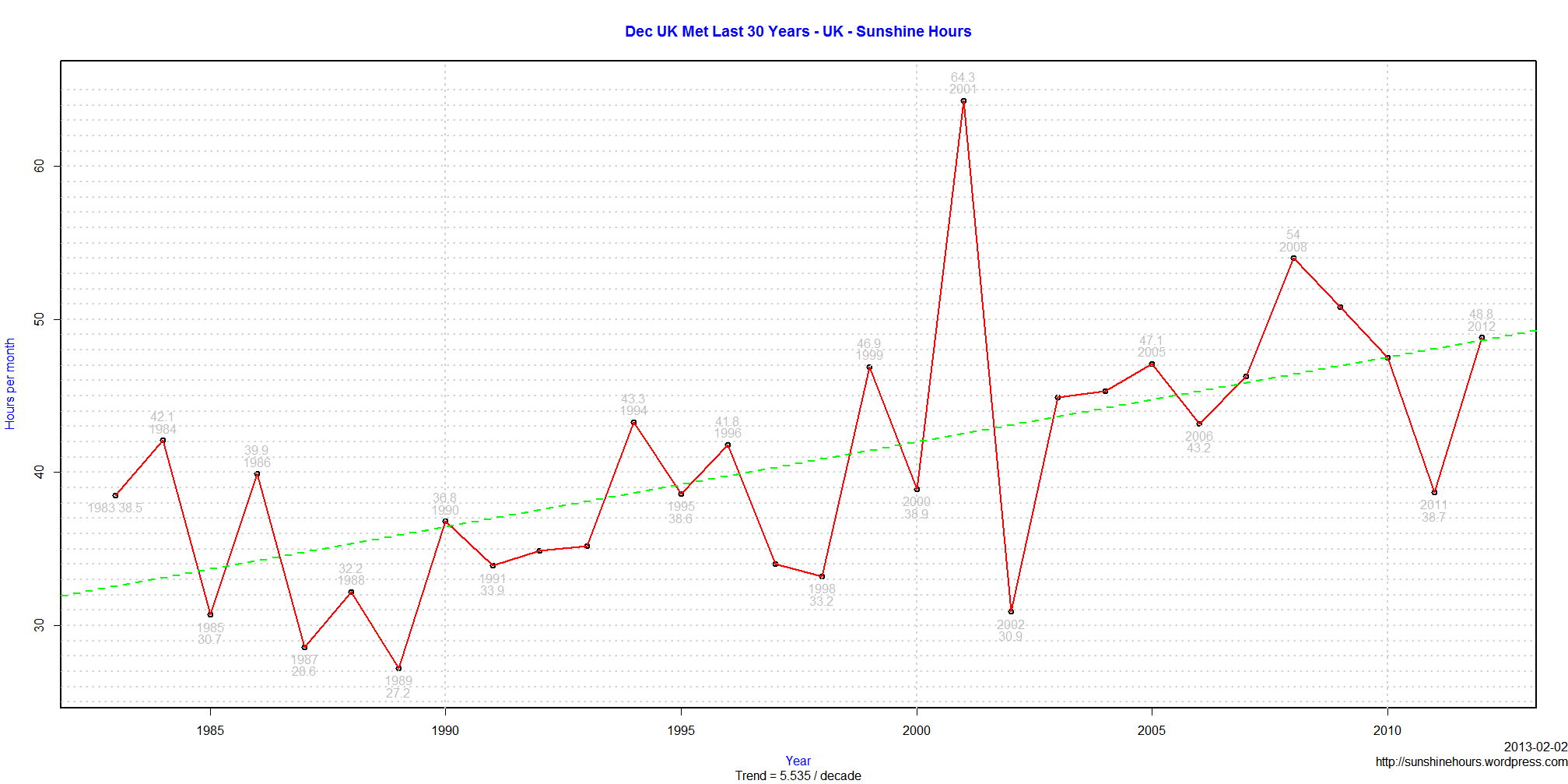
And then I wondered why? A theme I have returned to over and over is that hours of bright sunshine has increased because of cleaner air. Could more sunshine in December lead to cooler Decembers since clear skies can lead to colder temperatures in winter?
Guess what. Sunshine is up an average of 5.5 hours per year in December for the last 30 years. And compared to 1988 sunshine is up 80% in December. Instead of 28 hours of sunshine in December, the average is closer to 48.
Click on the graphs to enlarge.
Good News. Wind Turbines will wear out a lot quicker than previously estimated. Which means the slaughtering of Eagles and other birds will be more expensive.
“The Renewable Energy Foundation today published a new study, The Performance of Wind Farms in the United Kingdom and Denmark, showing that the economic life of onshore wind turbines is between 10 and 15 years, not the 20 to 25 years projected by the wind industry itself, and used for government projections.
The work has been conducted by one of the UK’s leading energy & environmental economists, Professor Gordon Hughes of the University of Edinburgh, and has been anonymously peer-reviewed. This groundbreaking study applies rigorous statistical analysis to years of actual wind farm performance data from wind farms in both the UK and in Denmark.
The results show that after allowing for variations in wind speed and site characteristics the average load factor [performance] of wind farms declines substantially as they get older, probably due to wear and tear. By 10 years of age the contribution of an average UK wind farm to meeting electricity demand has declined by a third.
This decline in performance means that it is rarely economic to operate wind farms for more than 12 to 15 years. After this period they must be replaced with new machines, a finding that has profound consequences for investors and government alike.”
(h/t The Hockey Schtick)
 sunshine hours