Higher Energy Costs (and carbon taxes) Screw The Poor

A timely article by Willis.

“The wealthiest of our households spend about 6% of their income on energy, while the poorest spend just over 40% of their income on energy.

And of course, this means if energy costs go up by say 25%, the rich will get a bite out of their income of 1.5%. But the poor will get an additional bill for no less than 10% of their income …

Sadly, in reality it is worse than that. At the poor end of the spectrum, there is very little slack in the budget. There is a concept in economics called “disposable income”, money that you have at the end of the month that isn’t already spoken for to pay some bill or other.

People living on the economic bottom floor not only don’t have disposable income, they never heard of disposable income. Every dollar is spoken for, and often over-promised.”


percentage-income-spent-on-energy

Cash For Ash – Northern Ireland

Another insane scheme to subsidize the burning of wood unravels.

November 2012: The Renewable Heat Incentive (RHI) is set up by the Department of Enterprise, Trade and Investment in a bid to encourage businesses to switch from oil or gas to wood pellet boilers.”

Just stop and think. They subsidized wood pellets (one of the dirtiest fossil fuels) to get people to switch from natural gas (the cleanest fossil fuel). Not only that … wood pellets produce way more CO2 than natural gas.

Utter insanity.

Why?

“It is part of Northern Ireland’s plan to meet renewable energy targets.”

Ahhh. The scheme relied on the stupidity of people and politicians confusing the term green and renewable with clean and CO2 free.

Sure. Wood pellets are renewable. But they are filthy with particulate matter and they produce 2x more CO2 (or more) than gas.

What went wrong? Can you guess?

Autumn 2013: A whistleblower contacts the department, warning of flaws with the RHI, which she claims overpays businesses and does not provide an incentive to be energy efficient. Officials at the department look into her allegations but they are dismissed.”

Right. The subsidy pays you more if you burn more wood pellets. To an unlimited amount. If the government promised to pay you 10$ for every 5$ bill you burned there would be mass bonfires of $5 bills.

Summer 2015: Officials move to cut the subsidy paid to businesses, which has no cap, after realising an error in how the initiative was set up means companies could make hundreds of thousands of pounds off it.

The more heat a business generates, the higher the subsidy it is paid, making the scheme bad for both the taxpayer and the environment. For every £1 a business spends on fuel, it gets £1.60 in subsidies from the government.

Insane.

There is a jump in applications to join the scheme before the changes come into effect.

No shit.

Read the article … if you can stomach it.


So Much For Tree Rings As A Temperature Proxy

So much for tree rings as a temperature proxy.

Huge Canadian Tree Growth Study.

Our analyses of a new methodologically standardized tree-ring dataset covering Canada’s boreal forest provide insights into the growth responses of this ecosystem to climate change. Although revealing no overarching “growth enhancement” or “growth decline” in recent years, results do point to significant regional- and species-related trends in growth. The observed link between climate variation and growth variability revealed unique evidence of an intensification of the impacts of hydroclimatic variability on growth late in the 20th century, in parallel with the rapid rise of summer temperature.

Such response can be attributed to annual growth variability in these forests being mainly driven by negative sensitivity to summer temperature (warmer summers leading to less growth) and positive sensitivity to summer soil moisture (more moisture leading to more growth)


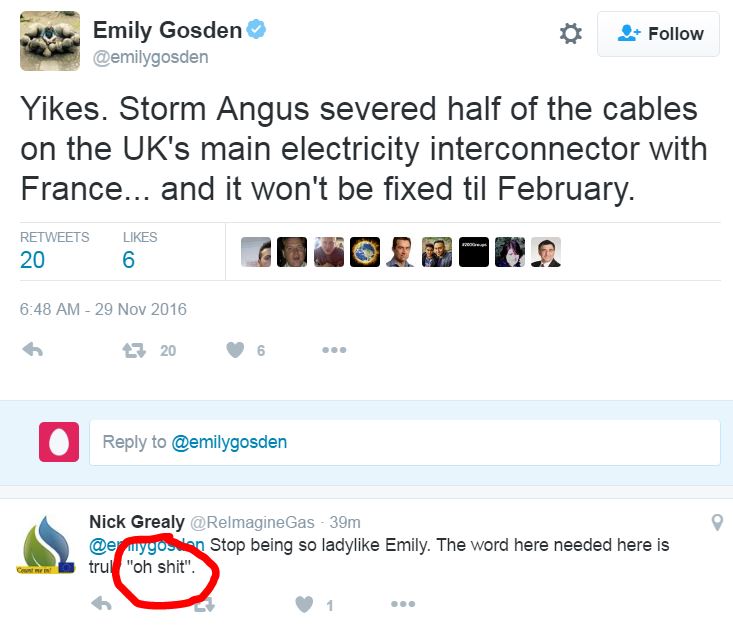
UK Electricity Grid – Reliability For the Rich – Screw the Poor

Is this a surprise? Of course the poor will get screwed.

Britain’s increasing reliance on “intermittent” renewable energy means that the country is facing an unprecedented supply crisis, a senior Ofgem executive has warned.

Andrew Wright, a senior partner at Ofgem and former interim chief executive, warned that households could be forced to pay extra to keep their lights on while their neighbours “sit in the dark” because “not everyone will be able to use as much as electricity as they want”.

He warned that in future richer customers will be able to “pay for a higher level of reliability” while other households are left without electricity.

Mr Wright said that because Britain has lost fuel capacity because of the closure of coal mines, there is now “much less flexibility” for suppliers.

In a stark warning about the future of energy supply in Britain, Mr Wright said that consumers could be forced to pay more if they want to ensure they always have power.

“At the moment everyone has the same network – with some difference between rural and urban – but this is changing and these changes will produce some choices for society,” he told a recent conference.

 “We are currently all paying broadly the same price but we could be moving away from that and there will be some new features in the market which may see some choose to pay for a higher level of reliability.

Wind Service Technician

A bunch of “scientists” and “grad students” singed a petition essentially begging for the gravy train of money to keep flowing to them despite Trump being elected.

Item #1 was: Make America a clean energy leader

And then they said:

“Wind technician” is the fastest growing job category in America, and the solar industry has hired more veterans than any other sector9.”

The reference:

Shah, J. Clean Energy Jobs Are Exploding in America. Why Don’t Mainstream Reporters Know? Greentech Media (Sept. 2, 2016). [link]

The relevant section:

According to the U.S. Bureau of Labor Statistics, “wind technician” is the fastest-growing job category — expanding twice as much as the next-fastest growing job, occupational therapy assistant.

What did I find when I sent searching?

It was a projection to 2024. Not actual numbers.

And the numbers are pitifully small. An increase of 4800 jobs over the next 10 years. 1.3 jobs a day!

Occupation Therapy Assistants (which pay better) are projected to have a 14,100 increase.

There are 9 careers in that list that pay better than Wind Turbine Service Technicians and most will supposedly have way more jobs in 2024.

But its a projection. And we know how good climate scientists are at making projections!

capture

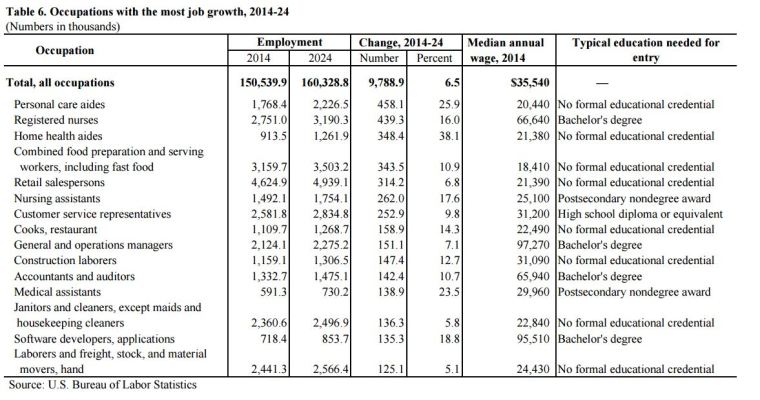
The occupations with the most job growth (total jobs … not percentage):

Personal Care Aides 458,100 ,Registered Nurses 439,300  etc

capture

UK Electricity Grid – Diesel Farms – It Ain’t Easy Pretending To Be Green

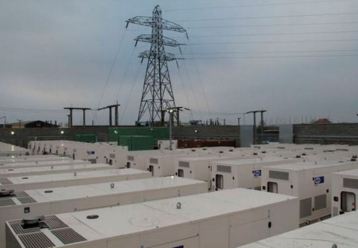
Diesel farms aren’t green at all.capture

The owner of Britain’s energy network is gearing up to buy more power from suppliers to ensure the country’s lights stay on, with polluting diesel generators among the providers vying for contracts.

The National Grid needs back-up electricity sources that kick in when, for instance, demand is high but the weather is not breezy enough to power wind farms. It secures this back-up power through the annual capacity market auction that begins on Tuesday and will see controversial “diesel farms” taking part.

This auction process has created lucrative investment opportunities for people to invest in diesel farms, rows of noisy and polluting generators that operate for up to 15 years. In fact, financiers have set up companies specifically to access payments from the National Grid. And while the government is weighing up plans to limit the attractiveness of such investments, many diesel farms have been built and are already delivering returns. Still more could land multimillion-pound contracts this week.

Industry sources said one farm can easily make £5m a year, while non-profit climate analysis firm InfluenceMap today claims the diesel farm industry could pick up £500m in a matter of years. In some cases, investors are also eligible for generous tax breaks. Gas has become an increasingly important part of the UK’s energy mix as coal, due to be phased out by 2025, has been scaled back. Diesel farms are not there to provide power on a routine basis, but to fire up at times of peak use or to help balance second-by-second changes in demand.

While the farms offer a profitable investment, those who live nearby say their lives are blighted by noise pollution and fear of toxic emissions. In Ernesettle, Plymouth, locals told the Guardian they are fed up with generators being built in their quiet neighbourhood.

UK Electricity Grid – No Gas For You

The morons in charge of the UK electricity supply have screwed things up so much no one wants to build new gas power plants even while old power plants are being closed.

As a result of Britain’s energy policies, building new gas-fired power plants is no longer economic. Now, the Government has to subsidise gas investors to keep the lights on.

Four years ago this week, the Government unveiled plans for a bold new dash for gas.

New gas-fired power stations, then-energy secretary Ed Davey said, would be required to “provide crucial capacity to keep the lights on”.

A new Gas Generation Strategy backed “significant investment” in up to 26 gigawatts (GW) of new plants by 2030.

Since then, energy ministers have come and gone, support for solar and onshore wind has been scrapped and the drive for new nuclear has faced security and cost worries. But support for gas had been unwavering.

Relatively cheap and quick to build, much cleaner than coal, and able to generate even when the wind doesn’t blow or the sun doesn’t shine, gas plants tick all the Government’s boxes.

“In the next 10 years, it’s imperative that we get new gas-fired power stations built,” Amber Rudd, Davey’s successor, declared last year.

There’s just one problem: pretty much no one’s building them.

The huge problems is all the other plants closing down.

23GW of conventional thermal power plant capacity has been closed or mothballed since 2010. “That’s more than a third of peak demand,” says Howard.

“And a further 24GW of coal and nuclear is expected to close between now and 2025.

They held auctions … and nobody built any big gas power plants.

Instead, the big winners both times were existing coal, gas and nuclear plants – as well as an unexpected boom in new small diesel and gas engines.

All that shale gas coming and nowhere to burn it.

The UK is screwed.