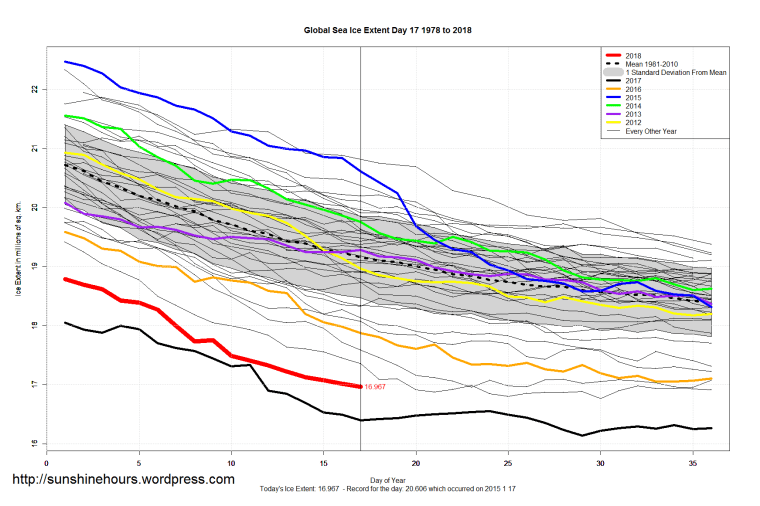
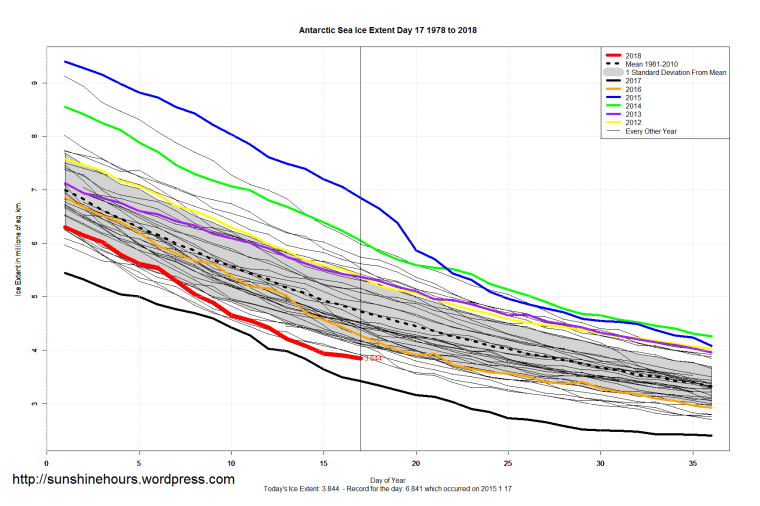
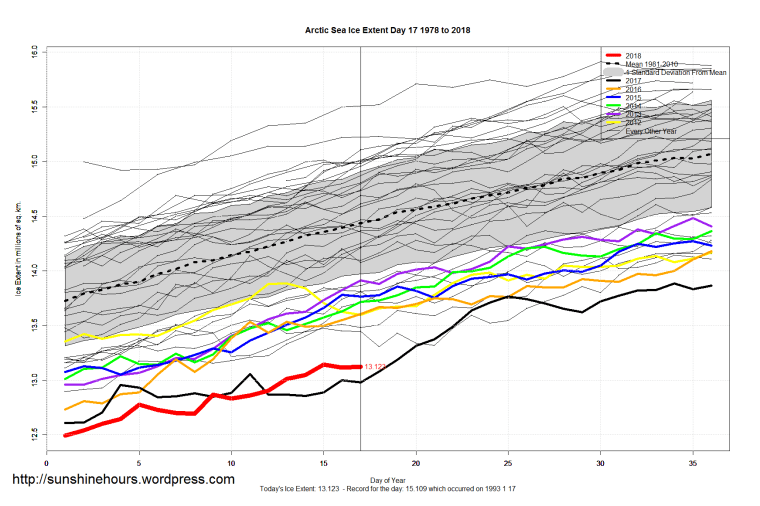
Sea Ice Extent (Global Antarctic and Arctic) – Day 15 – 2018
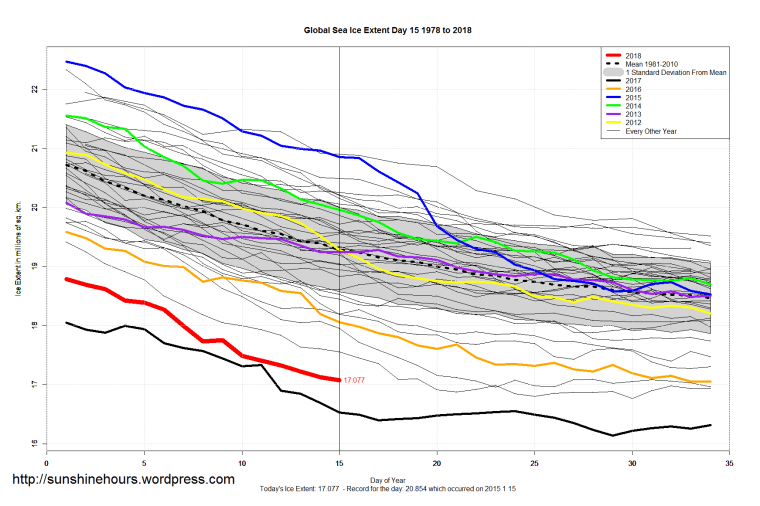
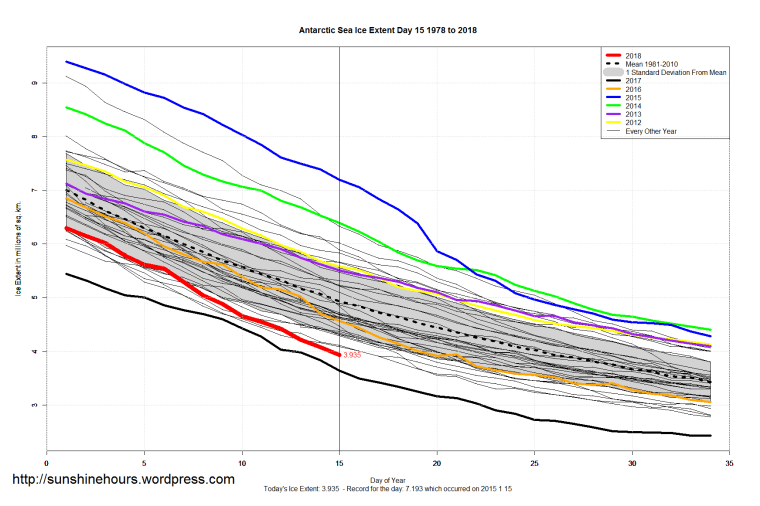
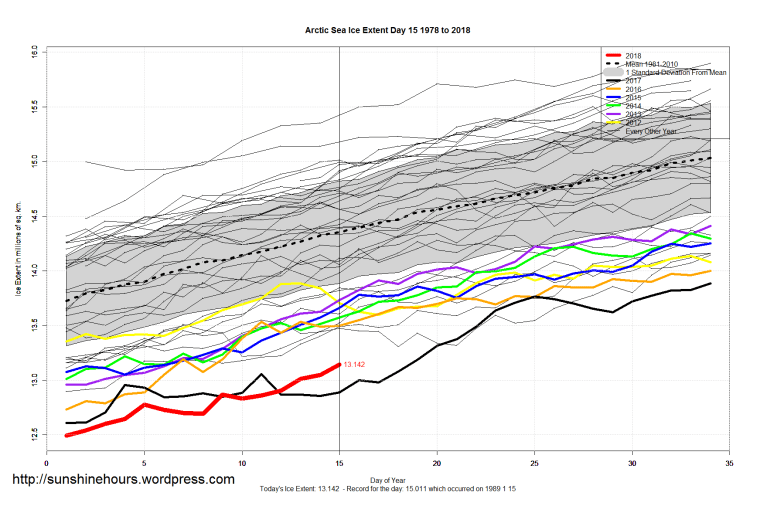
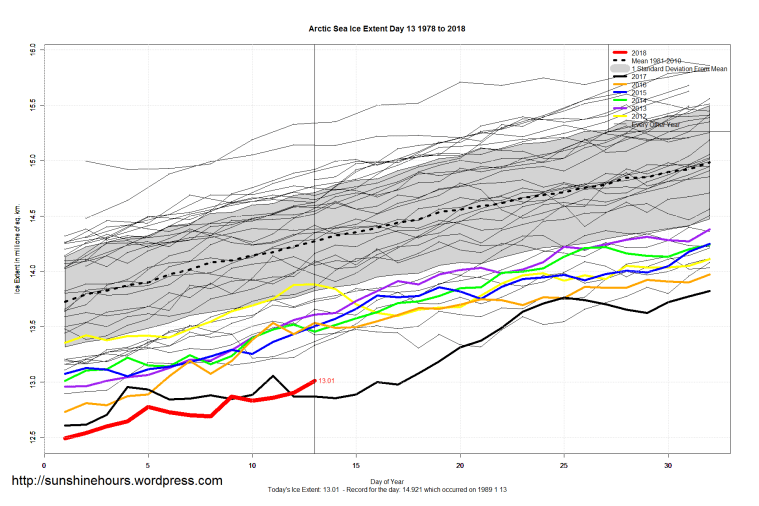
Sea Ice Extent (Global Antarctic and Arctic) – Day 13 – 2018
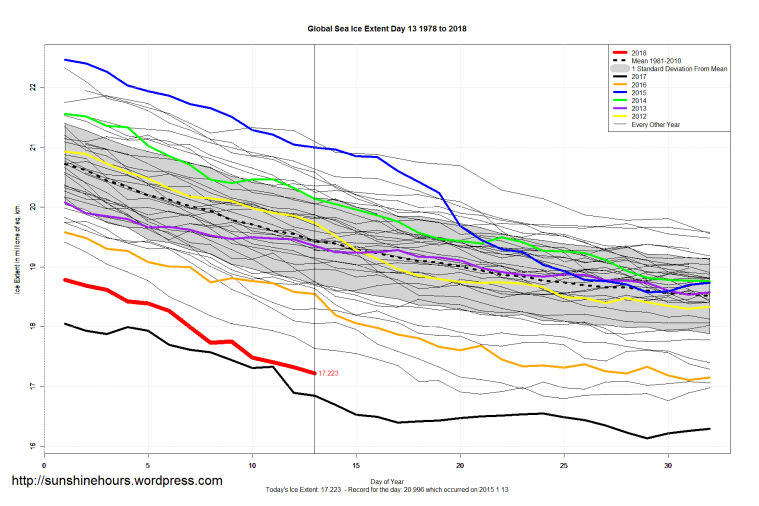
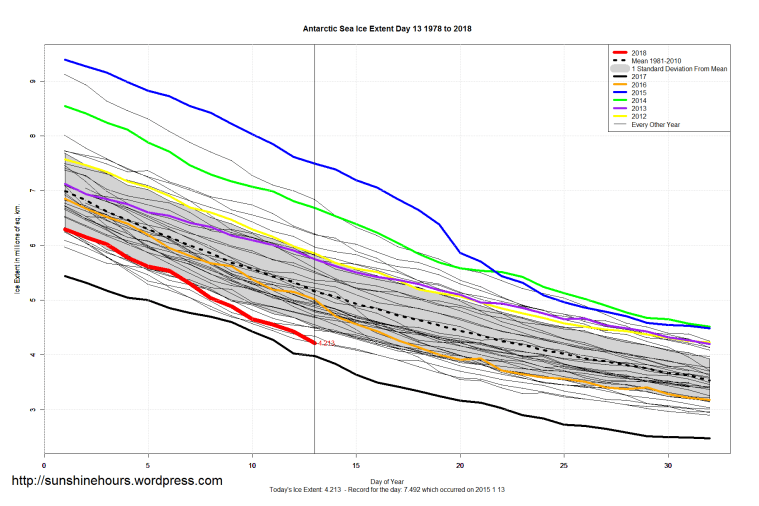
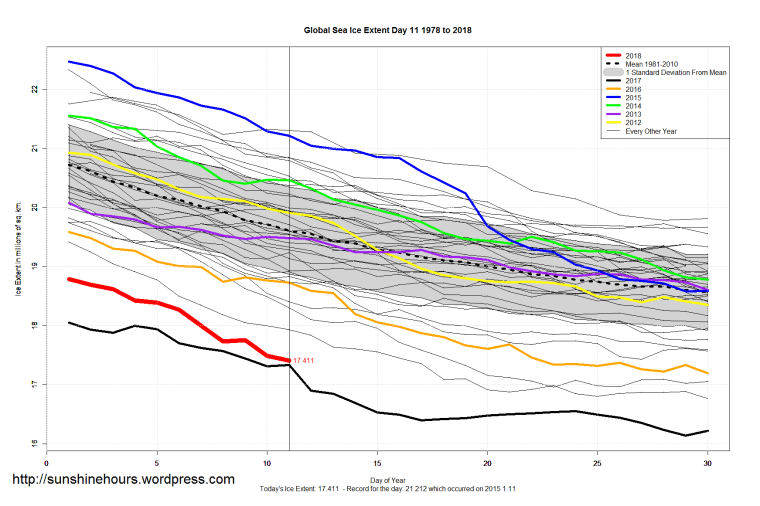
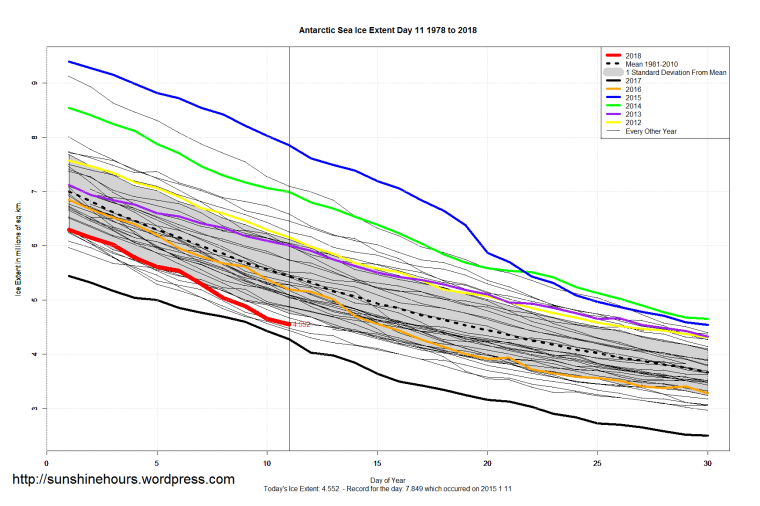
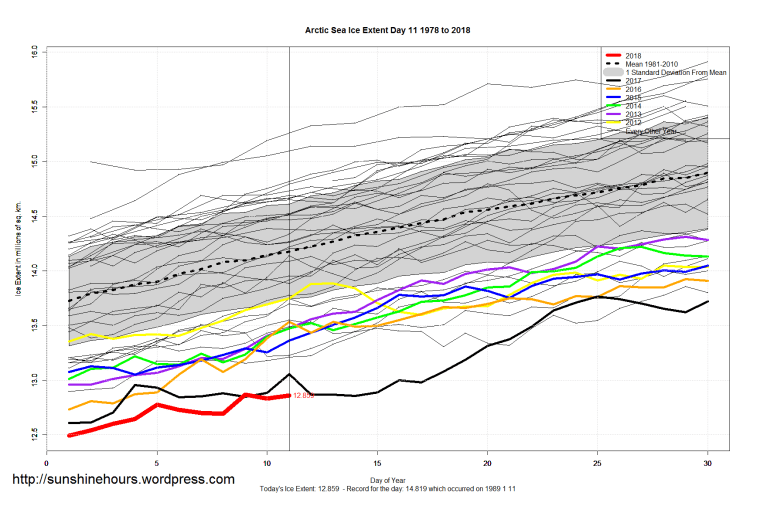
Sea Ice Extent (Global Antarctic and Arctic) – Day 11 – 2018
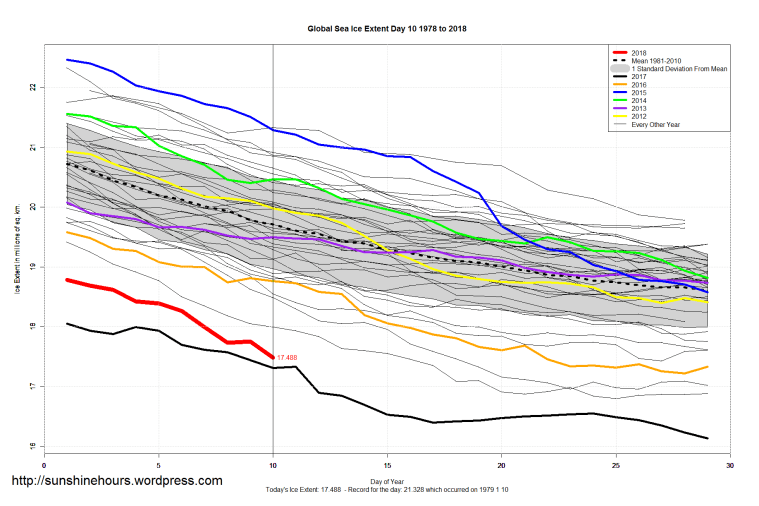
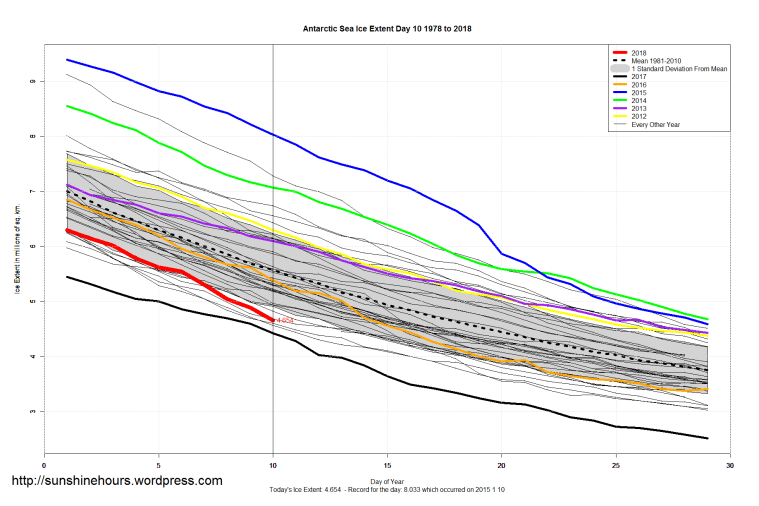
Sea Ice Extent (Global Antarctic and Arctic) – Day 10 – 2018

Biofuels = Centuries Long Increase in CO2
This paper is a pdf.
Biofules, biomass , wood pellets et al are a disaster if you believe more CO2 will cause Global Warming.
Does replacing coal with wood lower CO2 emissions?
Dynamic lifecycle analysis of wood bioenergy
John D. Sterman1
Lori Siegel2
Juliette N. Rooney-Varga3
In sum, although bioenergy from wood can lower long-run CO2 concentrations compared to
fossil fuels, its first impact is an increase in CO2, worsening global warming over the critical
period through 2100 even if the wood offsets coal, the most carbon-intensive fossil fuel.
Declaring that biofuels are carbon neutral as the EU and others have done, erroneously
assumes forest regrowth quickly and fully offsets the emissions from biofuel production and
combustion. The neutrality assumption is not valid because it ignores the transient, but
decades to centuries long, increase in CO2 caused by biofuels.
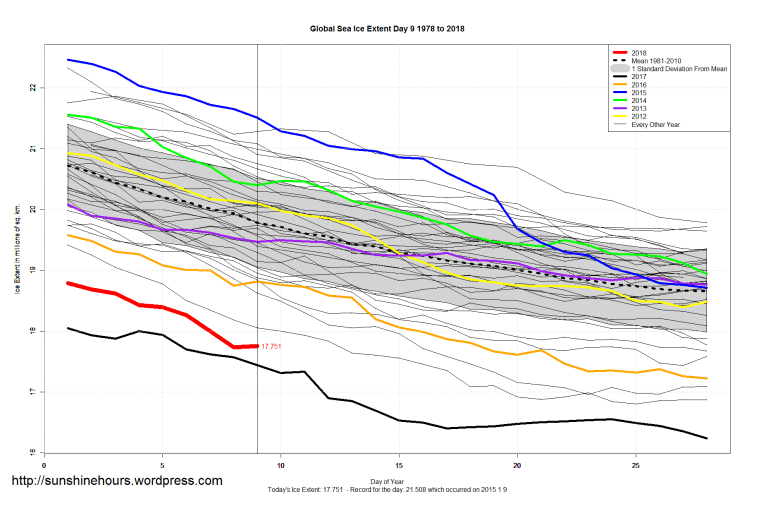
Sea Ice Extent (Global Antarctic and Arctic) – Day 9 – 2018


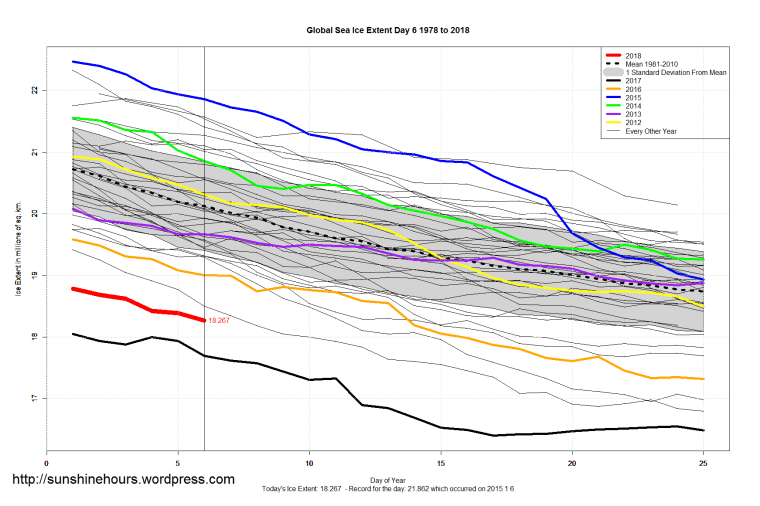
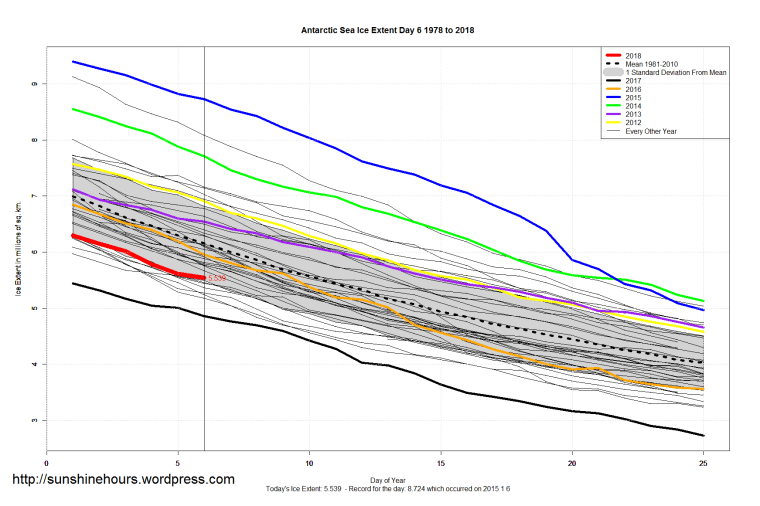
Sea Ice Extent (Global Antarctic and Arctic) – Day 6 – 2018

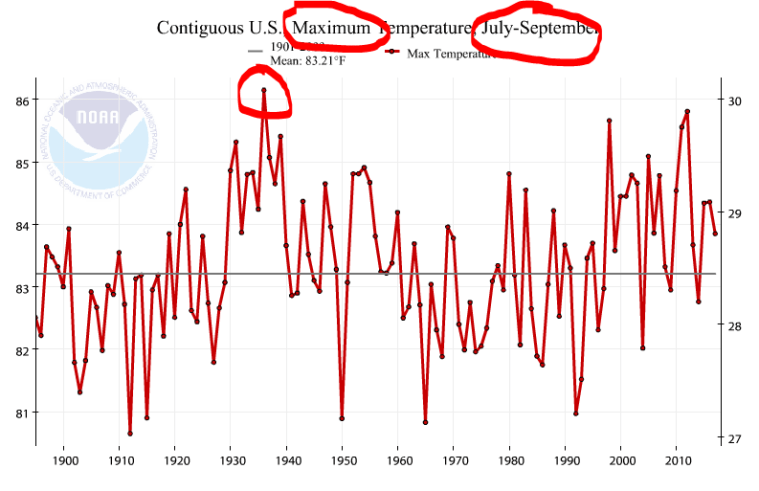
1936 USA – Cold and Hot
A little bit of climate trivia.
The Summer of 1936 in the USA was the hottest summer (using max temperatures).
The Winter of 1935/1936 in the USA was the coldest winter (using minimum temperatures).

10 Hours of Sun in Germany for December 2017
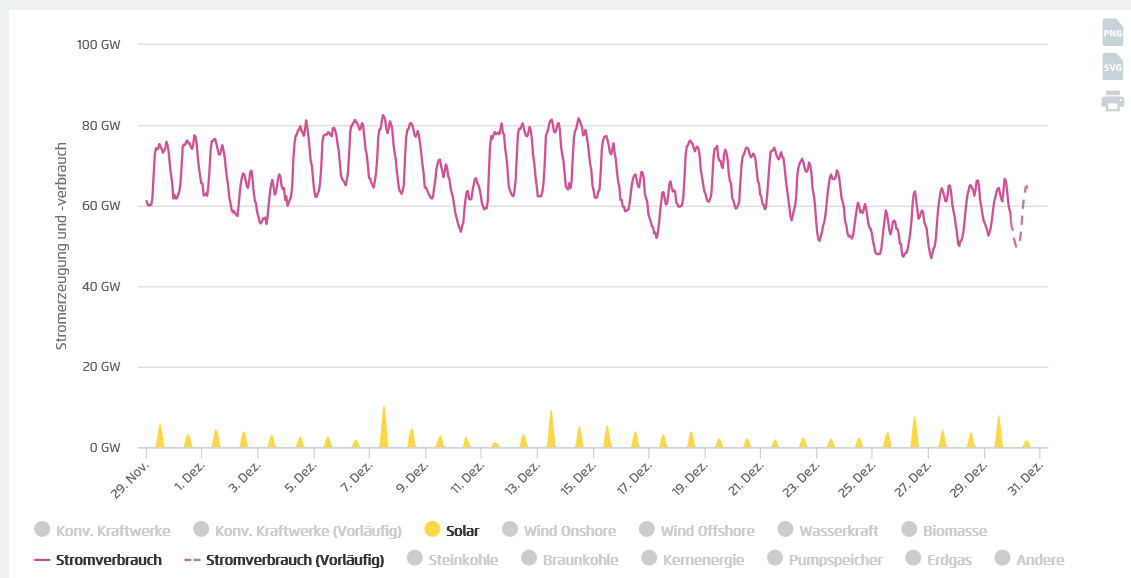
At NoTricksZone the insanity of Germany’s “plan” for saving the worlds from cheap electrcity is on display.
80GW of demand (the reddish line)
40 GW of installed solar producing almost nothing (the yellow)/
10 hours of sunshine in Germany for the whole month of December.
As Jo Nova says:
“Imagine what kind of havoc this kind of energy flux can do. Not one piece of baseload capital equipment can be retired, despite the fact that half of it is randomly unprofitable depending on cloud cover. Solar PV eats away the low cost competitive advantage. Capital sits there unused, spinning on standby, while wages, interest, and other costs keep accruing. So hapless baseload suppliers charge more for the hours that they do run, making electricity more expensive.
They just need batteries with three months supply.”
 sunshine hours