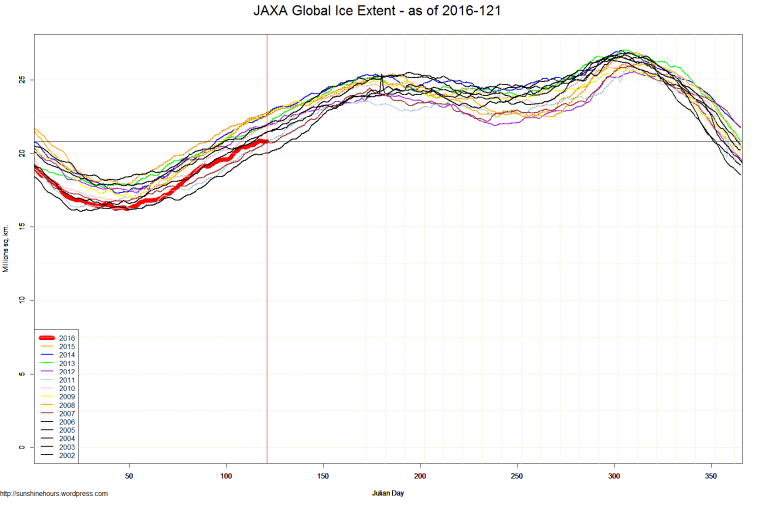
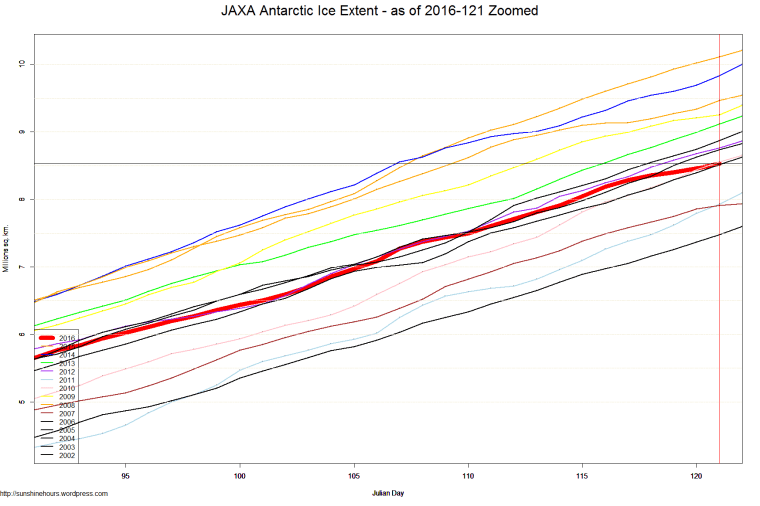
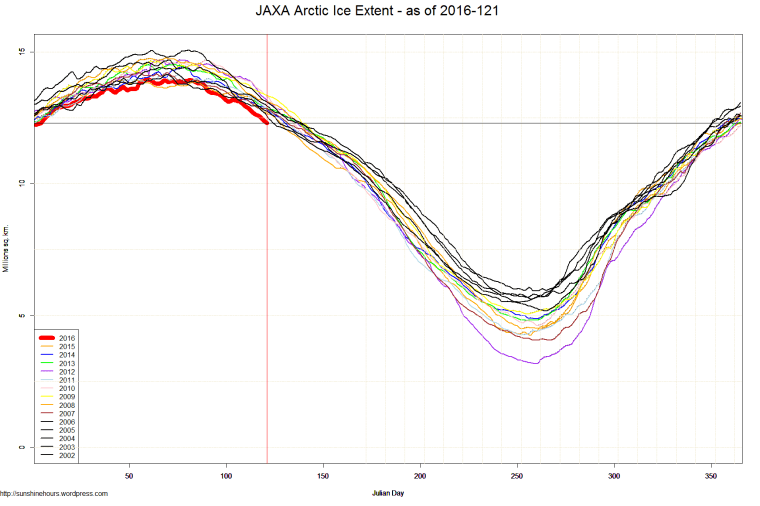
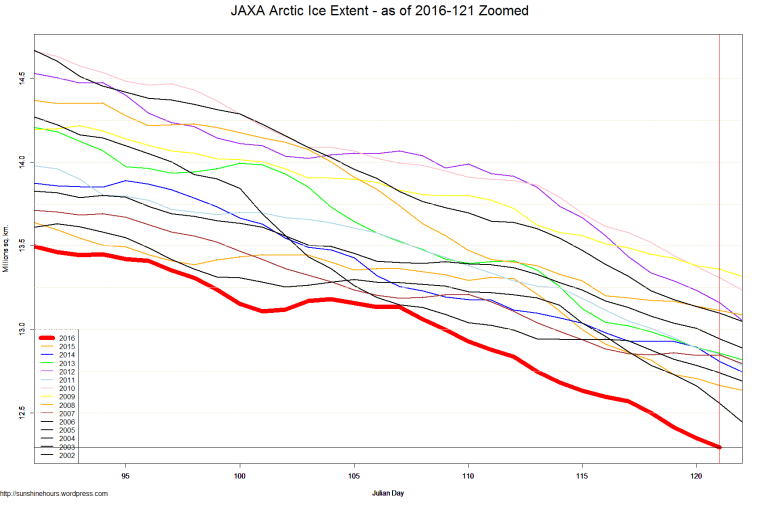
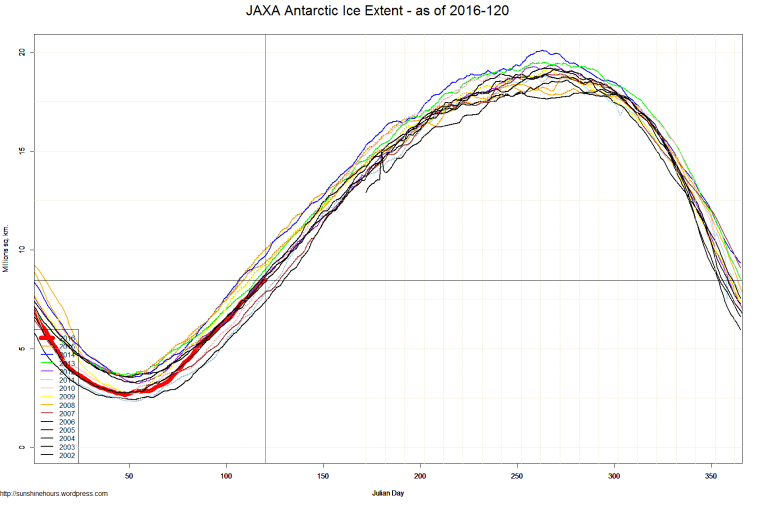
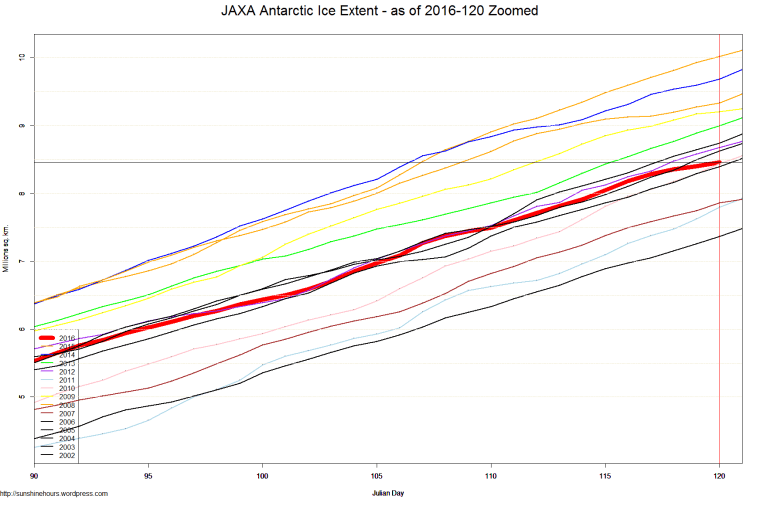
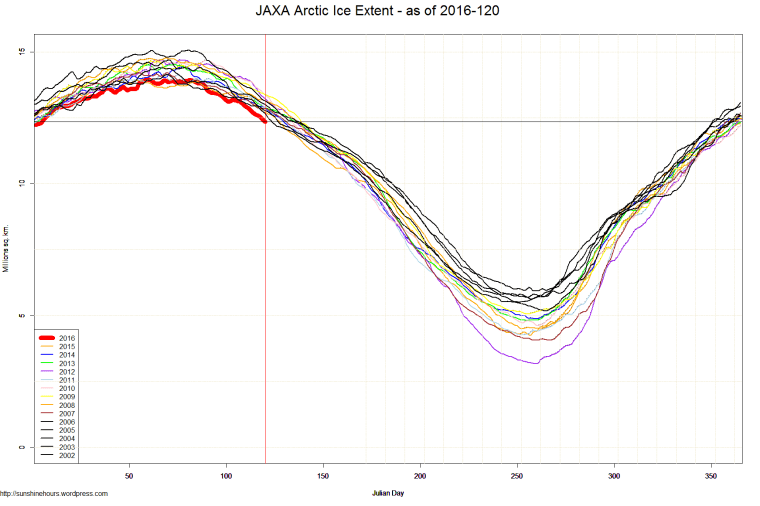
JAXA sea ice extent data from Japanese Aerospace Exploration Agency.
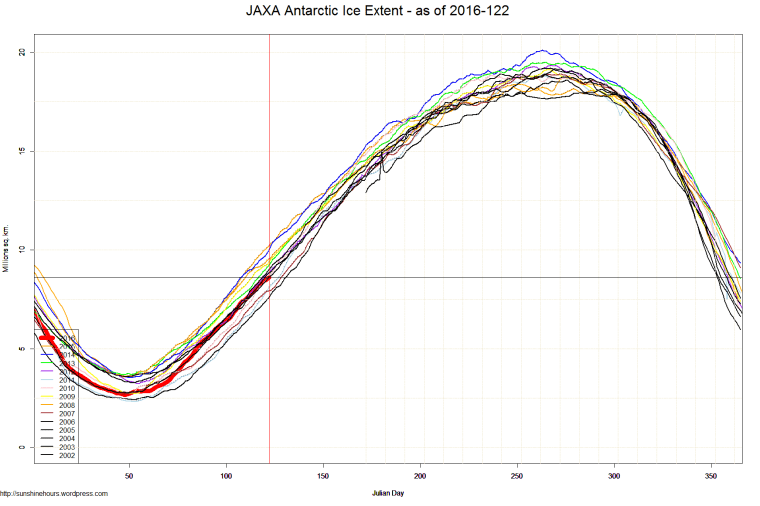
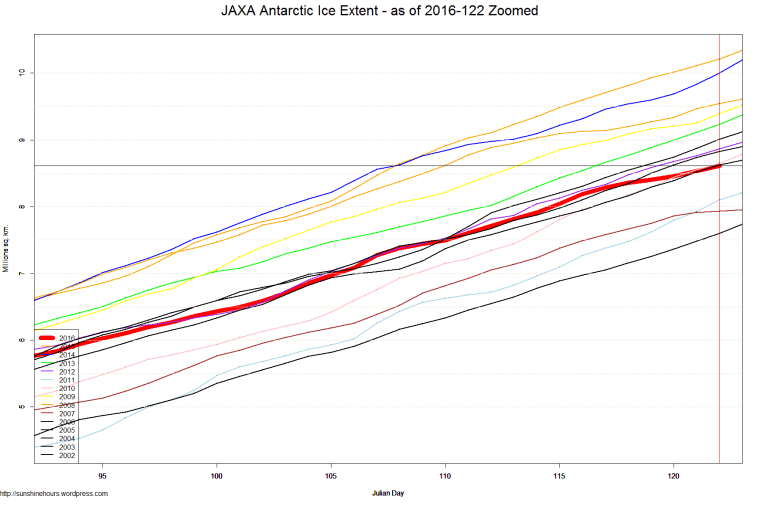
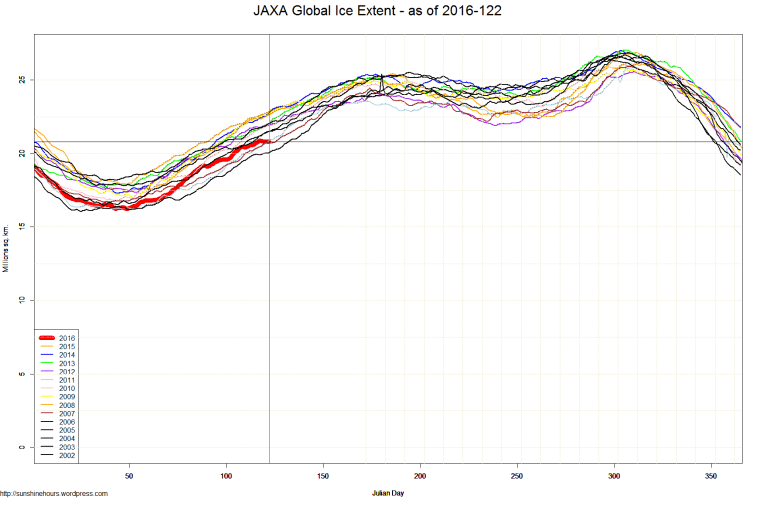
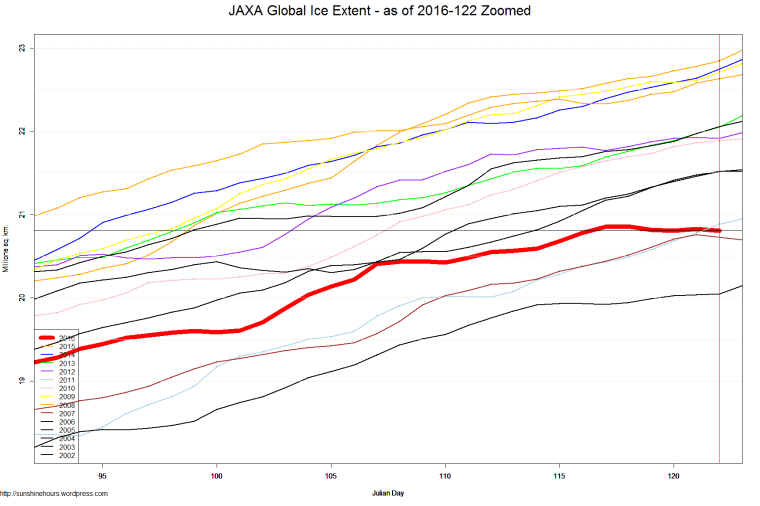
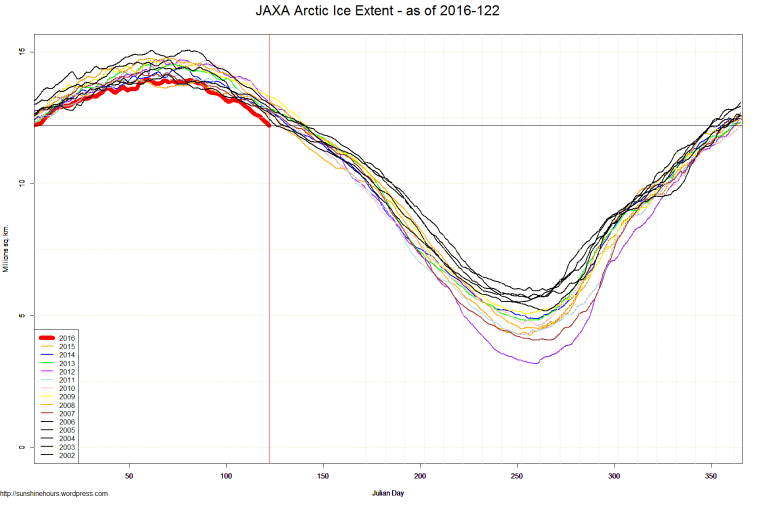
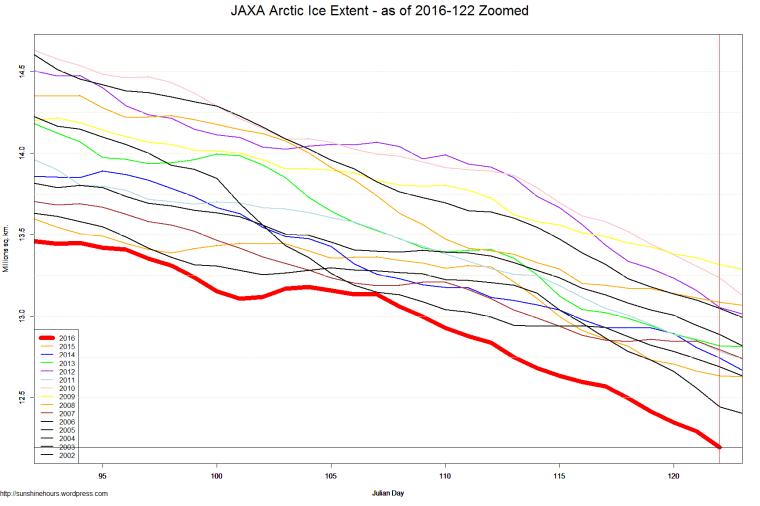
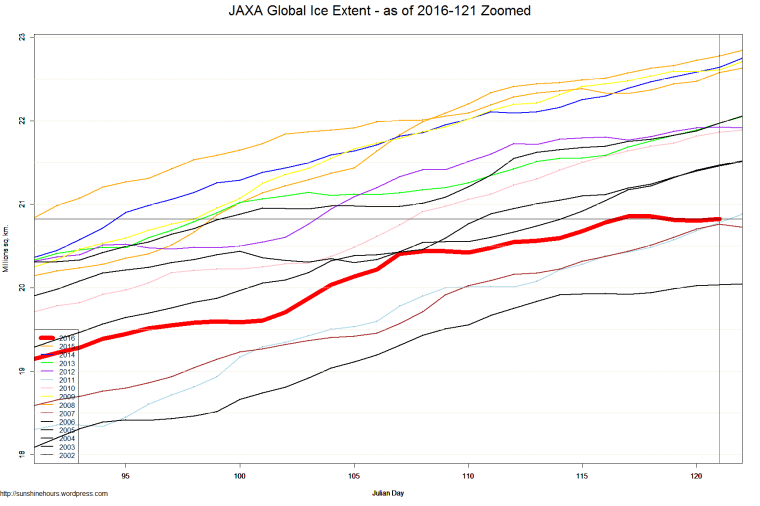
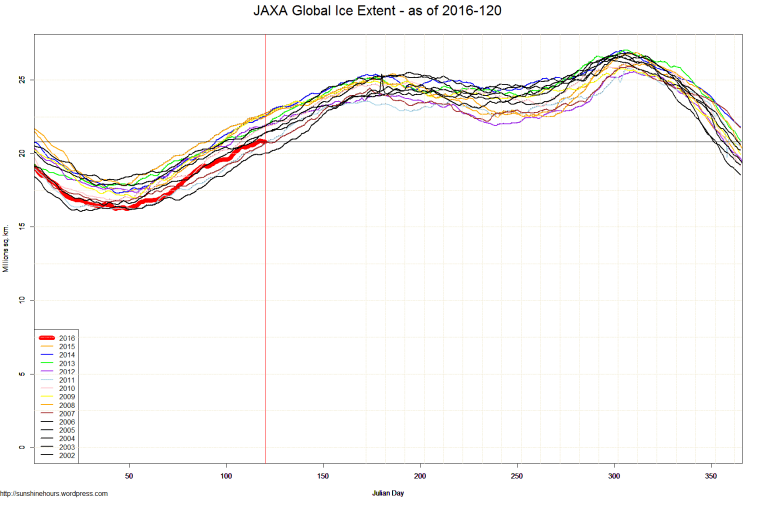
JAXA sea ice extent data from Japanese Aerospace Exploration Agency.
You remember HADCET (Central England Temperature)? Longest temperature record in existence!.
HADCET April 2016 was tied for 217th warmest out of 354.
The barplot is the April’s since 1659. The temperature is the anomaly from the 1659 to 2016 average.
The yellow bars are the years warmer than February 2016. Green bars indicate a tie with February 2016. Click twice for bigger.
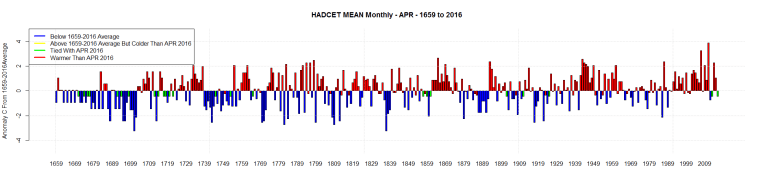
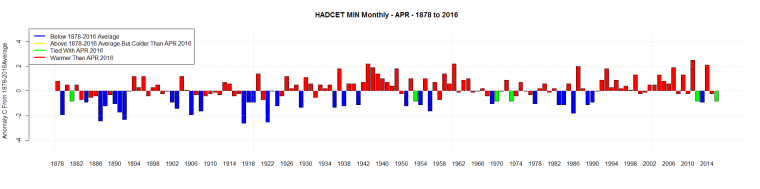
HADCET only goes back to 1878 for MIN and MAX. Here are those graphs.
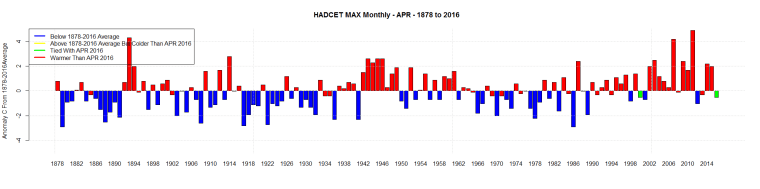
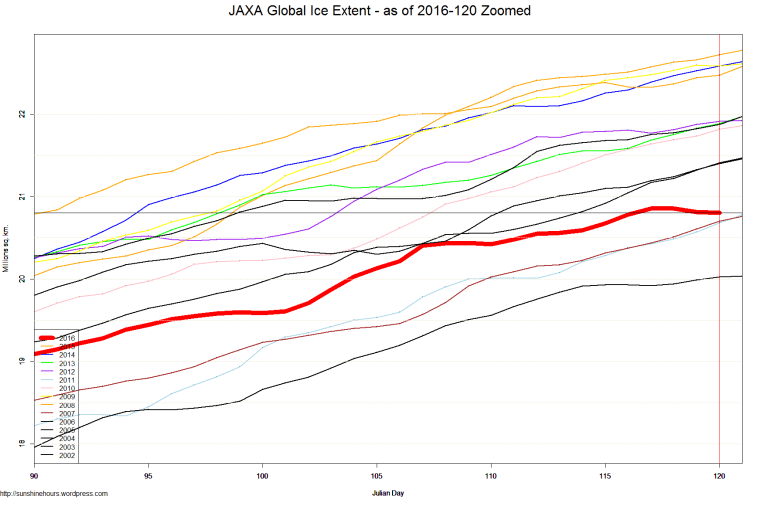
JAXA sea ice extent data from Japanese Aerospace Exploration Agency.
Sky high electricity costs for Ontario consumers and businesses. Cheap electricity to the USA and Quebec.
Insanity.
Steve McIntyre tweeted: “Ontario lost $400 million in Q4 2015 alone in wind power. Dumped to neighbors for $5 M.”
This is the article he is referring to:
The 3,434,750 MWh is estimated to have cost ratepayers approximately $460 million. The 3 TWh of electricity IWT delivered to the grid cost about $405 million and the curtailed cost was almost $55 million. During the quarter, the HOEP1. averaged $1.50/MWh, meaning if all of generated and curtailed wind was a part of the 5.4 TWh exported, it would have generated only a shade over $5 million —that would have reduced the cost to ratepayers to $455 million. With 92 days in the last quarter of 2015, the money paid by Ontario ratepayers averaged daily was almost $5 million.
I found another one for June. With a good explanation of the stupidity.
Electricity watchdog Parker Gallant keeps a wary eye on energy prices in this province.
In a recent post on the website www.windconcerns.ca, Gallant points out the government paid $200 million in June to dump electricity at a loss.
Gallant, vice-president of Wind Concerns, estimates 1.9 terawatts (TWh) of Ontario’s electricity production (15.2% of Ontario’s demand of 10.6 TWh) was exported to Michigan, New York and Quebec, in June.
Ontario was paid $29.1 million for those exports. Unfortunately, it cost provincial ratepayers $249.9 million to produce that same electricity.
Here’s the math: Ontario exported the power at the Hourly Ontario Electricity Price (HOEP) of $15.31/megawatt hour (MWh) or 1.53 cents per kilowatt hour (kWh) for $29.1 million. However, the cost to produce and transmit that 1.9 TWh, was $131.43/MWh (13.14 cents/kWh) — or $249.9 million.
“Most of that wound up in the big (and growing) pot referred to as the Global Adjustment (GA),” Gallant reports.
“So Ontario’s electricity ratepayers picked up the difference of $221 million, which when added to our export losses for the prior five months of 2015, brought costs to almost $1.1 billion for the first six months of 2015,” Gallant said.
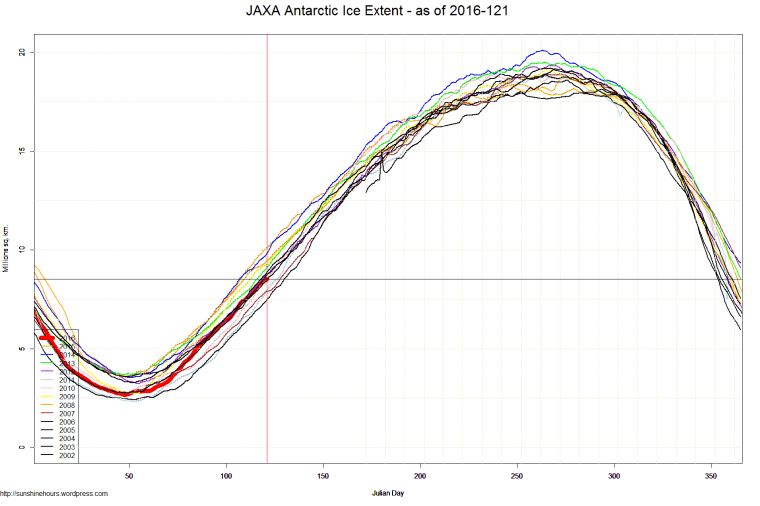
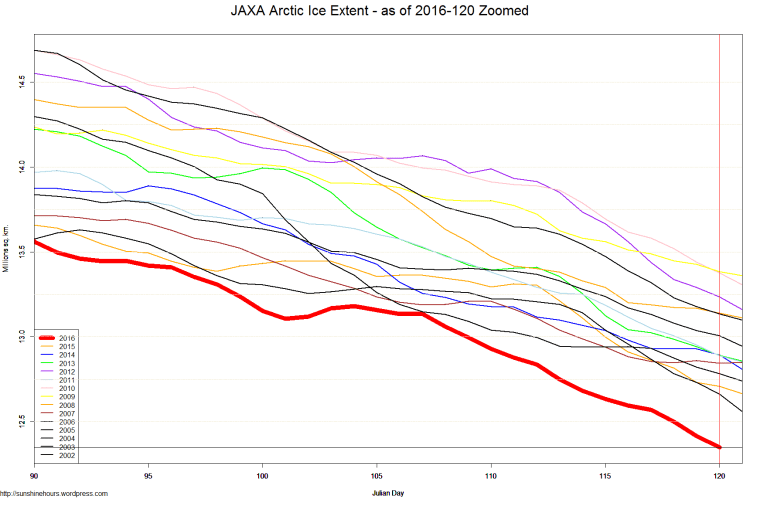
JAXA sea ice extent data from Japanese Aerospace Exploration Agency.
Bear with me. (This is just a mini-rant brought on by this. Skip it if you want)
Lets say ISIS takes 25,000 hostages. And then executes 1,000. And then ISIS broadcasts pictures of the survivors.
And then Obama goes on TV and notes that the survivors are sweating. He then blames the deaths on global warming.
Normal people would rightly claim he was insane because it wasn’t the heat that killed those hostages.
Well … there are 25,000 polar bears. Somewhere between 500 and 1,000 are shot each year by aboriginal hunters (or the people they guide for).
And the usual suspects (like Greenpeace and Obama and the whole climate change scam) blame it on global warming.
References:
Annual harvest is between 500 and 700 bears or 2-3% of the world population of about 25,000 bears and is thought to be sustainable.
Russians say Canadian documents help polar bear poachers
Hunting polar bear in the Arctic is a privilege that so few outdoorsman will ever have the chance of experiencing. All of our guides and guide helpers are Inuit and posses government certification on safety standards used when out on the land.The Inuit are the only people in Canada who can legally harvest a polar bear based on cultural and subsistence purposes and is done through strictly enforced regulations and highly monitored tag allocations. A sustainable harvest quota system set by Canadian scientists and local Inuit Wildlife Management Boards are based on the principles of conservation and aboriginal subsistence hunting, and are not market-driven. Measures are in place to allow a limited number of polar bear tags from the overall annual harvest quota to be allocated for non-Aboriginal hunters thereby not affecting the management objectives and conservation of the species.
All the meat derived from a sport hunted polar bear goes directly to the Inuit guide and his family or the community food bank.
Hunters in Quebec have killed 12 times the usual number of polar bears they harvest in southern Hudson Bay this winter, leading a Canadian polar bear researcher to wonder if soaring prices for polar bear hides are to blame.
Because of the boom of renewable energy, more and more wind turbines have to be switched off. The reason is power overloading. The network operators must turn down electricity generated from windmills when their power threatens to clog the network. Originally, this was intended only as an emergency measure. The operators of wind and solar parks, however, are being subsidised for electricity that is not produced.
For the grid operator Tennet alone, these costs added EUR 329 million in 2015 – two and a half times as much as in the previous year. The other network operators 50Hertz, Amprion and EnBW had a combined cost of 150 million euros, according to a survey of Wirtschaftswoche among the four network operators in Germany.
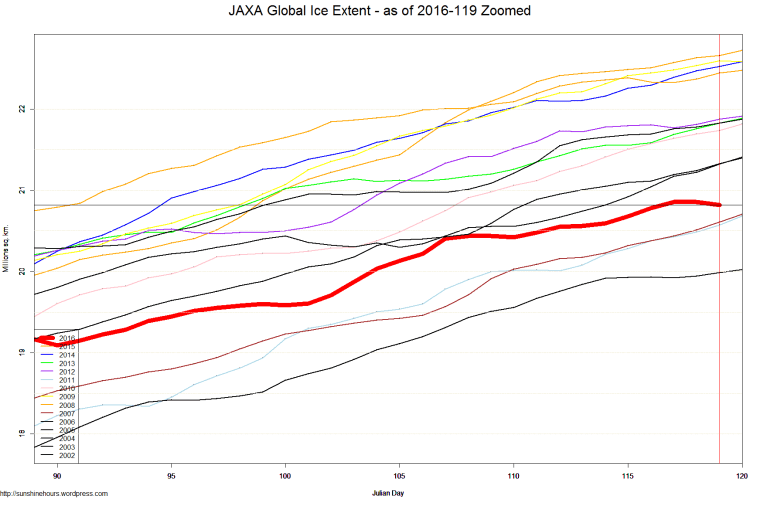
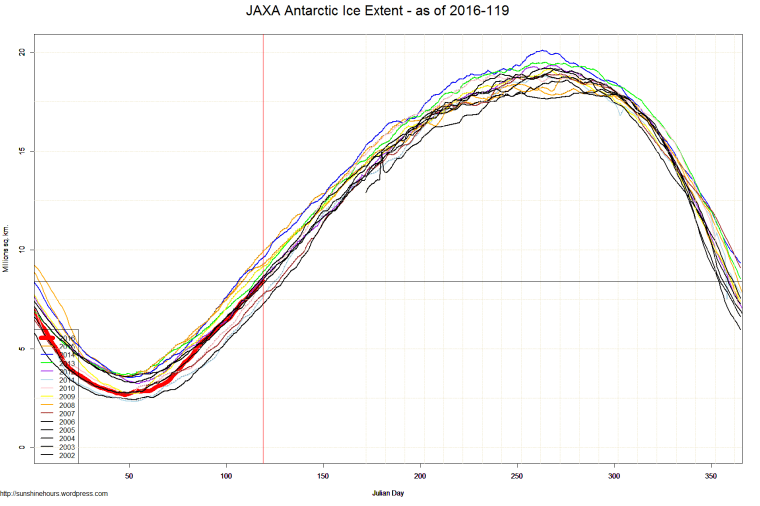
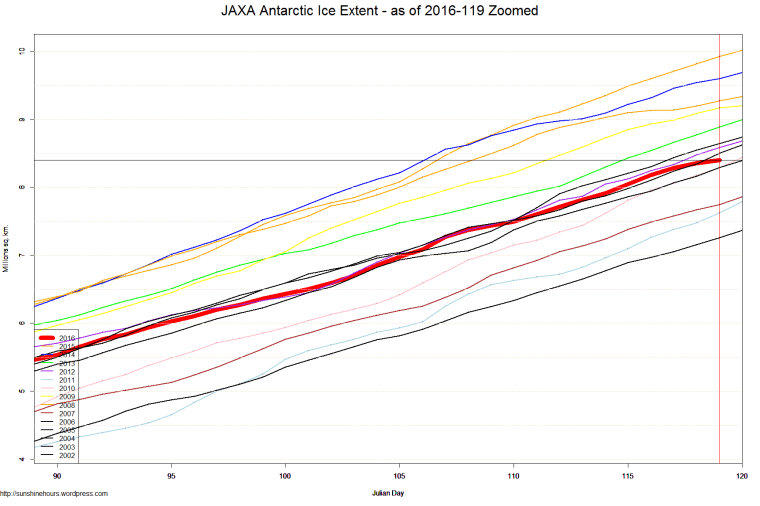
JAXA sea ice extent data from Japanese Aerospace Exploration Agency.
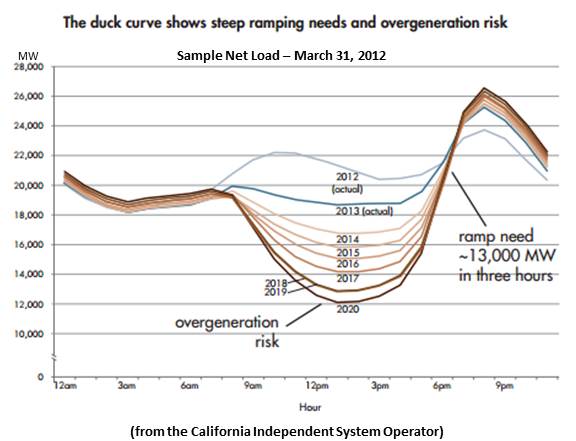
The problem with solar power on a state wide basis is that it peaks at mid day while “everyone” is at work and no one is doing laundry or cooking dinner or turning on the A/C at the end of a long hot day at work or school.
There is a real risk of overgeneration which means you need to dump electricity somewhere or quickly shutdown any non-solar power you can.
And then kids start coming home from school and then the sun starts to go down and the parents come home and put something in the oven and maybe do a load of laundry and plug in the hybrid car.
And suddenly you need 13,000MW of power to pump into the grid.
And the demand curve looks like a duck.
The surge in intermittent solar power will test the statewide electricity grid because it exacerbates the need for alternative sources such as gas outside of daylight hours. Regulators have warned it’ll make California more vulnerable to price spikes and power disruptions.
What a surprise. They want a subsidy to turn wood into “biocoal”. They want to use energy to roast wood and turn it into coal. Even though coal exists. And there is lots of it. Some of the processes use microwaves.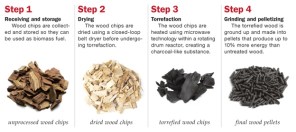
The torrefaction process is a thermal treatment of biomass, in a temperature range between 200-300° C, in absence of oxygen and with a variable residence time (around 1 hour). The biomass gets roasted during the process and releases various volatile compounds. The final solid product has a higher energy density, better storability and better grindability than wood pellets or woodchips. For these reasons it can be used as a valuable renewable feedstock for co-combustion in small percentages in coal power plants, or it can be used in higher percentages in coal fired combined heat and power plants, hence the name biocoal.
Torrefaction occurs by steam inertization and through an accurate process control. Wood chips are conveyed from a chip silo to the unit where all the phases of torrefaction take place: pre-drying, post-drying, torrefaction, and cooling of solids. After this step, the biomass is delivered to a pelletizing unit and packed in big bags of 1 m3.
Several different woody biomass feedstock were tested: forest chips made from coniferous trees (spruce, pine) and broadleaf (birch), as well as by-products such as bark. Results showed that the quality of torrefied pellets depends to a large extent on the quality of raw material, the particle size distribution should be as homogenous as possible and fine particles should be avoided. No binders were used in the pelletization phase, and this is an advantage as binders concur to increasing the production costs. The lower heating value of the biocoal pellets varied between 17.96 and 18.44 MJ/kg (4.99–5.12 kWh/kg) with an initial moisture content of 6.57%. Higher energy density and lower moisture are expected with new continuous process tests which will be conducted at a higher temperature and with a separate drying system. Biocoal is typically hydrophobic, however, trials with outdoor covered storage during winter revealed a slight increase in the moisture content of the torrefied pellets.
… this study indicated a cost of 208 €/ton, or 37–39 eur/MWh, for a full scale 50 kton/y plant. Several different factors can affect the final production cost of torrefied pellets. In the conditions considered by the study, raw-material accounted for 57% of the final production cost, while the torrefaction process accounted for 33%, and transport for 10%. This price level is clearly higher than the current price of coal used in combined heat and power plants, around 26 eur/MWh in Finland, however 1.2 million tons of torrefied pellets could replace half of the coal used in CHP plants in Finland annually.
For this reason the authors suggest there is a need for a subsidy system, such as feed-in tariffs, to make energy from biocoal competitive in the current market conditions.


