Who Will Pay For Roads and Bridges If Electric Cars Get Market Share?

Good point:

U.S. roads and bridges are in abysmal shape – and that was before the recent winter storms made things even worse.

In fact, the government rates over one-quarter of all urban interstates as in fair or poor condition and one-third of U.S. bridges need repair.

To fix the potholes and crumbling roads, federal, state and local governments rely on fuel taxes, which raise more than US$80 billion a year and pay for around three-quarters of what the U.S. spends on building new roads and maintaining them.

I recently purchased an electric car, the Tesla Model 3. While swerving down a particularly rutted highway in New York, the economist in me began to wonder, what will happen to the roads as fewer and fewer cars run on gasoline? Who will pay to fix the streets?

Fuel taxes 101

Every time you go to the pump, each gallon of fuel you purchase puts money into a variety of pockets.

About half goes to the drillers that extract oil from the earth. Just under a quarter pays the refineries to turn crude into gasoline. And around 6 percent goes to distributors.

The rest, or typically about 20 percent of every gallon of gas, goes to various governments to maintain and enhance the U.S. transportation’s infrastructure.

Currently, the federal government charges 18.4 cents per gallon of gasoline, which provides 85 percent to 90 percent of the Highway Trust Fund that finances most federal spending on highways and mass transit.

Read more at: https://phys.org/news/2019-02-electric-cars-america-crumbling-roads.html#jCp

Why Renewables Can’t Save the Planet

Obvious to some, but here is a great essay.

“As for house cats, they don’t kill big, rare, threatened birds. “

“In fact, wind turbines are the most serious new threat to important bird species to emerge in decades. The rapidly spinning turbines act like an apex predator which big birds never evolved to deal with.

Solar farms have similarly large ecological impacts. Building a solar farm is a lot like building any other kind of farm. You have to clear the whole area of wildlife.

In order to build one of the biggest solar farms in California the developers hired biologists to pull threatened desert tortoises from their burrows, put them on the back of pickup trucks, transport them, and cage them in pens where many ended up dying.”

As we were learning of these impacts, it gradually dawned on me that there was no amount of technological innovation that could solve the fundamental problem with renewables.

You can make solar panels cheaper and wind turbines bigger, but you can’t make the sun shine more regularly or the wind blow more reliably. I came to understand the environmental implications of the physics of energy. In order to produce significant amounts of electricity from weak energy flows, you just have to spread them over enormous areas. In other words, the trouble with renewables isn’t fundamentally technical—it’s natural.

Read it all at Quillette.


Ferries and Killer Whales – Stats

Just an addendum to the post I made about Ferries and Killer Whales. The key paragraph is here.

The study stated “that ferries undoubtedly contribute a large amount of noise due to their size, the large number of monthly ferry trips, and because their routes are widely distributed throughout” the pod’s habitat. To make matters worse, B.C.’s provincial government plans to increase the number of ferry trips in B.C. coastal waters by an enormous 2,700 trips per year — or 225 more trips per month.

TMX will result in 1 extra tanker sailing per day.

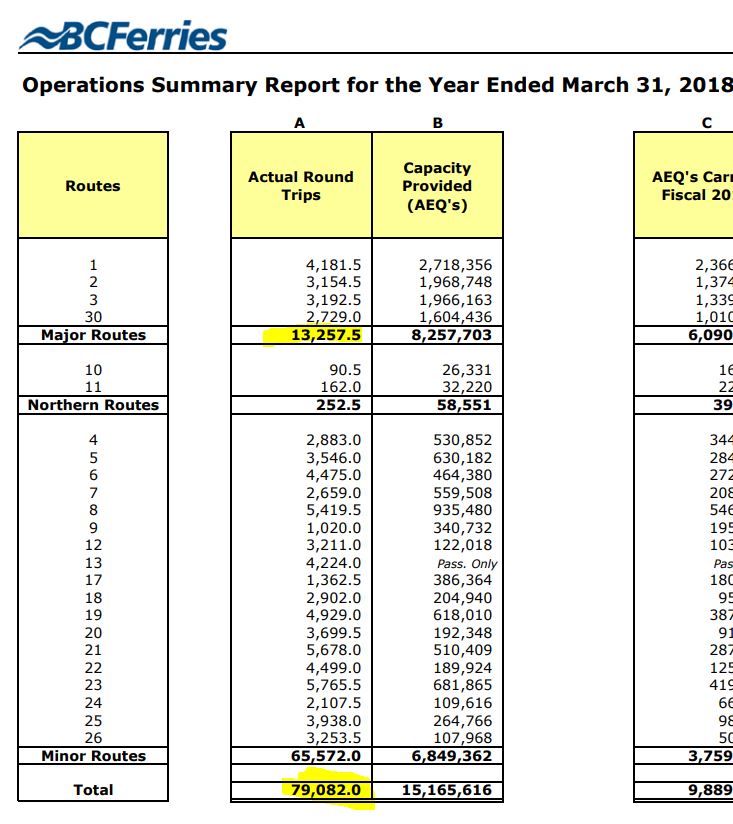
BC Ferries make over 26,000 sailings a year (13,000 round trips) on the 4 major routes (which go right through the feeding grounds)

Thats works out to 71 daily trips.

And there are a grand total of 79,000 round trips (156,000 sailings) on all routes.


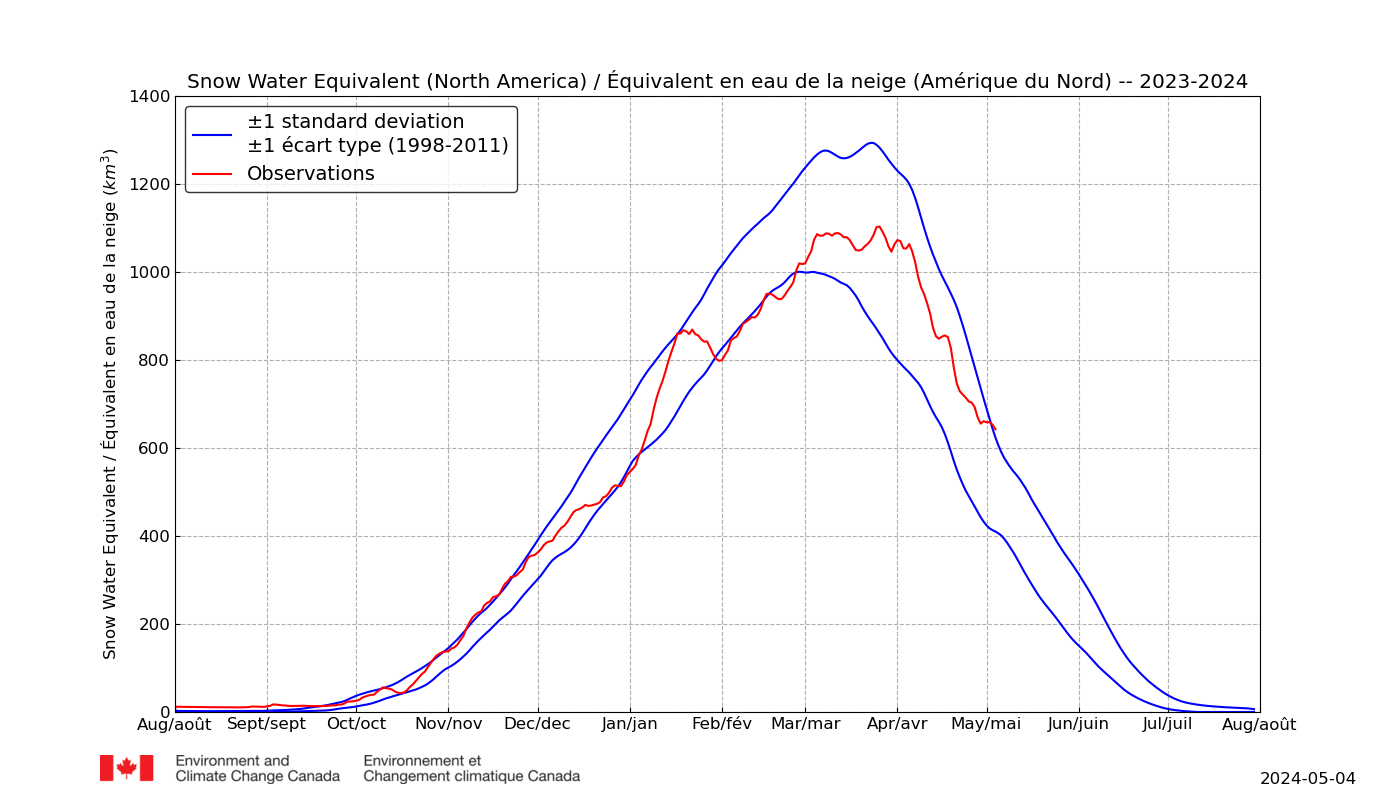
Snow: They Are Going To Run Out of Room on the Graph

I usually post Northern Hemisphere. But here is North America Snow Water Equivalent.


March 2000: According to Dr David Viner, a senior research scientist at the climatic research unit (CRU) of the University of East Anglia,within a few years winter snowfall will become “a very rare and exciting event”.

“Children just aren’t going to know what snow is,” he said.

Snow seems to be ignoring David Viner.