I used to watch Almost Live a long time ago on a Seattle TV station. And I remember Bill Nye comedian.
Category: Mockery
Klimate Kids
I came across this NASA website dedicated to freaking kids out educating kids about climate change.
It reminds me of the short movie called “Bambi versus Godzilla” …. lots of images cute baby deer to set you up and then crunch!
Godzilla = Climate Change
Here is a few excerpts from NASA’s site.
Bambi:
“For the past 30 years or so, spring temperatures have been coming one day earlier each year. That gives the marmots one more month to eat and get fatter before going back into hibernation in the fall. With more food stored in their bodies, more marmots are surviving the winters.
Early spring brings luscious green grass to munch.
Also, marmot babies are being born sooner in the spring. That means the babies have more time to fatten up too. So more of the babies are surviving their first winter.
So not only are the marmots getting fatter, but there are lots more of them.”
Godzilla:
However, as their environment continues to warm, summer drought will dry up the food before the marmots are ready to hibernate again. Then, the earlier spring and longer summer will not help them at all.
Bambi:
While the marmots are getting fatter, the wild Soay sheep on islands near Scotland have been shrinking! Large animals have an easier time staying warm in cold weather than do smaller animals. However, as the sheep’s environment has warmed, the smaller sheep are surviving just fine too. Smaller lambs that often did not survive are now surviving. Also, younger and smaller mother sheep (who often did not survive the winter) are giving birth to smaller lambs. And smaller sheep eat less,
Godzilla:
Climate change may seem to be helping these animals. But this help probably will not last. As their environments continue to warm, the animals may find that drier conditions make food scarce.
‘Green’ Biodiesel Has Increased Emissions
What a shocker.
The use of supposedly ‘green’ biodiesel to hit EU renewable energy targets has actually significantly increased greenhouse gas emissions, a new study finds.
By 2020, continued use of biodiesel derived from vegetable oil will increase total EU transport emissions by almost four per cent compared with using its fossil fuel alternative, according to analysis by Transport & Environment, a green group.
That is roughly equivalent to putting an extra 12 million cars to the road, it says.
Countries across Europe have blended small percentages of biofuels into petrol and diesel in recent years in an attempt to cut emissions and to hit the EU’s renewable energy directive (RED), which requires 10 per cent of transport energy to come from renewable sources by 2020.
But Transport & Environment says the EU’s own studies show that producing biodiesel from food crops – in particular soy and palm oil – is significantly worse for the environment than producing regular diesel.
Earth Day 1970 Predictions
Earth day 1970 predictions didn’t come true.
1. Harvard biologist George Wald estimated that “civilization will end within 15 or 30 years unless immediate action is taken against problems facing mankind.”
2. “We are in an environmental crisis which threatens the survival of this nation, and of the world as a suitable place of human habitation,” wrote Washington University biologist Barry Commoner in the Earth Day issue of the scholarly journal Environment.
3. The day after the first Earth Day, the New York Times editorial page warned, “Man must stop pollution and conserve his resources, not merely to enhance existence but to save the race from intolerable deterioration and possible extinction.”
4. “Population will inevitably and completely outstrip whatever small increases in food supplies we make,” Paul Ehrlich confidently declared in the April 1970 Mademoiselle. “The death rate will increase until at least 100-200 million people per year will be starving to death during the next ten years.”
5. “Most of the people who are going to die in the greatest cataclysm in the history of man have already been born,” wrote Paul Ehrlich in a 1969 essay titled “Eco-Catastrophe! “By…[1975] some experts feel that food shortages will have escalated the present level of world hunger and starvation into famines of unbelievable proportions. Other experts, more optimistic, think the ultimate food-population collision will not occur until the decade of the 1980s.”
6. Ehrlich sketched out his most alarmist scenario for the 1970 Earth Day issue of The Progressive, assuring readers that between 1980 and 1989, some 4 billion people, including 65 million Americans, would perish in the “Great Die-Off.”
7. “It is already too late to avoid mass starvation,” declared Denis Hayes, the chief organizer for Earth Day, in the Spring 1970 issue of The Living Wilderness.
8. Peter Gunter, a North Texas State University professor, wrote in 1970, “Demographers agree almost unanimously on the following grim timetable: by 1975 widespread famines will begin in India; these will spread by 1990 to include all of India, Pakistan, China and the Near East, Africa. By the year 2000, or conceivably sooner, South and Central America will exist under famine conditions….By the year 2000, thirty years from now, the entire world, with the exception of Western Europe, North America, and Australia, will be in famine.”
9. In January 1970, Life reported, “Scientists have solid experimental and theoretical evidence to support…the following predictions: In a decade, urban dwellers will have to wear gas masks to survive air pollution…by 1985 air pollution will have reduced the amount of sunlight reaching earth by one half….”
10. Ecologist Kenneth Watt told Time that, “At the present rate of nitrogen buildup, it’s only a matter of time before light will be filtered out of the atmosphere and none of our land will be usable.”
US Senate Considering Albedo Modification Geoengineering Proposal
The US Senate is considering an “Albedo Modification Geoengineering Proposal”.
Budgetmakers in the U.S. Senate want the Department of Energy (DOE) to study the possibility of making Earth reflect more sunlight into space to fight global warming. Earth’s reflectivity is known as its albedo, and the request to study “albedo modification” comes in the details of a proposed spending bill passed by the Senate appropriations committee to fund DOE, the Army Corps of Engineers, and related agencies for fiscal year 2017, which begins 1 October. The bill does not specify how much money should be spent on the research.
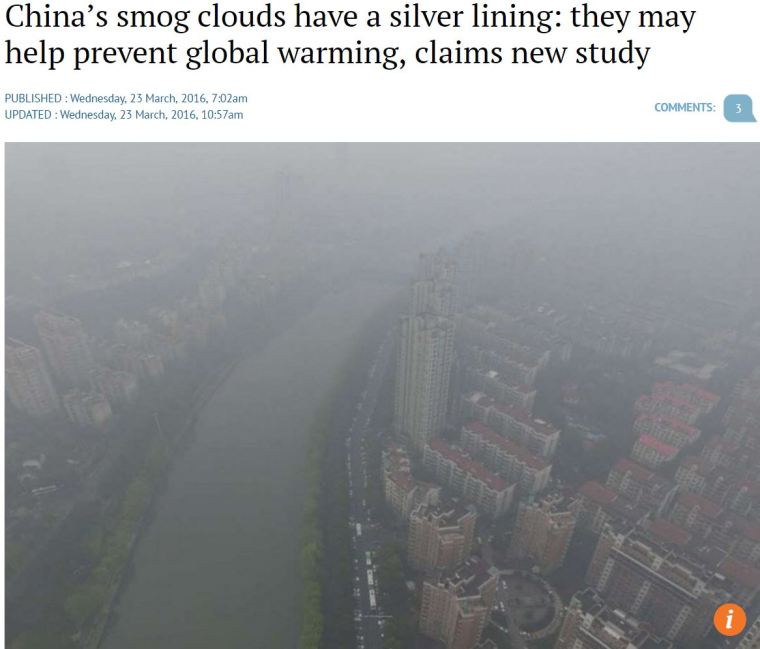
In a surprise move, 200 companies in China decided to bid on the contract. Most of their plans involved reopening all the coal power plants President Obama has shut down.
Subsidy Sam’s Got Blood On His Hands

‘Subsidy Sam’ was written by Lyndsey Ward to counter the shameless pro-wind propaganda allowed in schools.
More here.
Polar Bears Are Morons (Maybe Not)
A study claims Polar Bears are swimming longer, tiring them out and that maybe cause them problems.
The Polar Bear Science Blog points out the obvious:
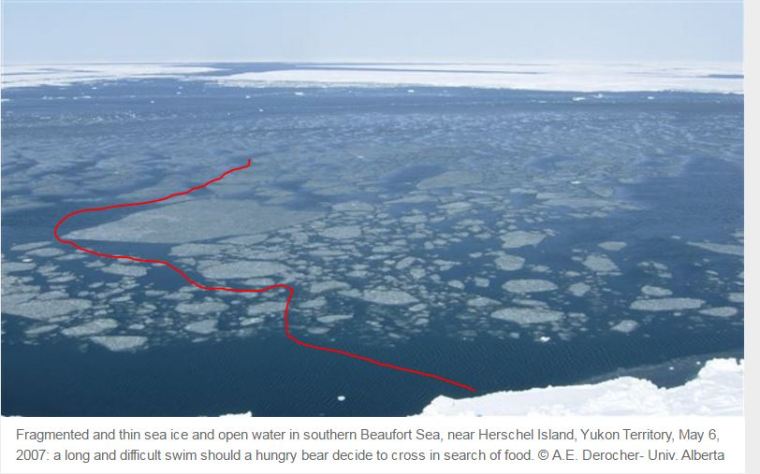
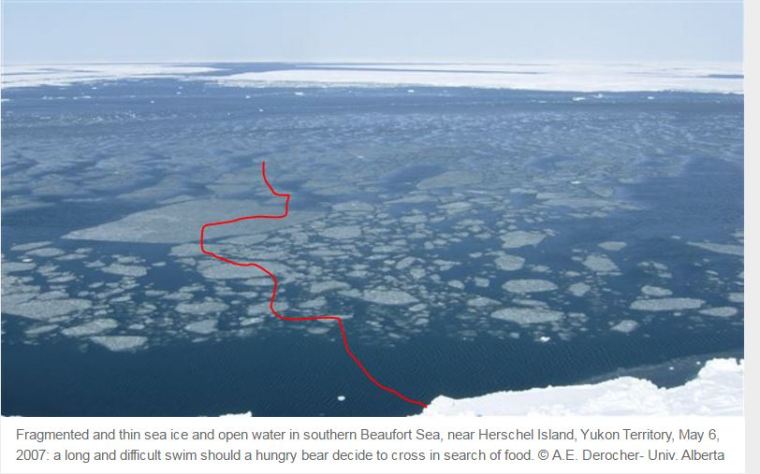
So, despite what may be implied during media moments, Beaufort Sea polar bears were not frantically trying to reach the sea ice from land so that they could attempt to keep feeding over the summer – most of their swimming was done during breakup in July and August from one bit of pack ice to another and they showed no evidence of harm from doing so.
What do you think? Do you think they swim like this (avoiding all ice floes):
Or like this (jumping on ice floes for a rest when they need it):
California TOU Pricing: Stay Home In The Middle of the Day (or when its windy)!
California is planning for TOU (Time of Use) pricing for electricity that matches up with renewables like solar and wind:
From late morning until the sun sets, California produces a significant amount of solar power; and the future for solar is so bright, we’re reaching for our shades. With TOU pricing, we can shift demand to match up with the abundant solar electricity we produce – making the cheapest price windows for TOU rates likely from 10 AM until 4 PM. The good news is, the success of clean energy programs in California over the past decade means we’ll be able to meet peak demand by simply re-aligning our energy use to synch up with plentiful, clean, and cheap electricity.
Starting January 1, 2019, after a period of study, public outreach, and education, California’s large investor-owned utilities (Pacific Gas and Electric, San Diego Gas and Electric, Southern California Edison) will switch households to time-of-use (TOU) electricity pricing.
This simplified rate structure rewards customers who shift some of their electricity use to times of the day when clean energy is plentiful.
Why would you run the dishwasher at 6 PM, for example, if it were cheaper to wash the dishes overnight when wind energy is abundant and cheap?
The last line is an actual quote.
Why? Because you want clean dishes? You can’t sleep with the dishwasher running?
Do you want to be able to afford electricity for showering, laundry or charging your electric car?
Then stay home in the middle of the day (but only when it is sunny). or only do those things when it is windy!
If you don’t you know they will punish you with grotesquely high electricity rates.
Boycott Finlandia!
Finlandia Vodka has decided to “Protect Our Winters”.
There is no denying that for the past decade, our winters have gradually become shorter and warmer, creating vast changes in the landscape of Canada’s climate. Finlandia Vodka (Finlandia) is pleased to be joining forces with Protect Our Winters (POW), the leading climate change advocacy group for the snow sports community, in an effort to reduce the effects of global climate change. Finlandia believes that if you are kind to nature, it will return the favour, and has decided to join the movement against climate change by donating one per cent of its total April sales from the British Columbia market to POW.
I live in BC. I hate long cold wet winters.
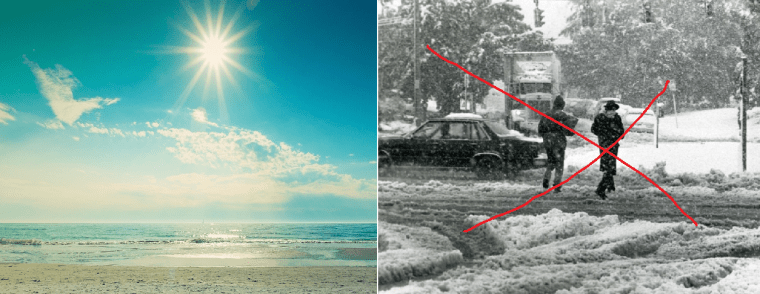
Screw Finlandia. Screw long cold wet snowy winters.
I want long, hot, glorious summers with lots of swimming and barbecues and baking in the sun!
Boycott Finlandia.
Polar Bears in Southern Hudson Bay Losing Body Weight – Or Just Dying?
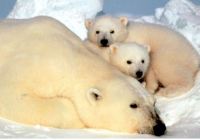 A new “study” blames climate change for making Polar Bears in the southern Hudson Bay population lose weight .
The world’s southernmost population of polar bears has already lost significant amounts of body weight after decades of shrinking sea ice with breeding females suffering the most, says new research from the Ontario government.
“They’re in poorer condition now than they were in the 1980s,” said Martyn Obbard, of the province’s natural resources department, one of the co-authors of the paper published by the National Research Council.
Maybe it isn’t climate change. Maybe the biggest polar bears are being shot.
Northern wildlife officials will meet in Quebec’s arctic region Wednesday to discuss quotas on the world’s last unregulated polar bear hunt.
Hunters who kill bears from the south Hudson Bay population, which includes Quebec, Ontario and Nunavut, have a voluntary limit of 60 bears a year.
But scientists say climate change is starting to affect the population’s health and that the region’s first official quotas should be lower.
None of the various aboriginal communities that hunt those bears say they’re willing to reduce their take.
According to the first report, there are “roughly 900 bears” in the southern Hudson Bay population. If you kill at least 60 (it is after all a voluntary quota) out of 900 and if you are selling those pelts you want the biggest and healthiest bears.
Maybe the survivors (after the biggest are killed for their pelts) are smaller.
Bids for what ended up being the dearest skin, a spotless white specimen that was also over 10 feet in length, started at $7,000 and didn’t stop until they’d reached $12,400—$1,400 more than last year’s top seller, a previous record. It went to Anna and Steve Gao, whose Mississauga, Ont.-based business, Canadian Intertrade JJ Ltd., ships furs to China and elsewhere.
Early this year, word spread that hunters from the northern Quebec community of Inukjuak had killed as many as 70 polar bears last season—an enormous jump over past years and an unsustainable harvest rate for the southern Hudson Bay polar bear population
The spike in kills around Inukjuak is thought to have begun when a buyer arrived in the region and announced he’d pay big money in advance for furs.
If you look at Canada as a whole 500 polar bears are being shot:
Each year, Aboriginal hunters and foreign sportsmen pursuing the animals alongside Aboriginal guides kill some 500 polar bears (there is no federal cap, and that number depends on shifts in geographic harvest quotas and on First Nations treaties). Many of the resulting polar bear skins find their way to market.
 sunshine hours