No shortage of snow
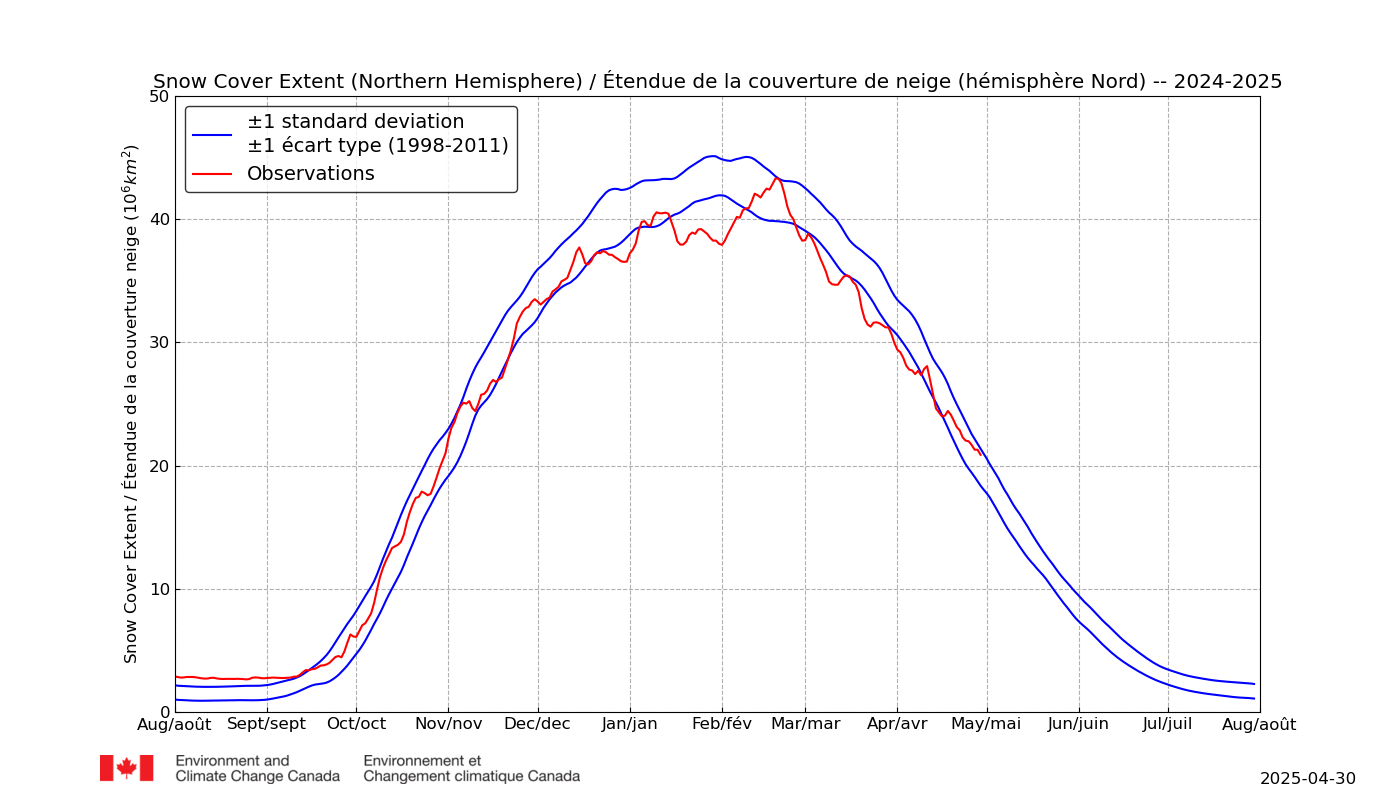
No shortage of snow
The truth aboout carbon taxes is emerging. They con you into thinking it will be 20$ or 20€ and then suddenly they admit it will need a massive increase.
Carbon tax will have to increase substantially – from €100 per person a year to €1,500 a year – if Ireland is to meet legally-binding targets on reducing greenhouse gas emissions by 2030, according to ESRI projections.
A new computational model developed by the institute that factors in economic data, environmental trends and energy consumption, has found carbon tax on fossil fuels will need to increase to €300 per tonne of carbon dioxide emitted over the coming decade to avoid substantial fines in the form of compliance costs.
The current rate of €20 per tonne was not increased in the budget as had been widely anticipated, although Taoiseach Leo Varadkar and Minister for Climate Action Richard Bruton have confirmed it is set to increase in coming years.
A rise to €30 a tonne as was envisaged would have added about €1 to a bag of coal and about 25 cent to a bale of briquettes, as well as increasing the price of oil and gas.
However, a €300 carbon tax would only be sufficient to enable Ireland to meet its targets if there were reductions in agricultural emissions in particular (currently accounting for a third of Ireland’s emissions), the ESRI analysis shows.
If there was no reduction in carbon emissions arising from farming, a carbon tax rate of €470 per tonne by 2030 would be necessary, research officer Dr Kelly de Bruin confirmed at an ESRI briefing to launch its new Ireland Environment, Energy and Economy model (I3E).

I’ve always thought that clean air laws decreased SO2 , increased sunshine and therefore warming.
Well … there is a new law that may change climate.
In effect, the shipping industry has been carrying out an unintentional experiment in climate engineering for more than a century. Global mean temperatures could be as much as 0.25 ˚C lower than they would otherwise have been, based on the mean “forcing effect” calculated by a 2009 study that pulled together other findings (see “The Growing Case for Geoengineering”). For a world struggling to keep temperatures from rising more than 2 ˚C, that’s a big helping hand.
And we’re about to take it away.
In 2016, the UN’s International Maritime Organization announced that by 2020, international shipping vessels will have to significantly cut sulfur pollution. Specifically, ship owners must switch to fuels with no more than 0.5 percent sulfur content, down from the current 3.5 percent, or install exhaust cleaning systems that achieve the same reduction, Shell noted in a brochure for customers.
There are very good reasons to cut sulfur: it contributes to both ozone depletion and acid rain, and it can cause or exacerbate respiratory problems.
But as a 2009 paper in Environmental Science & Technology noted, limiting sulfur emissions is a double-edged sword. “Given these reductions, shipping will, relative to present-day impacts, impart a ‘double warming’ effect: one from [carbon dioxide], and one from the reduction of [sulfur dioxide],” wrote the authors. “Therefore, after some decades the net climate effect of shipping will shift from cooling to warming.”
Sulfur pollution from coal burning has a similar effect. Some studies suggest that China’s surge in coal consumption over the last decade partly offset the recent global warming trend (though coal does have a strong net warming effect).
It’s difficult to estimate how much the new rule could affect temperatures. We don’t know enough about cloud physics and the behavior of atmospheric particles, nor how diligently the shipping industry will comply with the new rule, says Robert Wood, a professor of atmospheric sciences at the University of Washington.
Another wrinkle is that ships emit other particles that can sometimes also stimulate cloud droplets to form, including black carbon, a major component of soot. Removing the sulfur from the fuel could alter the size and quantity of these particles, which could affect clouds as well, says Lynn Russell, a professor of atmospheric science at the Scripps Institution of Oceanography.
“So we can’t really say exactly what the change will be,” says Russell, though she adds that the rule change is “likely” to produce a warming effect on balance.
… read the rest: https://www.technologyreview.com/s/610007/were-about-to-kill-a-massive-accidental-experiment-in-halting-global-warming/
PS There is a problem with the expensive scrubbers that are an alternative to low sulphur fuel. The ships dump the waste into the ocean. The waste will be sulphuric acid (and more)
Canada has essentially quit recording bright sunshine hours. What a tragedy.
Environment Canada And Climate Change (I can’t believe they changed the name to that!) has dropped the ball.
One exception is the Saskatchewan Research Council. They collect sunshine data at two locations.
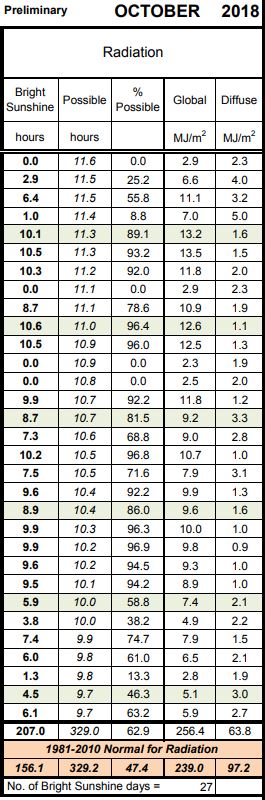
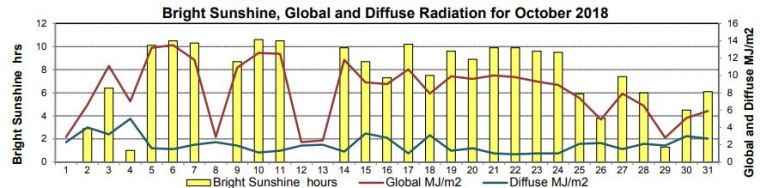
This is the October data for Saskatoon.
The normal is 156.1 hours of bright sunshine.
October 2018 had 207.0 hours.
Big waterspout going ashore in Salerno, Campania, south Italy this afternoon!
\

Beware of environmentalists coming up with brilliant plans to save the world. And fuels with “bio” in front of the name.
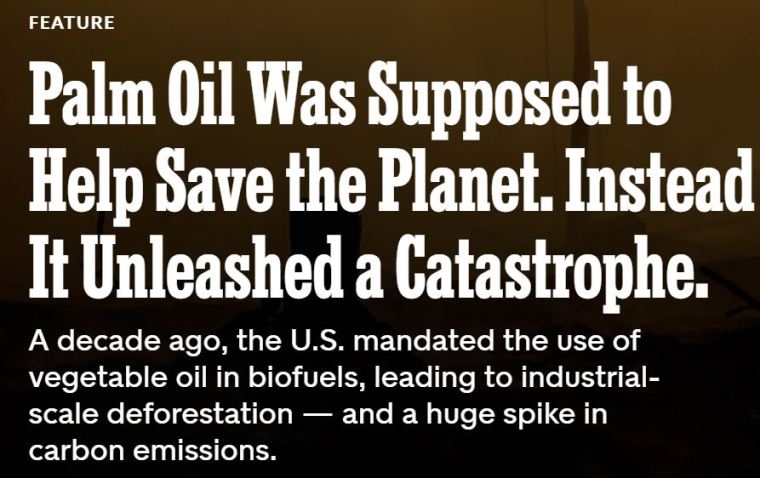
… in the mid-2000s, Western nations, led by the United States, began drafting environmental laws that encouraged the use of vegetable oil in fuels — an ambitious move to reduce carbon dioxide and curb global warming. But these laws were drawn up based on an incomplete accounting of the true environmental costs. Despite warnings that the policies could have the opposite of their intended effect, they were implemented anyway, producing what now appears to be a calamity with global consequences.
The tropical rain forests of Indonesia, and in particular the peatland regions of Borneo, have large amounts of carbon trapped within their trees and soil. Slashing and burning the existing forests to make way for oil-palm cultivation had a perverse effect: It released more carbon. A lot more carbon. NASA researchers say the accelerated destruction of Borneo’s forests contributed to the largest single-year global increase in carbon emissions in two millenniums, an explosion that transformed Indonesia into the world’s fourth-largest source of such emissions.

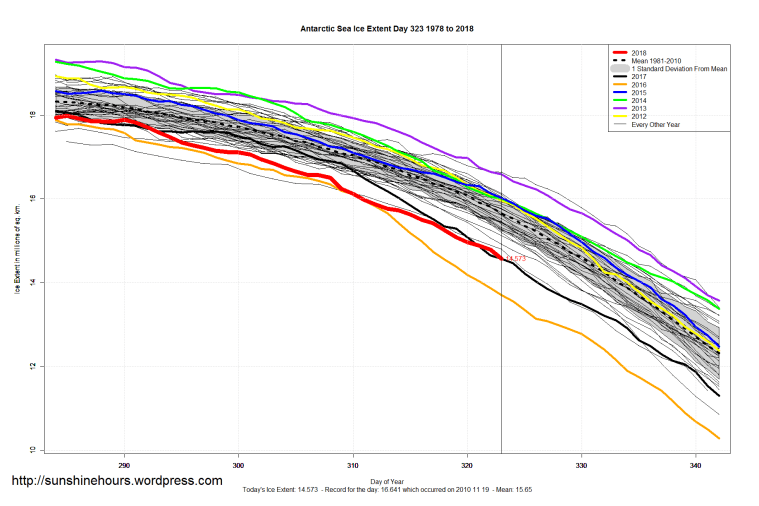
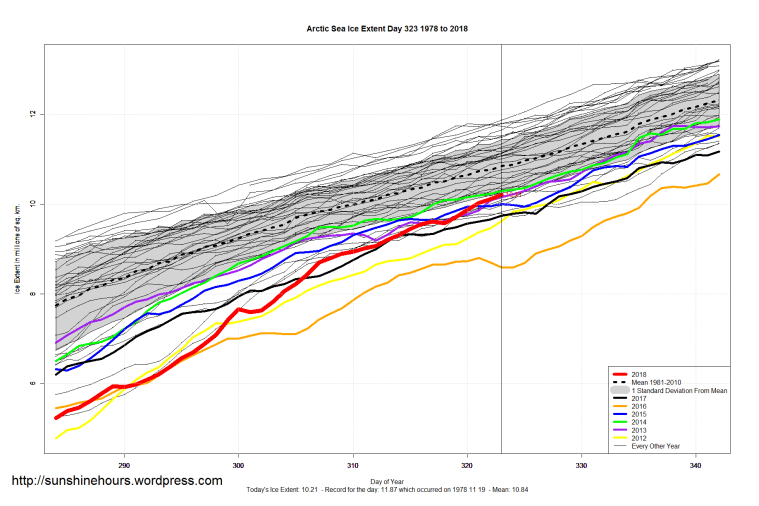
 sunshine hours