.@AlbertStienstra 10:10 was a propaganda video depicting skeptical kids/adults brutally murdered by climate cultists https://t.co/A5vlRRE2TQ
— Tom Nelson (@tan123) December 23, 2016
100% Renewable (COUGH COUGH)
“The city of Las Vegas is now drawing 100 percent of its power from renewable energy sources“
“The effort moved closer to reality about a year ago when the city expanded its partnership with NVEnergy“
“NVEnergy’s GreenEnergy program allows large customers to contract for an added cost with the company to power their facilities. Customers that opt to receive all of their energy from renewable sources pay a slight premium for that.”
“Coal currently accounts for 8 percent of NVEnergy’s generating resources, compared with 74 percent natural gas and 18 percent renewable resources.”
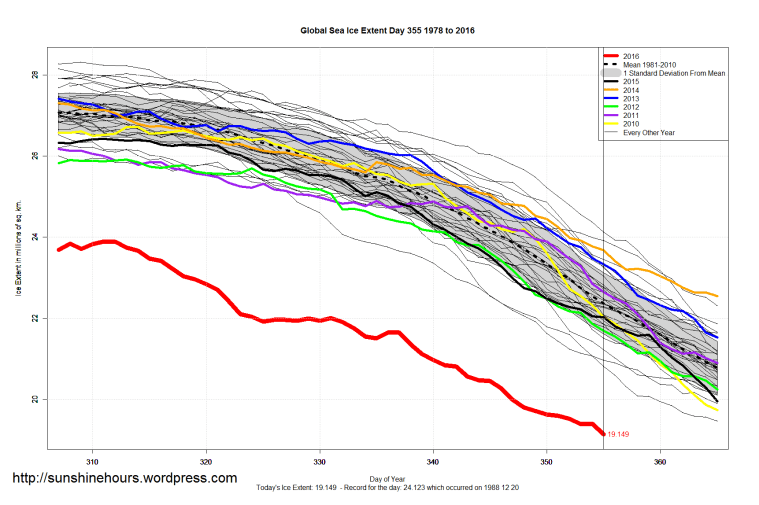
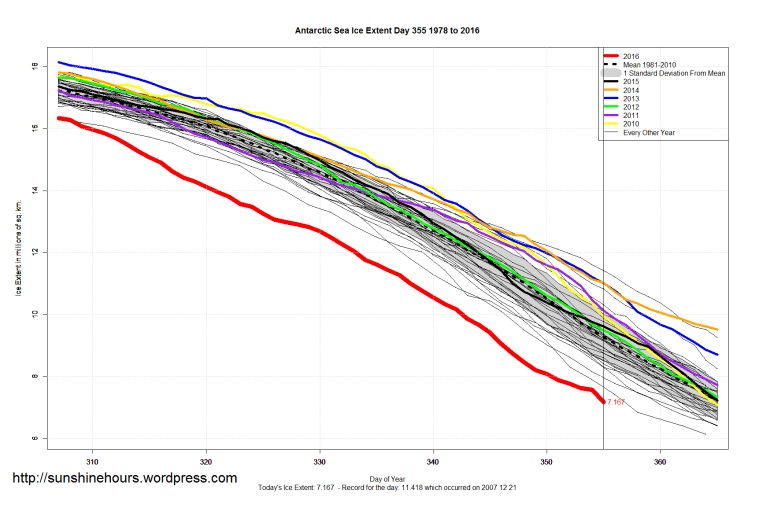
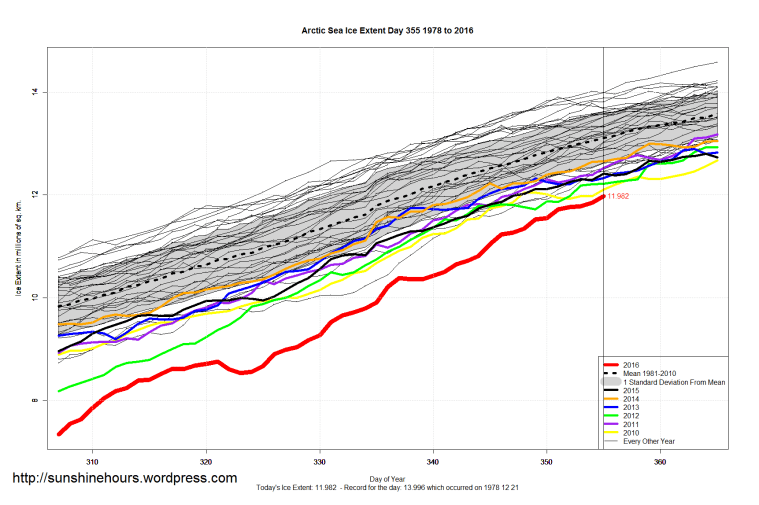
Sea Ice Extent (Global Antarctic and Arctic) – Day 355 – 2016
DRAX – The Monumental Stupidity in Europe Continues
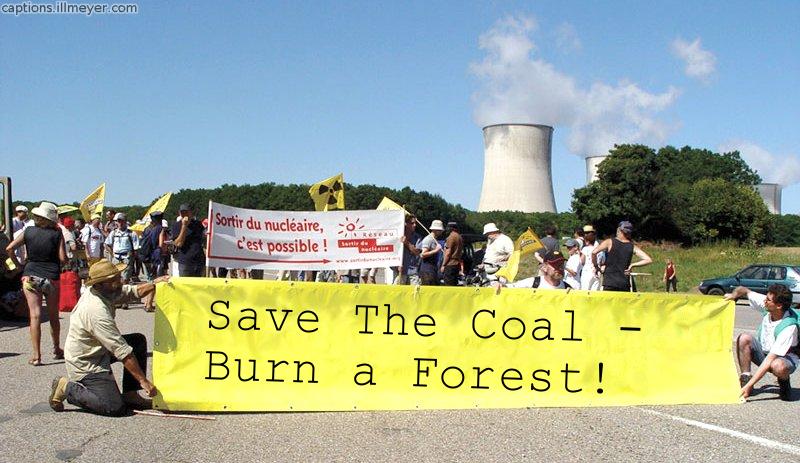
The evil EU morons are still encouraging DRAX to burn whole forests instead of coal. The farce continues:
Management at Drax received an early Christmas present yesterday when the European Commission announced that it had approved the company’s bid to convert a third coal-fired power plant unit to biomass.
The UK’s largest coal-fired power producer had been anxiously awaiting the Commission’s state aid decision, as it attempts to re-position itself ahead of the country’s ultimate coal power phase out.
The Commission has opened an investigation into government support for the project in January and concluded that it was in line with the European Union’s environmental and energy targets.
Burning trees/forests/wood is filthier than coal and produces more CO2 than coal, especially when it is harvested in the USA and trucked to ports in the USA and shipped to ports in the UK and then trucked to DRAX.
Sea Ice Extent (Global Antarctic and Arctic) – Day 352 – 2016
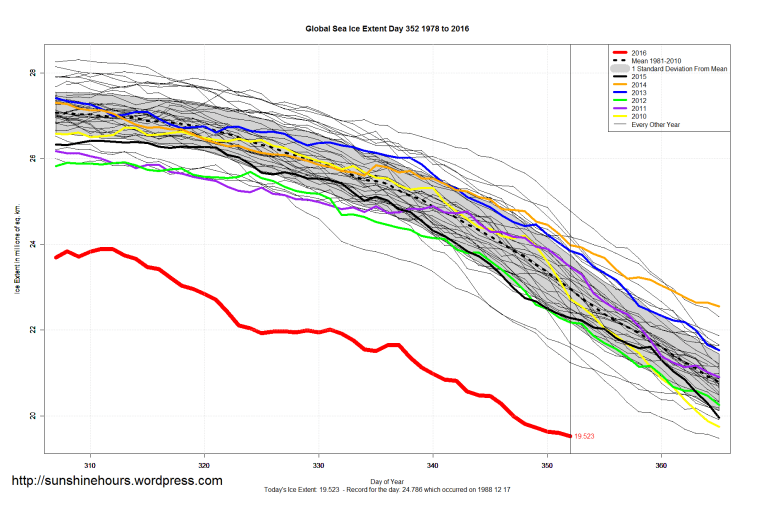
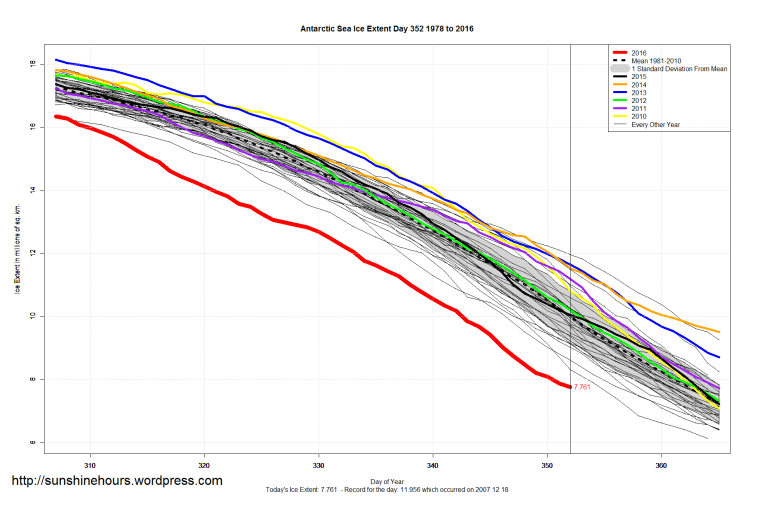
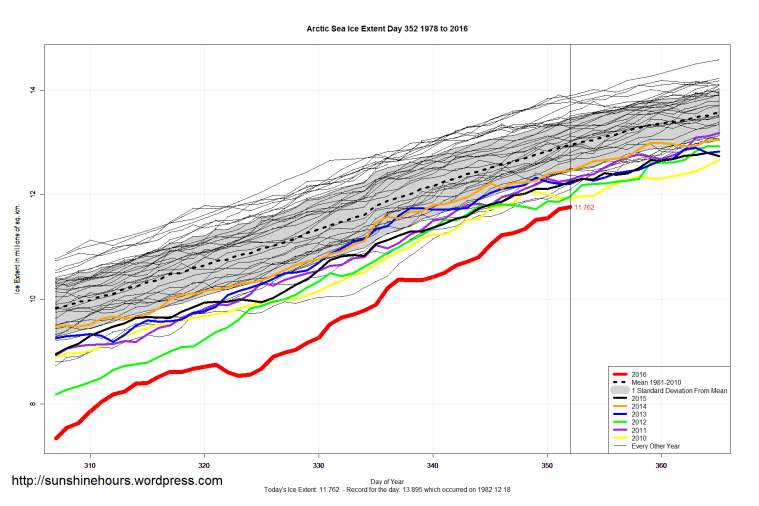
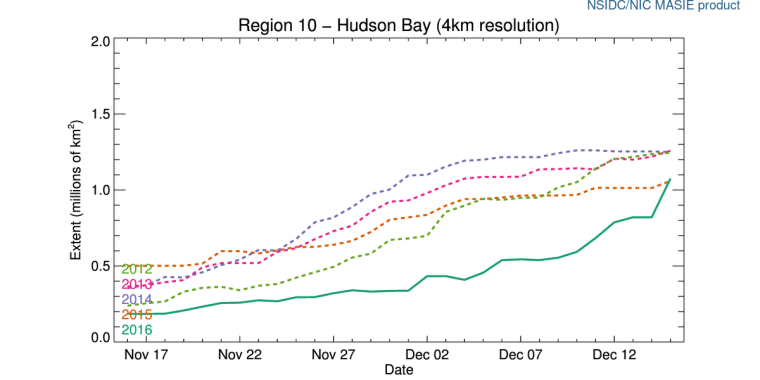
MASIE – Hudson Bay
Sea Ice Extent (Global Antarctic and Arctic) – Day 350 – 2016
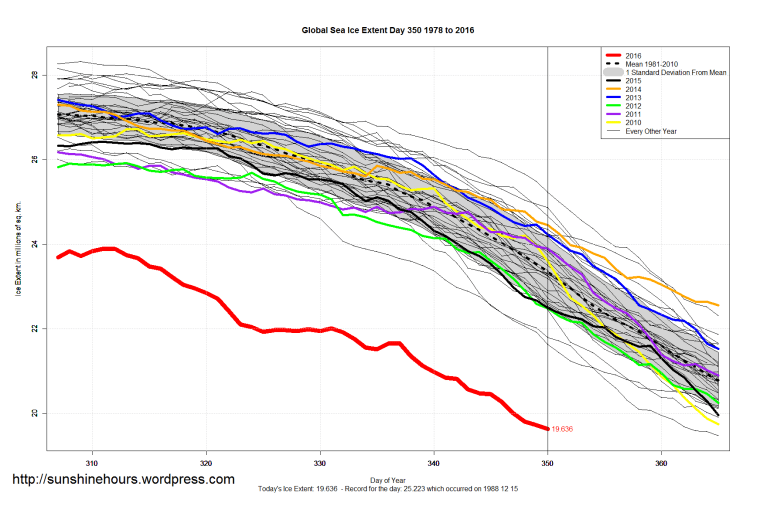
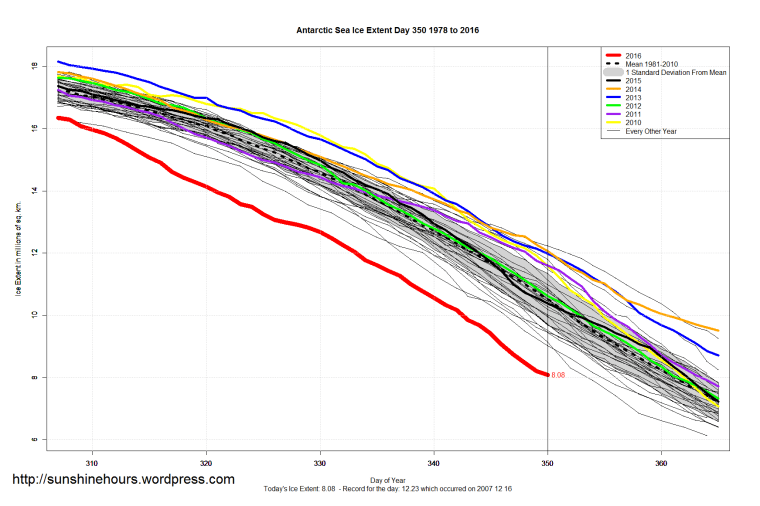
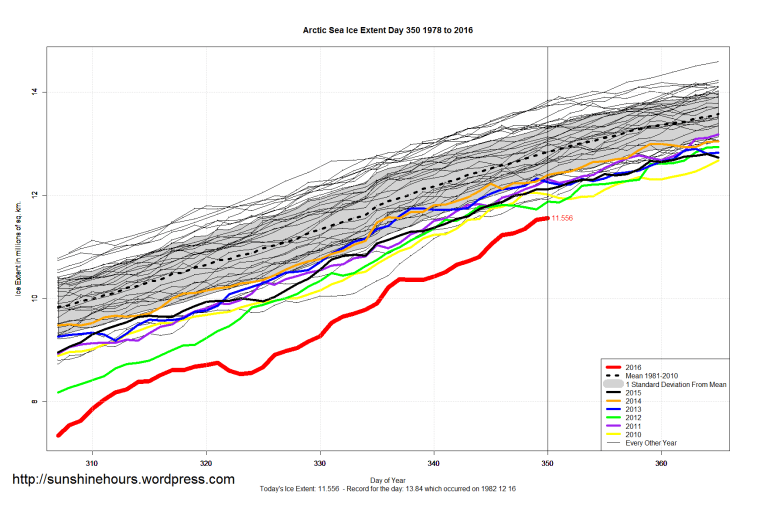
Greenland Ice Balance Well Above Normal
The daily surface mass balance on the Greenland Ice Sheet is well above normal.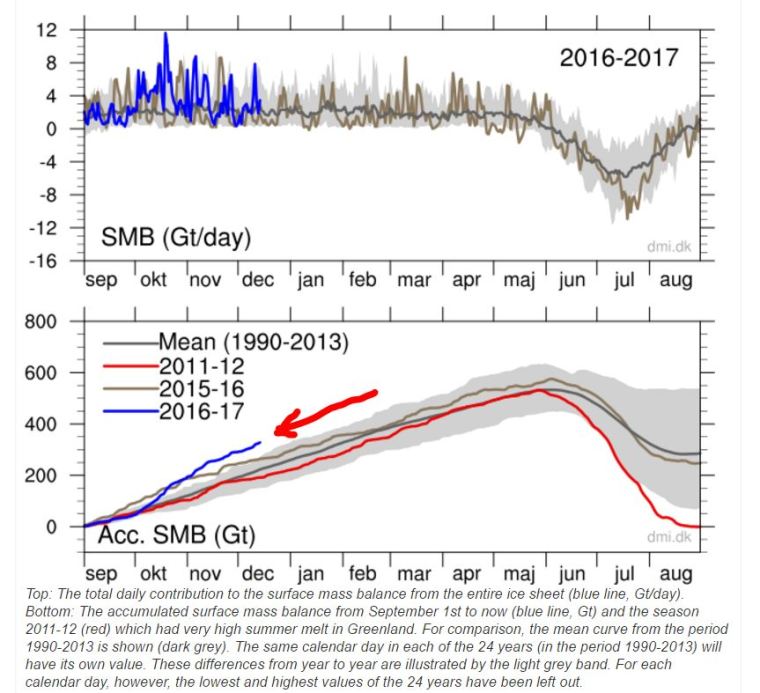
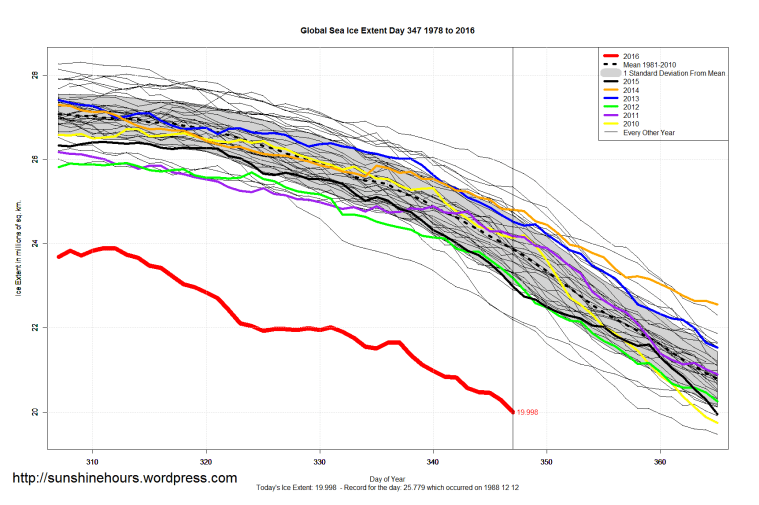
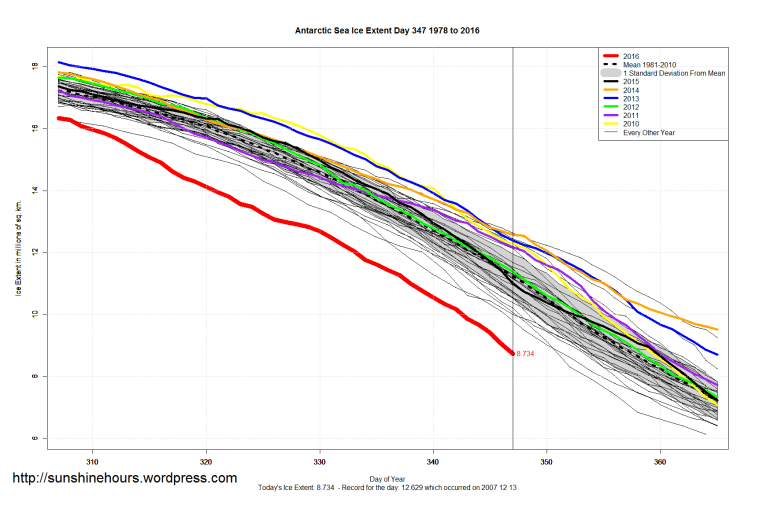
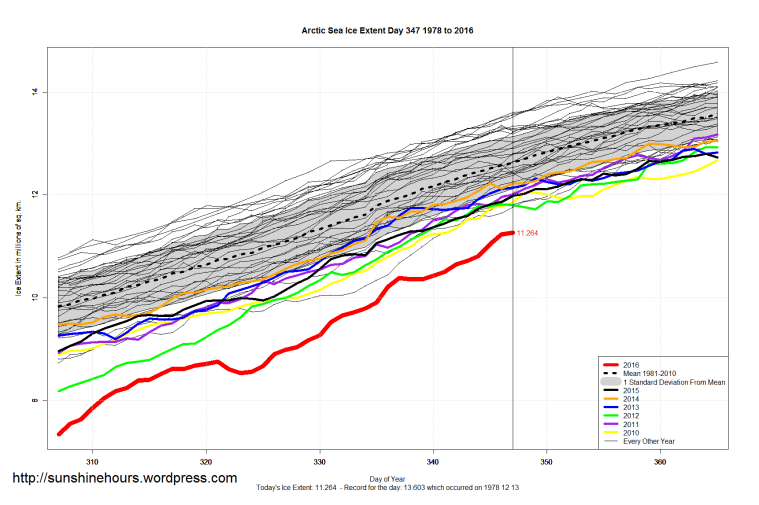
Sea Ice Extent (Global Antarctic and Arctic) – Day 347 – 2016
So Much For Tree Rings As A Temperature Proxy
So much for tree rings as a temperature proxy.
Huge Canadian Tree Growth Study.
Our analyses of a new methodologically standardized tree-ring dataset covering Canada’s boreal forest provide insights into the growth responses of this ecosystem to climate change. Although revealing no overarching “growth enhancement” or “growth decline” in recent years, results do point to significant regional- and species-related trends in growth. The observed link between climate variation and growth variability revealed unique evidence of an intensification of the impacts of hydroclimatic variability on growth late in the 20th century, in parallel with the rapid rise of summer temperature.
Such response can be attributed to annual growth variability in these forests being mainly driven by negative sensitivity to summer temperature (warmer summers leading to less growth) and positive sensitivity to summer soil moisture (more moisture leading to more growth)
 sunshine hours