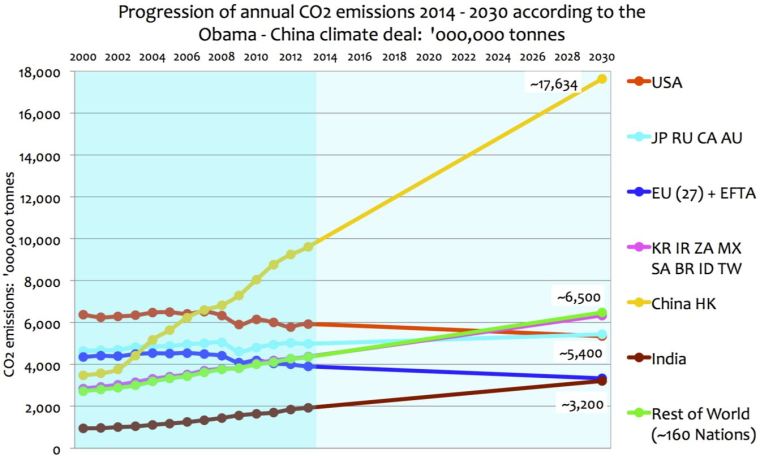
18 Alberta Coal Power Plants May Be Shut By 2018 – Not 2030

The Alberta NDP has promised to shut down 18 coal power plants by 2030. The problem with this promise it that they  will have also started taxing carbon at 20$ per tonne in 2017 and then 30$ per  tonne in 2018. That may make every coal power plant in Alberta unprofitable by 2018.

Already several power companies have returned some PPA’s back to the government.

On March 7, 2016, TransCanada Corporation announced its plan to exit three Power Purchase Arrangements (PPAs) as a result of changing emissions laws in Alberta, which TransCanada claims have rendered the PPAs unprofitable. The decision will leave the Balancing Pool – a statutory entity created during deregulation in 1999 – in charge of the PPAs associated with the Sundance A, Sundance B and Sheerness coal plants. The announcement follows ENMAX Energy Corporation’s decision earlier this year to exit the Battle River PPA, also claiming that the plant had become unprofitable as a result of changing emissions laws. The Effective Terms of the Sundance B, Sheerness and Battle River PPAs are set to expire at the end of 2020 and the Sundance A PPA expires at the end of 2017. The collective generation capacity of these plants is 2,407 MW (about 15% of Alberta’s total installed generation capacity).

These decisions follow the Alberta Government’s announcement in June 2015 that it will increase the carbon emission reduction (or offset) requirements for industrial emitters from 12% in 2015 to 20% in 2017, in conjunction with an increase to the carbon emissions levy from $15 per tonne in 2015 to $30 in 2017.  The interim increases (15% reduction and $20 levy) took effect at the beginning of this year, at a time when Alberta was (and is) experiencing consistently low electricity prices. The Alberta Government also released an aggressive climate change leadership plan in November 2015, which includes an accelerated phase-out of coal by 2030, with much of the excess capacity to be filled by renewable power (see our prior Osler Update here).

The ENMAX and TransCanada PPA terminations are the first of their kind in Alberta. That fact, along with the significant number of MW affected, demonstrates that the policy and legislative changes imposed by the Notley Government in 2015 are beginning to have tangible impacts on the industry. These termination decisions further suggest that a large portion of Alberta’s electricity supply may no longer be economic to produce. In that case, Alberta could find itself in a situation where much of the coal-fired capacity – which provides a very reliable and stable power source – will be taken offline much sooner than the Government planned. This may have implications for system reliability if these large-capacity plants cannot be replaced with lower emitting alternatives before they go offline. These factors are all likely to play a role in the ongoing negotiations between the Alberta Government and coal plant owners regarding compensation for the premature closure of the affected plants.


CO2 is a Benefit

CO2 is a huge benefit to agriculture and nature.

It’s an undeniable fact that increasing CO2 increases plant growth. CO2 increases since 1985 have led to increased rainforest and crop growth, satellites show a 14 per cent increase in global greenery – fantastic news for nature and food security. Despite climate pessimists, global food prices remain low, with record yields achieved last year. Food prices would be even lower if the US ceased growing subsidised, inefficient “green” bioethanol crops. Extra production from rising “CO2 fertilisation” is equivalent to an extra 15 per cent land globally. This equals 35 times UK arable area, enough to feed the entire world their daily bread, worth over £100 billion yearly, plus the environmental benefit of increased growth in natural ecosystems. All down to a supposed “villain”.

Dr Keith P Dawson is vice President at the Scottish Society of Crop Research

Read more: The Scotsman


Earth’s Internal Heat Drives Subglacial Melting in Greenland

This is pretty amazing.

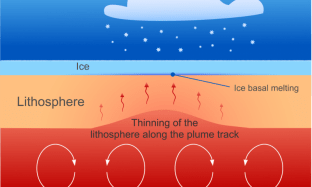
earthsinternGreenland’s lithosphere has hot depths which originate in its distant geological past and cause Greenland’s ice to rapidly flow and melt from below.

To understand Greenland’s of today researchers have to go far back into Earth’s history. The island’s lithosphere has hot depths which originate in its distant geological past and cause Greenland’s ice to rapidly flow and melt from below. An anomaly zone crosses Greenland from west to east where present-day flow of heat from the Earth’s interior is elevated. With this anomaly, an international team of geoscientists led by Irina Rogozhina and Alexey Petrunin from the GFZ German Research Centre for Geosciences could explain observations from radar and ice core drilling data that indicate a widespread melting beneath the ice sheet and increased sliding at the base of the ice that drives the rapid ice flow over a distance of 750 kilometres from the summit area of the Greenland ice sheet to the North Atlantic Ocean.

The North Atlantic Ocean is an area of active plate tectonics. Between 80 and 35 million years ago tectonic processes moved Greenland over an area of abnormally hot mantle material that still today is responsible for the volcanic activity of Iceland. The mantle material heated and thinned Greenland at depth producing a strong geothermal anomaly that spans a quarter of the land area of Greenland. This ancient and long-lived source of heat has created a region where subglacial meltwater is abundant, lubricating the base of the ice and making it flow rapidly. The study indicates that about a half of the ice in north-central Greenland is resting on a thawed bed and that the meltwater is routed to the ocean through a dense hydrological network beneath the ice.

The team of geoscientists has now, for the first time, been able to prove strong coupling between processes deep in the Earth’s interior with the flow dynamics and subglacial hydrology of large ice sheets: “The geothermal anomaly which resulted from the Icelandic mantle-plume tens of millions of years ago is an important motor for today’s hydrology under the ice sheet and for the high flow-rate of the ice” explains Irina Rogozhina. “This, in turn, broadly influences the dynamic behaviour of ice masses and must be included in studies of the future response to climate change.”

Read more at: Physorg

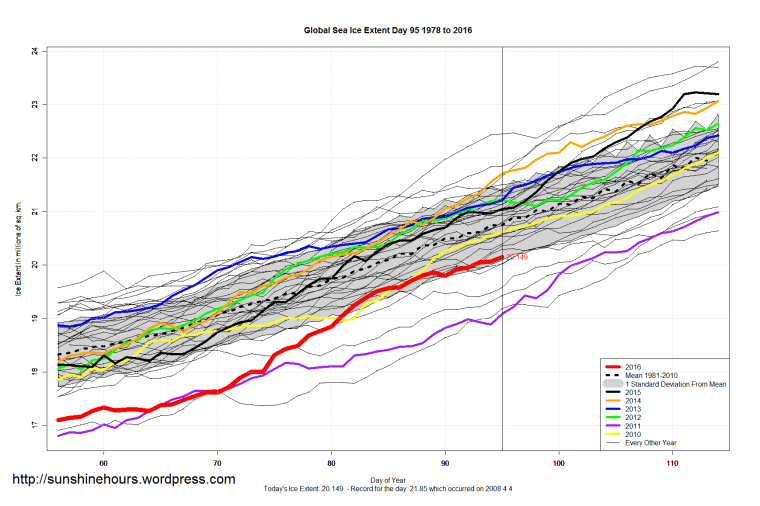
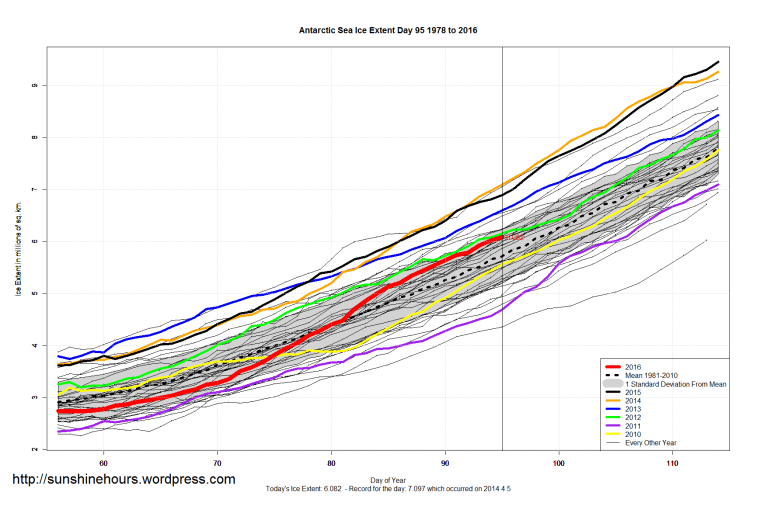
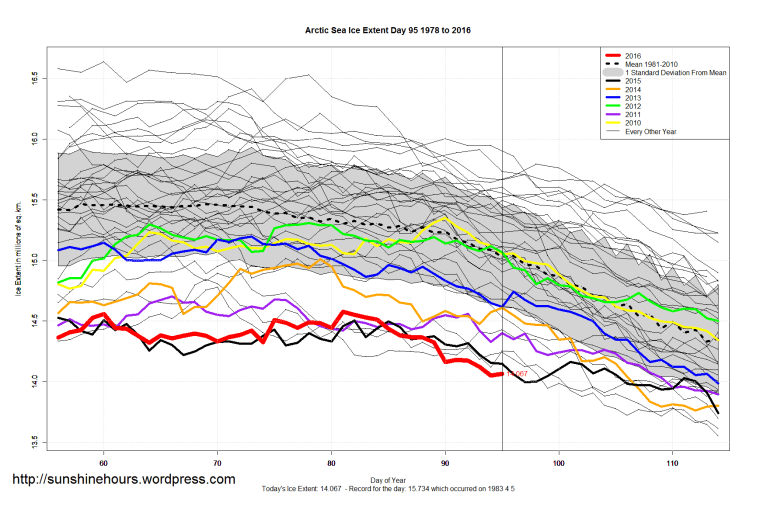
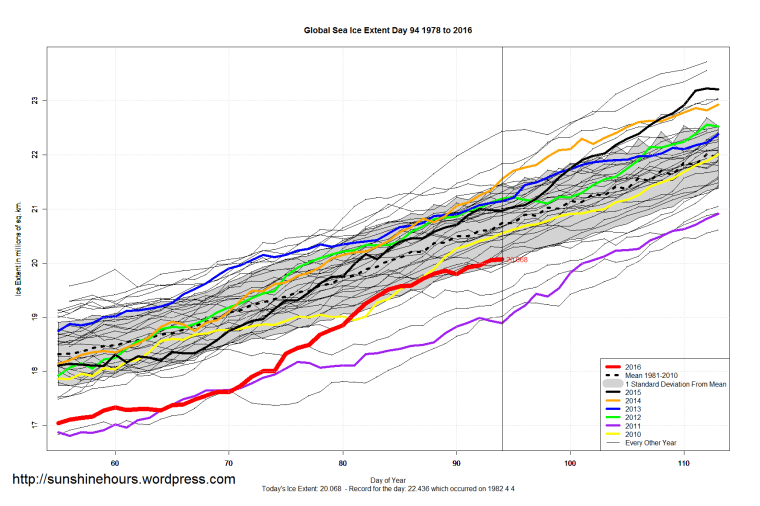
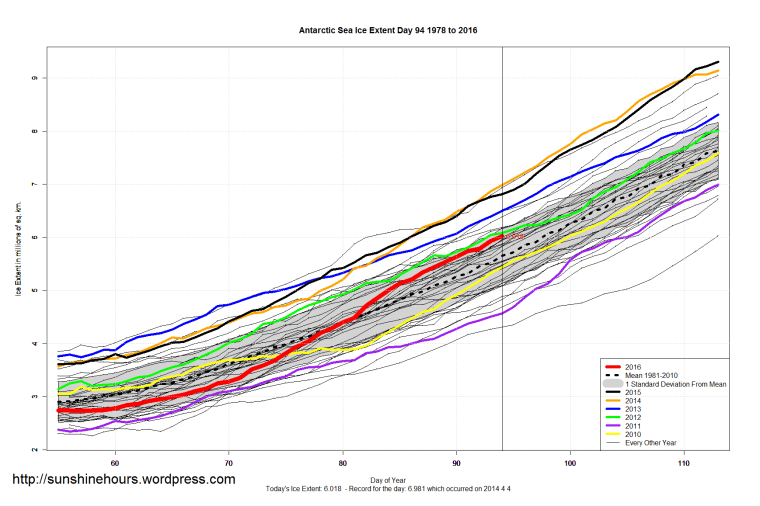
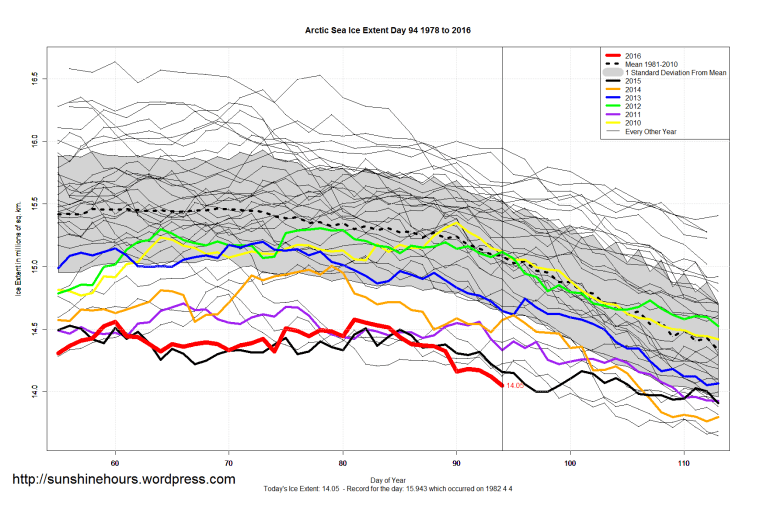
Sea Ice Extent (Global Antarctic and Arctic) – Day 95 – 2016

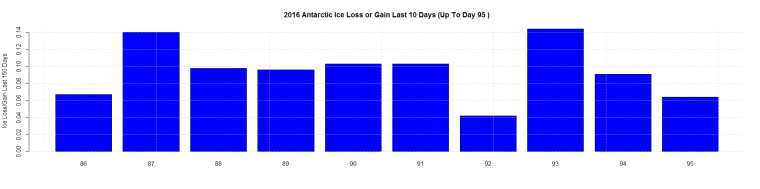
Change in the last 10 days Antarctic (blue is gain / red is melt):

2016 Antarctic Ice Loss or Gain Last 10 Days (Up To Day 95 )

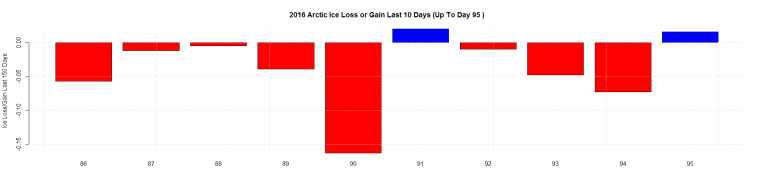
Change in the last 10 days Arctic:

2016 Arctic Ice Loss or Gain Last 10 Days (Up To Day 95 )

Global

Global_Sea_Ice_Extent_Zoomed_2016_Day_95_1981-2010

Antarctic

Antarctic_Sea_Ice_Extent_Zoomed_2016_Day_95_1981-2010

Arctic

Arctic_Sea_Ice_Extent_Zoomed_2016_Day_95_1981-2010

South / North

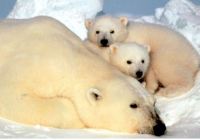
Polar Bears in Southern Hudson Bay Losing Body Weight – Or Just Dying?

Capture A new “study” blames climate change for making Polar Bears in the southern Hudson Bay population lose weight .

The world’s southernmost population of polar bears has already lost significant amounts of body weight after decades of shrinking sea ice with breeding females suffering the most, says new research from the Ontario government.

“They’re in poorer condition now than they were in the 1980s,” said Martyn Obbard, of the province’s natural resources department, one of the co-authors of the paper published by the National Research Council.

Maybe it isn’t climate change. Maybe the biggest polar bears are being shot.

Northern wildlife officials will meet in Quebec’s arctic region Wednesday to discuss quotas on the world’s last unregulated polar bear hunt.

Hunters who kill bears from the south Hudson Bay population, which includes Quebec, Ontario and Nunavut, have a voluntary limit of 60 bears a year.

But scientists say climate change is starting to affect the population’s health and that the region’s first official quotas should be lower.

None of the various aboriginal communities that hunt those bears say they’re willing to reduce their take.

According to the first report, there are “roughly 900 bears” in the southern Hudson Bay population. If you kill at least 60 (it is after all a voluntary quota) out of 900 and if you are selling those pelts you want the biggest and healthiest bears.

Maybe the survivors (after the biggest are killed for their pelts) are smaller.

Bids for what ended up being the dearest skin, a spotless white specimen that was also over 10 feet in length, started at $7,000 and didn’t stop until they’d reached $12,400—$1,400 more than last year’s top seller, a previous record. It went to Anna and Steve Gao, whose Mississauga, Ont.-based business, Canadian Intertrade JJ Ltd., ships furs to China and elsewhere.

Early this year, word spread that hunters from the northern Quebec community of Inukjuak had killed as many as 70 polar bears last season—an enormous jump over past years and an unsustainable harvest rate for the southern Hudson Bay polar bear population

The spike in kills around Inukjuak is thought to have begun when a buyer arrived in the region and announced he’d pay big money in advance for furs.

If you look at Canada as a whole 500 polar bears are being shot:

Each year, Aboriginal hunters and foreign sportsmen pursuing the animals alongside Aboriginal guides kill some 500 polar bears (there is no federal cap, and that number depends on shifts in geographic harvest quotas and on First Nations treaties). Many of the resulting polar bear skins find their way to market.


UK Industry Facing Massive ‘Green’ Power Costs


UK industry is facing  massive energy ‘policy’ cost increases. This article summarizes the estimated costs for energy intensive users (like steel mills) and the businesses that rely on them:

In 2014 DECC estimated that prices to Energy Intensive users were 26% higher than they would be in the absence of policies.

By 2020, in the Low Fossil Fuel price scenario, which now seems more likely than not, a large Energy Intensive Industry (EII) with a full cost relief package would face electricity prices (p/kWh) that are 22% higher than they would be in the absence of policies.

Those unable to qualify for relief would see prices 76% higher than they would be without policies. No estimates are available for 2030, perhaps because DECC does not expect there to be any Energy Intensive Industries remaining in that year.

The electricity price impacts on other parties trading with EIIs are also large.

Medium sized businesses would see prices 77% higher than they would be in the absence of policies in 2020, and 114% higher in 2030.

Small sized businesses would see prices 61% higher in 2020 and 95% higher in 2030.

Domestic households would see prices 42% higher than they would otherwise be in 2020 and 60% higher in 2030.

To these must be added electricity system costs, for grid expansion and management, and in the presence of large renewable fleets these could easily reach totals not much less than the subsidy costs themselves.

– See more at: http://www.thegwpf.com/climate-policies-and-the-future-of-manufacturing/


Ontario Spent 170 million to Convert a Coal Power Plant to burn Norwegian Wood Pellets

Ontario has shut down its coal power plants. One of those coal power plants was Atikokan. What OPG decided to do (because they needed dispatchable power) was to convert the plant to biomass. And that biomass was wood pellets. Not just any wood pellets. It was “Advanced Biomass”.

Advanced biomass has been treated to withstand exposure to rain, and has handling and storage properties similar to those of coal. It is still in the early stages of development, which is why OPG purchases advanced biomass fuel from Norway.

Before we get to CO2 and squandering hundreds of millions to change from one fuel you burn to anther fuel you burn …. you may ask yourself why you need to make wood pellets waterproof.

Wet biomass catches on fire. Or explodes.

Biomass fuel has a wide range of possible refuse items: pellets, chip logs, forestry, sewage sludge, methane, meat and bone, palm kernels, cereal, sawdust, bioenergy crops, or landfill gas. When a biomass fuel is stored in a pile, waiting for transport or use, the biomass can spontaneously heat through oxidation. In order for this to happen, three conditions must sync: rate of heat generation, air supply, and insulation properties of the immediate surroundings. With most biomass material, there is a high moisture content combined with air and/or bacterial fermentation – both of which can cause spontaneous combustion through oxidation.

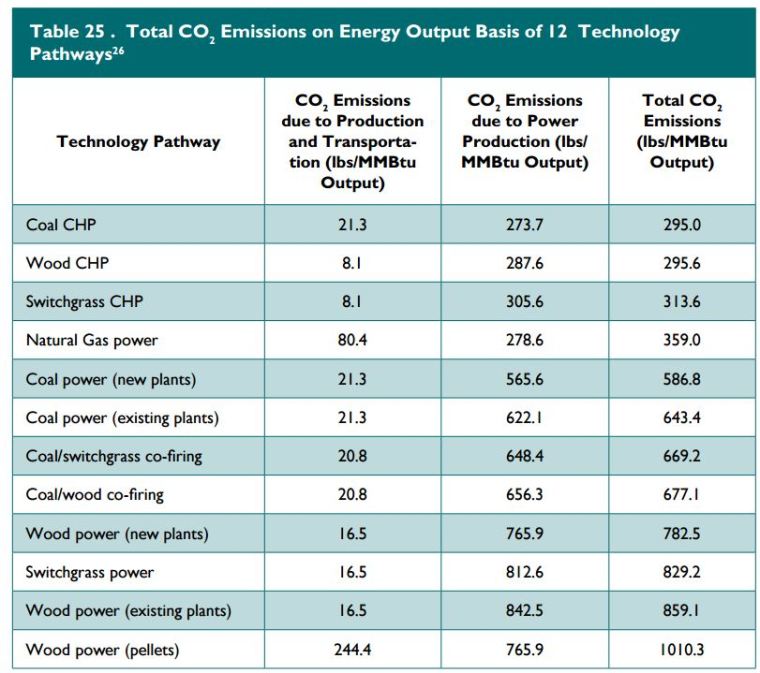
Back to CO2. The study I have referenced before told us that wood pellets (especially those transported long distances like USA to UK) produce way more CO2 than coal. So I would assume that if you buy wood pellets from Norway, your power plant is producing more CO2 than if you had not spent 170 million and were still burning coal.

CO2emissions


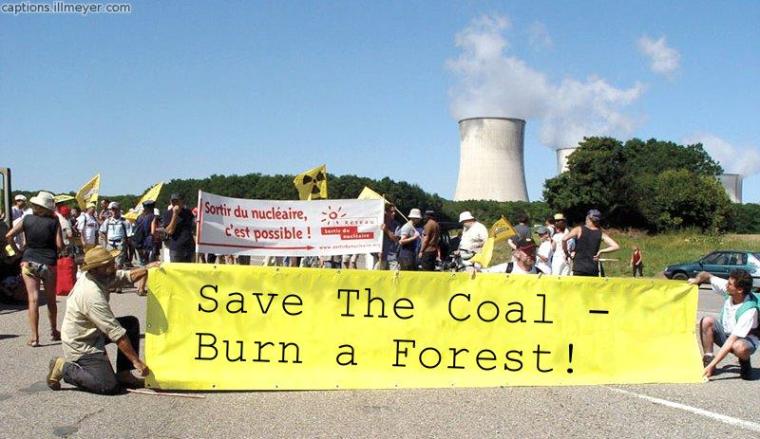
‘Green’ logic confuses me.Killing Norwegian forests and turning the wood into special waterproof pellets and then using a lot of fossil fuel to ship it to Ontario to burn in a closed down resurrected coal power plant seems crazy to me.


SaveTheCoal