According to the NOAA, August 2017 ranked 30th out of 123 using the Maximum temperature.
A rank of 1 is coldest. A rank of 123 is warmest.
-0.87F below the 1901 to 2000 average.
4F colder than August 2011, 1936 and 1937.

The top 3.
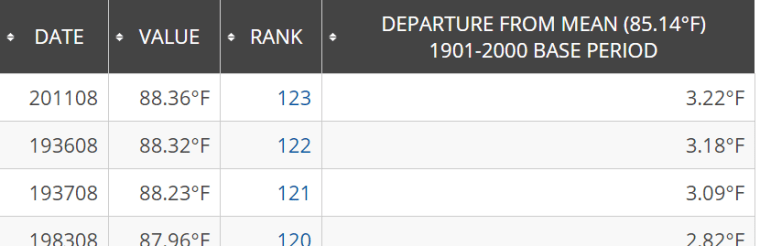
According to the NOAA, August 2017 ranked 30th out of 123 using the Maximum temperature.
A rank of 1 is coldest. A rank of 123 is warmest.
-0.87F below the 1901 to 2000 average.
4F colder than August 2011, 1936 and 1937.
The top 3.
A new climate report for the USA was published along wit the usual shenanigans by the NY Times.
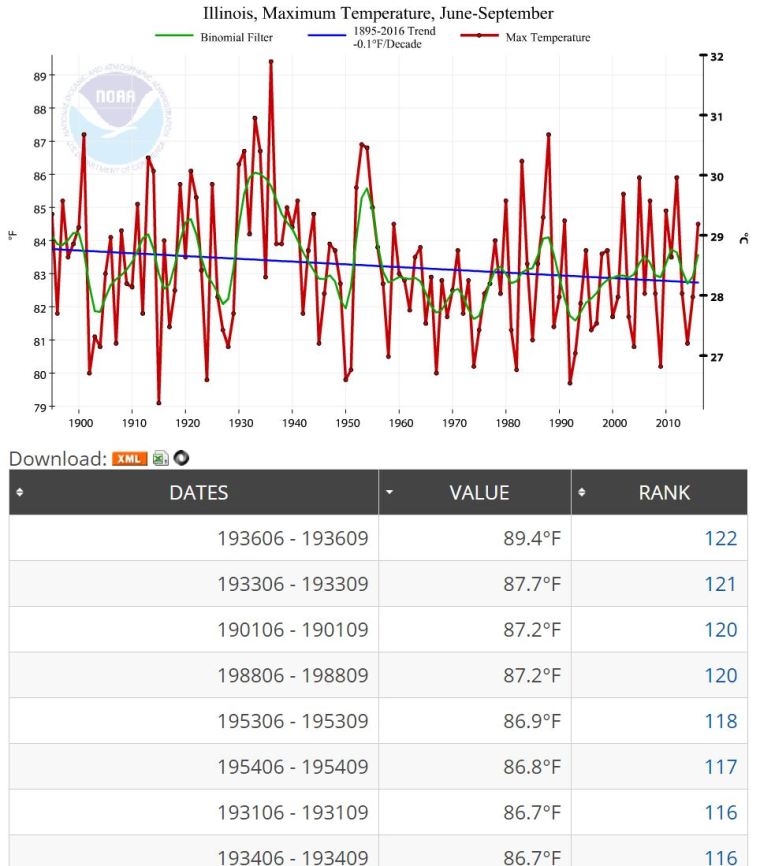
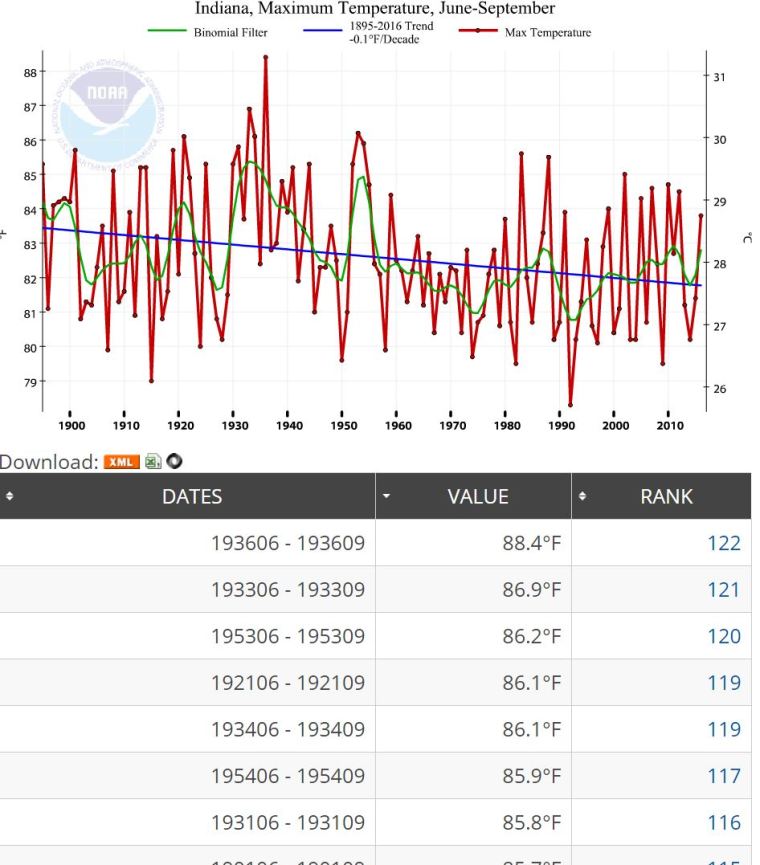
What this map shows is highly damaging to the global warming alarmism industry. It proves that, regardless of average temperature trends, temperatures at the top end of the scale are not increasing. Note that this applies even in the case of California, until recently the golden child of warmists.
We may be seeing milder winters and warmer nights, but, as far as the US is concerned, we are certainly not seeing hotter days.

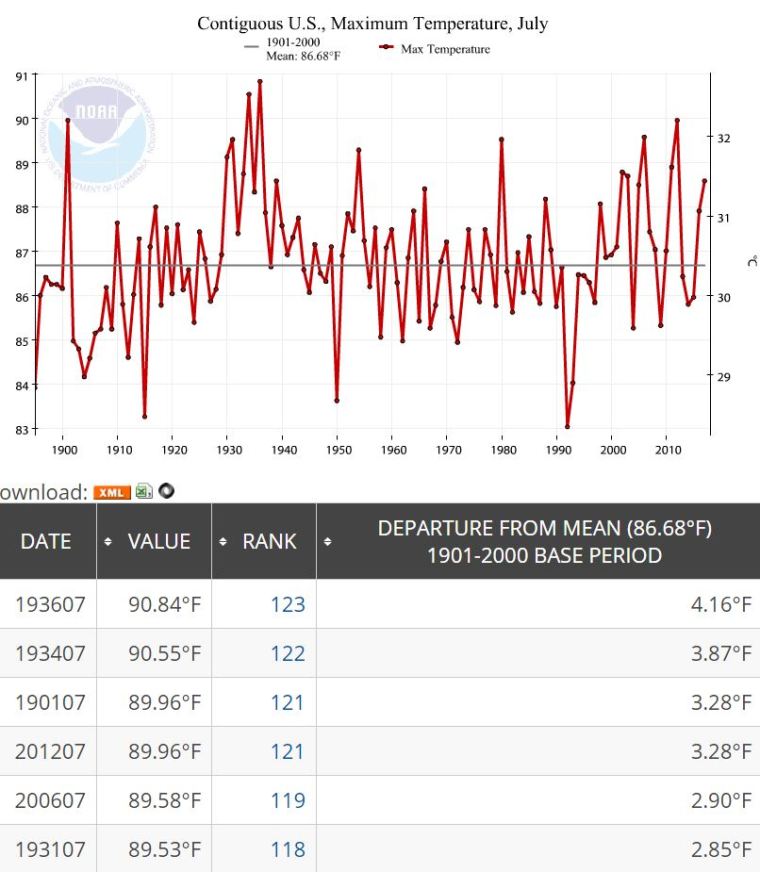
July USA – 1936, 1934 and 1901 (tied with 2012) Are Still the Hottest (Maximum) in USA.
Correction: 2017 is 15th. 2017 is tied for 14th.
Clarification: I’m using Maximum Temperature. Not Average.
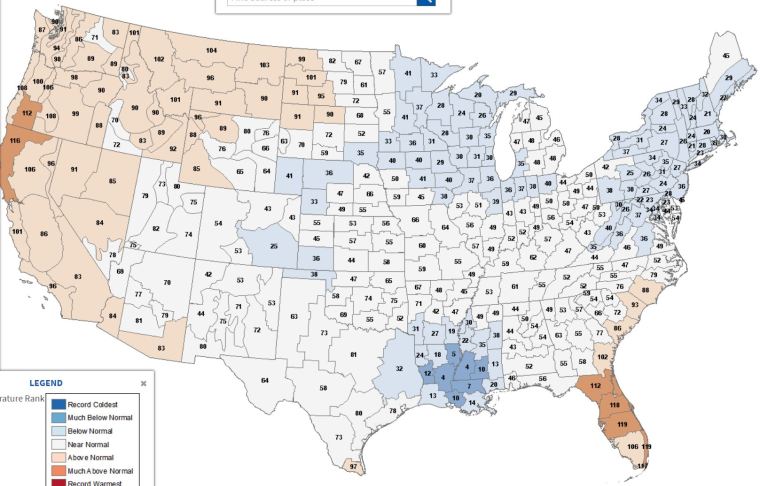
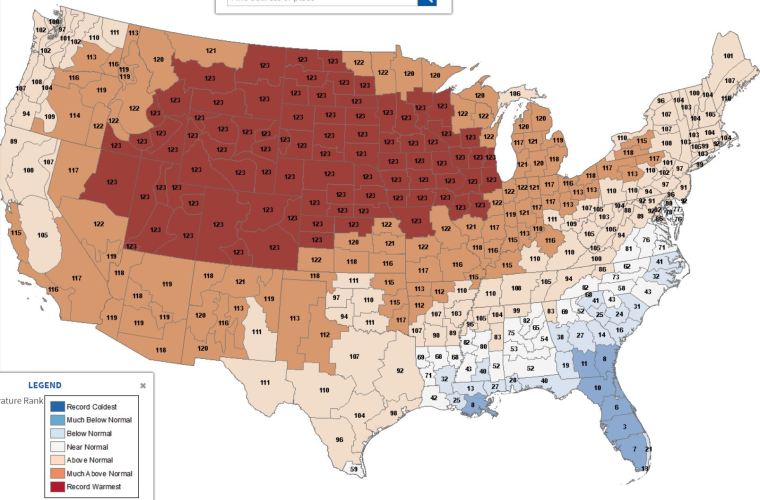
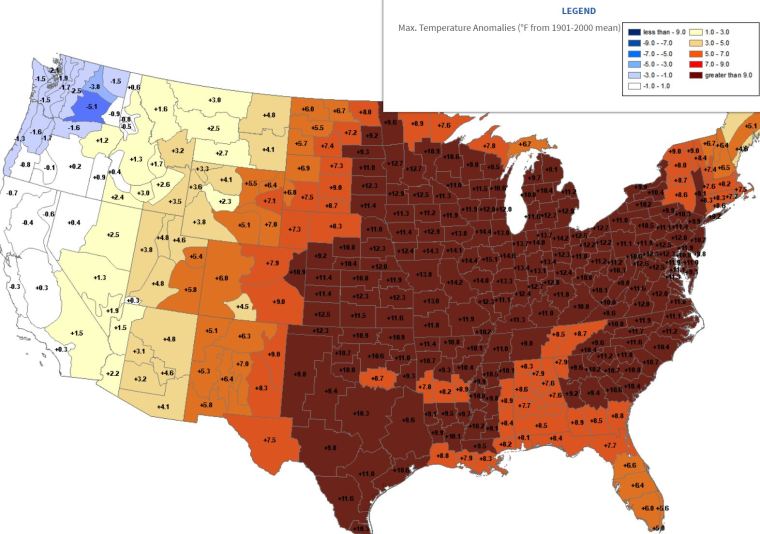
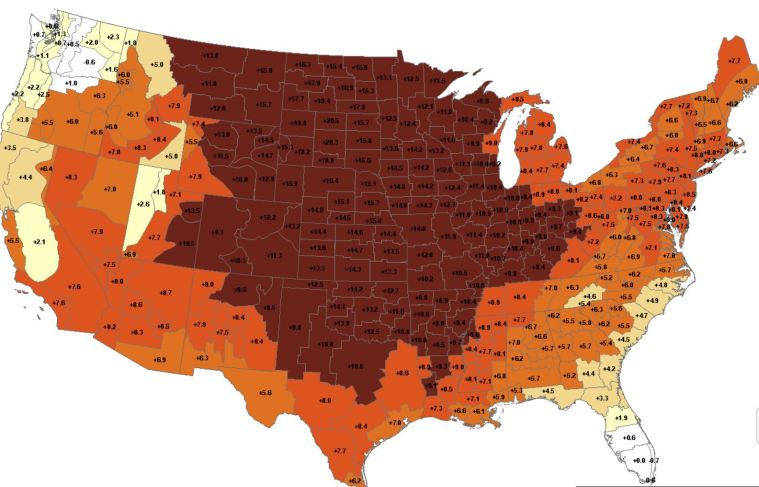
Comparing May 1934 to May 2017 by Division and Rank where 123 it hottest and 1 is coldest.
Every dark brown are with 123 in it was a record high in 1934
2017
1934
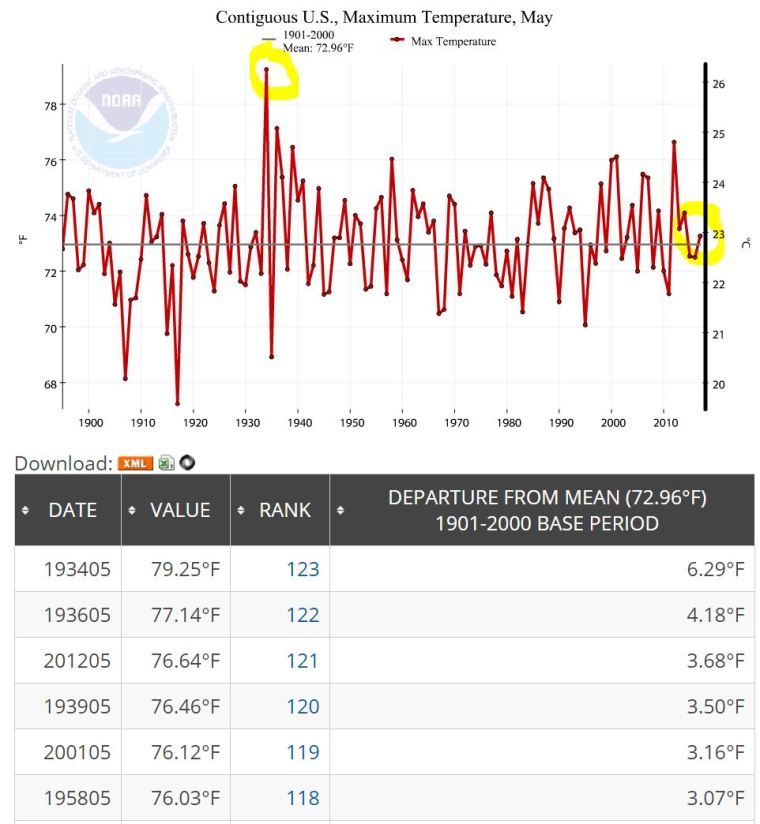
According to the NOAA May 2017 Tmax was ranked 70th out of 123 May’s (123 = warmest , 1 = coldest) .
It was only .31F above the 1901-2000 average.
The top 2 were 1934 and 1936. 1934 was 6.29F above the mean.
February 2017 was 2nd warmest Tmax. 1954 is still the record holder.

2017 Map of Tmax anomalies
1954 Map of Tmax anomalies
A follow up to my post The Crops Won’t Survive The Summer Heat
No lack of rain. Where is that predicted drought?
Corn and Soybean Belt – Annual Precipitation

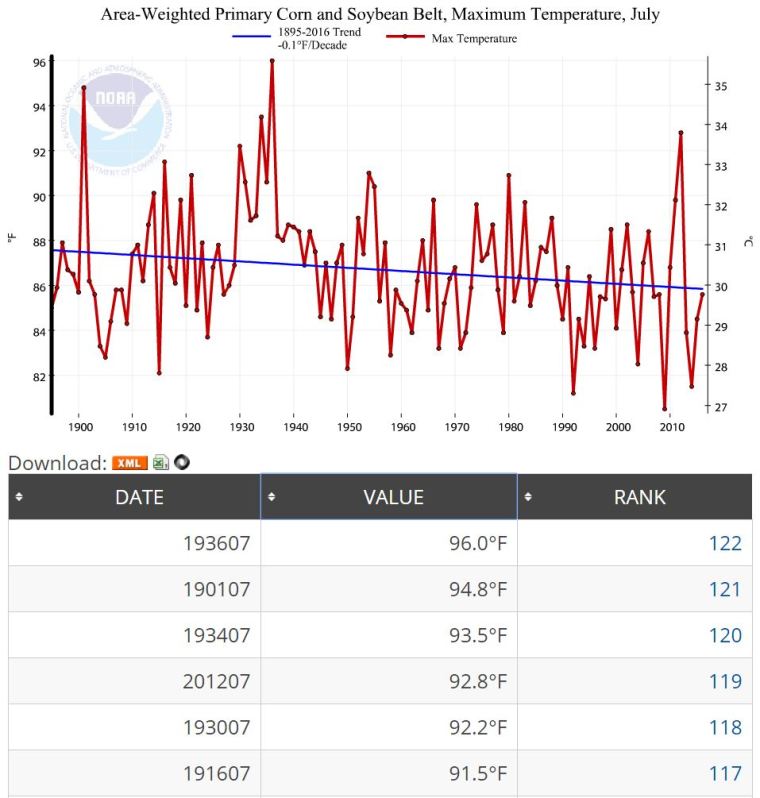
Corn and Soybean Belt – July Maximum Temperature (Updated with Trend)
1936 was hottest. 2009 was coldest. 1936 was 15.5F hotter than 2009.
According to the NOAA, October 2016 Tmax in the USA was 117th warmest out of 122. 122 wast warmest.
1963 was warmest. 1947, 1950, 1953 and 1938 were also warmer than 2016.
(I publish Tmax instead of Tavg because I believe much of the US warming is UHI making the evenings warmer which shows up in the Tmin)

 sunshine hours