USHCN 2.5 – Estimated Data Is Warming Data – Arizona

An addendum to yesterdays post about “Estimated” data.

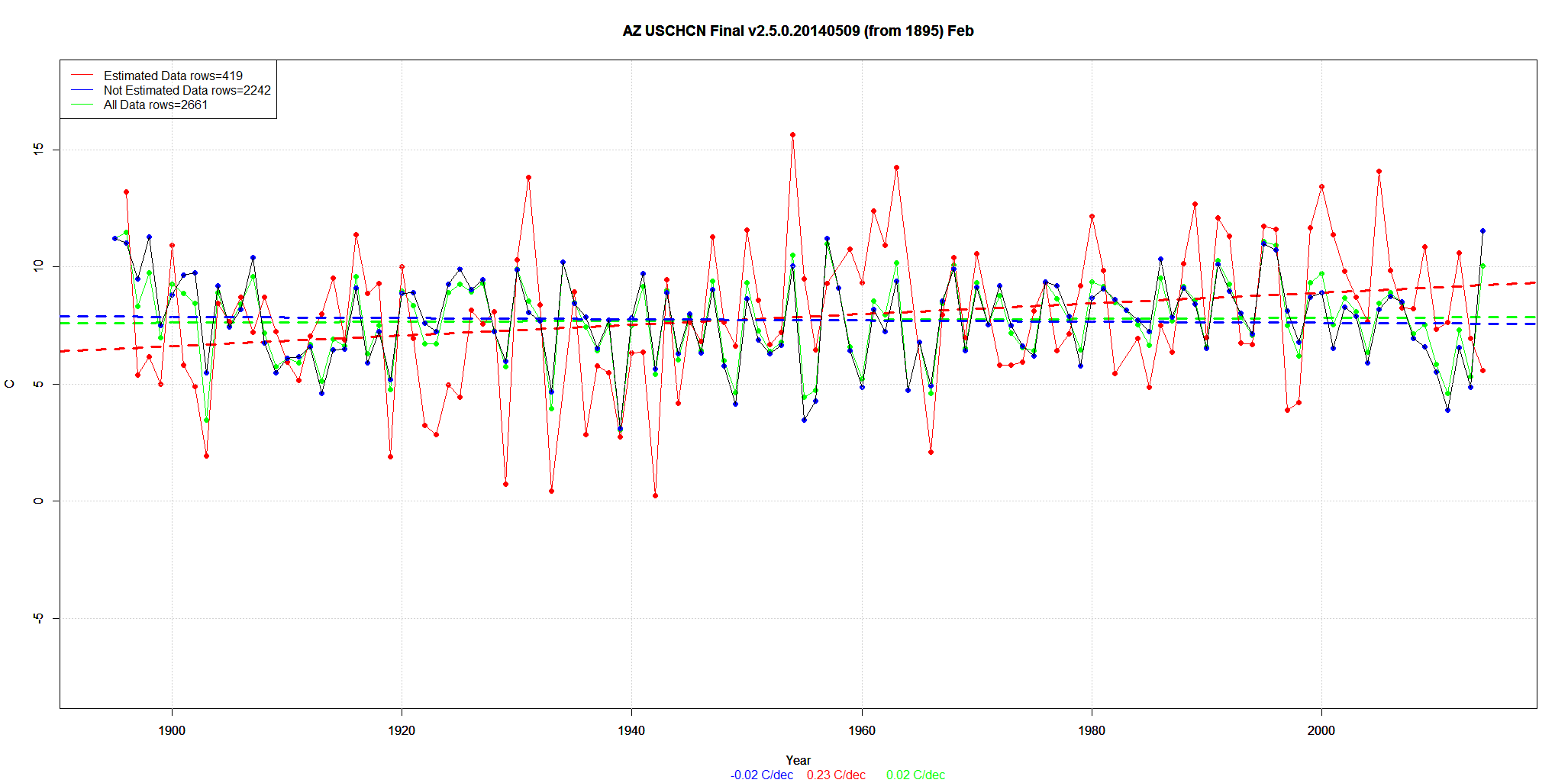
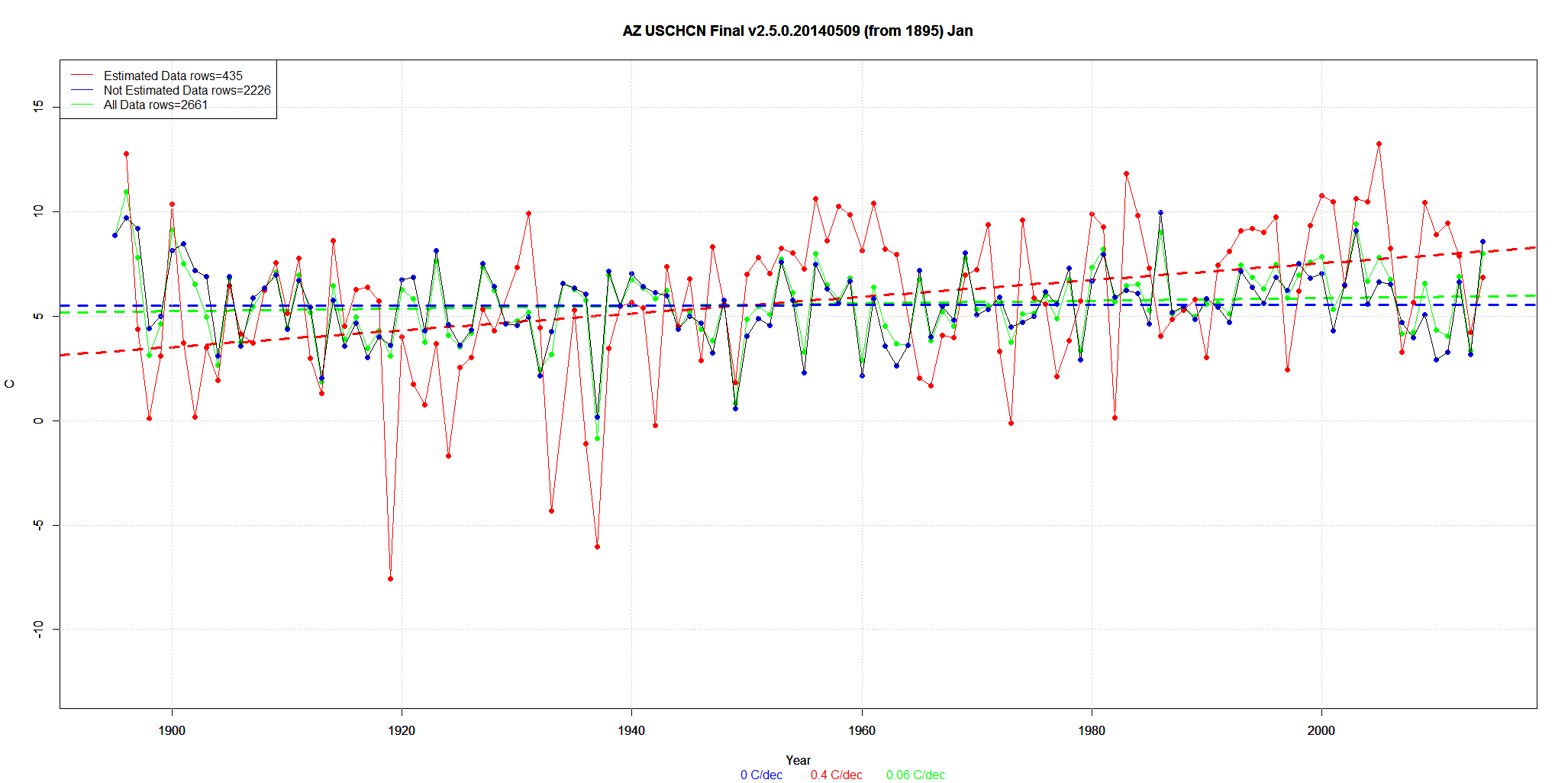
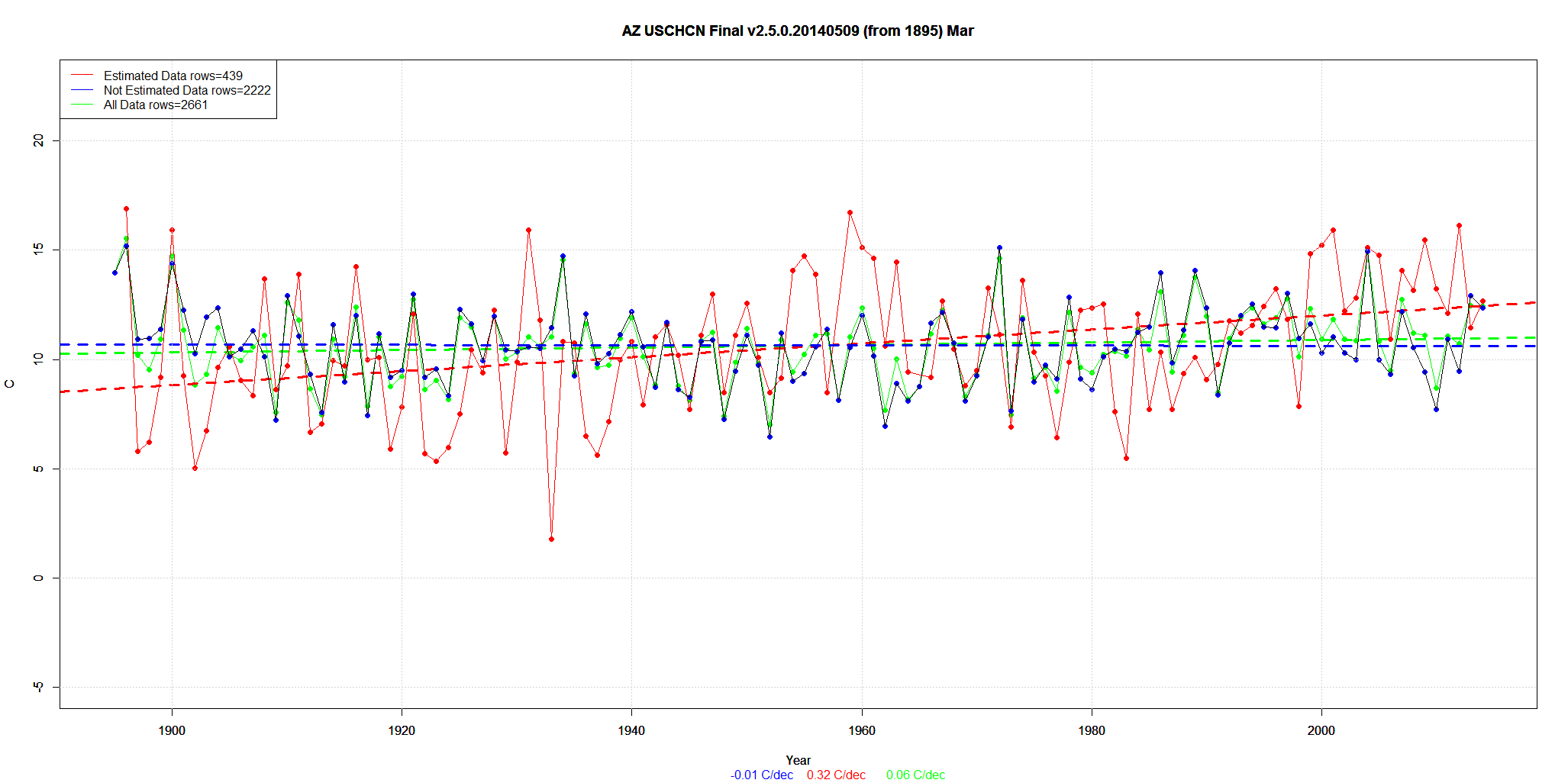
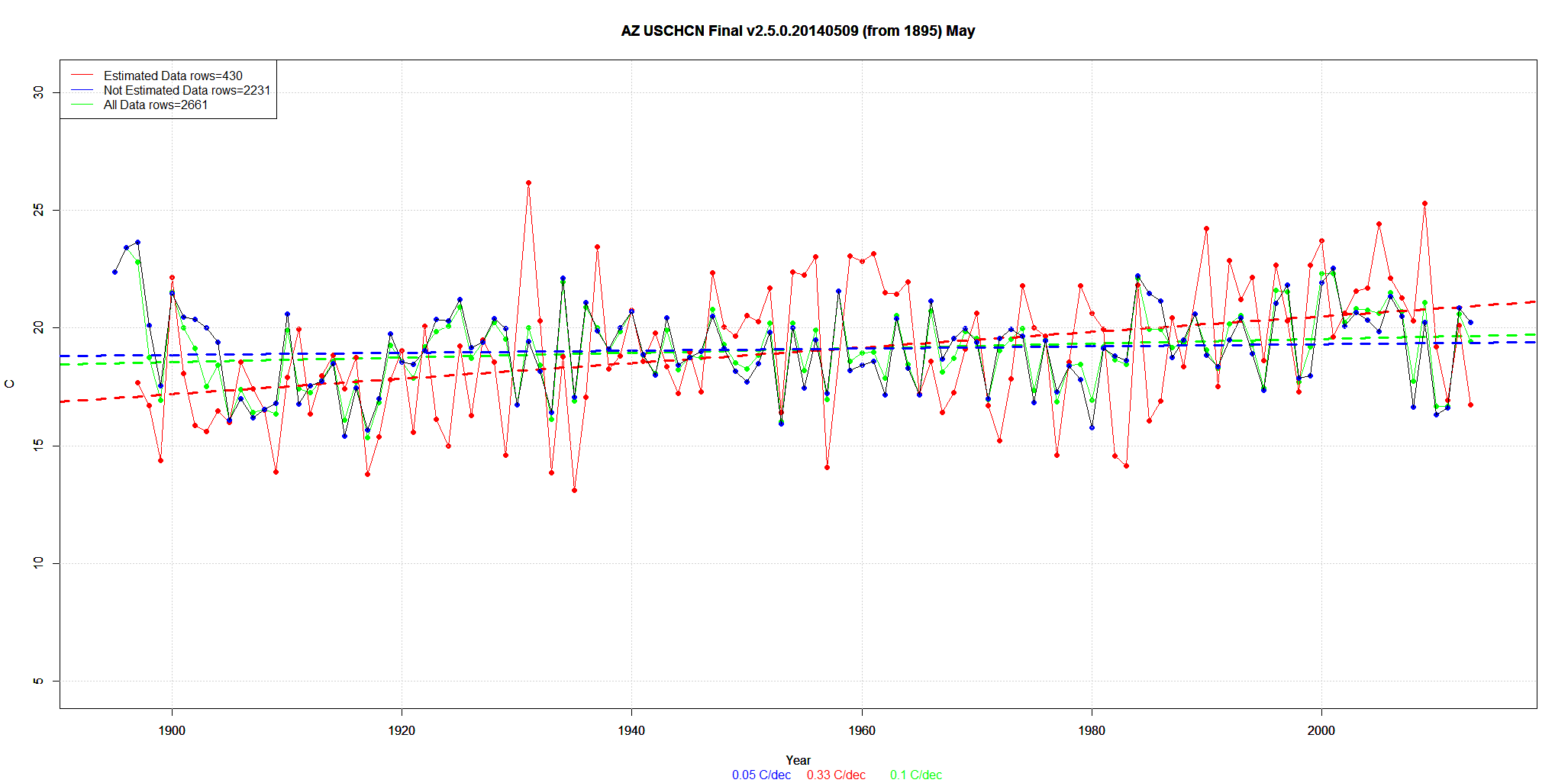
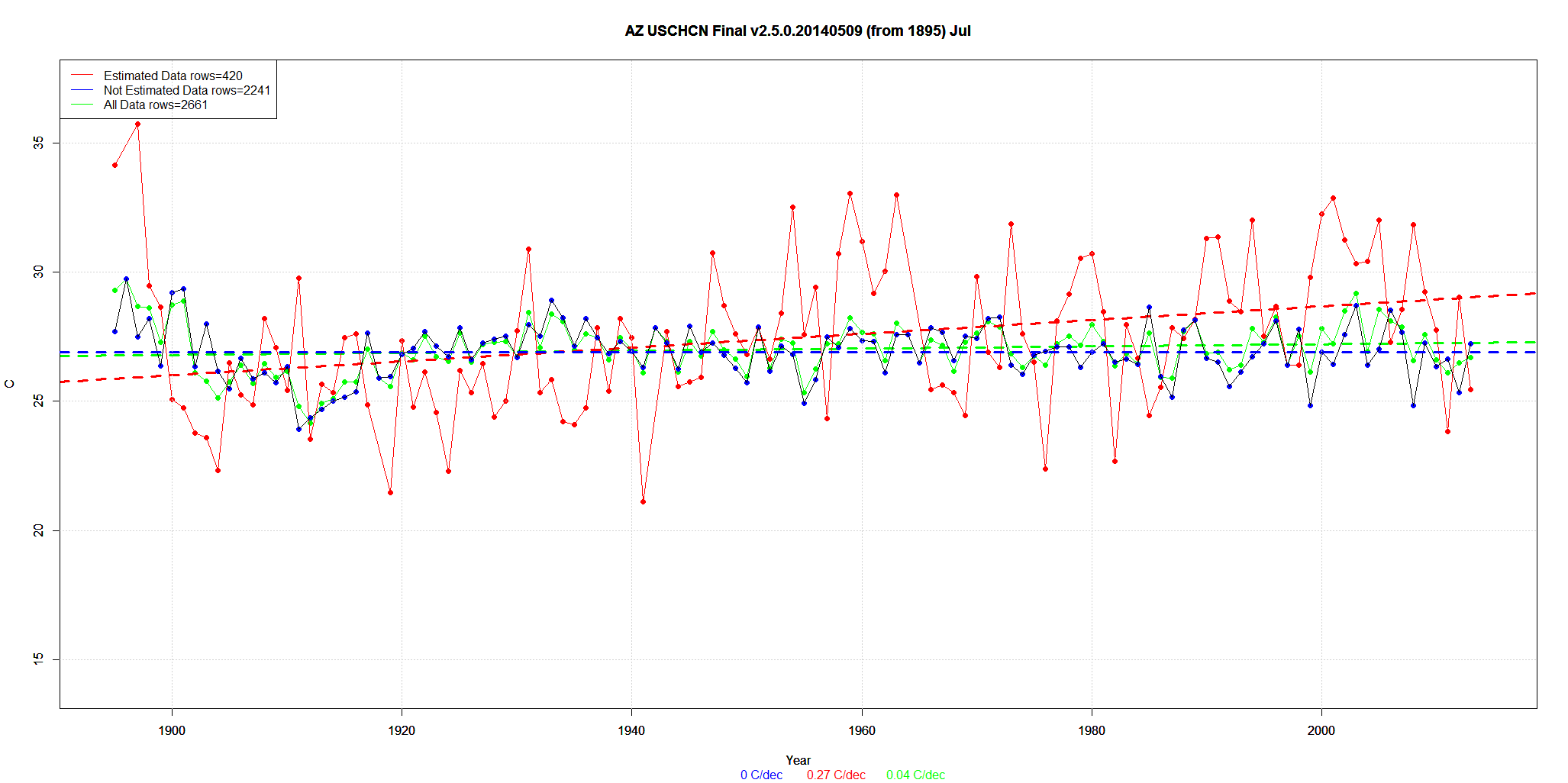
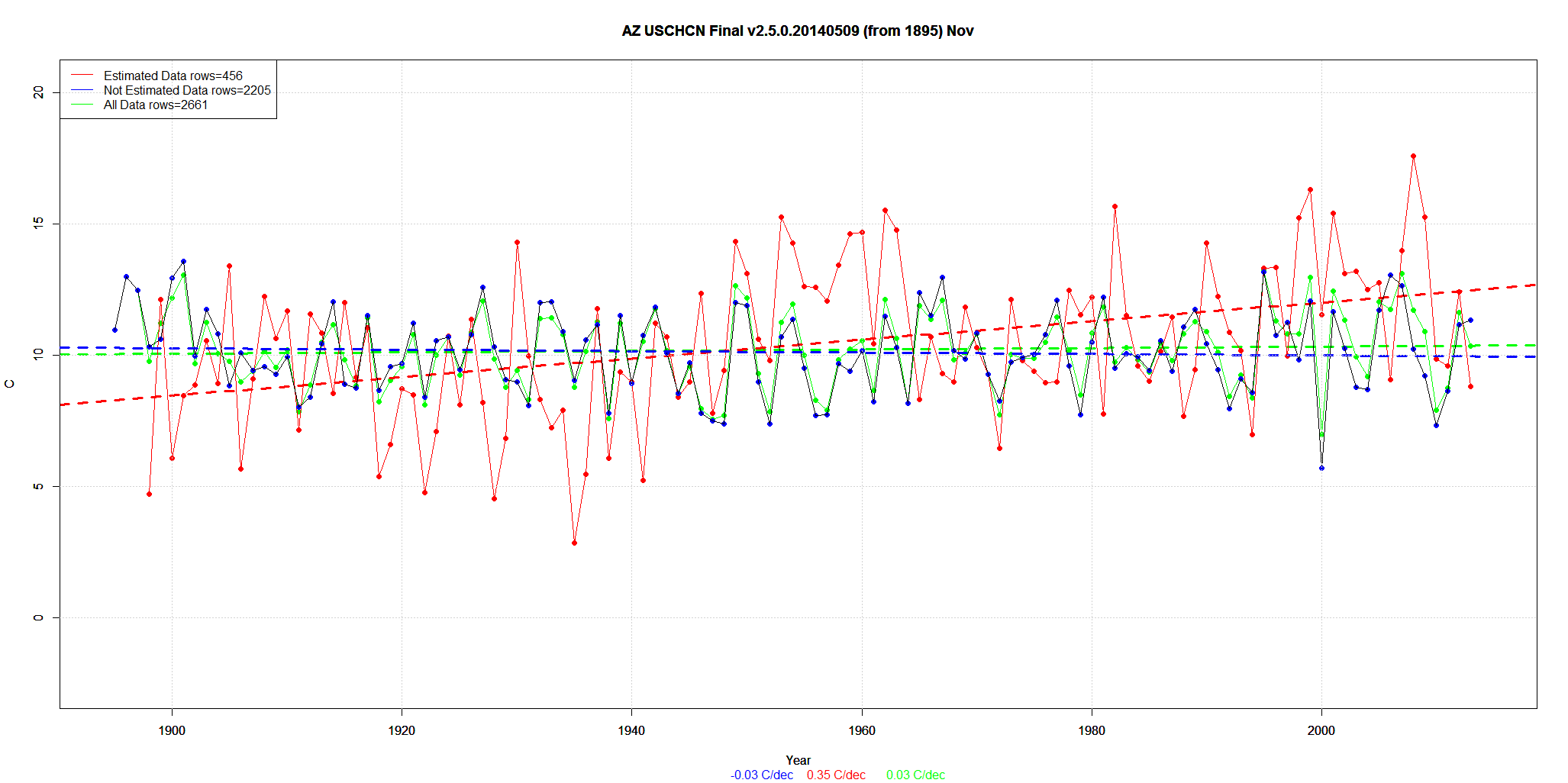
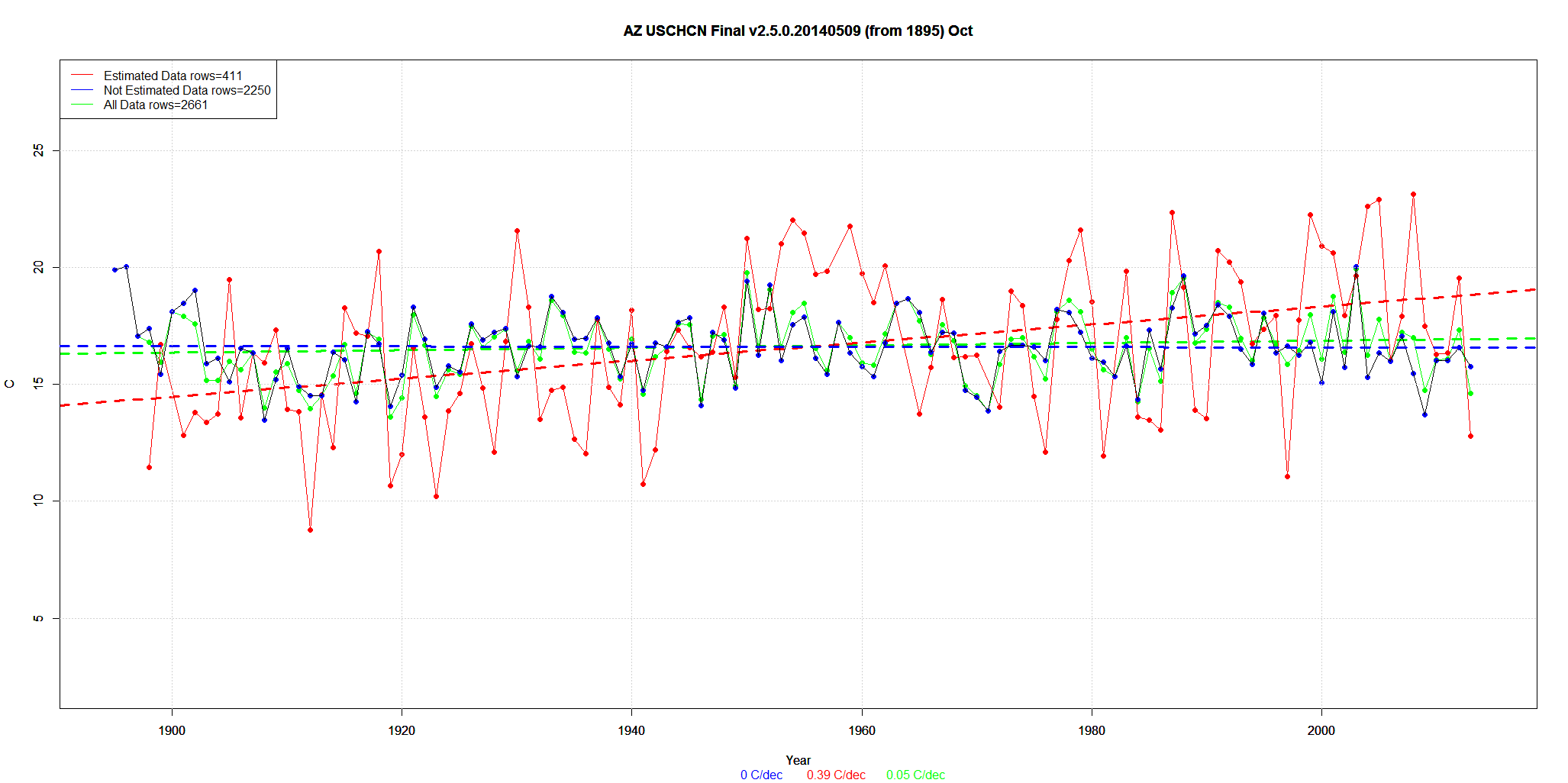
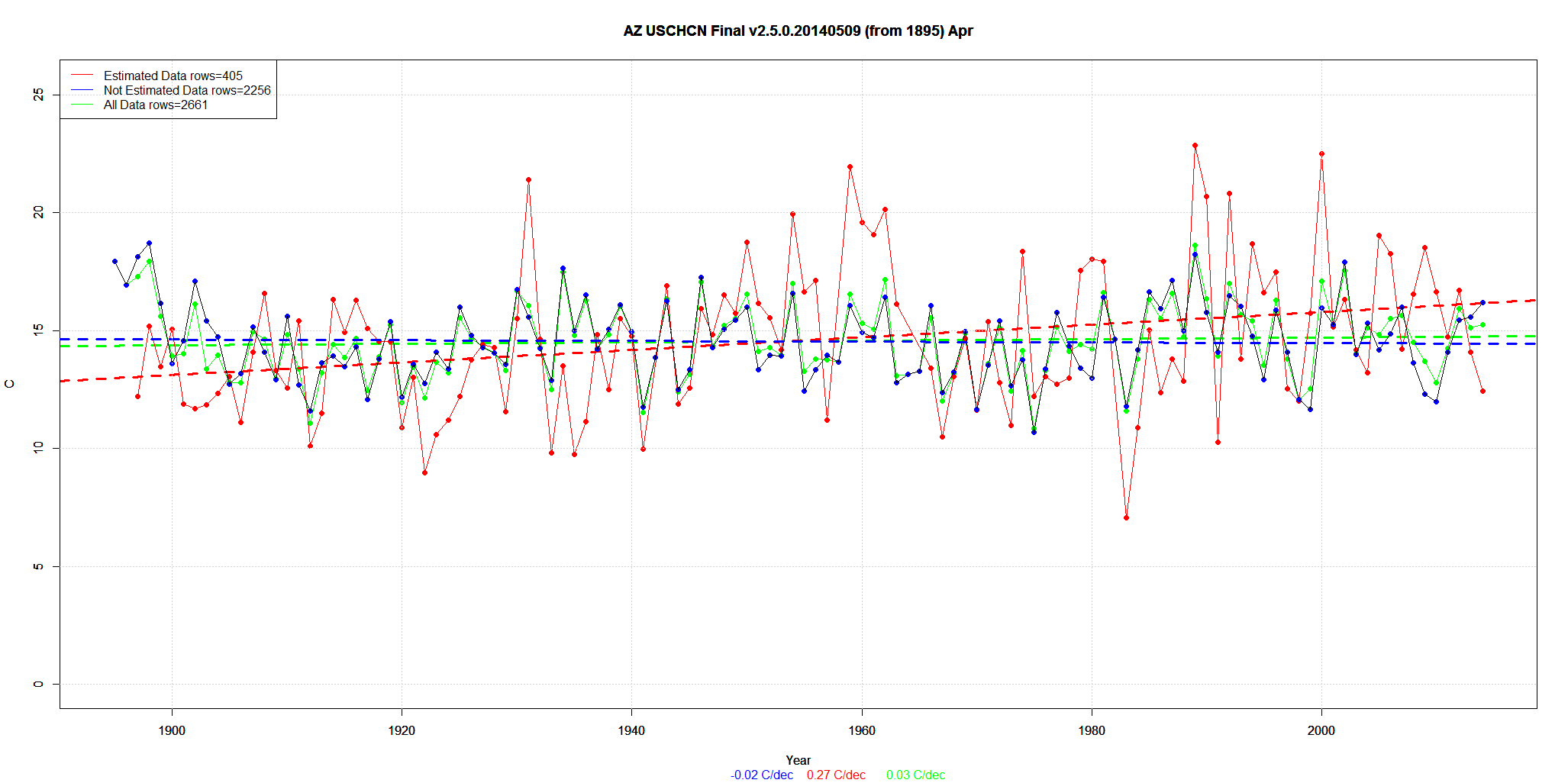
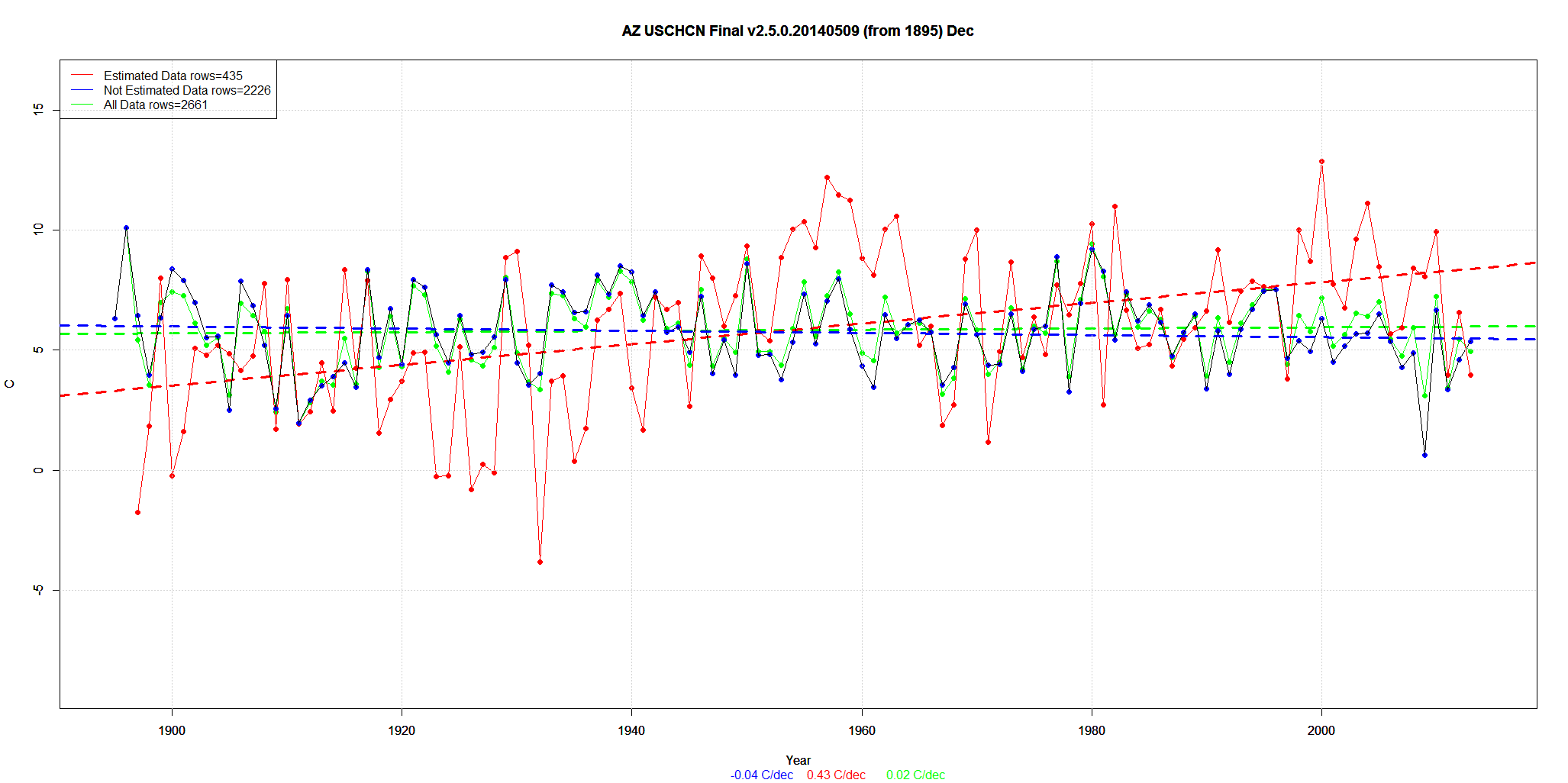
These are the 9 months in Arizona with the biggest change due to Estimated data. I’ll focus on December (the top graph). Remember, this is the Final data after all the other adjustments.

About 15% of the data is Estimated from neighboring stations.

The trend of REAL data is negative -.04C/decade.

Then they add in about 15% Estimated data with a trend of  +0.43C/decade.

The net result is a new trend of +0.02C/decade.

Presto. Magic. A downward trend is now an upward trend. (Click on graph for larger)

AZ USCHCN Final v2.5.0.20140509 (from 1895) Dec

AZ USCHCN Final v2.5.0.20140509 (from 1895) Feb

AZ USCHCN Final v2.5.0.20140509 (from 1895) Jan

AZ USCHCN Final v2.5.0.20140509 (from 1895) Mar

AZ USCHCN Final v2.5.0.20140509 (from 1895) May

AZ USCHCN Final v2.5.0.20140509 (from 1895) Jul

AZ USCHCN Final v2.5.0.20140509 (from 1895) Nov

AZ USCHCN Final v2.5.0.20140509 (from 1895) Oct

AZ USCHCN Final v2.5.0.20140509 (from 1895) Apr

USHCN 2.5 – Estimated Data Is Warming Data

Over at Steven Goddard’s blog he is trying to point out how much USHCN data is “Estimated”.

From the readme.txt file: " 'E' indicates the data value is an estimate from surrounding values; no original value is available;"

So I had a copy of the data from last month because of a previous post.

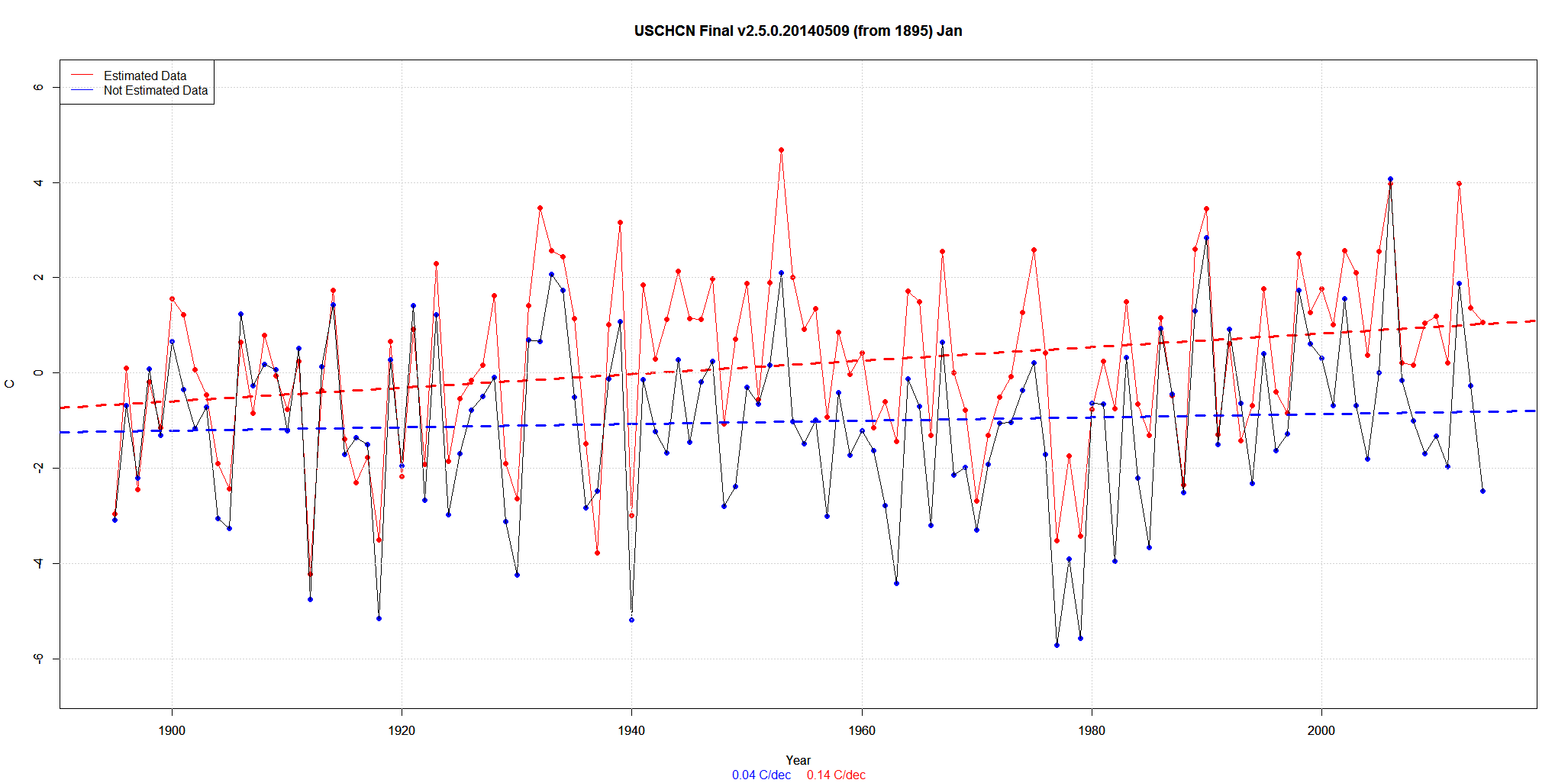
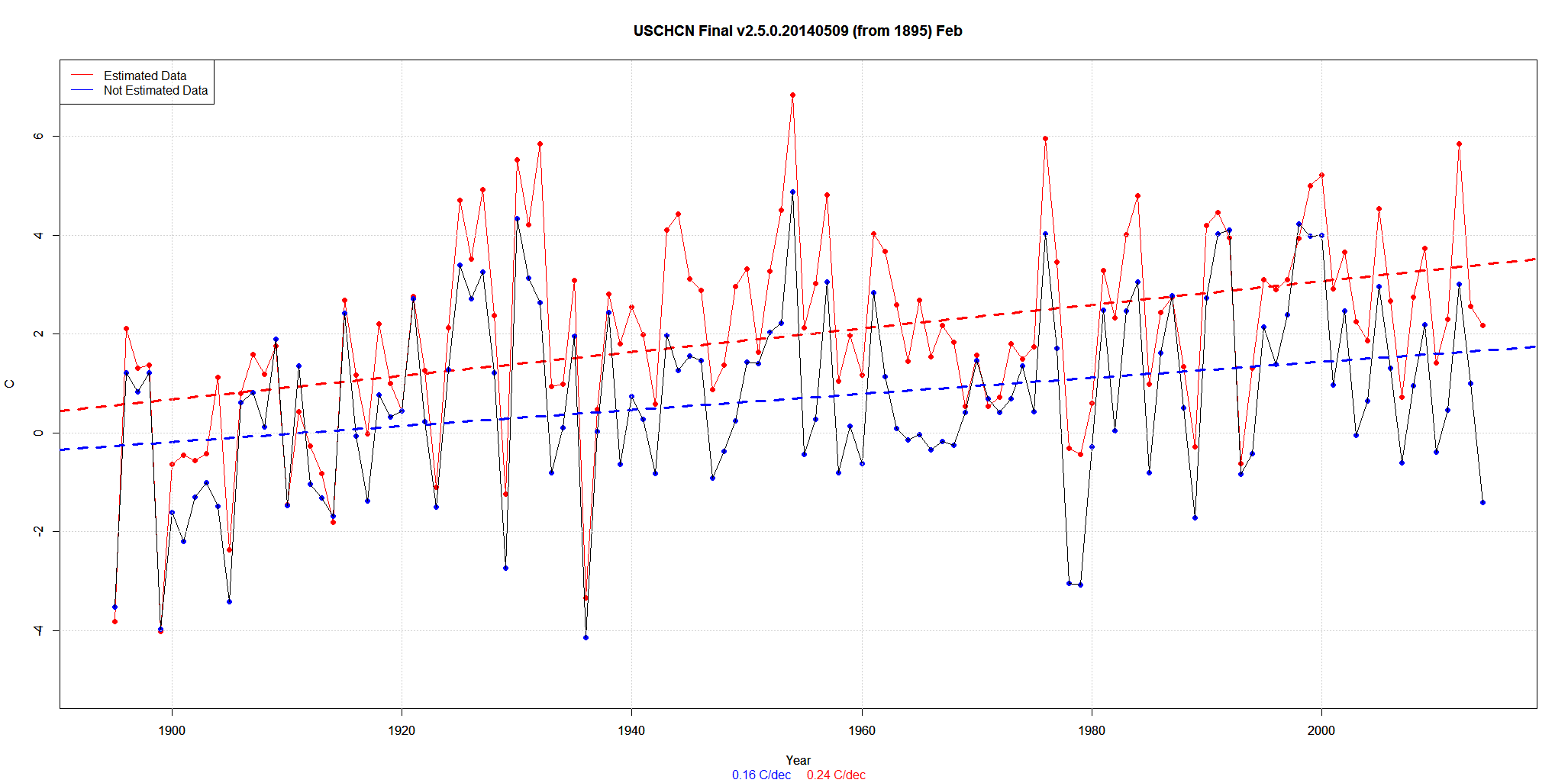
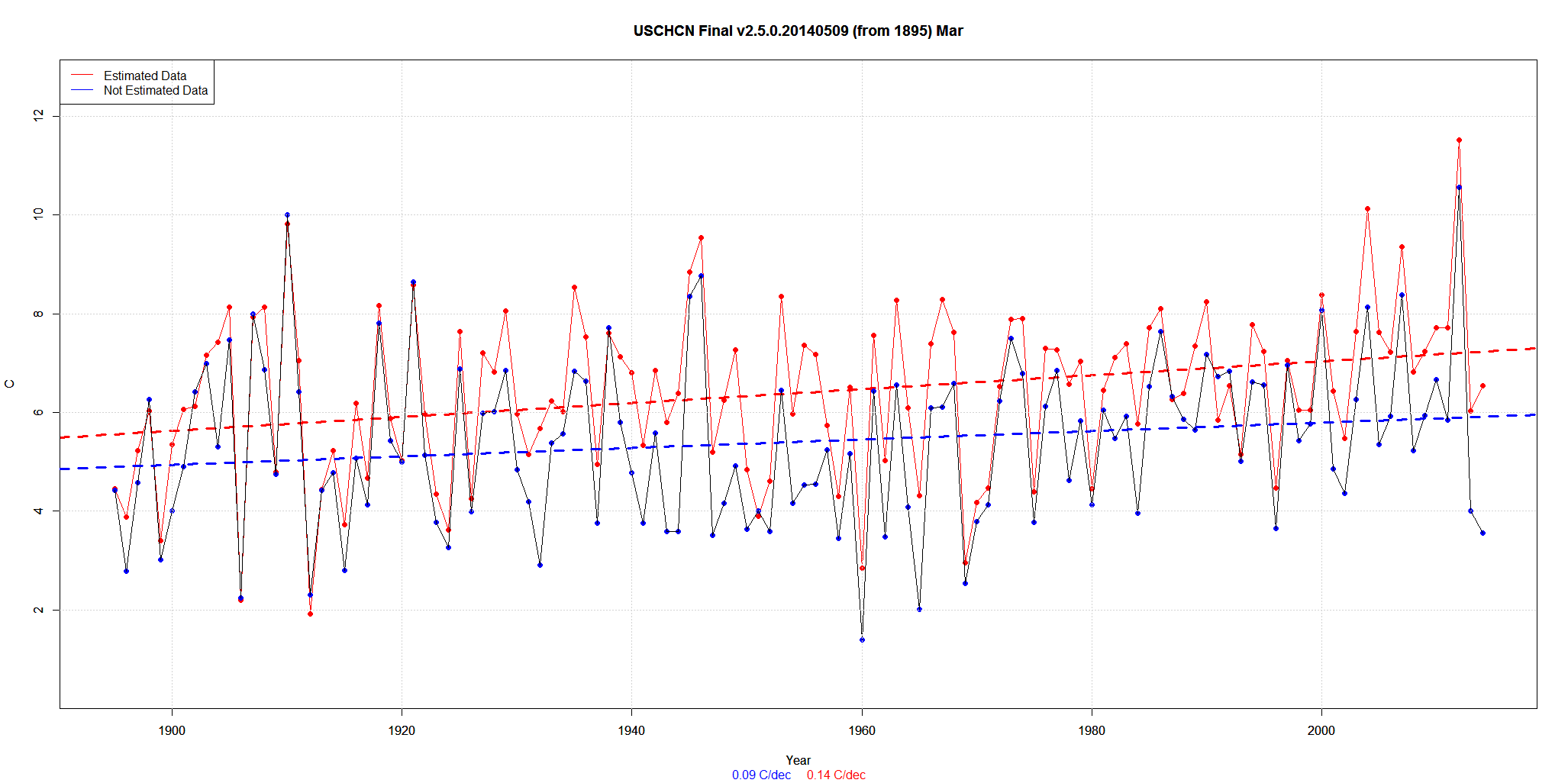
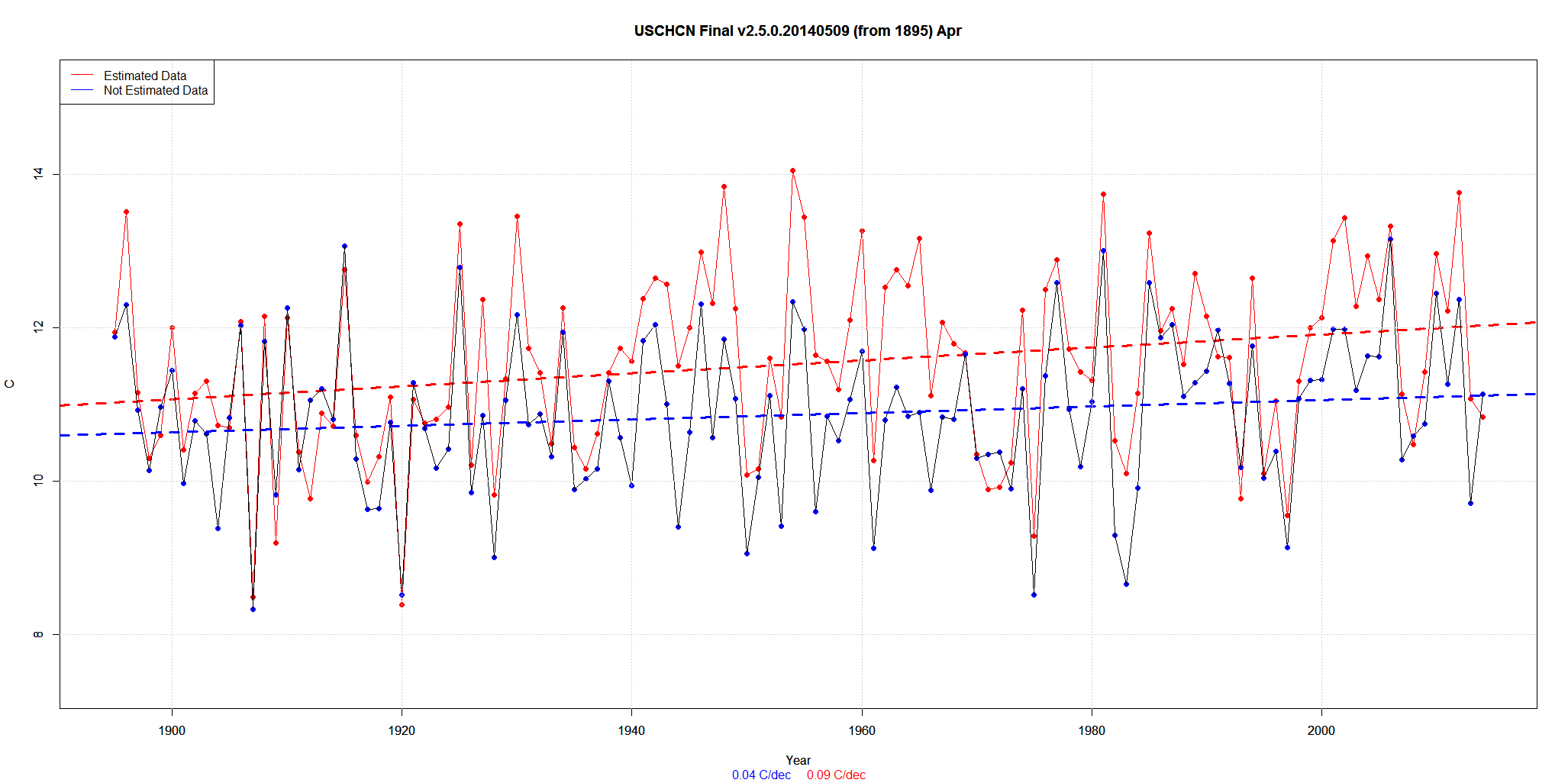
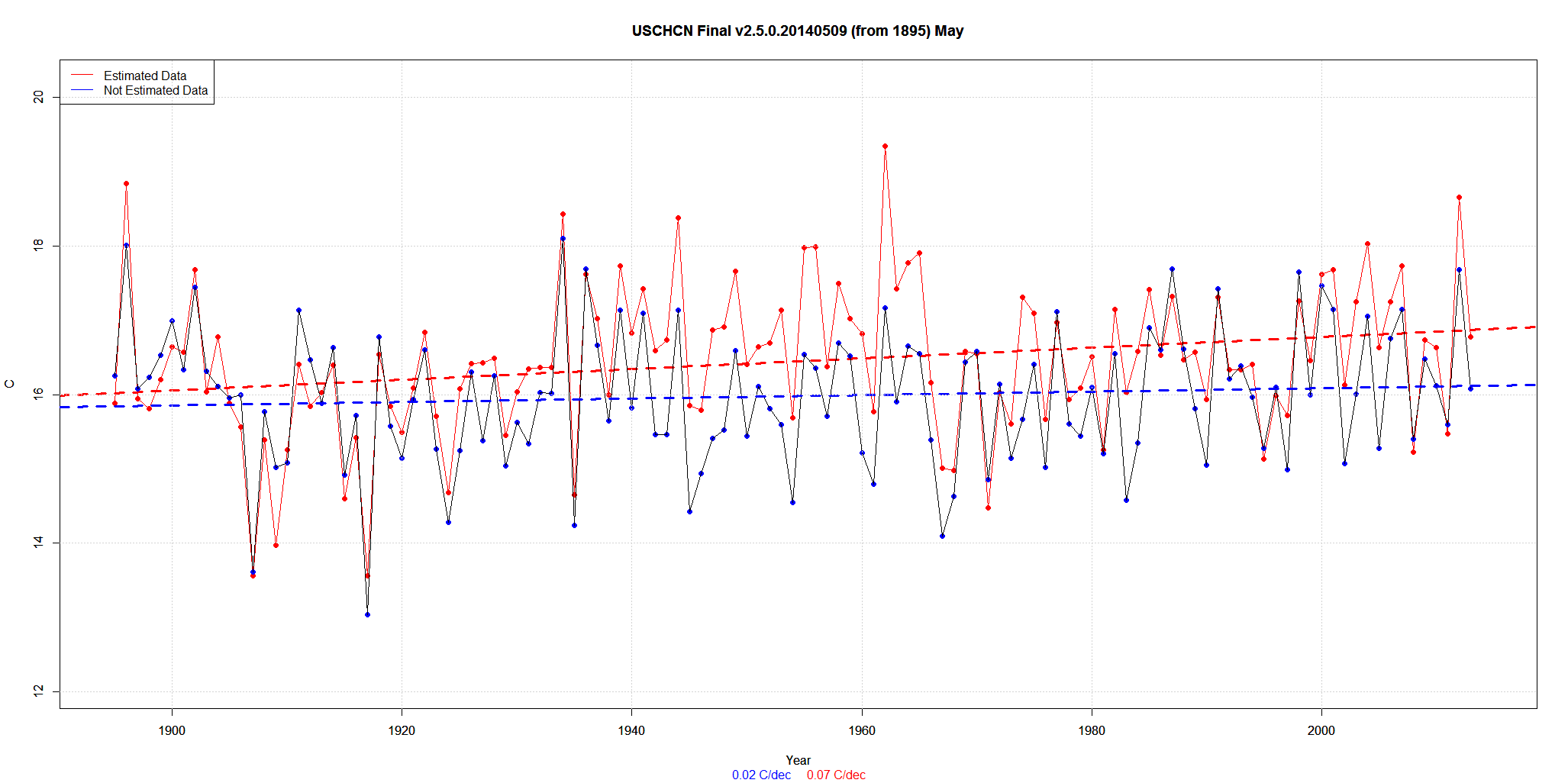
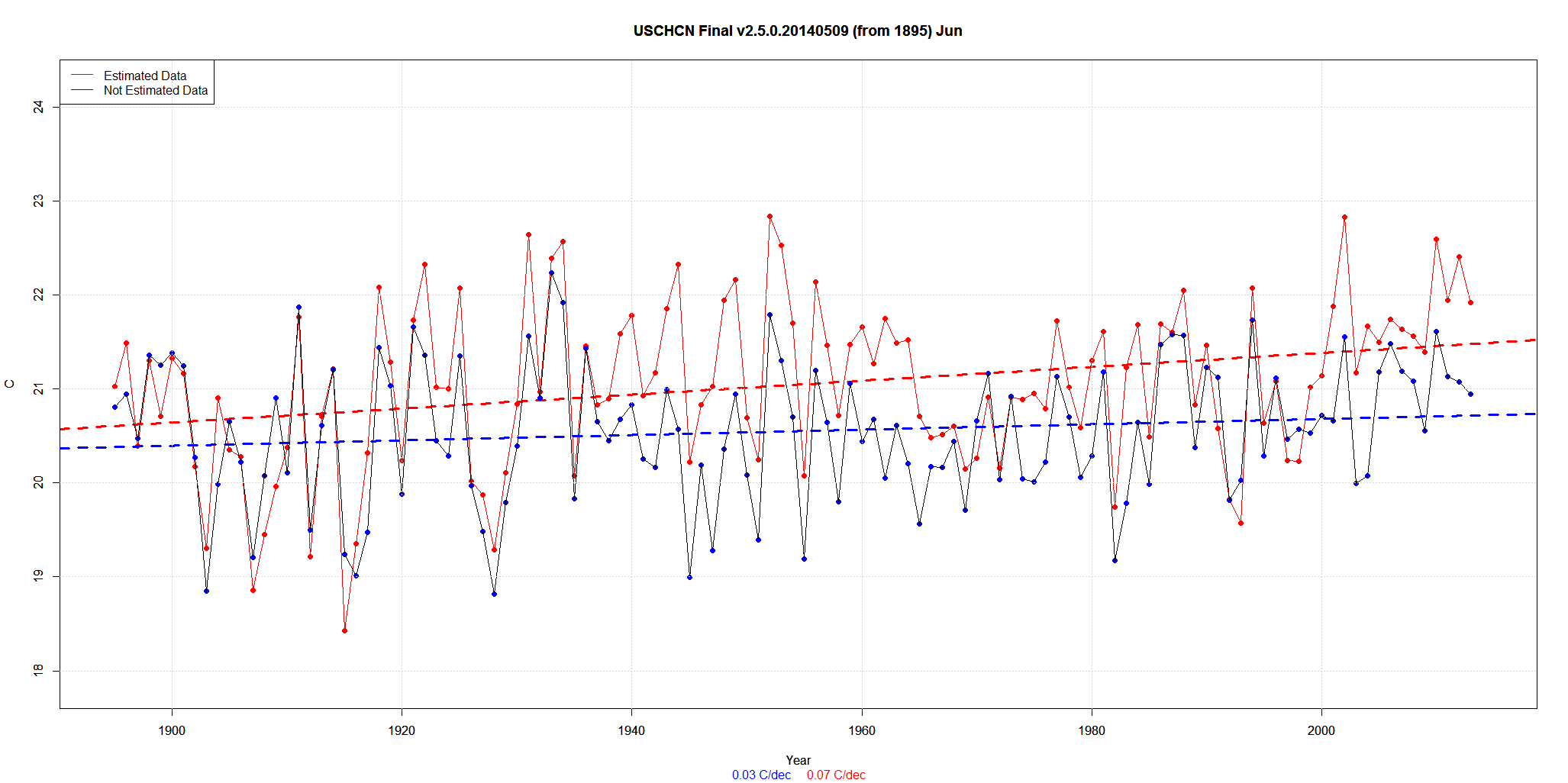
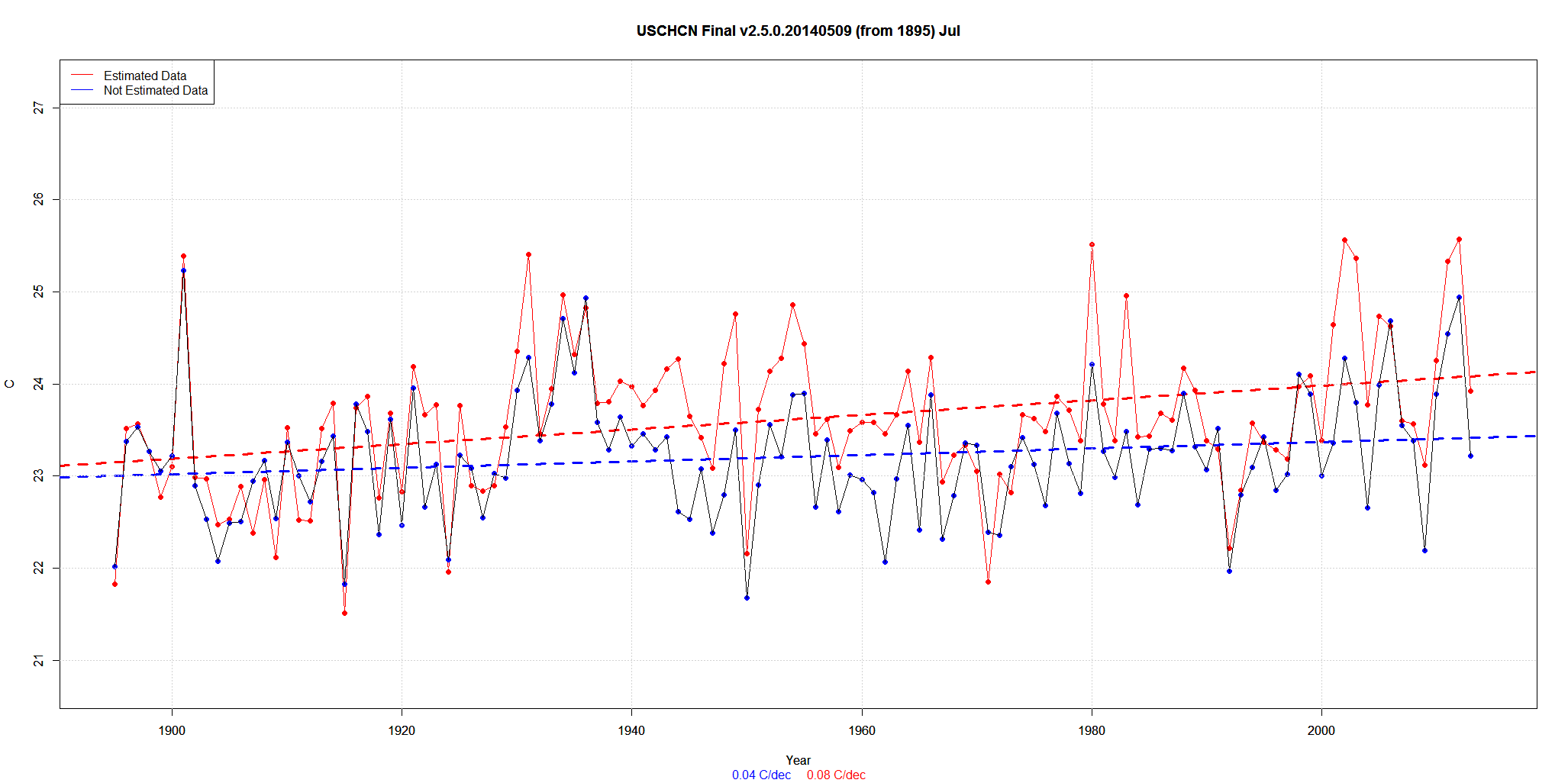
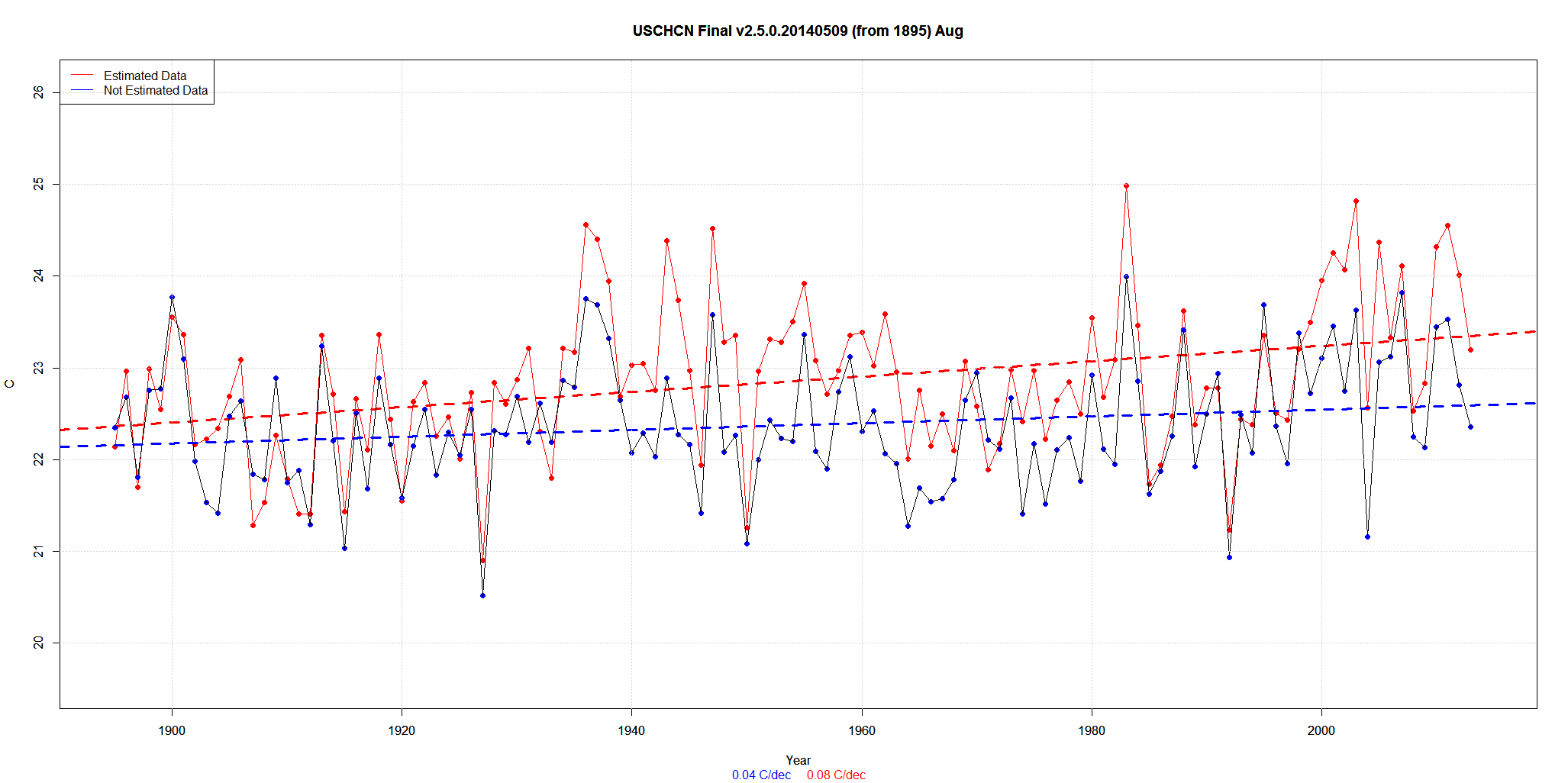
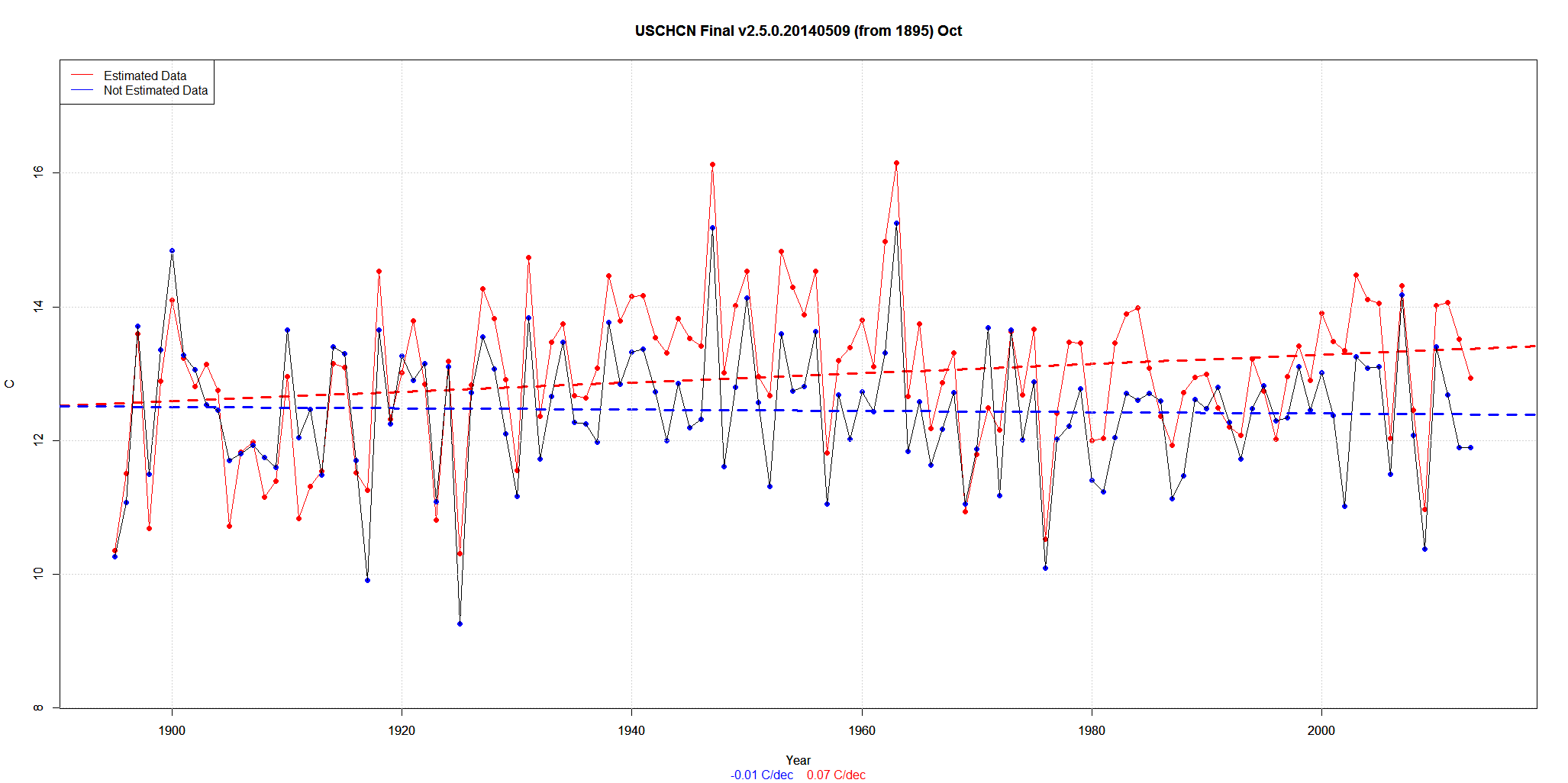
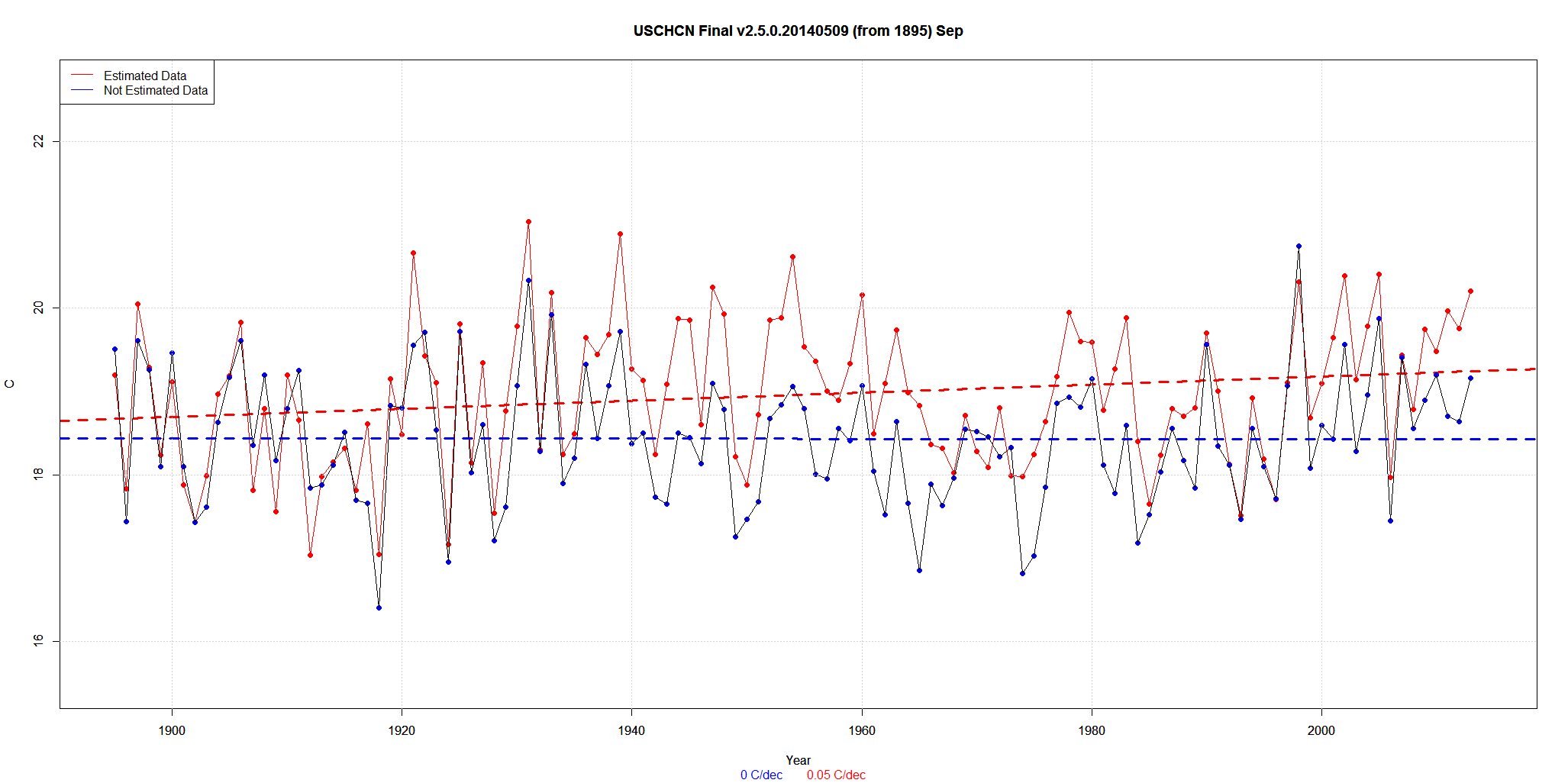
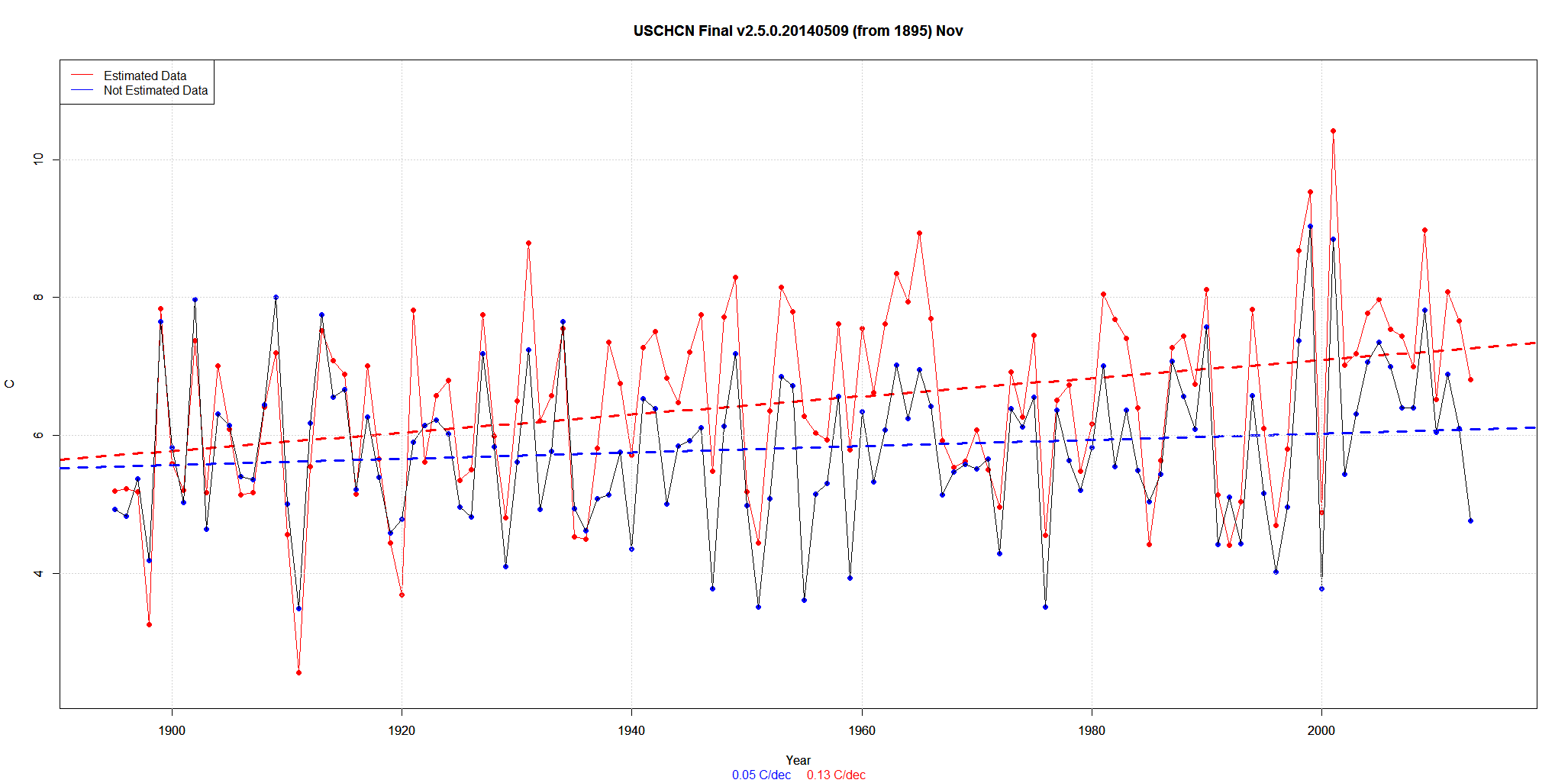
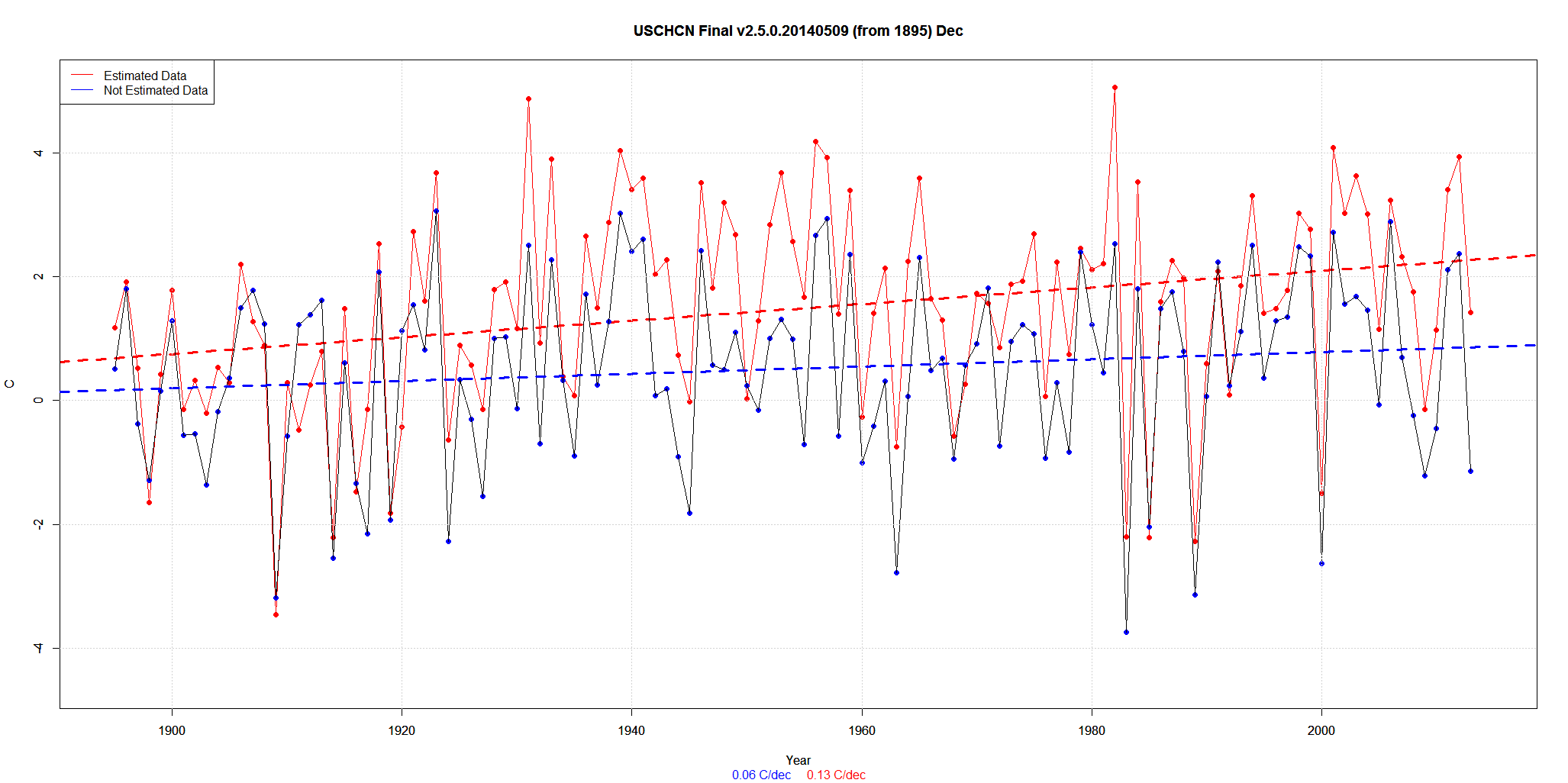
So I thought … take the Final data and graph each month comparing data with an E flag to all the data without an E flag.

Surprise. Estimated data is Warming Data. And that is ignoring all the manipulation in going from Raw to Final data.

USCHCN Final v2.5.0.20140509 (from 1895) Jan

USCHCN Final v2.5.0.20140509 (from 1895) Feb

USCHCN Final v2.5.0.20140509 (from 1895) Mar

USCHCN Final v2.5.0.20140509 (from 1895) Apr

USCHCN Final v2.5.0.20140509 (from 1895) May

USCHCN Final v2.5.0.20140509 (from 1895) Jun

USCHCN Final v2.5.0.20140509 (from 1895) Jul

USCHCN Final v2.5.0.20140509 (from 1895) Aug

USCHCN Final v2.5.0.20140509 (from 1895) Oct

USCHCN Final v2.5.0.20140509 (from 1895) Sep

USCHCN Final v2.5.0.20140509 (from 1895) Nov

USCHCN Final v2.5.0.20140509 (from 1895) Dec

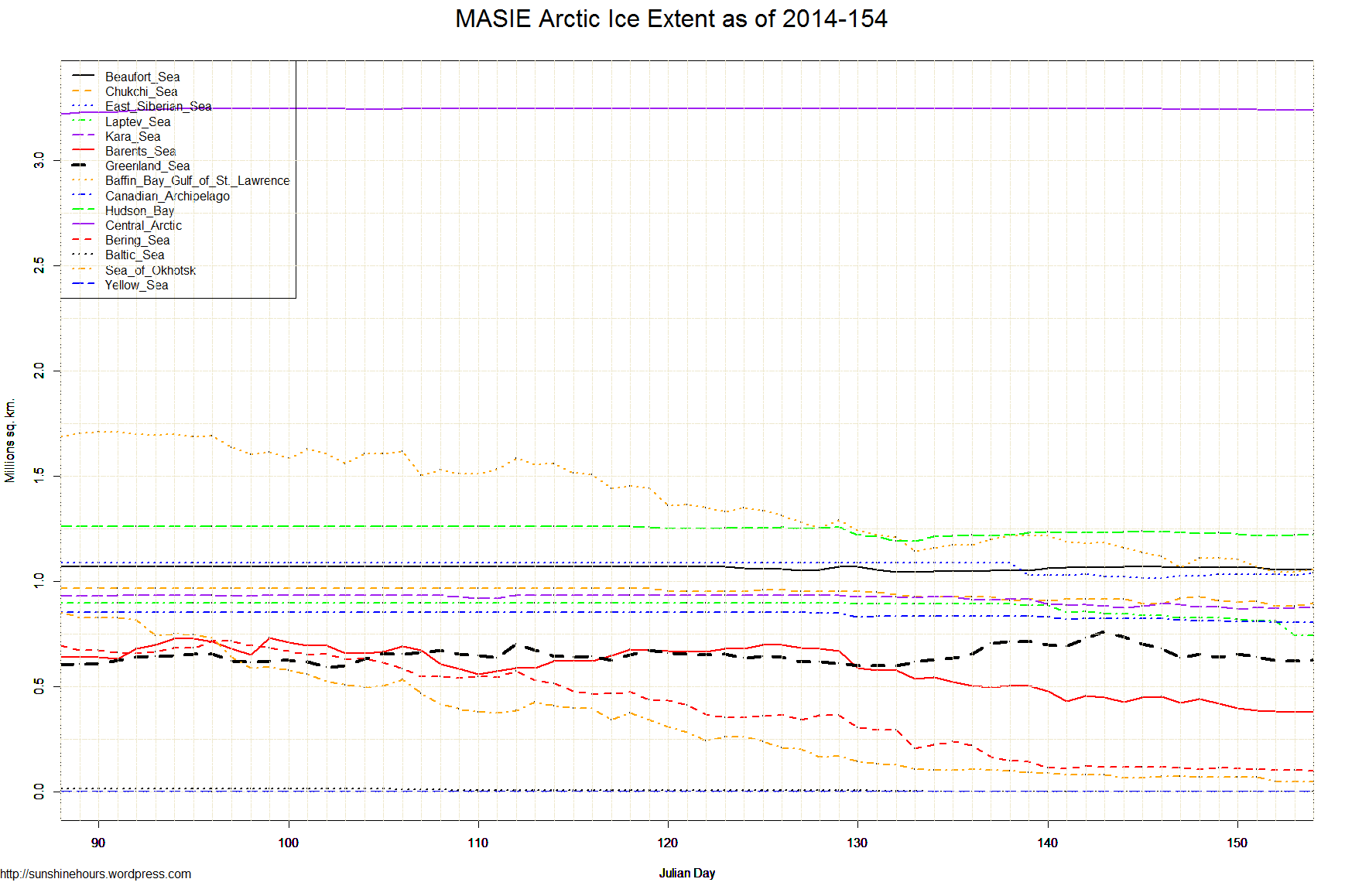
MASIE June 4 2014 – Arctic Ice Extent By Region – A Day of More Ice

June 4 2014  MASIE Update – Arctic Sea Ice actually rose 31,421 sq km over the last day because of the Chukchi Sea, Greenland Sea, East Siberian Sea and Baffin Bay.

This is the gain/loss up to day 154. Negative = loss. Sorted with biggest loser in last 7 days at top. Northern Hemisphere is the grand total.

Region Start End Last 66 Last 28 Last 14 Last 7 Last 3 Last 1
Laptev Sea 897,845 744,119 -153,726 -153,726 -141,132 -85,355 -68,528 0
Barents Sea 645,917 377,719 -268,198 -321,345 -101,635 -46,684 -9,736 0
Sea of Okhotsk 853,240 48,565 -804,675 -160,912 -38,775 -24,371 -23,554 0
Chukchi Sea 966,006 897,063 -68,943 -64,211 -12,895 -21,302 -9,445 12,327
Kara Sea 933,859 874,113 -59,746 -60,910 -18,958 -15,004 -2,806 0
Bering Sea 697,324 101,445 -595,879 -263,045 -15,050 -13,627 -6,230 -1,836
Greenland Sea 603,416 624,527 21,112 -16,305 -74,602 -12,264 -15,805 2,607
Baffin Bay Gulf of St. Lawrence 1,688,530 1,055,912 -632,619 -255,952 -160,732 -11,265 -13,623 10,196
Hudson Bay 1,260,903 1,220,436 -40,467 -37,052 -14,444 -10,029 1,782 -1,304
Beaufort Sea 1,070,445 1,056,356 -14,089 -3,767 -7,416 -9,749 -8,730 0
Canadian Archipelago 853,214 807,471 -45,744 -45,744 -22,296 -7,728 -2,262 0
Central Arctic 3,221,921 3,239,806 17,885 -8,207 -7,104 -4,176 -1,505 0
Baltic Sea 15,337 0 -15,337 -8,402 0 0 0 0
Yellow Sea 0 0 0 0 0 0 0 0
East Siberian Sea 1,087,137 1,040,736 -46,401 -46,401 12,341 14,074 5,682 9,431
Northern Hemisphere (Total) 14,805,115 12,089,410 -2,715,704 -1,447,027 -602,763 -247,817 -154,761 31,421
NH (Average Loss per Day) -40,533 -51,680 -43,054 -35,402 -51,587 31,421

MASIE Arctic Ice Extent as of 2014-154

Germany Mocks Obama By Burning More Brown Coal

Germany has decided to mock Obama’s plan to kill off coal power in the USA:

The eastern German state of Brandenburg approved plans on Tuesday to allow utility Vattenfall to mine a further 200 million tonnes of brown coal from 2026, a move critics say will cause pollution and also force 800 people from their homes.

Brown coal – also known as lignite – has a high moisture content and can be susceptible to spontaneous combustion, making it difficult to store and transport. Therefore, it is often burnt in power stations near to mines. It also emits more carbon dioxide when burnt compared with other types of coal, making it more harmful to the environment.

Opponents of the fuel, which accounts for about a quarter of German power, have campaigned hard for its use to be halted because of the high levels of carbon dioxide emissions and because they say about 800 local residents will be forced to relocate to make way for the new open-cast mining.

But its advocates say brown coal allows the use of domestic raw materials for a reliable source of electricity, especially in industrial parts of Germany, and reduces the need for energy imports.”

Germany is now squandering trillions on “green” energy subsidies … and paying for them by burning even more filthy brown coal. They could have been fracking for clean natural gas. But no … they shut down their nuclear power stations too.

http://www.thegwpf.org/german-state-allows-huge-expansion-of-brown-coal-mining/


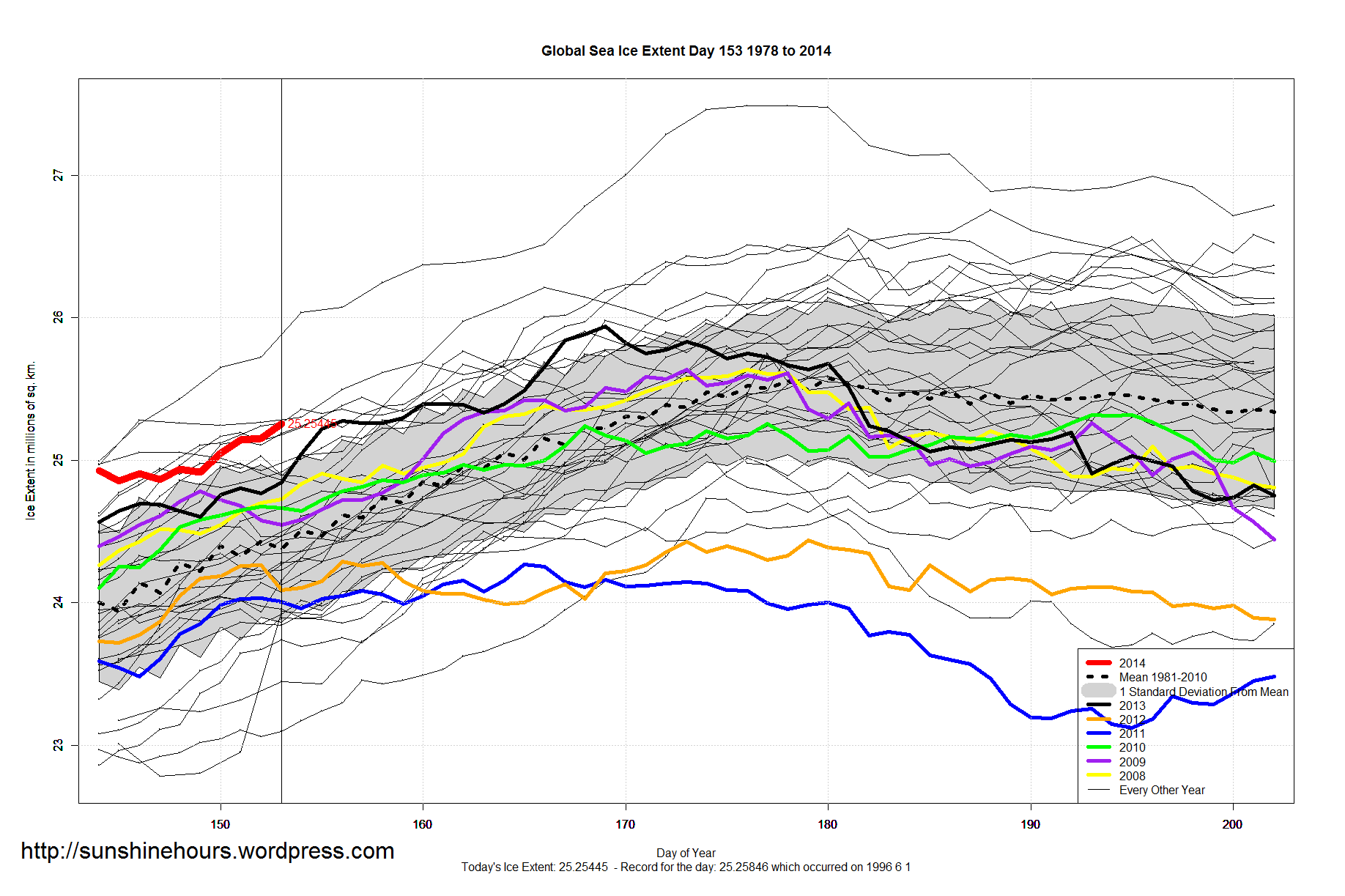
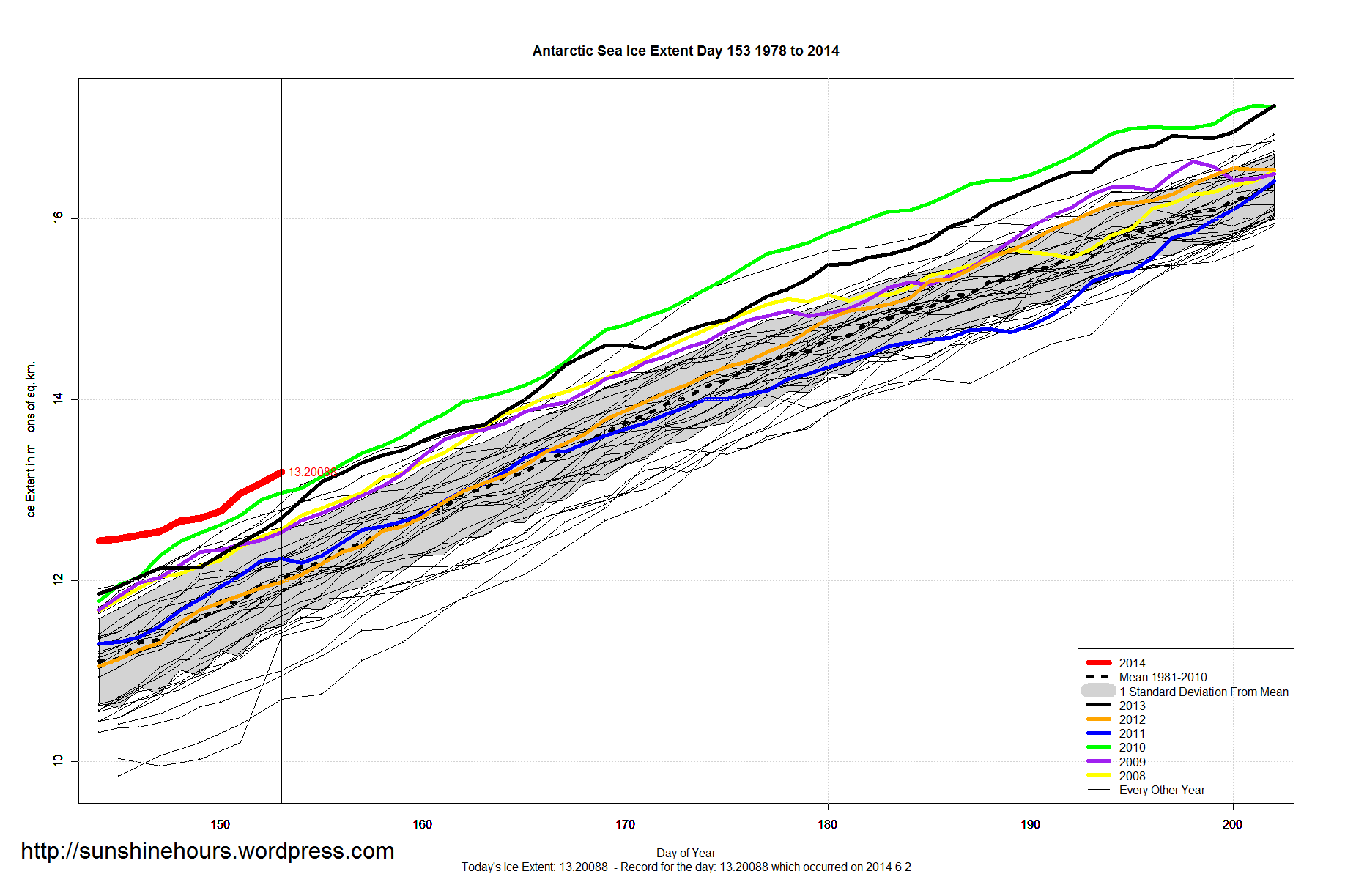
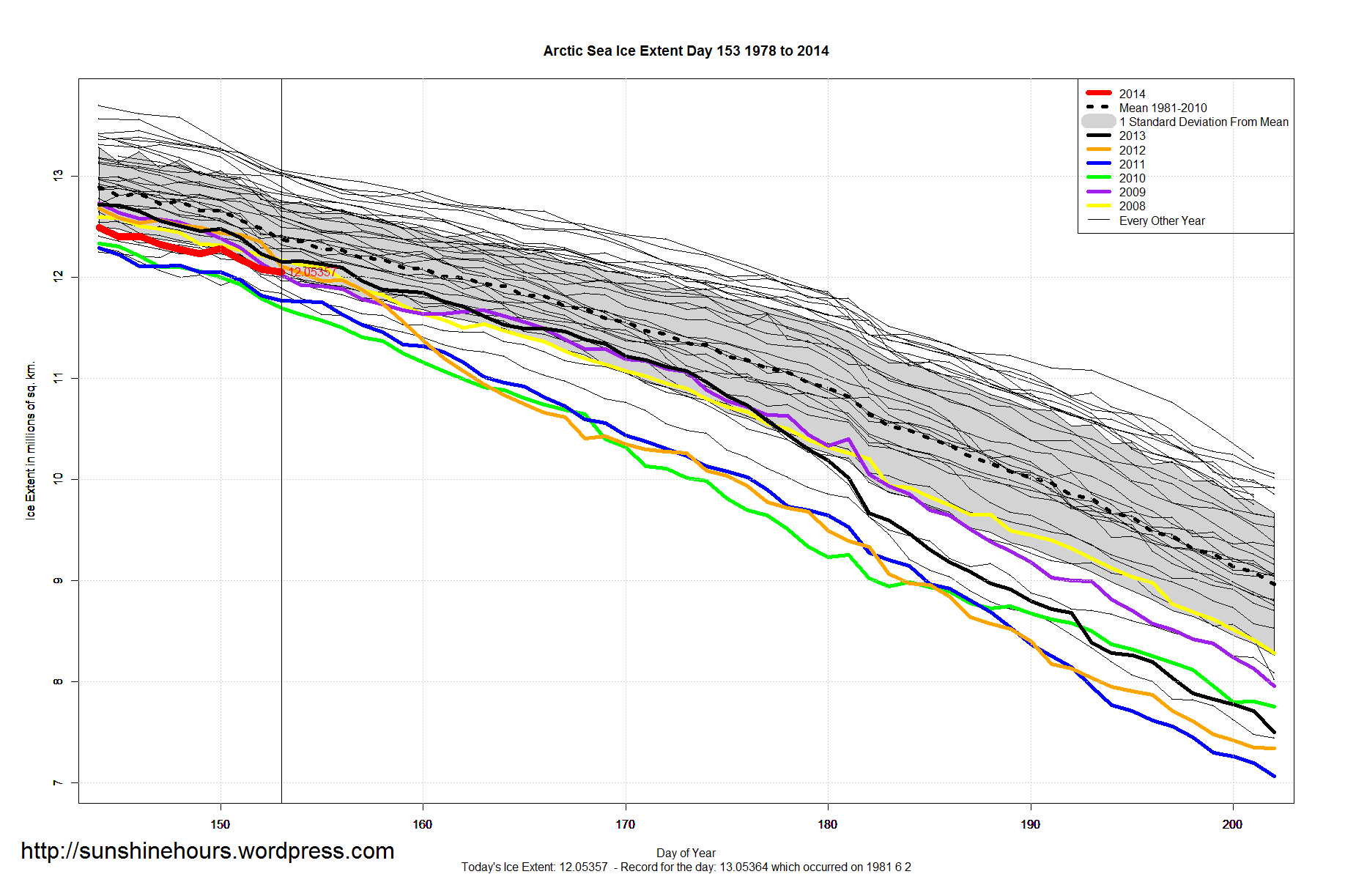
Sea Ice Update June 3 2014 – Global Sea Ice Highest Since 1996

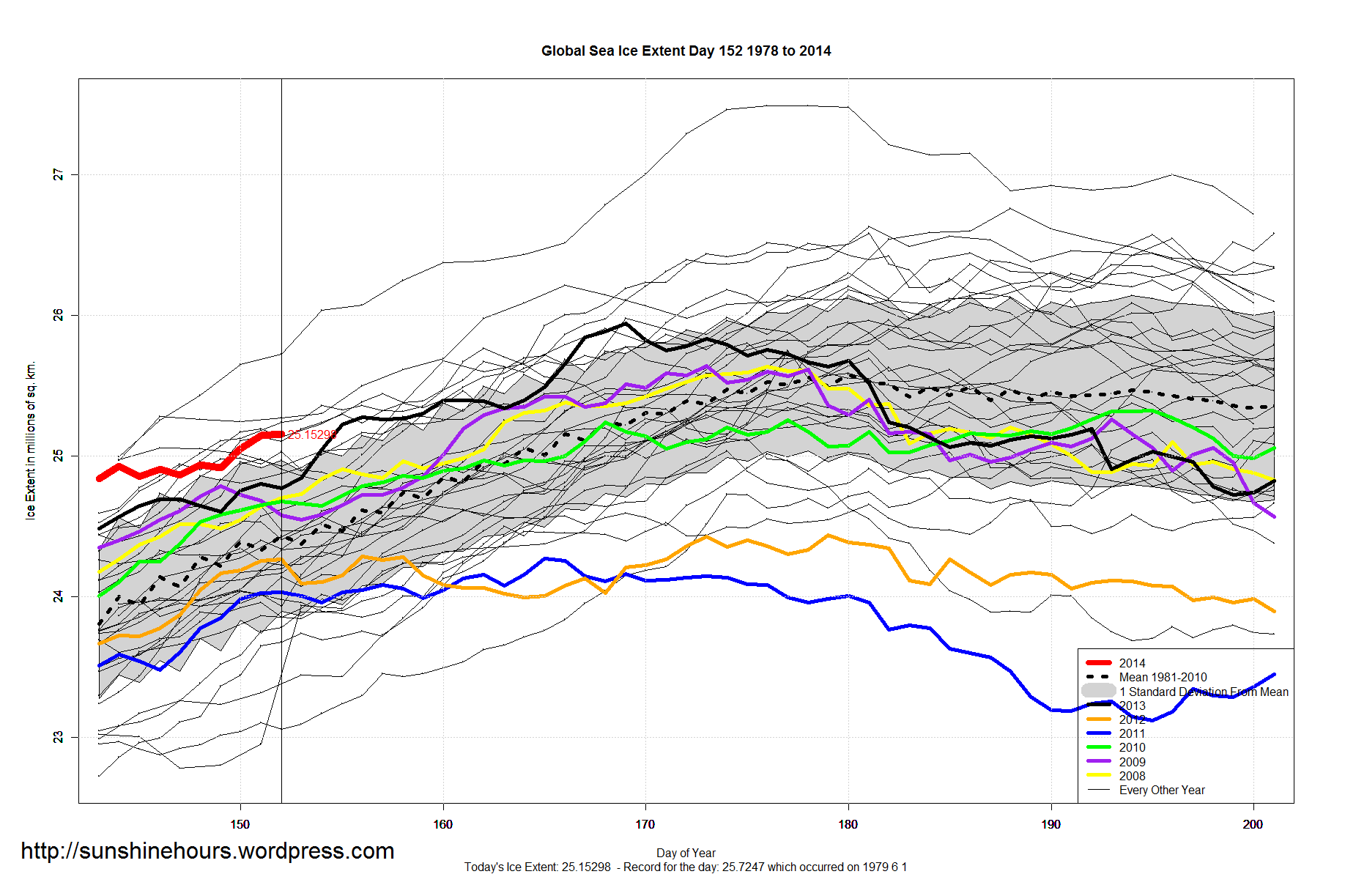
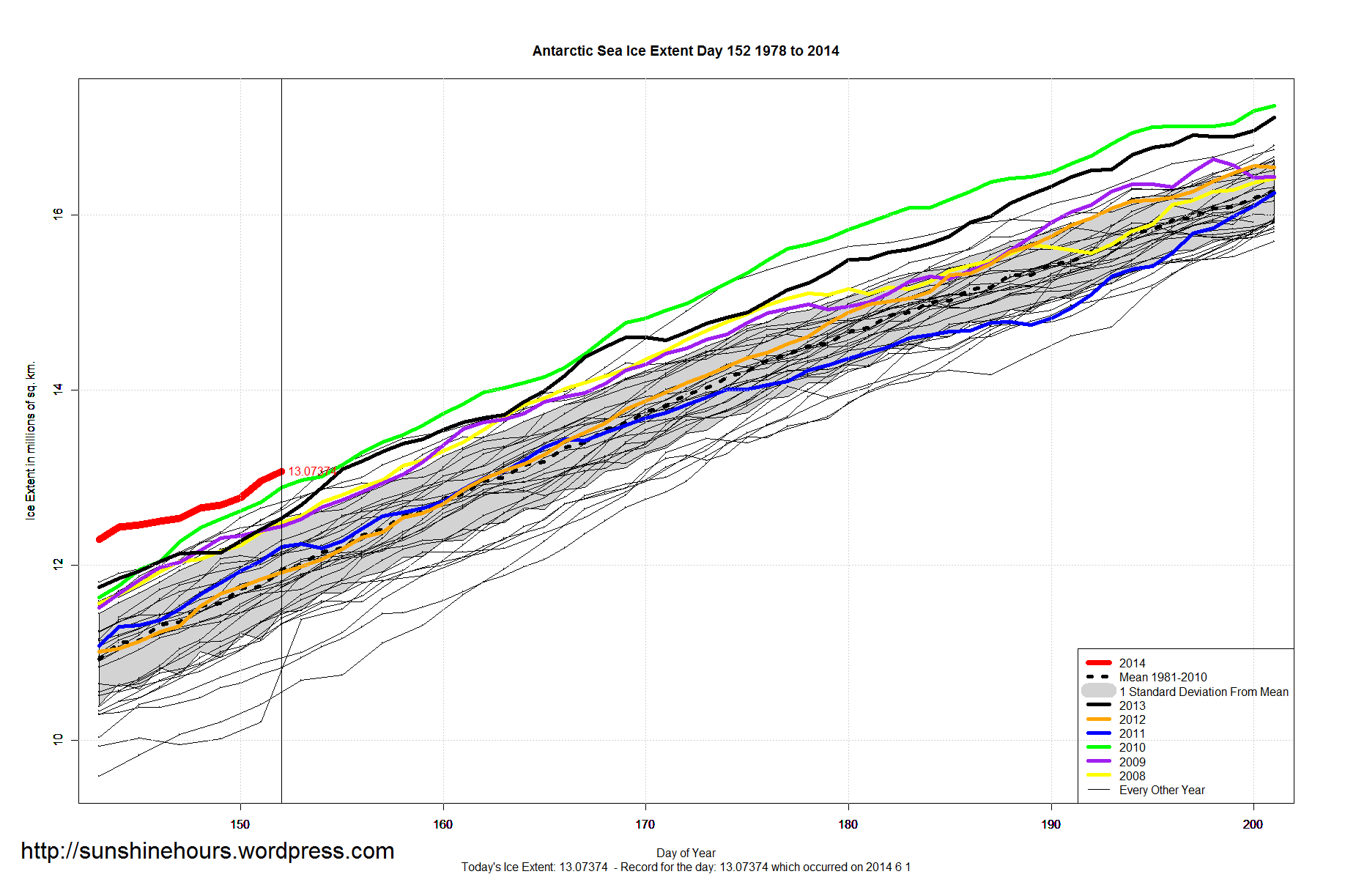
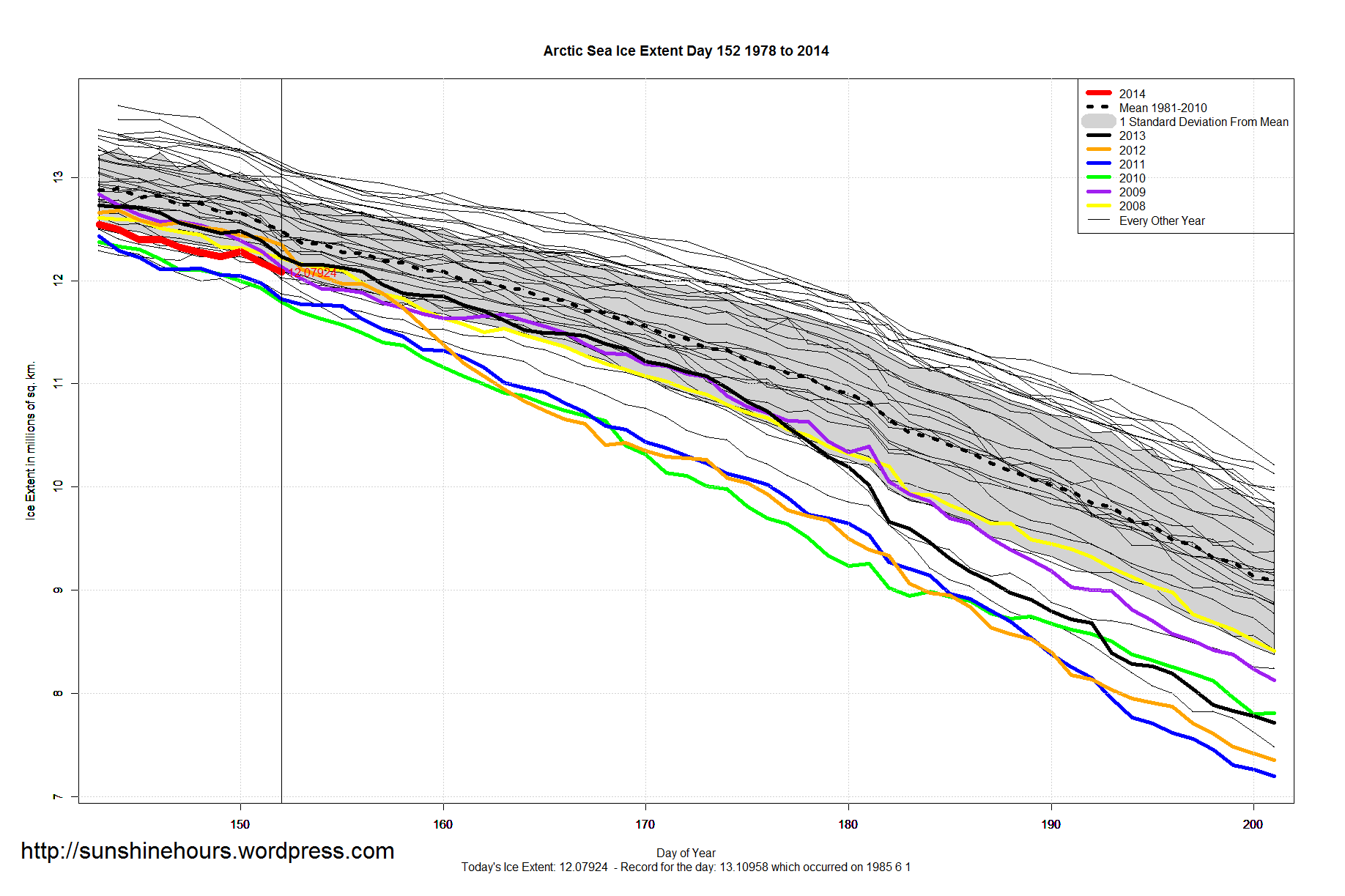
A quick update for sea ice extent for day 153 of 2014:

  • Global Sea Ice Extent is 824,000 sq km above the 1981-2010 mean.
  • Antarctic Sea Ice Extent is 1,221,000 sq km above the 1981-2010 mean.
  • Arctic Sea Ice Extent is -397,000 sq km below the 1981-2010 mean.

NOAA Data here and here here. Graphs below. Click for bigger.

Global_Sea_Ice_Extent_Zoomed_2014_Day_153_1981-2010

Antarctic_Sea_Ice_Extent_Zoomed_2014_Day_153_1981-2010

Arctic_Sea_Ice_Extent_Zoomed_2014_Day_153_1981-2010

MASIE June 2 2014 – Arctic Ice Extent By Region As of Day 152

June 2 2014  MASIE Update

This is the gain/loss up to day 152. Negative = loss. Sorted with biggest loser in last 7 days at top. Northern Hemisphere is the grand total.


Region Start End Last 64 Last 28 Last 14 Last 7 Last 3 Last 1
Baffin Bay Gulf of St. Lawrence 1,688,530 1,043,246 -645,284 -307,375 -174,654 -94,659 -67,951 -26,289
Greenland Sea 603,416 625,730 22,314 -12,228 -88,003 -77,276 -16,113 -14,602
Barents Sea 645,917 384,752 -261,165 -294,758 -121,072 -63,635 -35,573 -2,703
Laptev Sea 897,845 812,647 -85,198 -85,198 -80,695 -27,269 -13,638 0
Hudson Bay 1,260,903 1,218,054 -42,849 -36,638 -1,601 -21,791 -14,010 -600
Sea of Okhotsk 853,240 48,565 -804,675 -211,784 -51,509 -19,439 -22,078 -23,554
Canadian Archipelago 853,214 807,471 -45,744 -45,744 -26,055 -15,659 -6,206 -2,262
Bering Sea 697,324 103,281 -594,042 -251,810 -43,526 -13,488 -12,554 -4,393
Beaufort Sea 1,070,445 1,056,356 -14,089 -7,785 3,780 -13,149 -10,567 -8,730
Kara Sea 933,859 872,281 -61,578 -62,742 -44,356 -12,319 -6,623 -4,639
Chukchi Sea 966,006 884,736 -81,270 -66,680 -25,163 -10,418 -24,745 -21,772
Central Arctic 3,221,921 3,240,263 18,342 -7,750 -6,557 -7,153 -1,375 -1,048
Baltic Sea 15,337 0 -15,337 -8,219 0 0 0 0
Yellow Sea 0 0 0 0 0 0 0 0
East Siberian Sea 1,087,137 1,035,054 -52,083 -52,083 -52,083 20,938 1,015 0
Northern Hemisphere (Total) 14,805,115 12,133,578 -2,671,537 -1,451,859 -711,559 -355,671 -230,756 -110,593
NH (Average Loss per Day) -41,101 -51,852 -50,826 -50,810 -76,919 -110,593

MASIE Arctic Ice Extent as of 2014-152

Sea Ice Update June 2 2014

A quick update for sea ice extent for day 152 of 2014:

  • Global Sea Ice Extent is 766,000 sq km above the 1981-2010 mean. That is ranked 4 for the day.
  • Antarctic Sea Ice Extent is 1,212,000 sq km above the 1981-2010 mean. That is ranked 1 for the day.
  • Arctic Sea Ice Extent is -447,000 sq km below the 1981-2010 mean. That is ranked 31 for the day.

NOAA Data here and here here. Graphs below. Click for bigger.   Global_Sea_Ice_Extent_Zoomed_2014_Day_152_1981-2010 Antarctic_Sea_Ice_Extent_Zoomed_2014_Day_152_1981-2010 Arctic_Sea_Ice_Extent_Zoomed_2014_Day_152_1981-2010

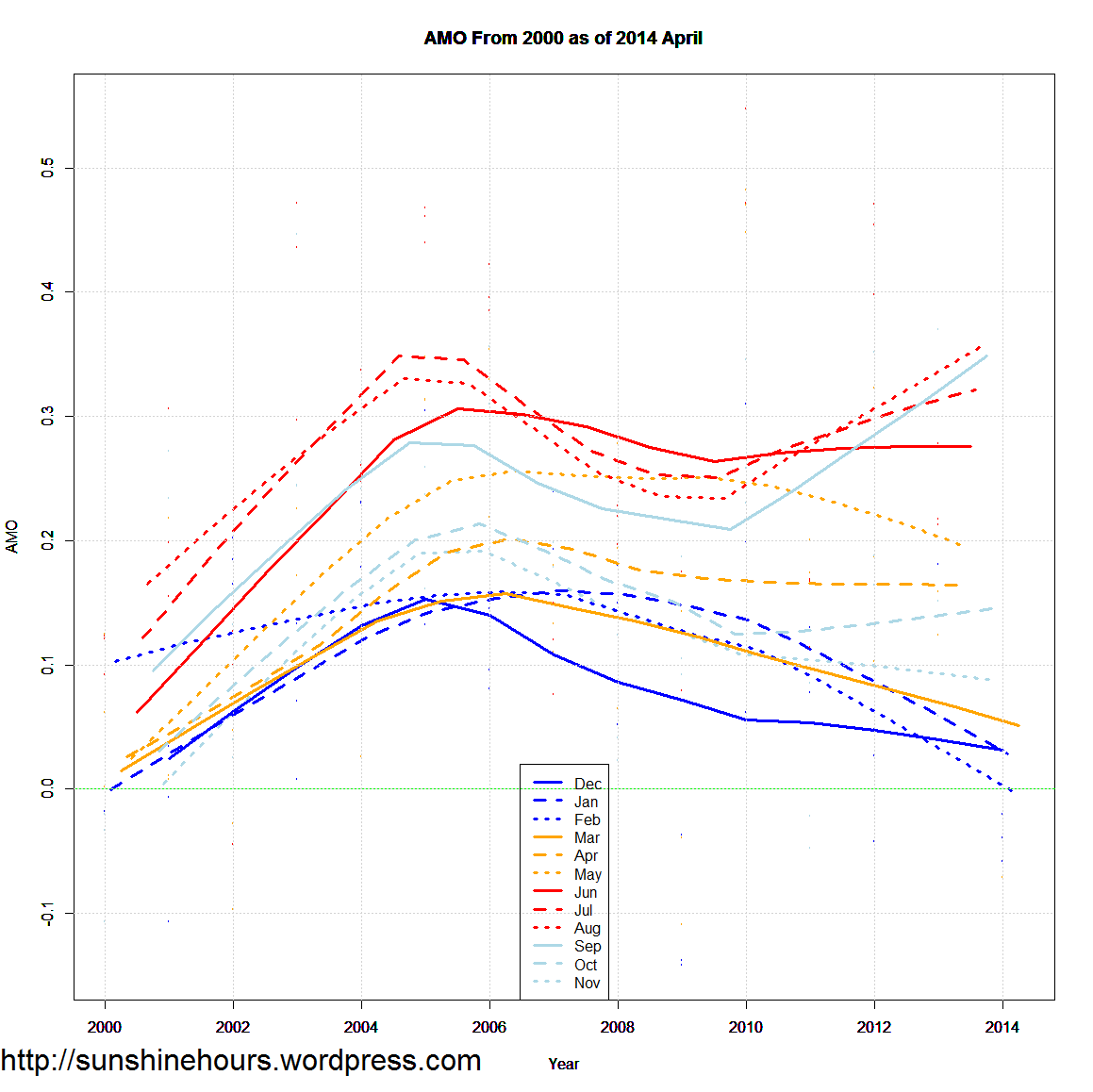
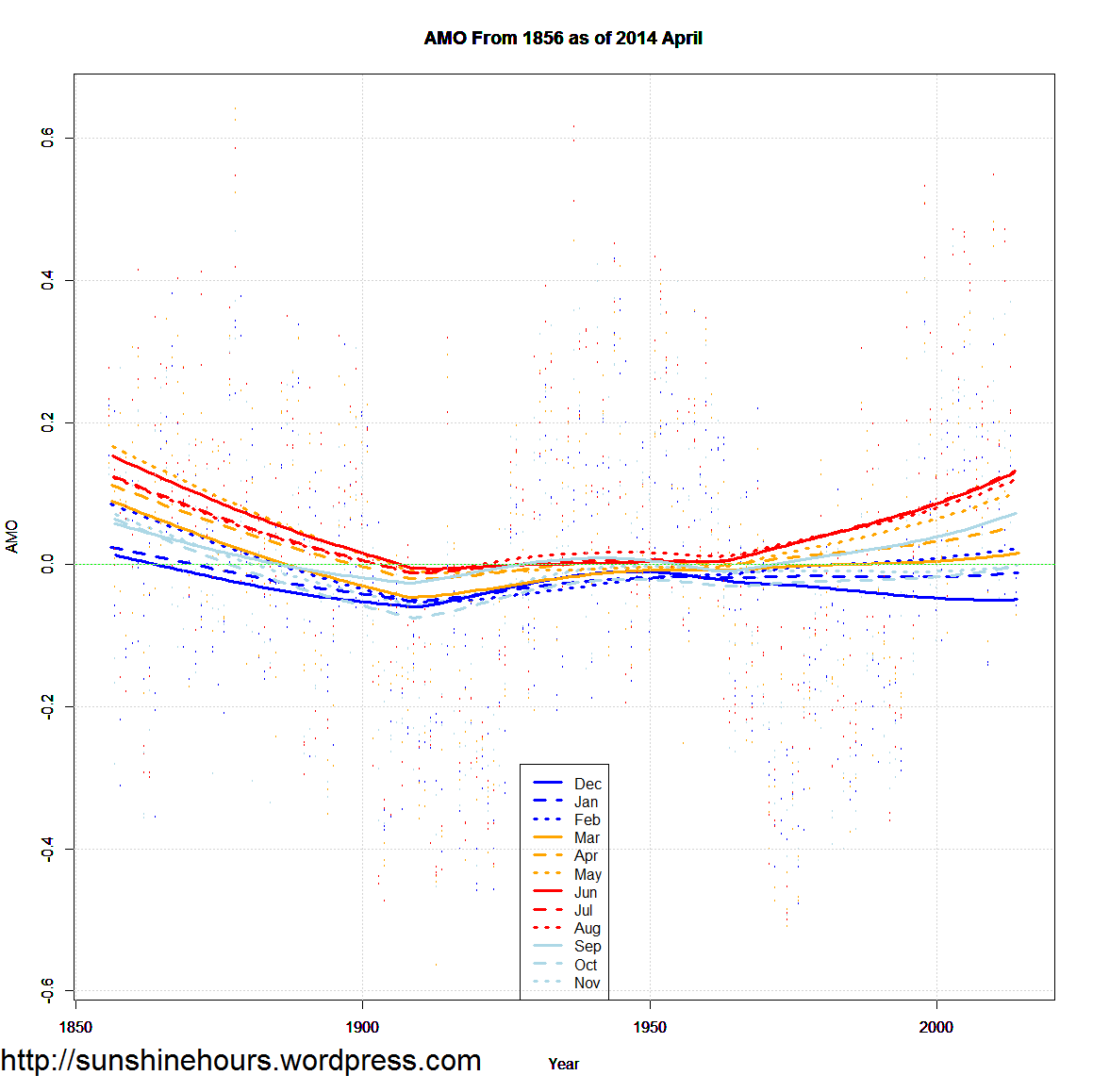
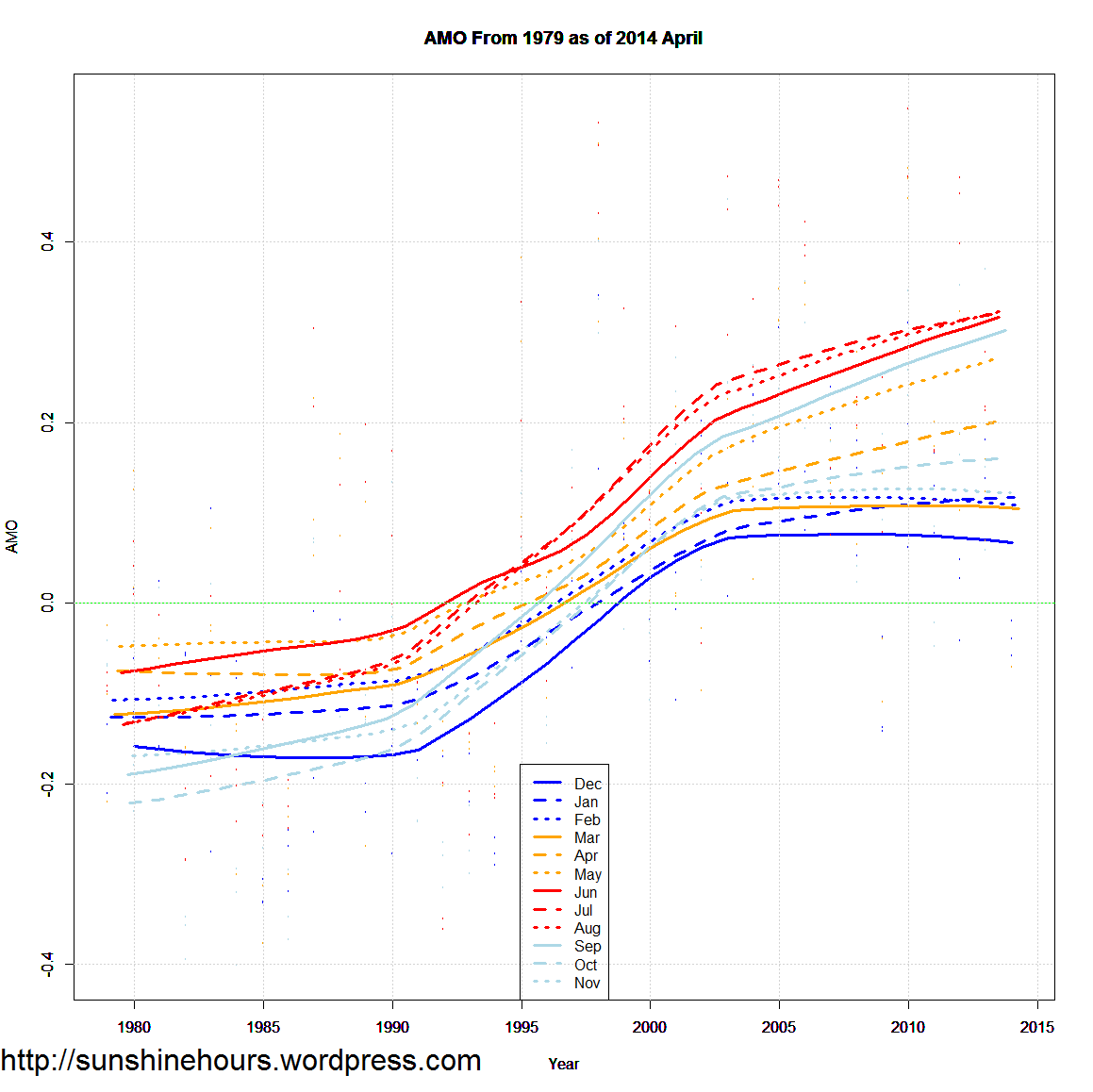
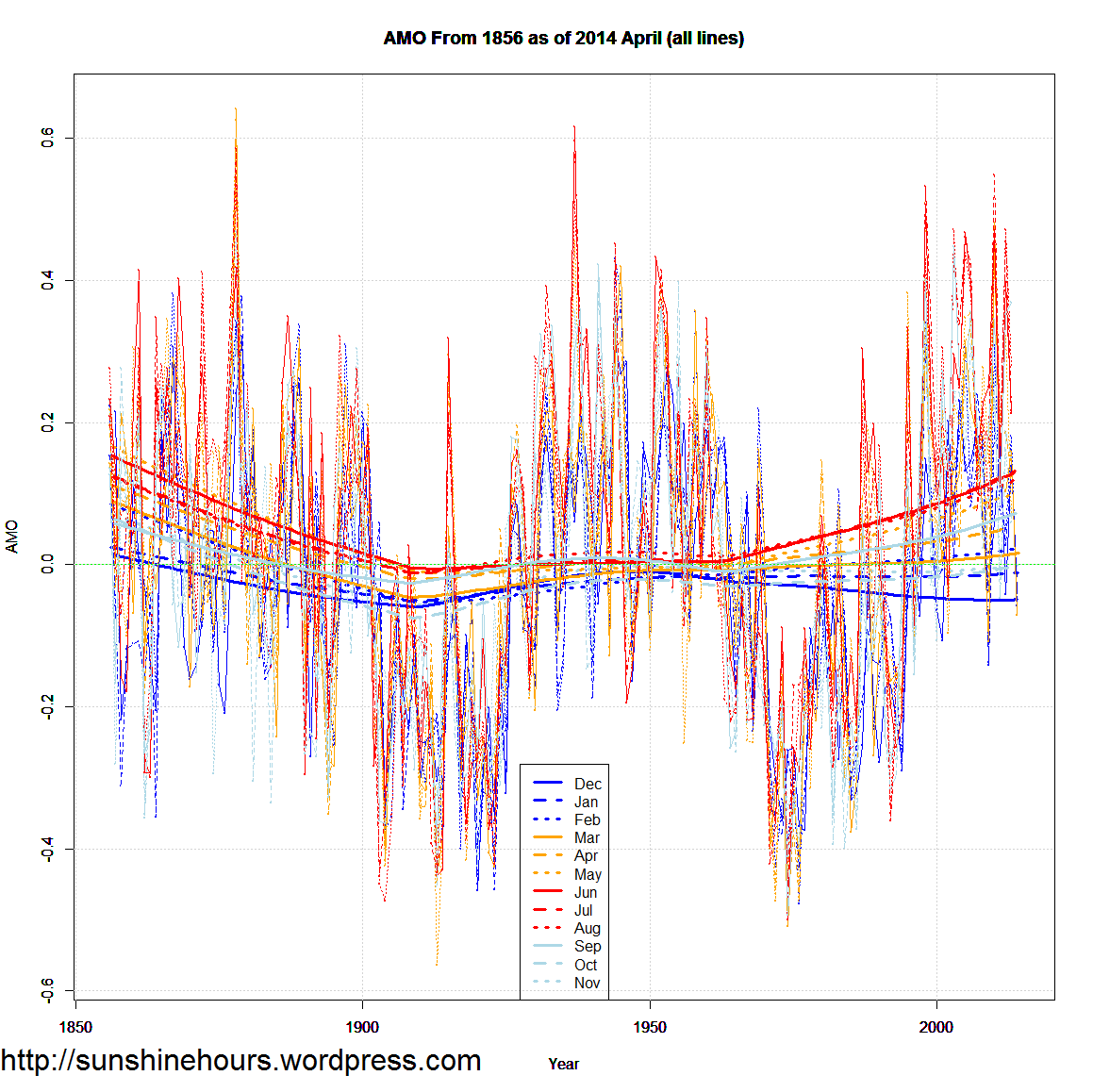
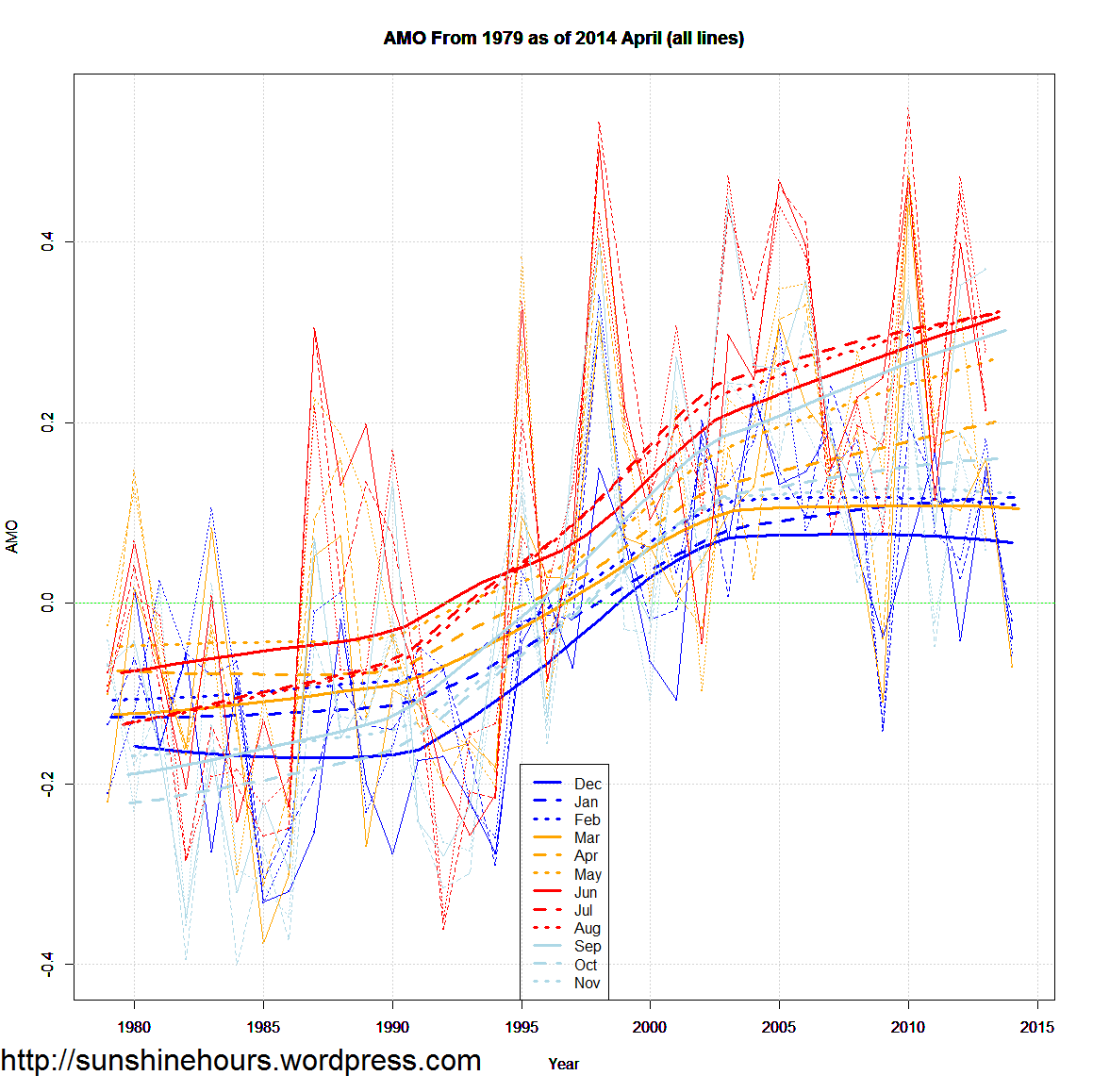
AMO Update as of April 2014

UPDATE: Sorry about the title. Not sure what happened. Fixed now.

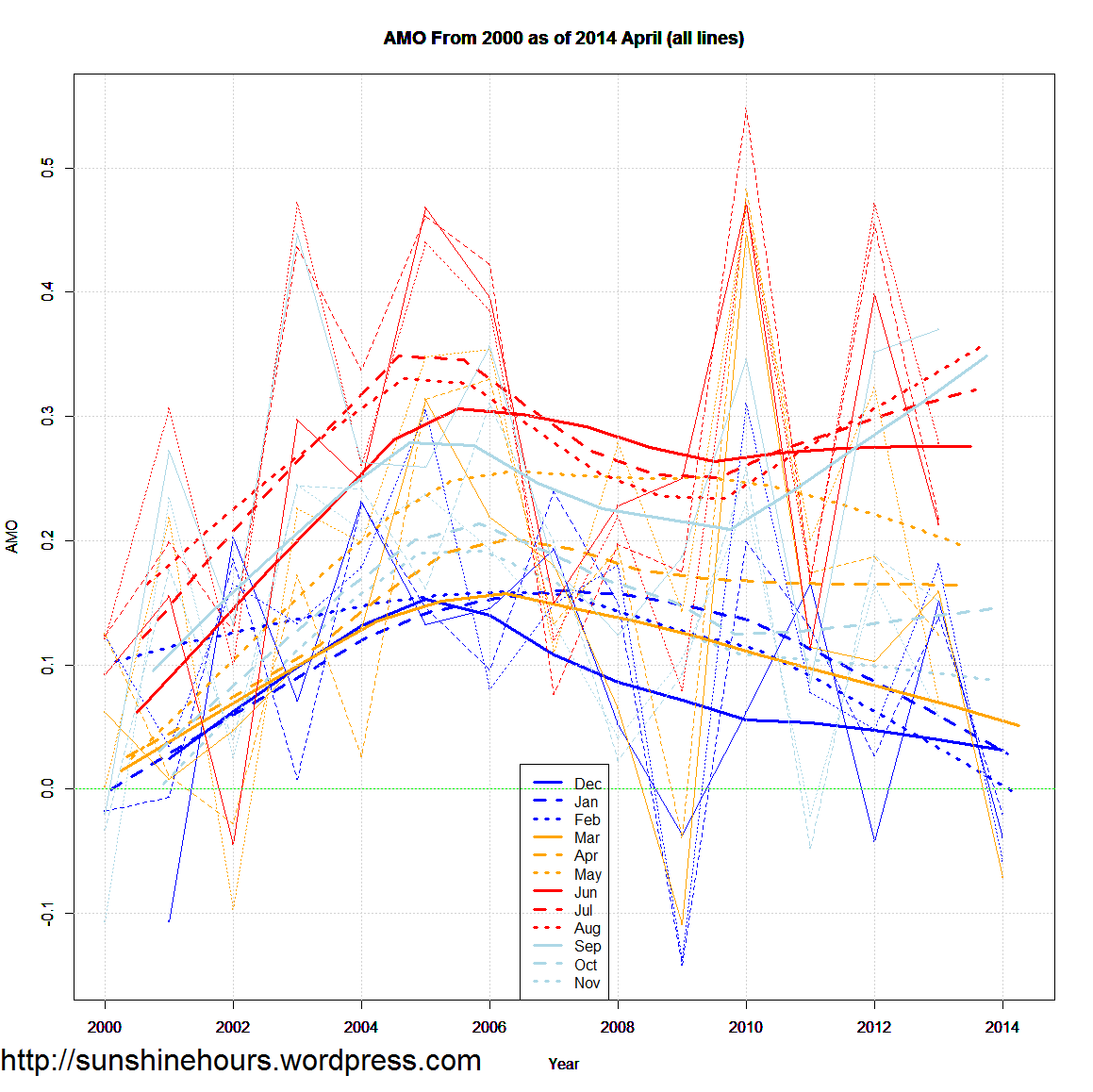
The AMO is definitely linked with climate cycles. And probably has more to do with Arctic Sea Ice than any other factor. This is loess trend of each month of the AMO on the same graph.

The winter months started trending down around 2005/2008. Spring months have been flattish since the same time. Only July-Sept have stayed high. June has been flat.

The first four months of 2014 were all negative.

AMO From 2000 as of 2014 April

Same graph, but from 1856 and 1979. The spread in months now seems to be repeating the pattern way back in 1856. But that could be an endpoint artifact.

AMO From 1856 as of 2014 April

AMO From 1979 as of 2014 April


Same graphs, but the data and the trends.

AMO From 1856 as of 2014 April (all lines) AMO From 1979 as of 2014 April (all lines) AMO From 2000 as of 2014 April (all lines)

Sea Ice Update June 1 2014 – Global Sea Ice Extent is 767,000 sq km Above ‘Normal’

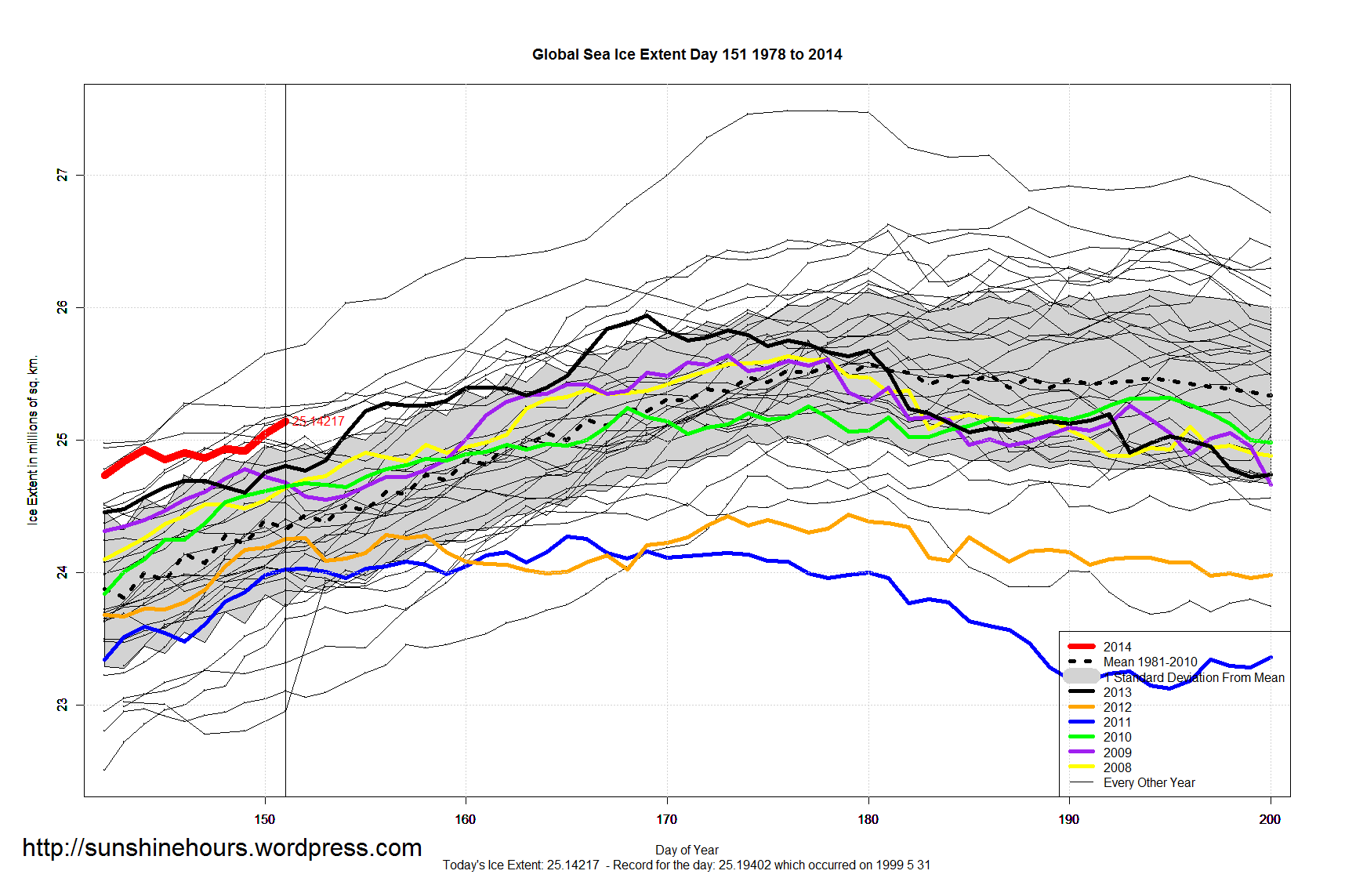
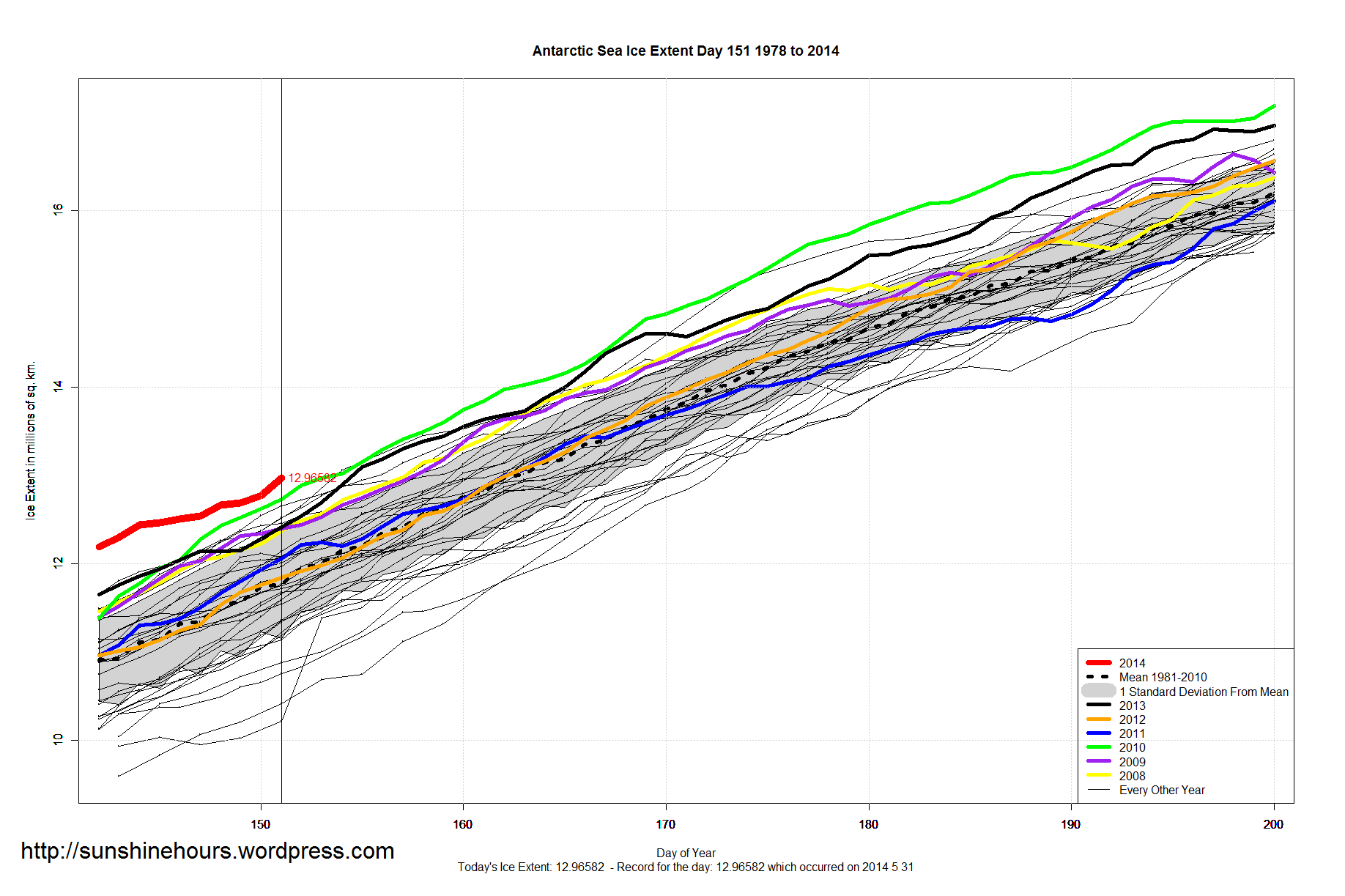
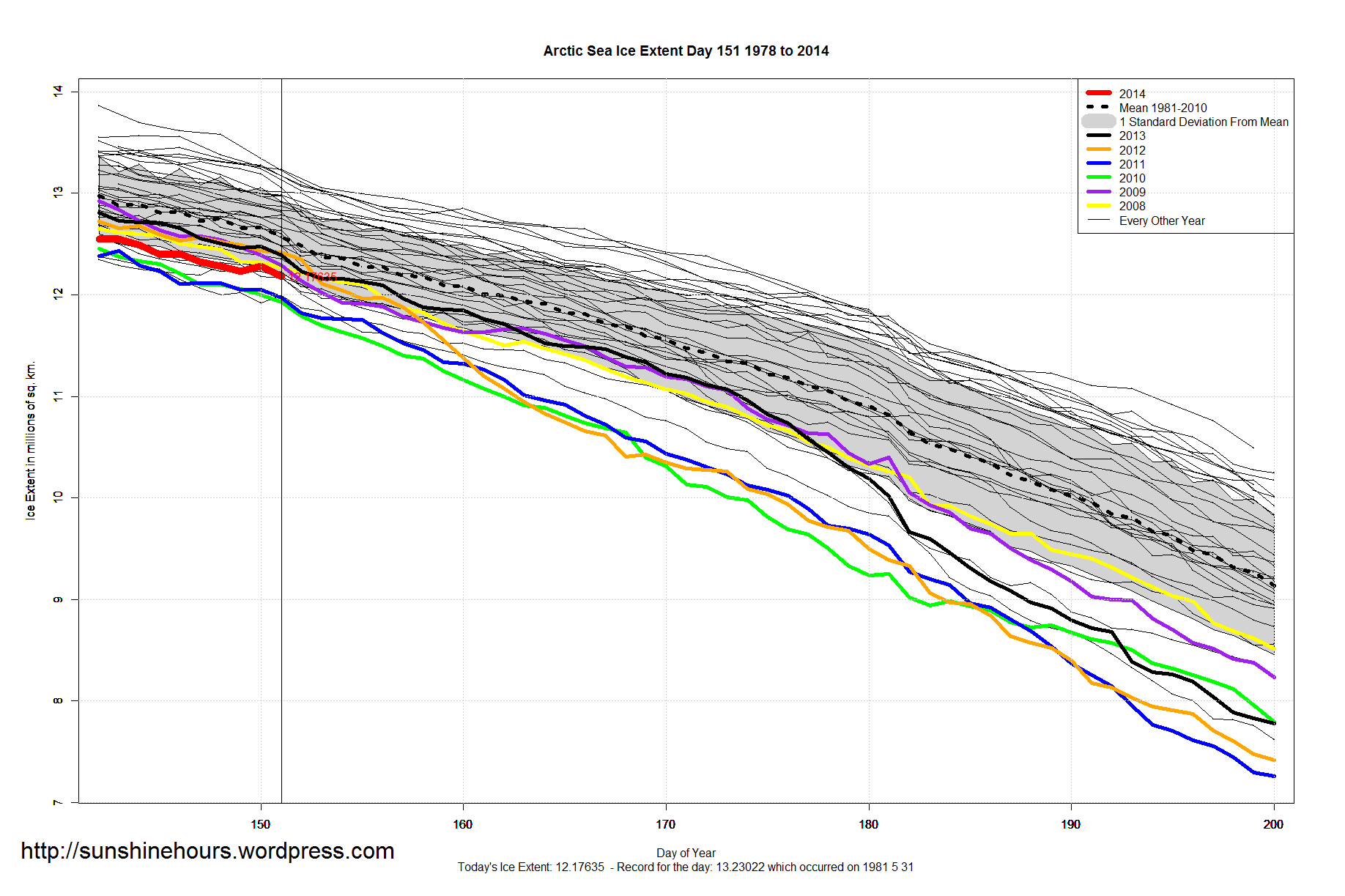
A quick update for sea ice extent for day 151 of 2014:

  • Global Sea Ice Extent is 767,000 sq km above the 1981-2010 mean.
  • Antarctic Sea Ice Extent is 1,233,000 sq km above the 1981-2010 mean. 84th daily record.
  • Arctic Sea Ice Extent is -466,000 sq km below the 1981-2010 mean.

NOAA Data here and here here.

Graphs below. Click for bigger.


Global_Sea_Ice_Extent_Zoomed_2014_Day_151_1981-2010

Antarctic_Sea_Ice_Extent_Zoomed_2014_Day_151_1981-2010

Arctic_Sea_Ice_Extent_Zoomed_2014_Day_151_1981-2010