Sea Ice Update July 13 2014 – A Little Rebound

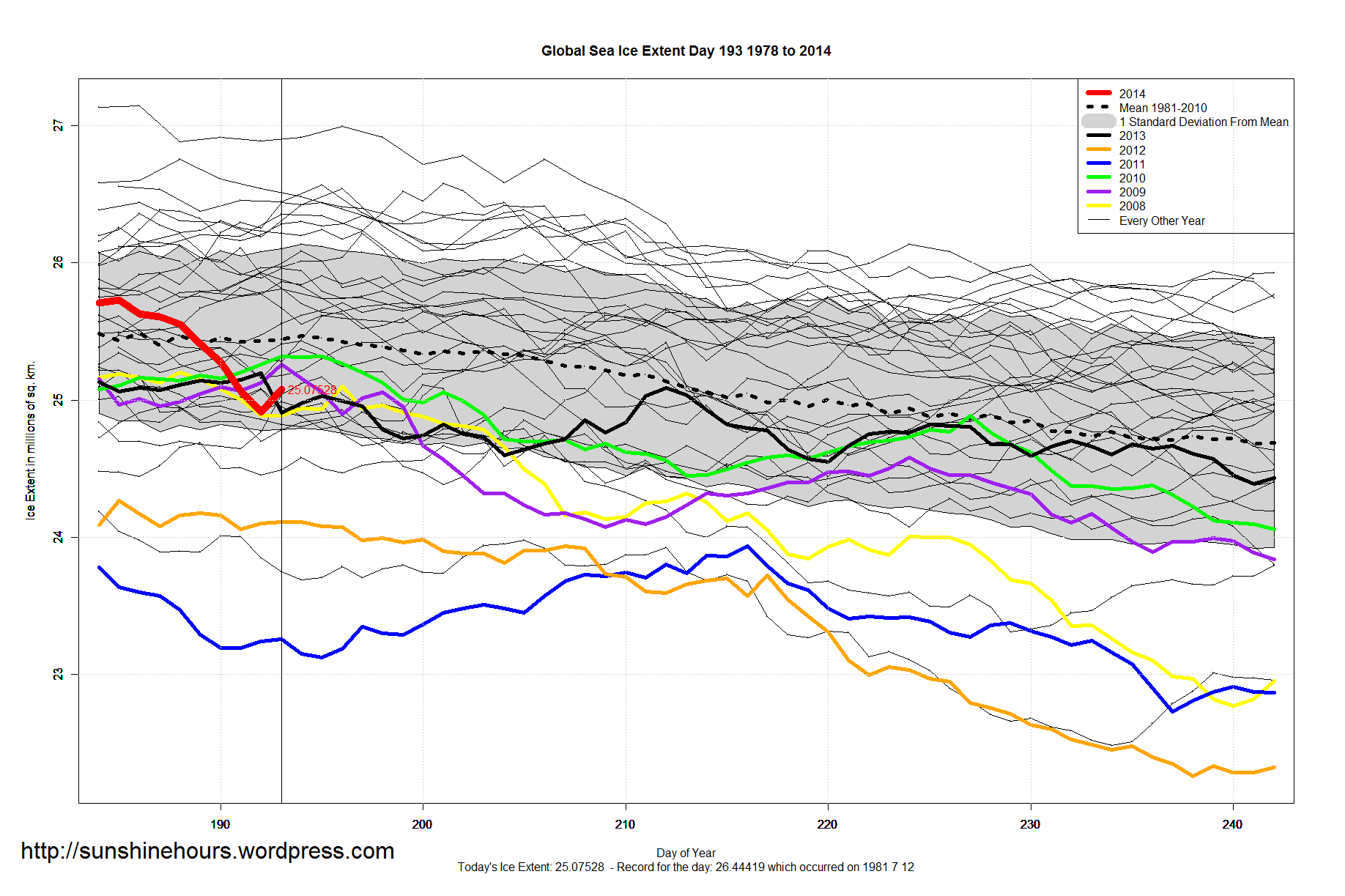
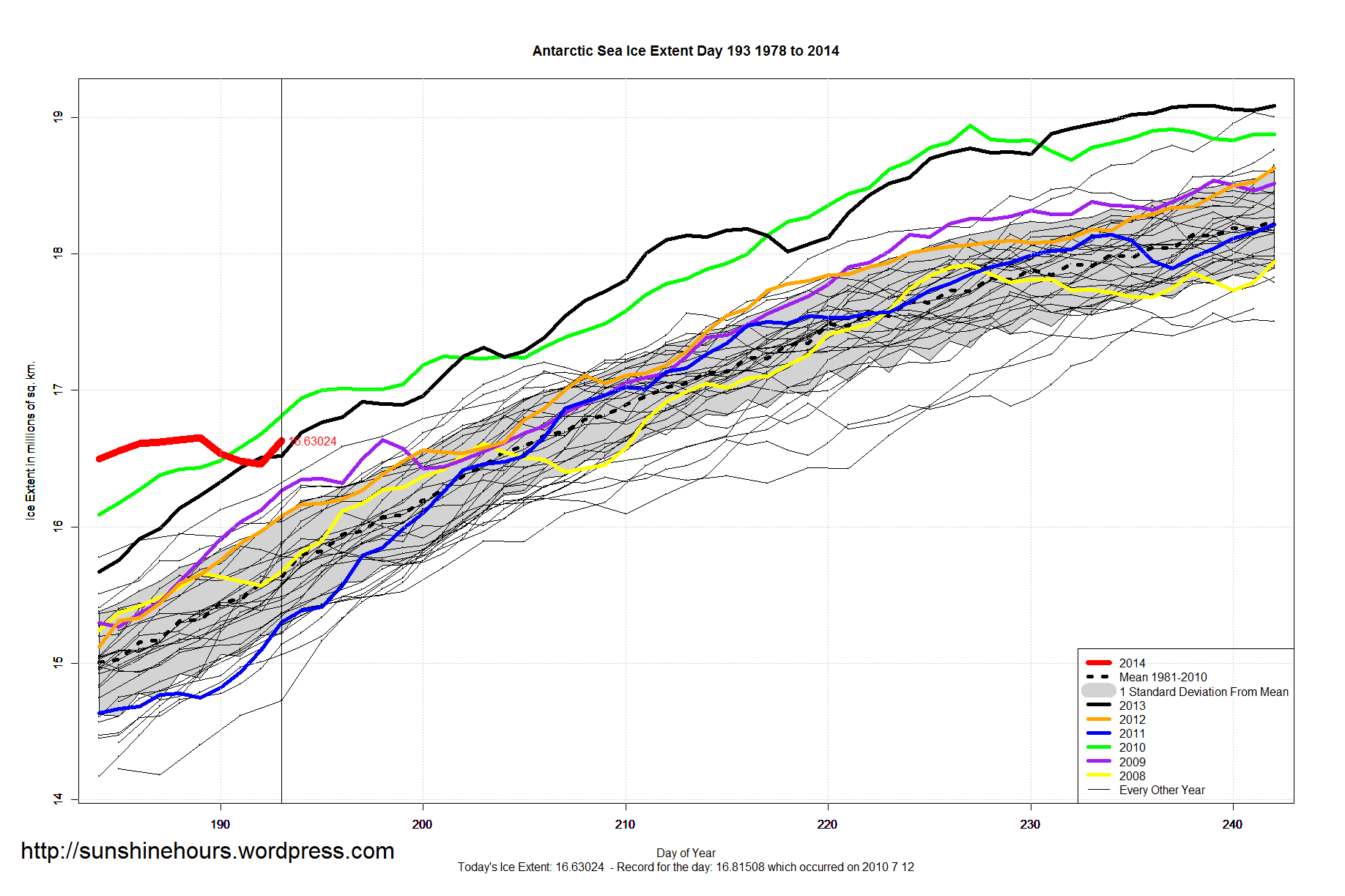
A quick update for sea ice extent for day 193 of 2014

  • Global Sea Ice Extent is -447,000 sq km below the 1981-2010 mean. That is ranked 24 for the day.
  • Antarctic Sea Ice Extent is 979,000 sq km above the 1981-2010 mean. That is ranked 2 for the day.
  • Arctic Sea Ice Extent is -1,427,000 sq km below the 1981-2010 mean. That is ranked 32 for the day.

NOAA Data here and here here. Graphs below. Click for bigger.

Global_Sea_Ice_Extent_Zoomed_2014_Day_193_1981-2010

Antarctic_Sea_Ice_Extent_Zoomed_2014_Day_193_1981-2010

Arctic_Sea_Ice_Extent_Zoomed_2014_Day_193_1981-2010

Big Surprise “Peer Review Ring”

I’m sure it is in fact no surprise that a “peer review ring” was operating at an academic journal.

“Every now and then a scholarly journal retracts an article because of errors or outright fraud. In academic circles, and sometimes beyond, each retraction is a big deal.

Now comes word of a journal retracting 60 articles at once.

The reason for the mass retraction is mind-blowing: A “peer review and citation ring” was apparently rigging the review process to get articles published.”

http://www.washingtonpost.com/news/morning-mix/wp/2014/07/10/scholarly-journal-retracts-60-articles-smashes-peer-review-ring/

Original article at Retraction Watch:

SAGE Publications busts “peer review and citation ring,” 60 papers retracted

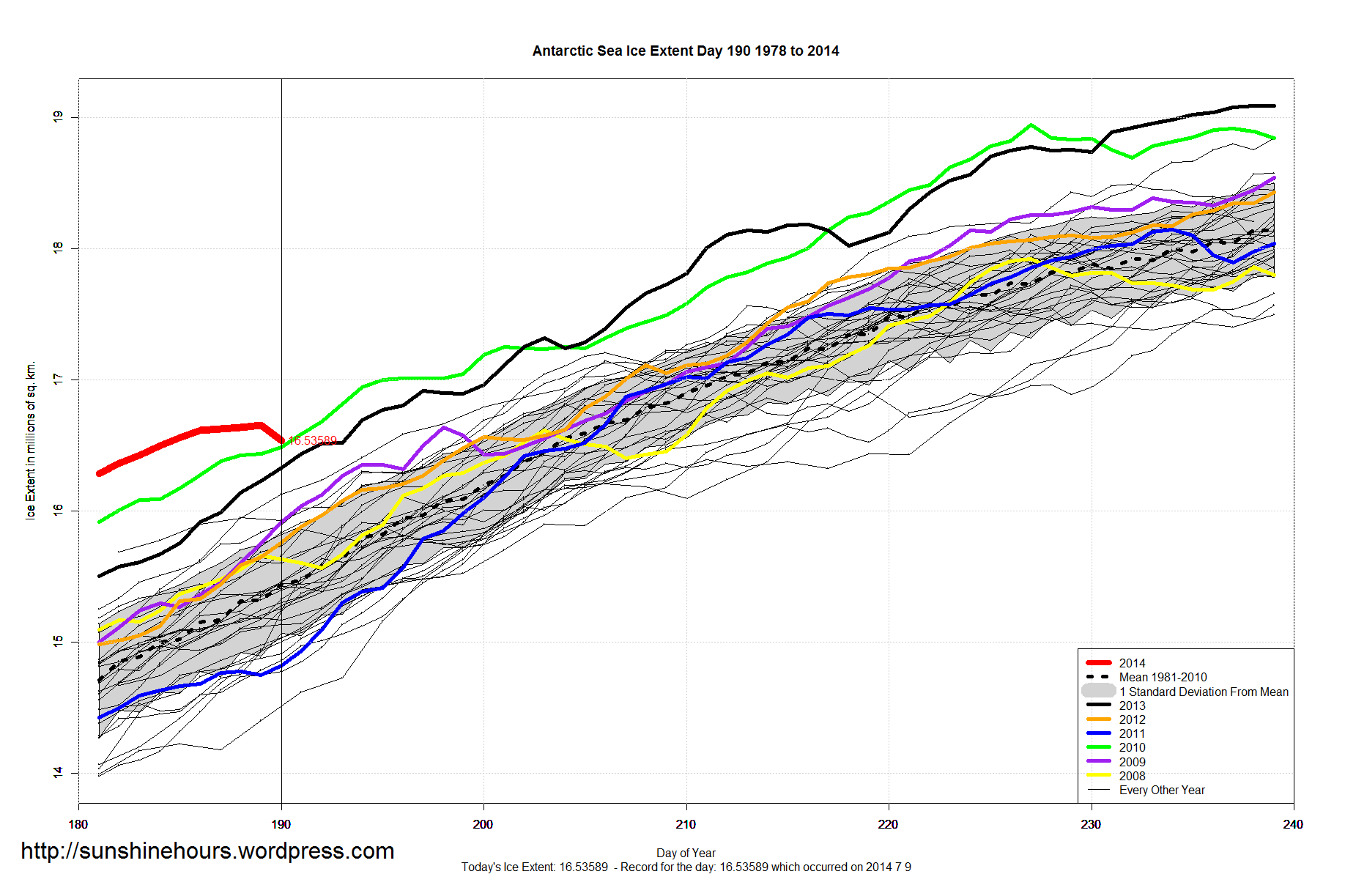
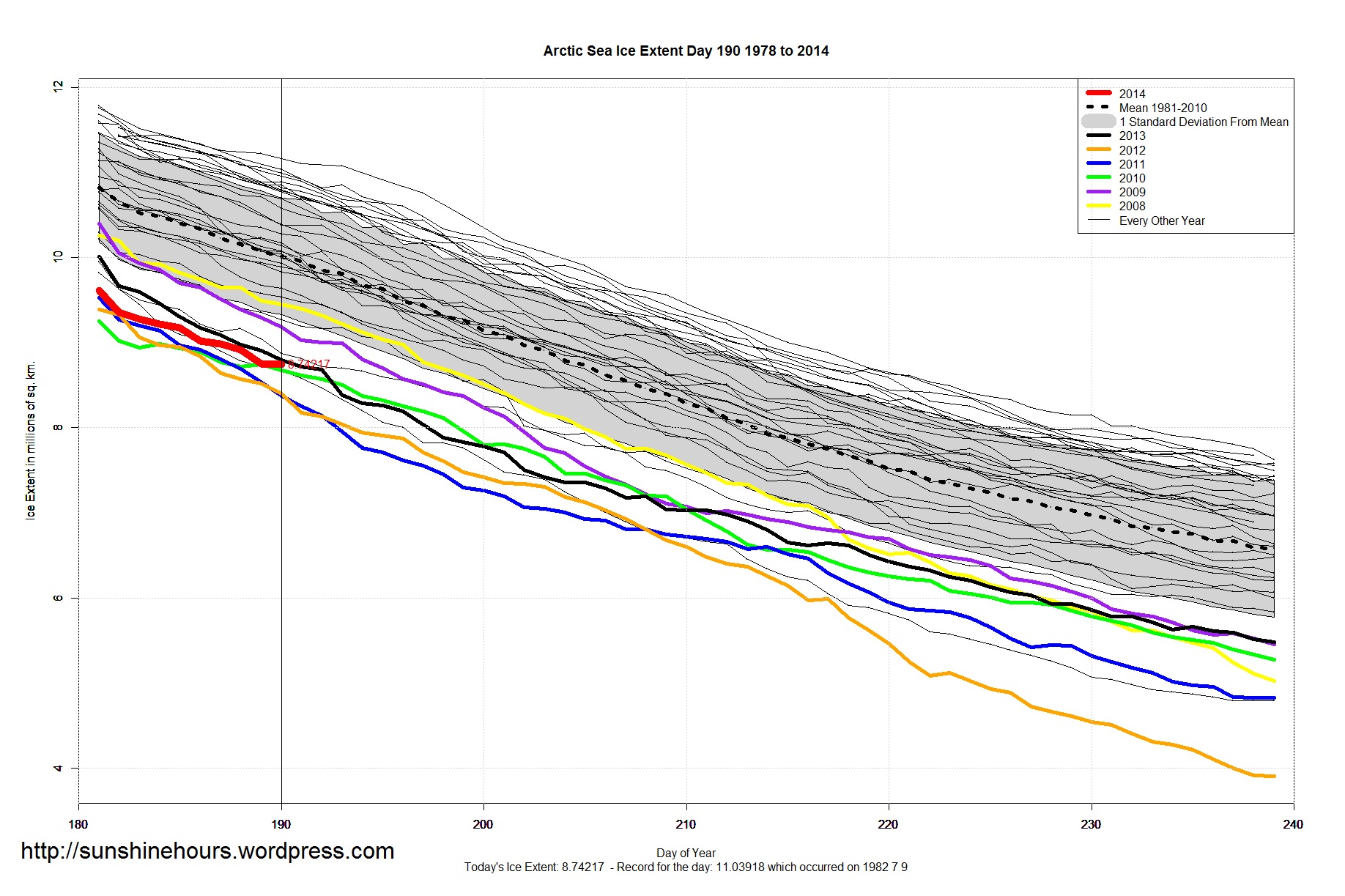
Sea Ice Update July 10 2014 -Antarctica Dives

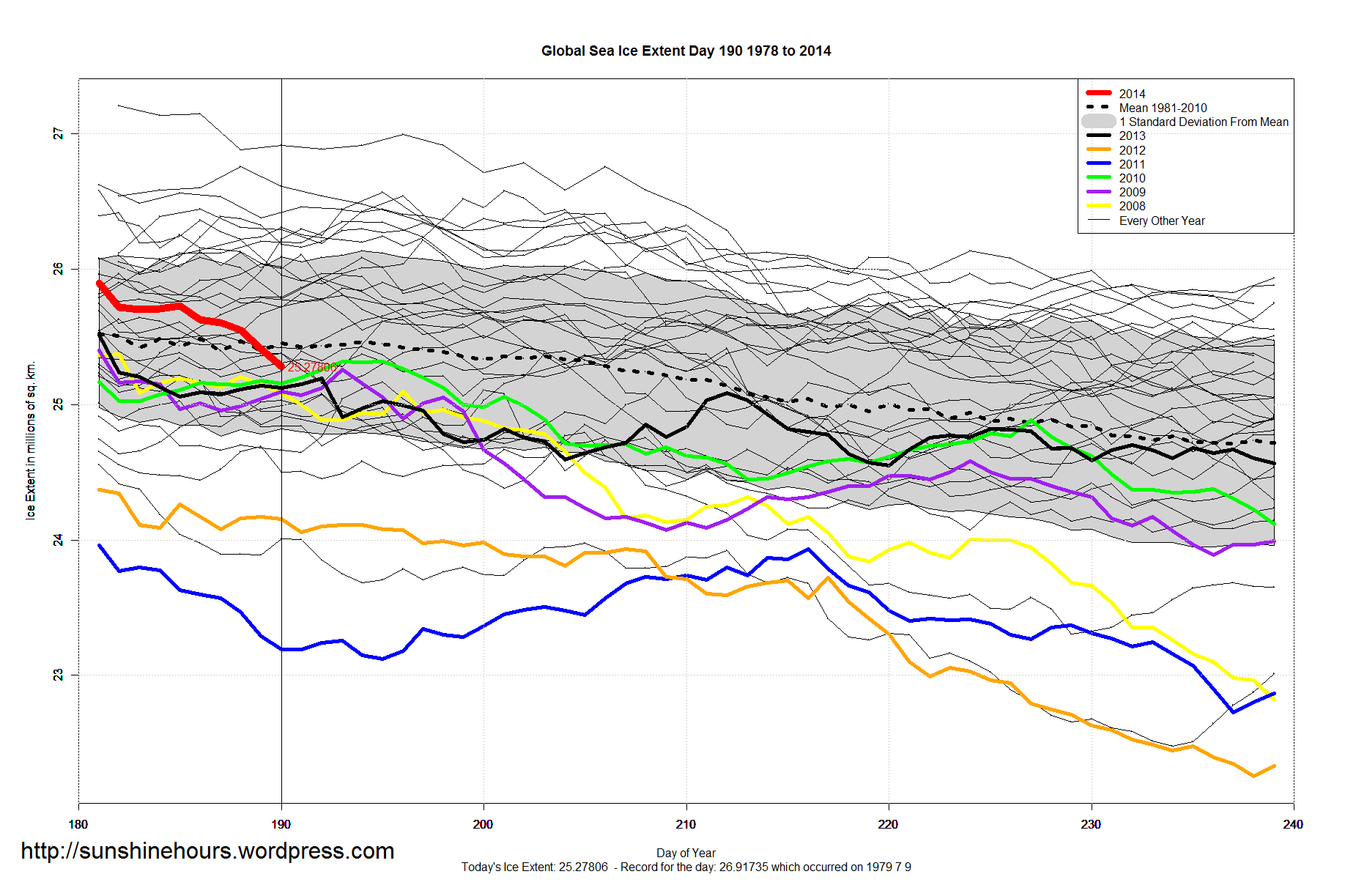
A quick update for sea ice extent for day 190 of 2014

  • Global Sea Ice Extent is -230,000 sq km below the 1981-2010 mean. That is ranked 21 for the day.
  • Antarctic Sea Ice Extent is 1,137,000 sq km above the 1981-2010 mean. That is ranked 1 for the day.
  • Arctic Sea Ice Extent is -1,367,000 sq km below the 1981-2010 mean. That is ranked 32 for the day.

NOAA Data here and here here. Graphs below. Click for bigger.

Global_Sea_Ice_Extent_Zoomed_2014_Day_190_1981-2010

Antarctic_Sea_Ice_Extent_Zoomed_2014_Day_190_1981-2010

Arctic_Sea_Ice_Extent_Zoomed_2014_Day_190_1981-2010

USHCN Infilling – A rebuttal to Nick Stokes

Nick Stoke and Zeke Hausfather don’t like my graphs showing a difference between Estimated (infilled) and non-Estimated (not infilled)  USHCN data

Nick said:

“The difference between average estimated and average non-estimated, doesn’t reflect estimation. It just reflects changes in the kind of stations that were being estimated.

For some reason, they were more likely to be warmer. I don’t know why, but they were. It’s just the wrong way to do it.”

I’m not sure I believe in coincidences.

I believe Nick and Zeke both created an anomaly baseline for each month for each station. Nick used 1900 to 2013. Zeke said he used 1961-1990.

Neither of them added trend lines.

I believe both used all the data (infilled and non-infilled). (As of my posting this they had not confirmed). I disagree with that. Infilled data should not be used in the baseline.

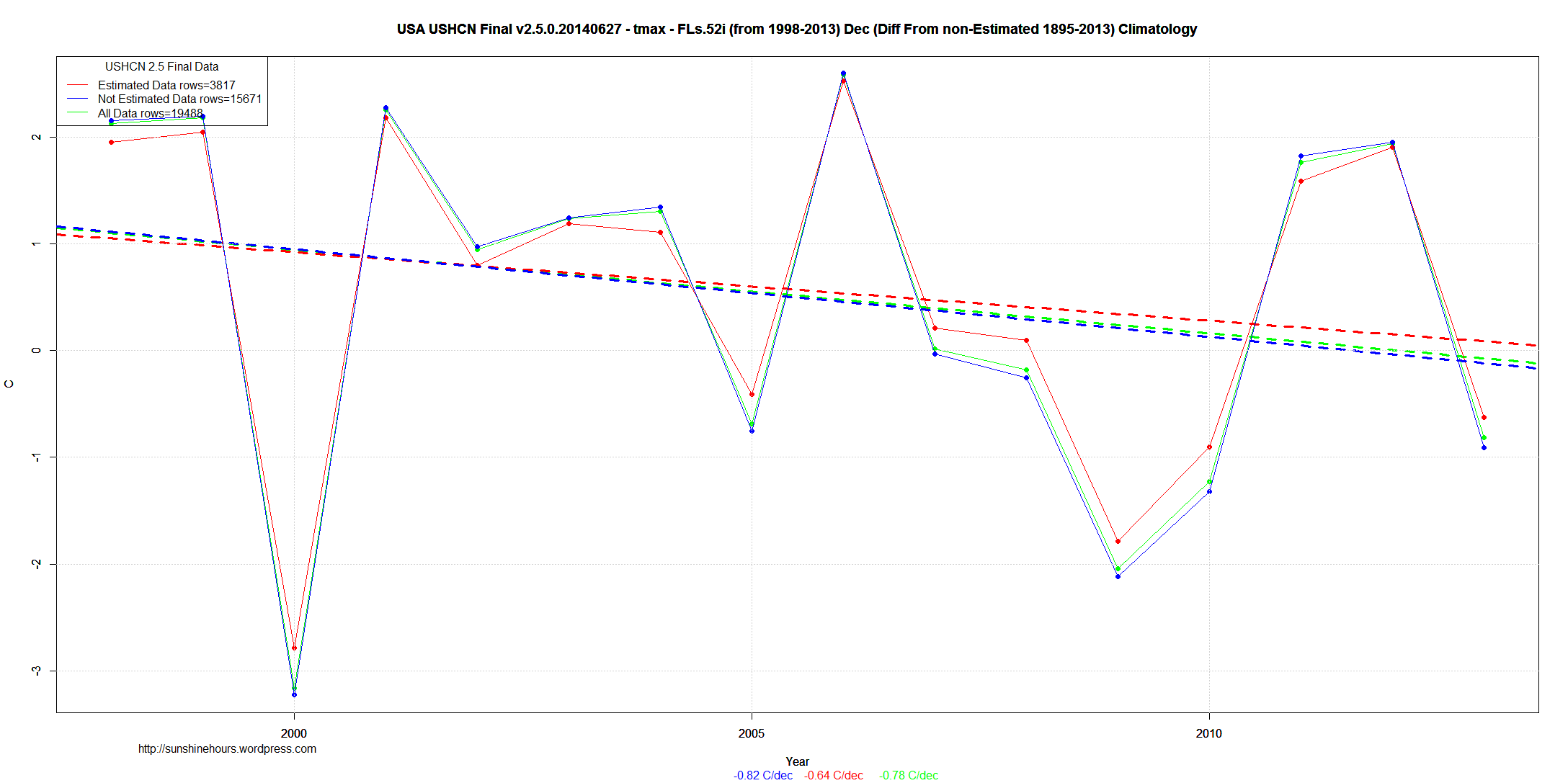
As an example of what infilling does using the difference by station from the 1895-2013 baseline here is Dec 1998 to 2013 Tmax.

In this case, the real data had a downwards trend of -0.82C/decade and the infilled data was -0.64C/decade which is .18C/decade higher not because infilled data was hotter, but because it was less cold.
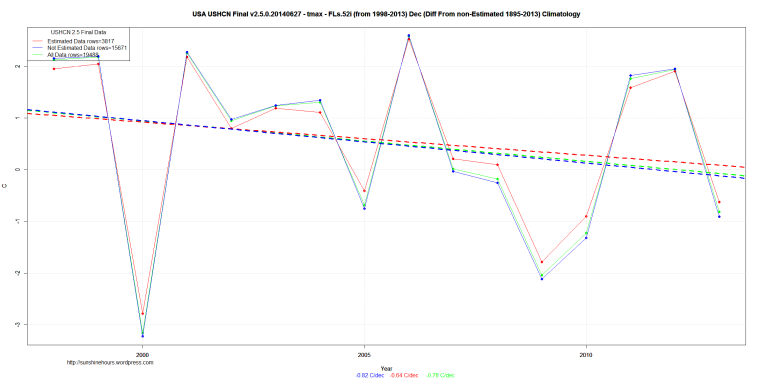
USA USHCN Final v2.5.0.20140627 - tmax - FLs.52i (from 1998-2013) Dec (Diff From non-Estimated 1895-2013) Climatology

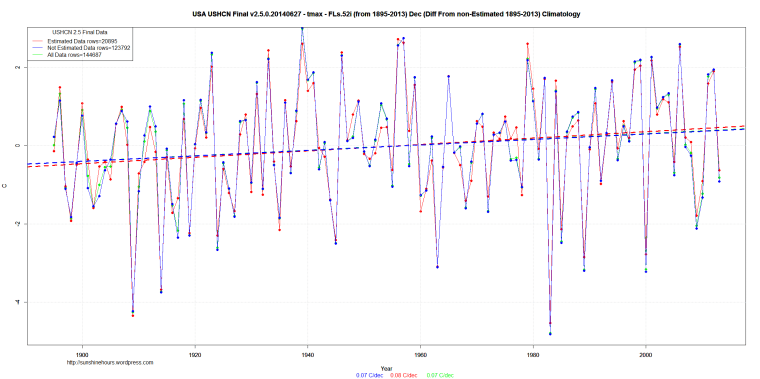
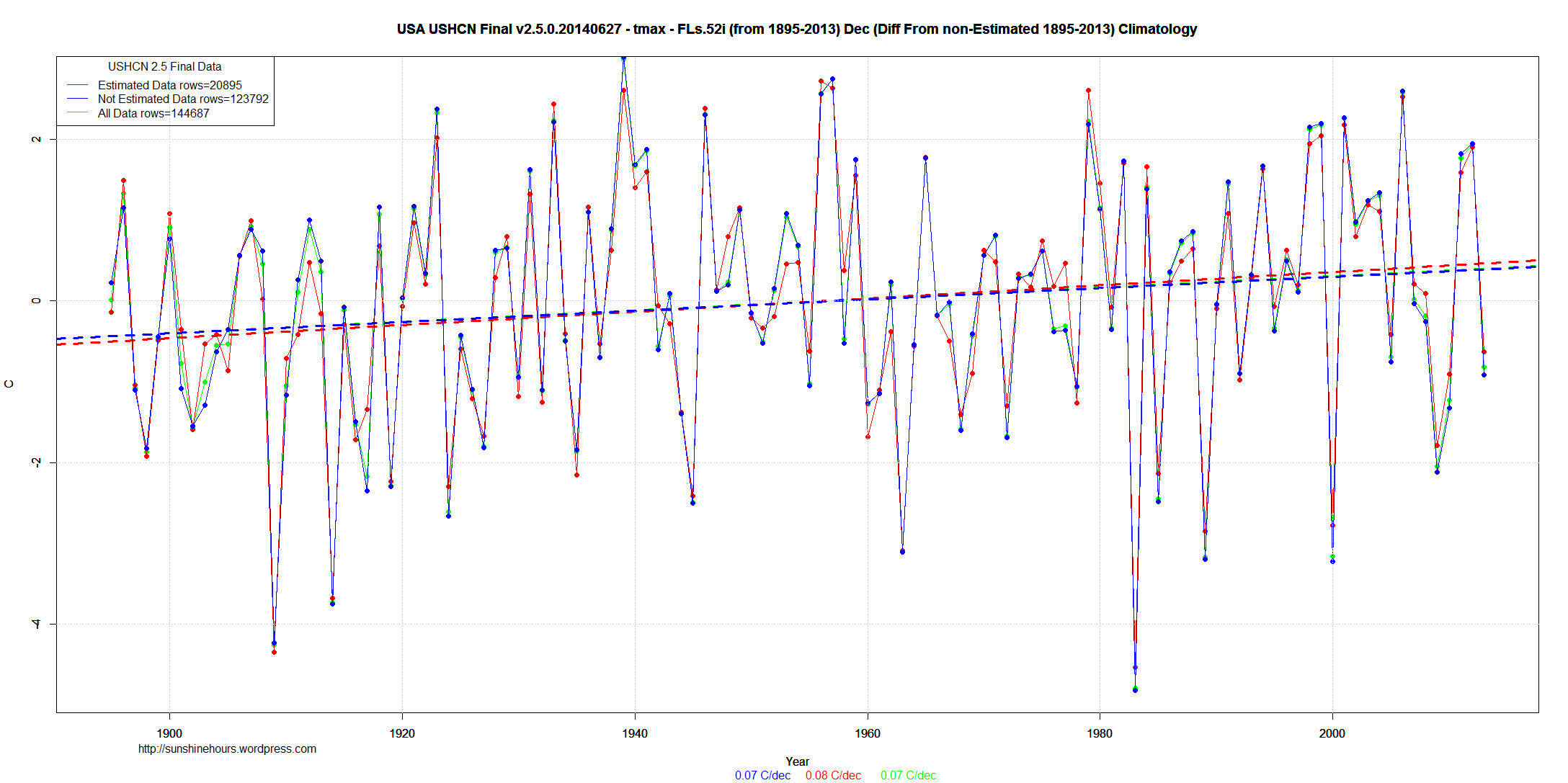
From 1895 to 2013 the infilled trend is consistently .02C/decade to .03C/decade higher than the non-infilled trend.

The red dots are higher on the 1980 and later side of the graph while they are lower on the pre-1960 part of the graph.

Cooling the past, warming the present.
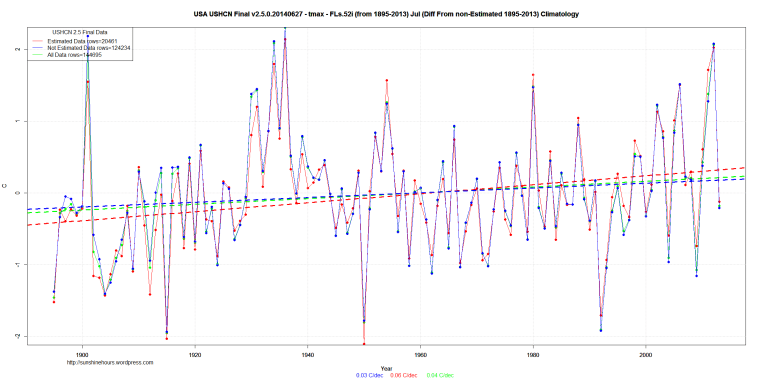
 

USA USHCN Final v2.5.0.20140627 - tmax - FLs.52i (from 1895-2013) Jul (Diff From non-Estimated 1895-2013) Climatology


USA USHCN Final v2.5.0.20140627 - tmax - FLs.52i (from 1895-2013) Dec (Diff From non-Estimated 1895-2013) Climatology


MASIE July 9 2014 – A Day of Freezing for Some

July 9 2014  MASIE Update – Some regions froze a little.

Data here.

Region Start End Last 101 Last 28 Last 14 Last 7 Last 3 Last 1
Baffin Bay Gulf of St. Lawrence 1,688,530 250,737 -1,437,793 -658,605 -448,500 -236,619 -43,837 0
Hudson Bay 1,260,903 610,879 -650,024 -559,498 -305,907 -167,272 -14,816 521
Greenland Sea 603,416 432,155 -171,260 -193,575 -118,708 -78,874 -48,210 -11,684
Laptev Sea 897,845 472,313 -425,531 -213,717 -202,093 -78,786 -40,053 -16,419
Barents Sea 645,917 109,185 -536,732 -155,345 -61,750 -68,561 -7,746 -924
Kara Sea 933,859 731,000 -202,859 -119,773 -130,822 -39,214 9,242 37,568
Chukchi Sea 966,006 709,240 -256,766 -157,563 -39,239 -35,027 3,907 -475
Beaufort Sea 1,070,445 891,689 -178,756 -144,715 -59,571 -7,929 11,996 14,254
Canadian Archipelago 853,214 743,808 -109,406 -43,908 -14,390 -3,476 6,530 6,940
Bering Sea 697,324 8,943 -688,380 -72,766 -23,812 -2,371 -4,462 -468
East Siberian Sea 1,087,137 1,012,983 -74,154 -998 -21,951 -2,352 -46 37
Central Arctic 3,221,921 3,227,093 5,172 -15,005 -15,714 -2,067 -4,366 2,275
Baltic Sea 15,337 0 -15,337 0 0 0 0 0
Sea of Okhotsk 853,240 0 -853,240 -20,538 -32 0 0 0
Yellow Sea 0 0 0 0 0 0 0 0
Northern Hemisphere (Total) 14,805,115 9,201,538 -5,603,577 -2,355,637 -1,442,505 -722,563 -131,861 31,624
NH (Average Loss per Day) -54,937 -84,130 -103,036 -103,223 -43,954 31,624

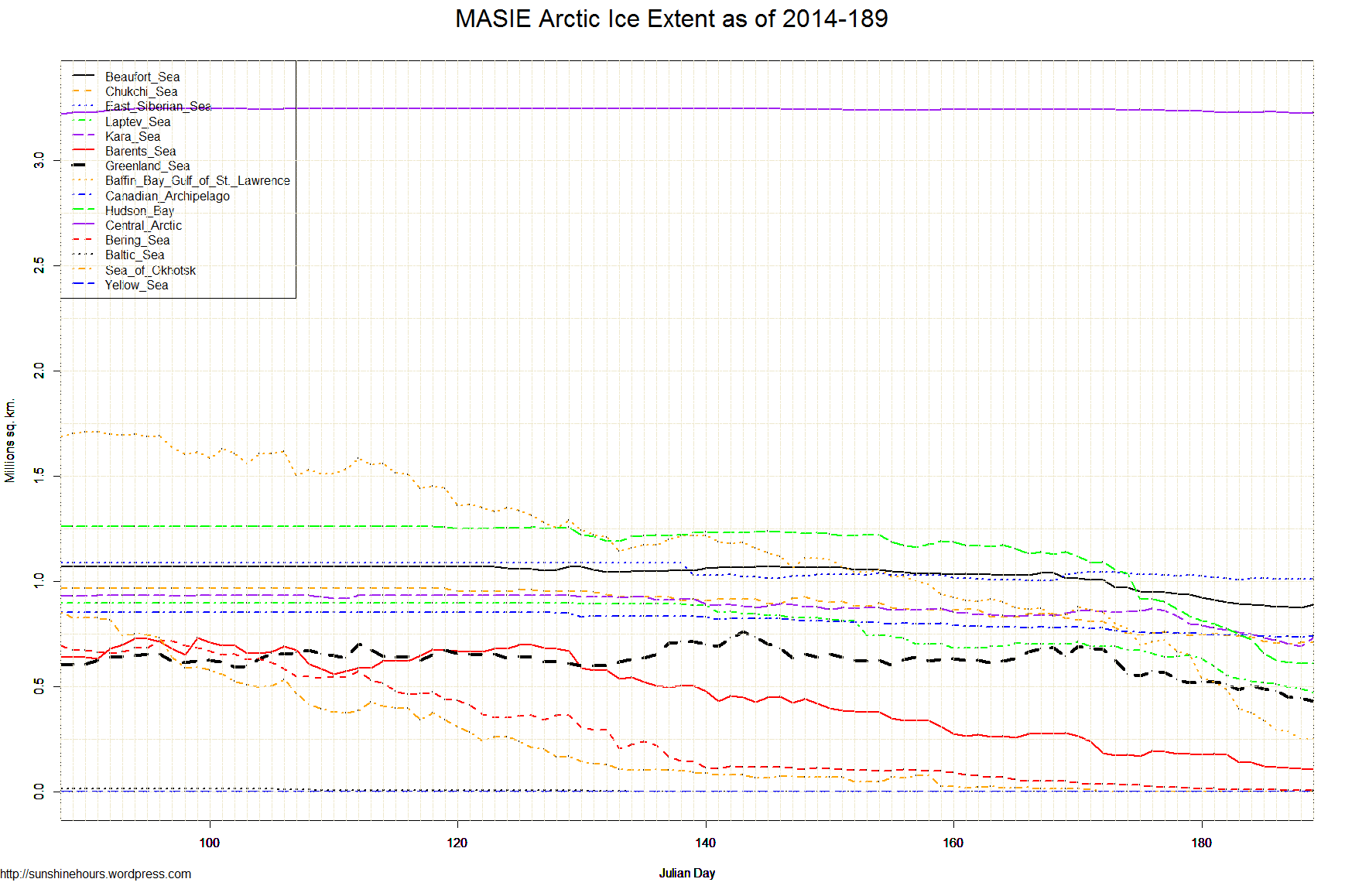
MASIE Arctic Ice Extent as of 2014-189

Sea Ice Update July 8 2014 -Antarctica 2014 Has Most Daily Records Ever!

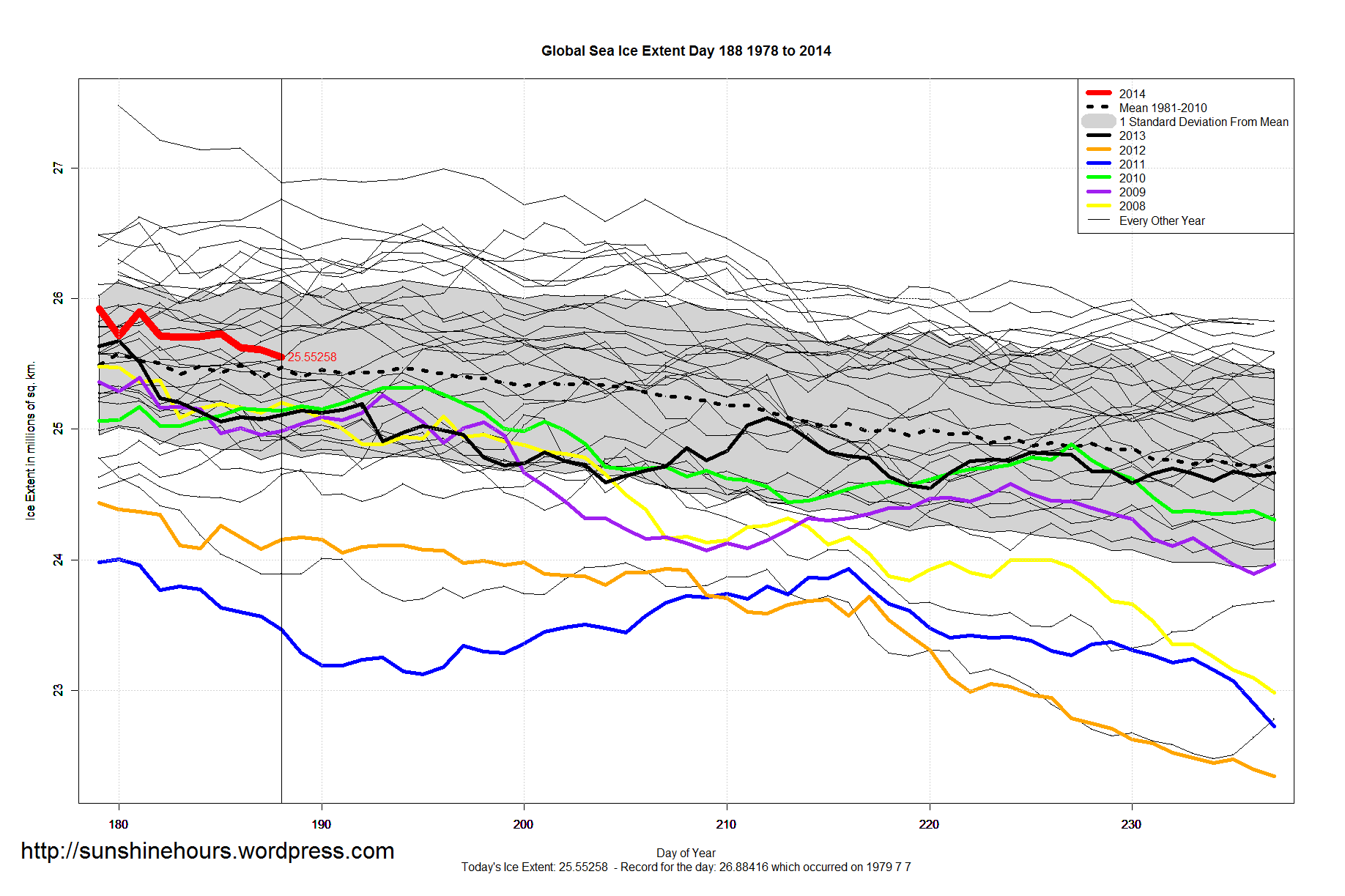
A quick update for sea ice extent for day 188 of 2014

  • Global Sea Ice Extent is 33,000 sq km above the 1981-2010 mean. That is ranked 16 for the day.
  • Antarctic Sea Ice Extent is 1,369,000 sq km above the 1981-2010 mean. That is ranked 1 for the day.
  • Arctic Sea Ice Extent is -1,336,000 sq km below the 1981-2010 mean. That is ranked 32 for the day.

This is a chart of the number of daily records and 2nd,3rd etc.  2014 now has more daily records (First) than any other year.

2014 is in 3rd place for top 5 … but it is only July 8. 180 days to go in the year.

There are no daily records from before 2007!

Year First Second Third Fourth Fifth Top 5
2014

121

25 13 28 1 188
2013 113 101 60 42 12 328
2008 59 82 29 19 19 208
2010 47 81 26 16 8 178
2007 21 0 2 3 10 36
2012 5 22 14 10 29 80
2009 0 6 41 43 34 124
2003 0 1 25 36 43 105
2006 0 27 29 21 12 89
2000 0 4 15 19 10 48
2005 0 4 20 8 14 46
1998 0 4 16 11 14 45
1996 0 0 19 8 16 43
1995 0 0 3 9 29 41
2001 0 0 14 11 13 38
1979 0 2 16 9 9 36
2004 0 5 4 11 16 36
1994 0 0 8 13 11 32
1988 0 1 0 10 16 27
1982 0 0 2 10 9 21
1985 0 0 5 7 7 19
1980 0 1 3 10 4 18
1984 0 0 1 4 6 11
1999 0 0 0 0 10 10
2011 0 0 0 3 7 10
1981 0 0 1 4 2 7
1986 0 0 0 1 3 4
1991 0 0 0 0 1 1
2002 0 0 0 0 1 1

NOAA Data here and here here. Graphs below. Click for bigger.

Global_Sea_Ice_Extent_Zoomed_2014_Day_188_1981-2010

Antarctic_Sea_Ice_Extent_Zoomed_2014_Day_188_1981-2010

Arctic_Sea_Ice_Extent_Zoomed_2014_Day_188_1981-2010

Have You Seen This Sentence: “… this study does not question the existence of a long-term anthropogenic warming trend during the 20th century.”

Have you ever read a paper on climate science and seen a sentence like this:

“We would like to emphasise that this study does not question the existence of a long-term anthropogenic warming trend during the 20th century.”

Guess what. That means the paper has probably been censored by the climate gatekeepers running the journals.


GWPF has the story from The Times:

“Research that questioned the accuracy of computer models used to predict global warming was “censored” by climate scientists, it was alleged yesterday.

One academic reviewer said that a section should not be published because it “would lead to unnecessary confusion in the climate science community”. Another wrote: “This entire discussion has to disappear.”

The paper suggested that the computer models used by the UN’s Intergovernmental Panel on Climate Change (IPCC) were flawed, resulting in human influence on the climate being exaggerated and the impact of natural variability being underplayed.


A third reviewer was much more supportive of the paper, saying its “very provocative” suggestion that climate models were flawed was “so interesting that it needs to be discussed more fully”.

However, almost the entire paragraph was deleted, along with the conclusion that “the average sensitivity of the IPCC models may be too high”.

The journal chose to publish only the opening sentence: “We would like to emphasise that this study does not question the existence of a long-term anthropogenic warming trend during the 20th century.


Misleading Information About USHCN At Judith Curry’s Blog

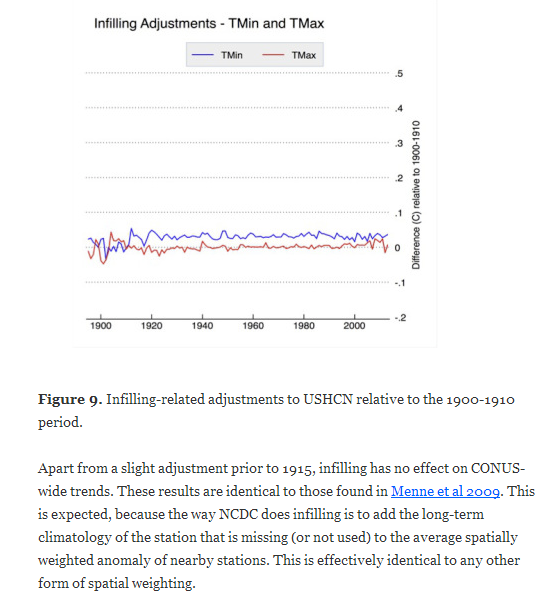
Zeke has an post over at Judith Curry’s blog where he makes a claim that “infill has no effect on CONUS-wide trends” (among other claims).

Zeke_Infilling_Curry


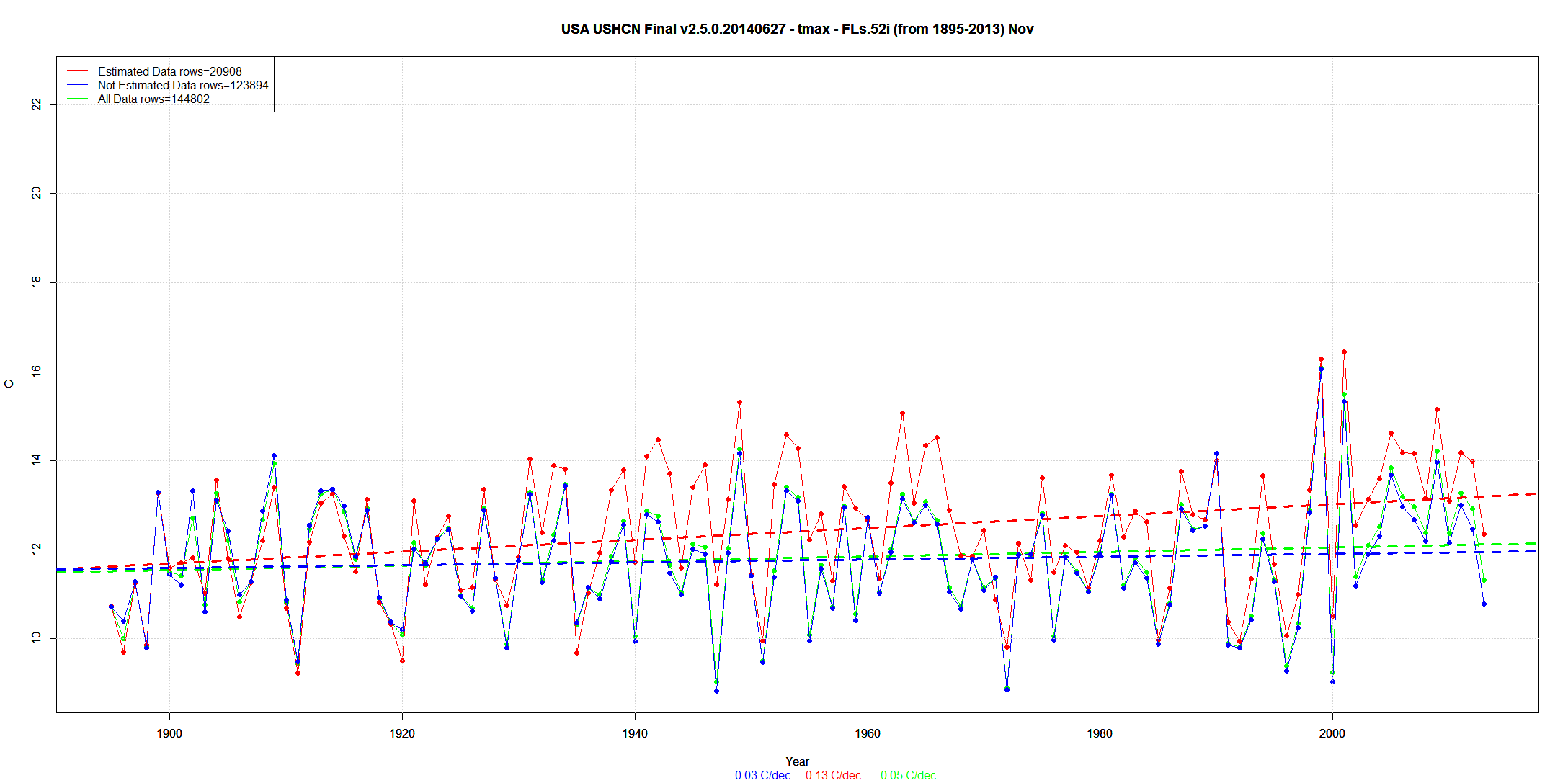
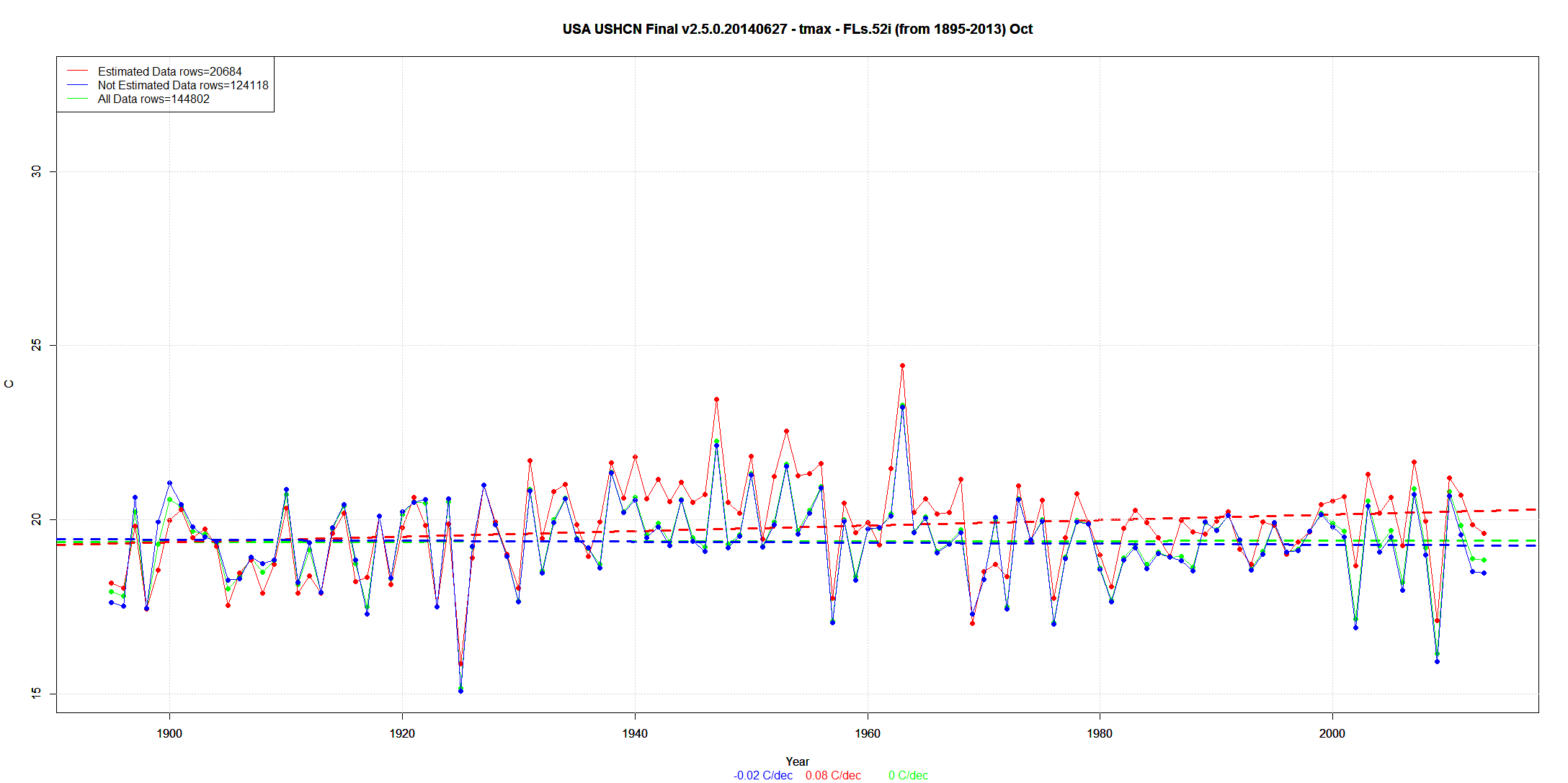
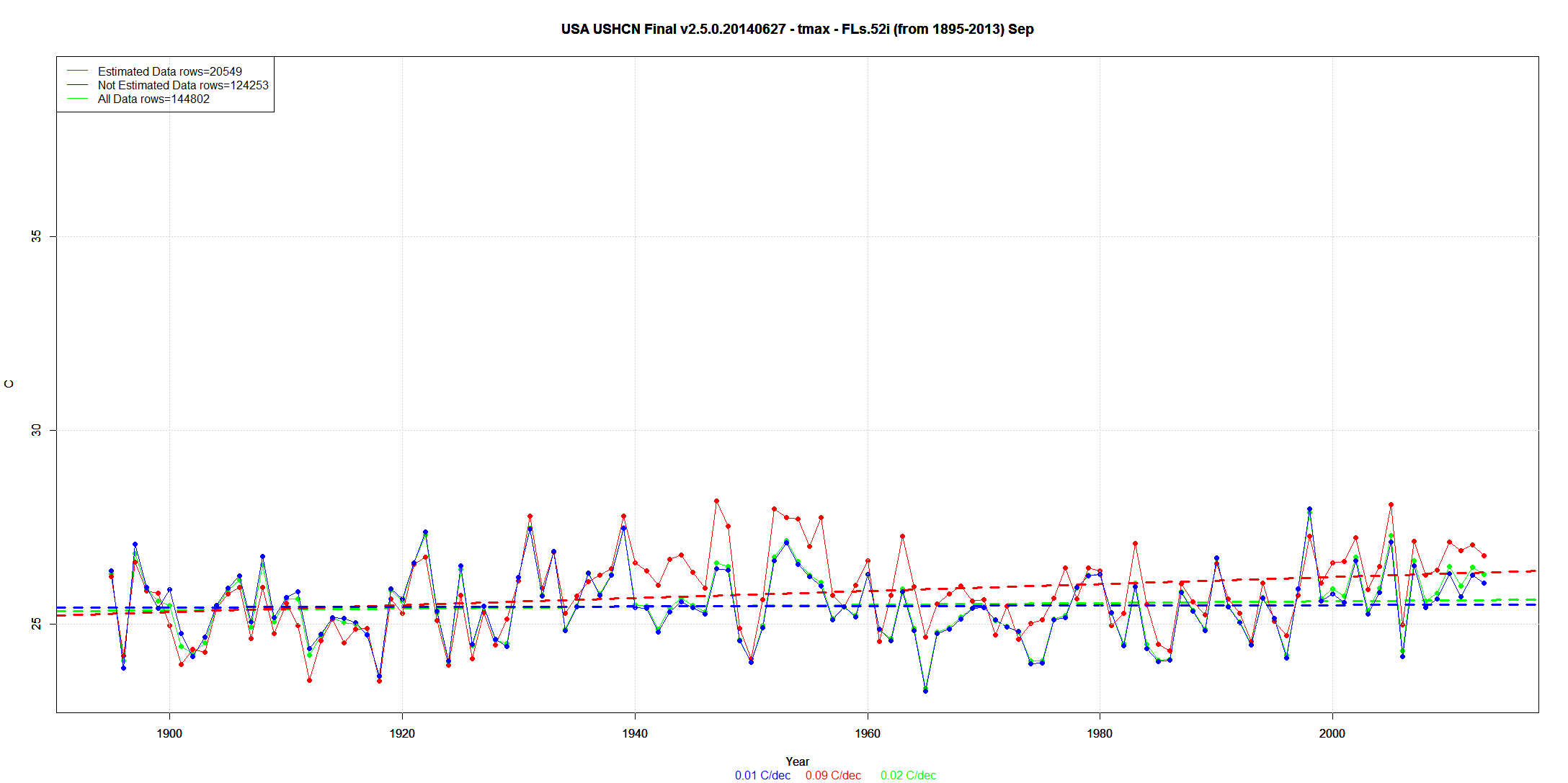
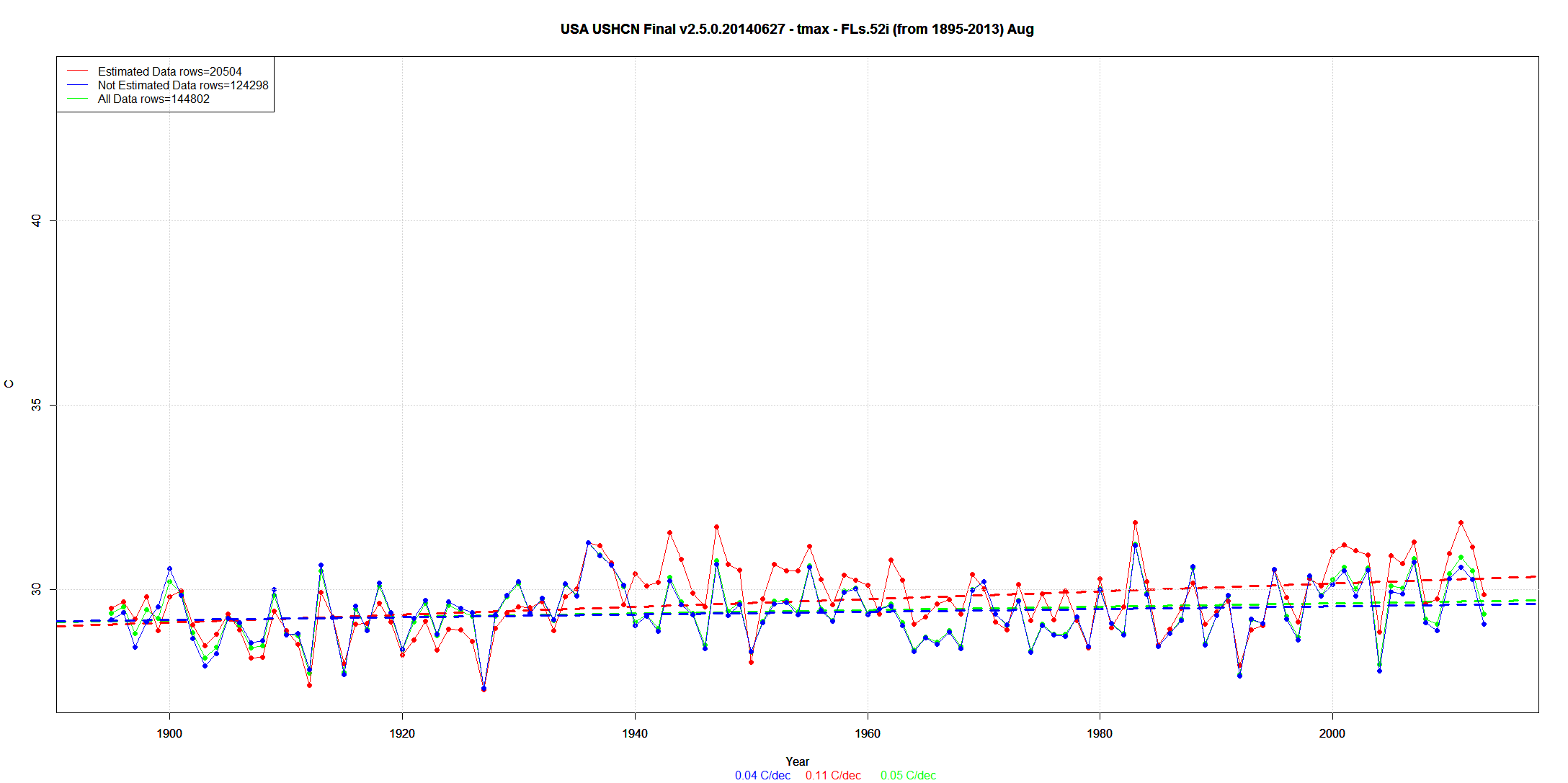
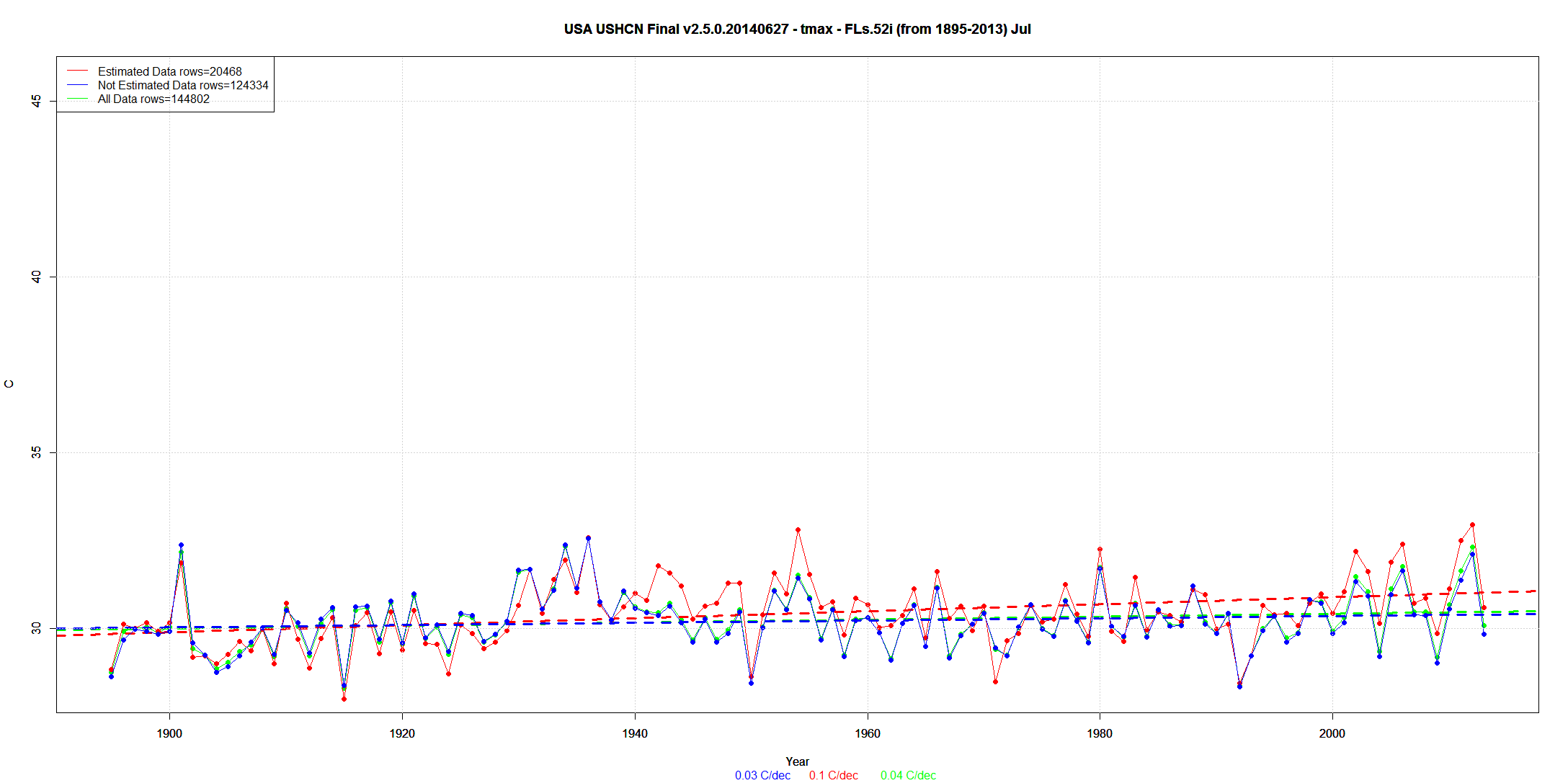
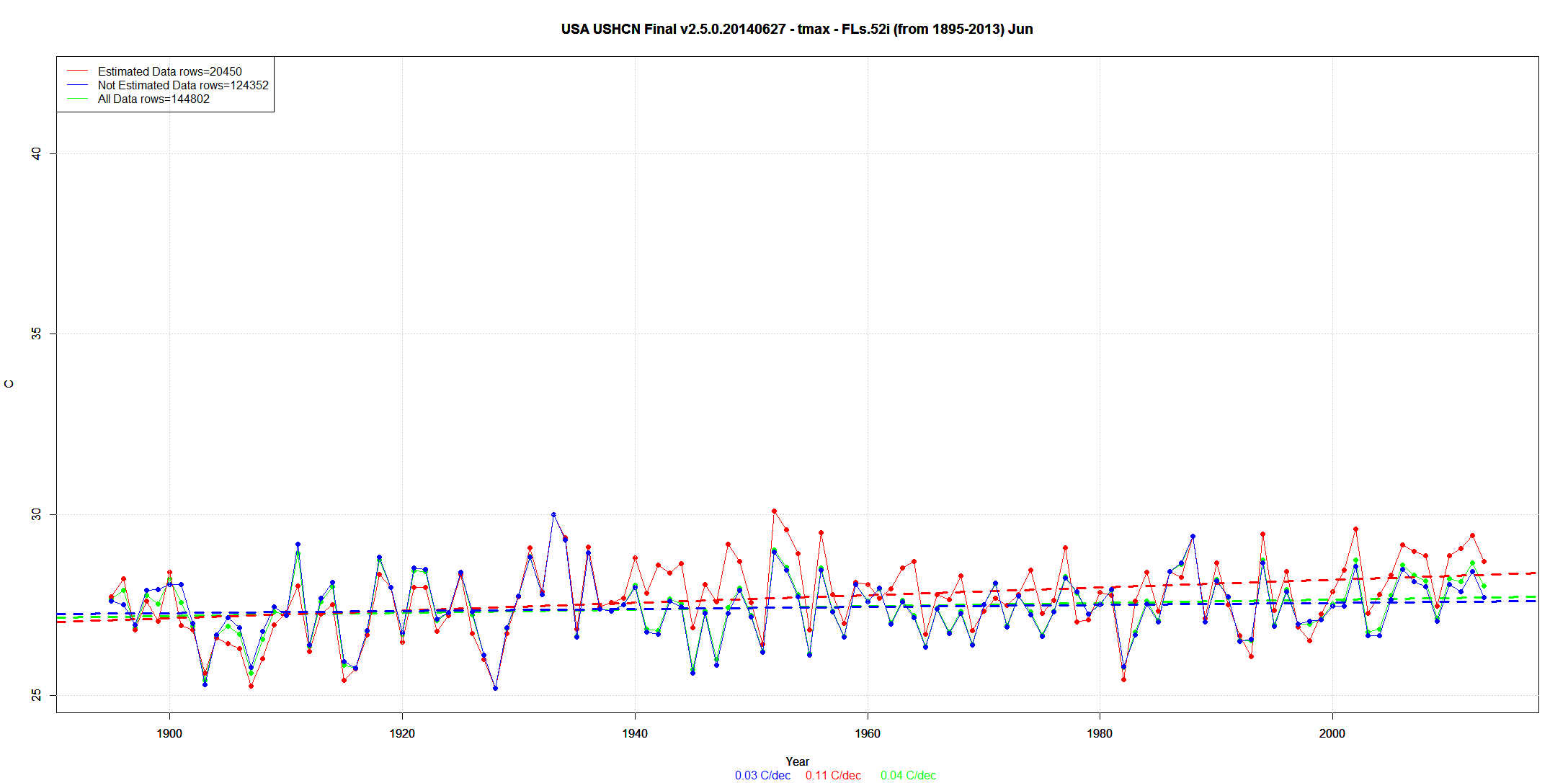
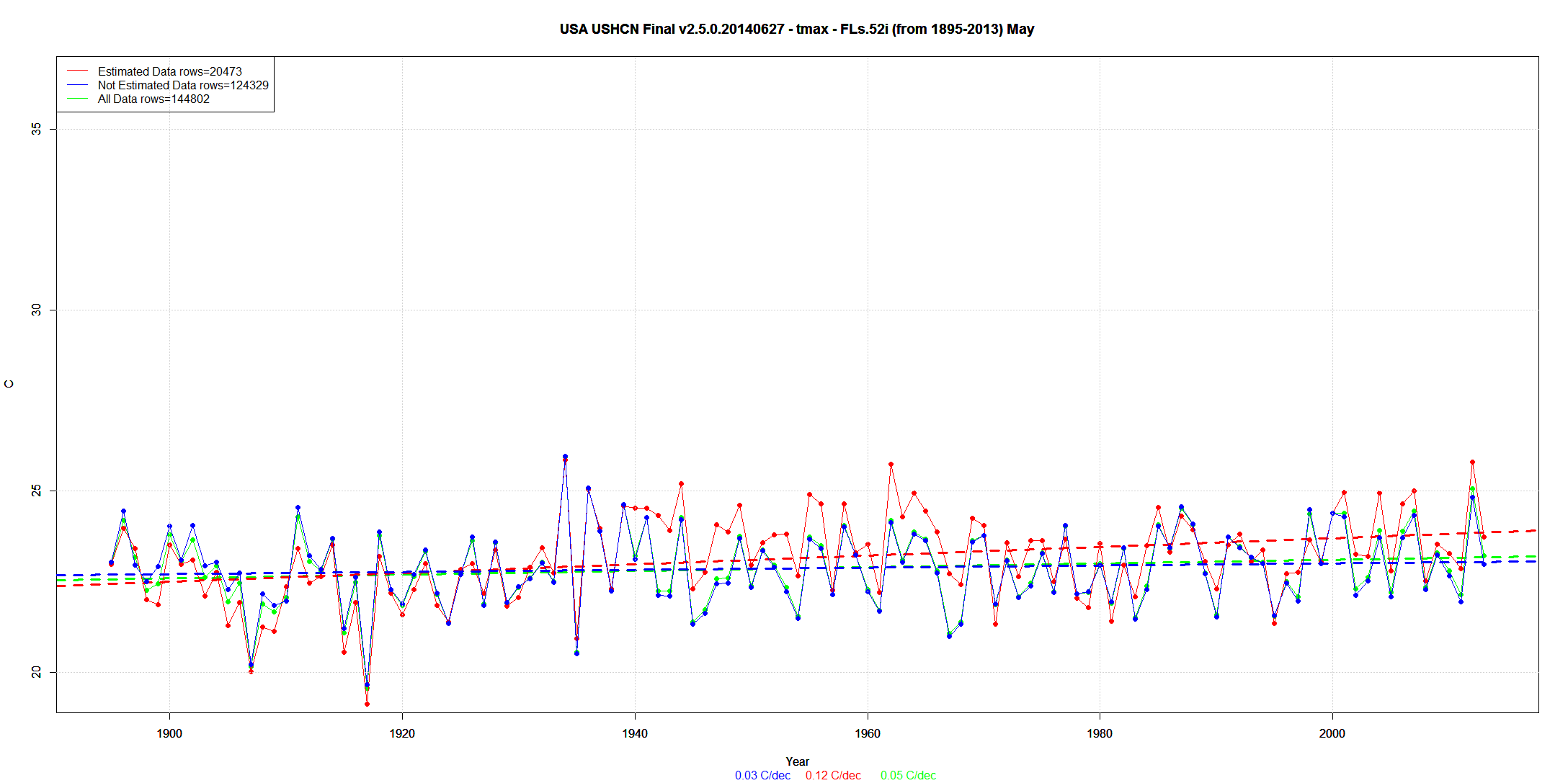
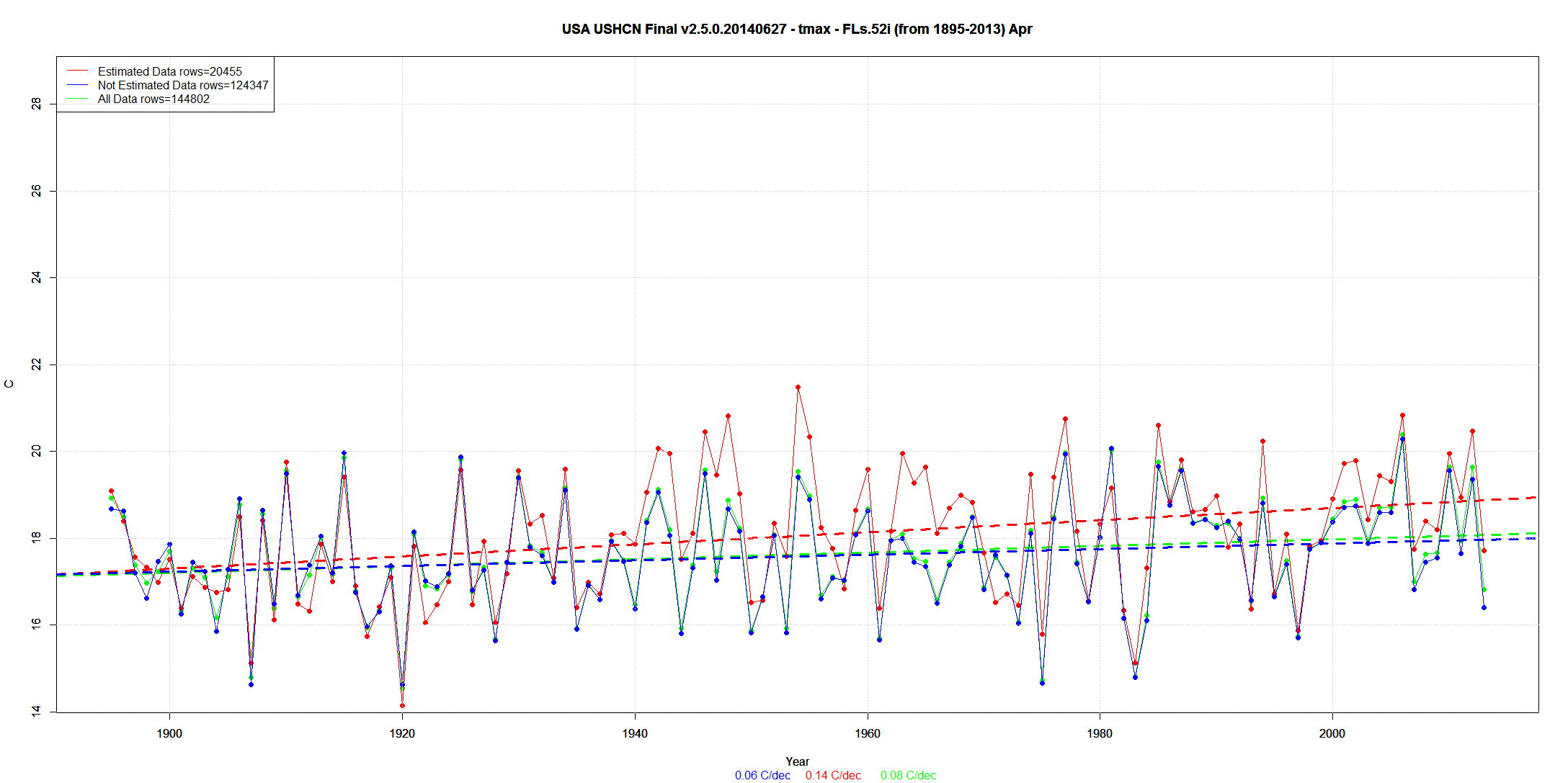
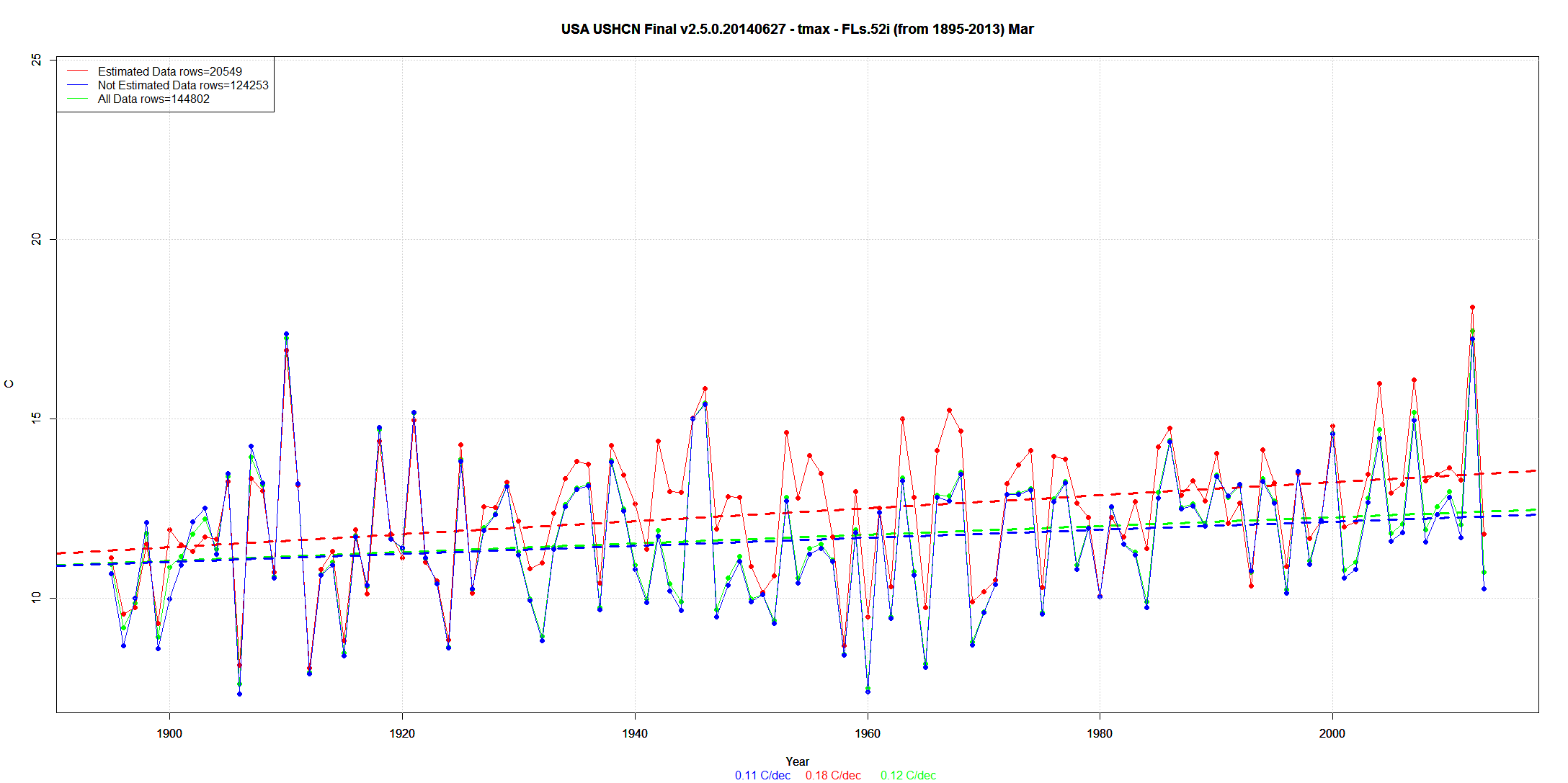
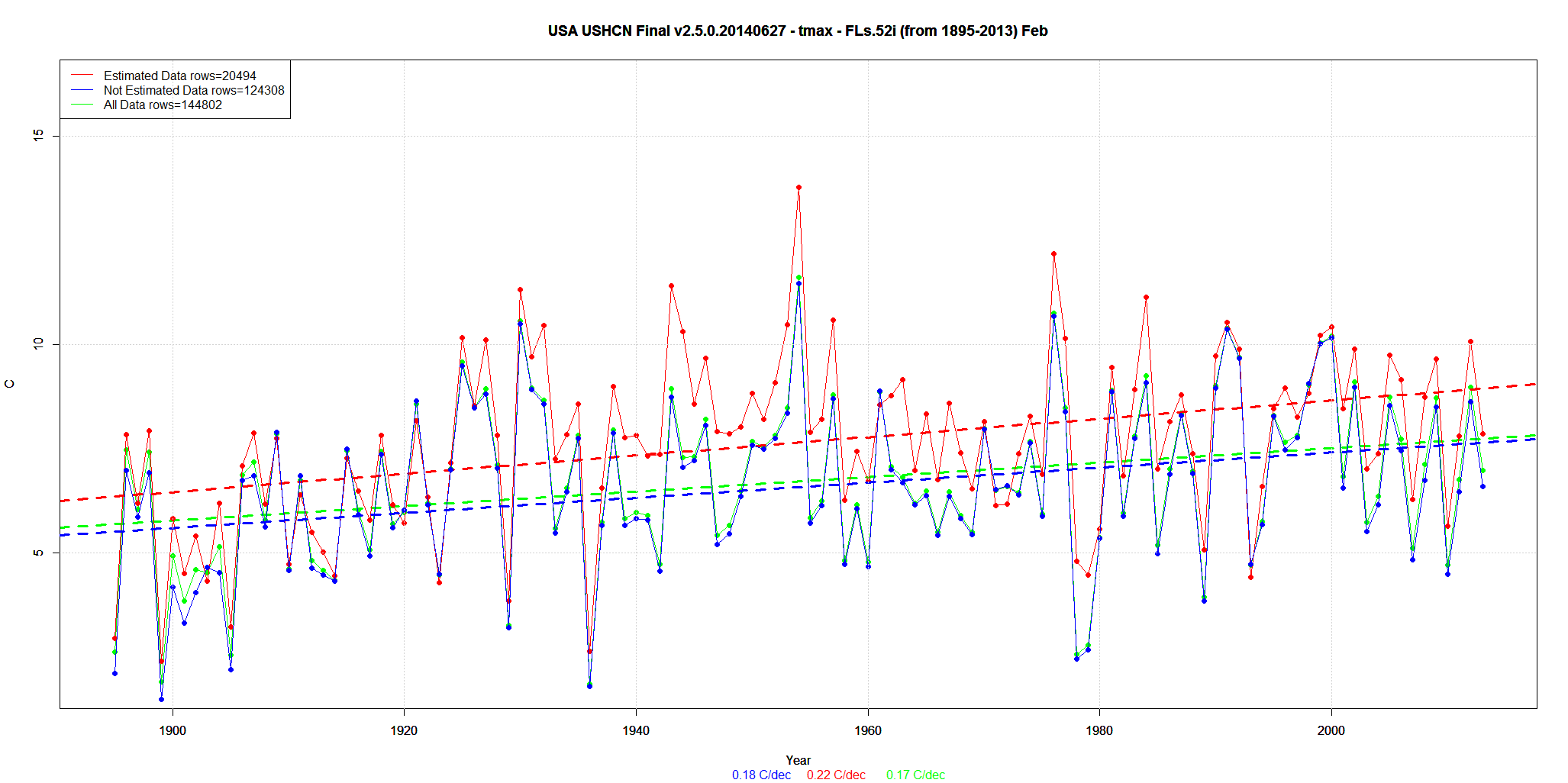
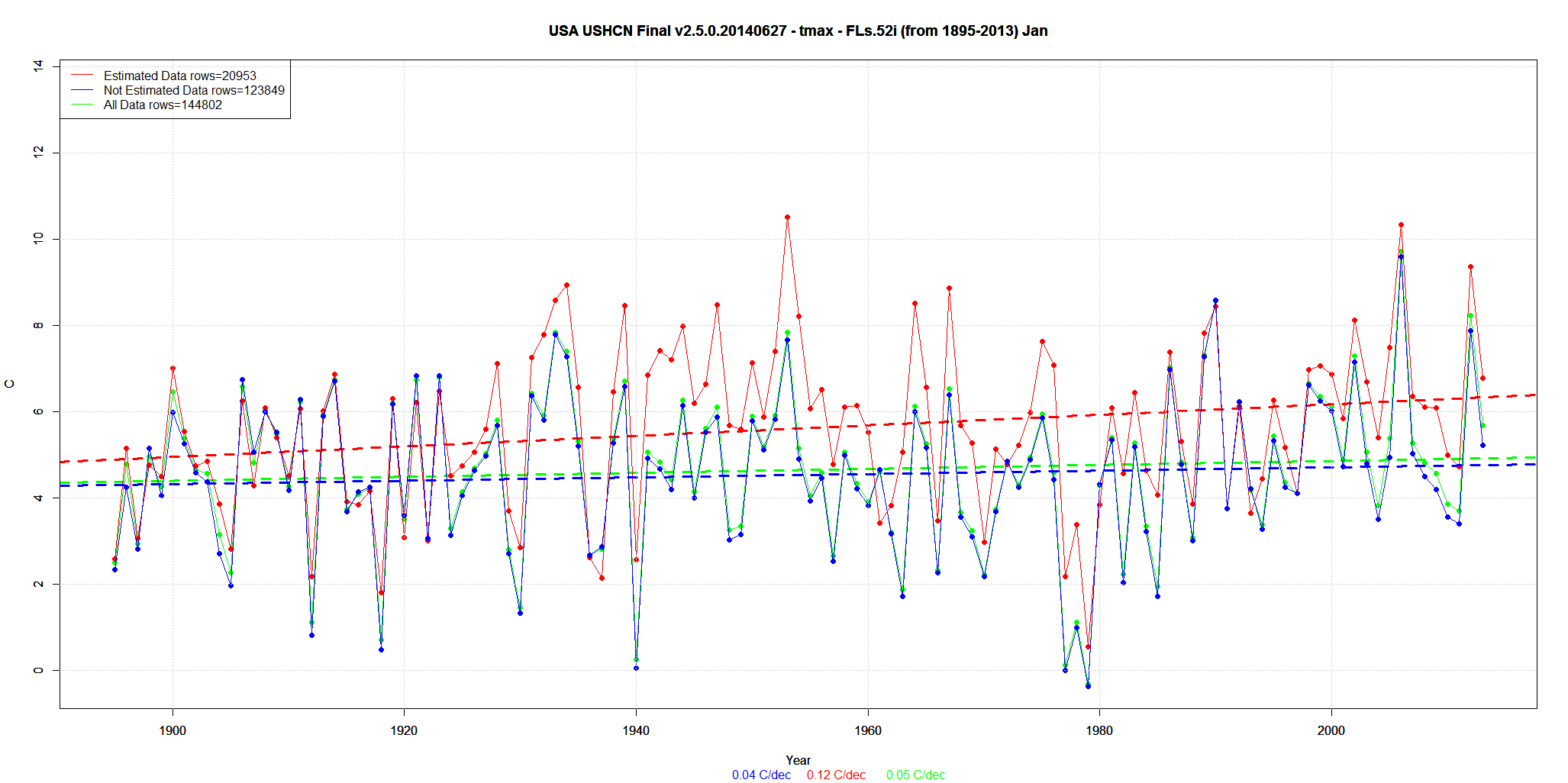
I disagree. Here are the 12 months comparing Estimated and Non-Estimated and then all the data. Blue = Final data (non-Estimated) Red = Final Data Estimated Green = All Final Data.

Infilling does change the trend. For example, Estimating changed the trend in Dec from .06C per decade to .07C per decade because the Estimated data had a trend of .15C/decade.

USA USHCN Final v2.5.0.20140627 - tmax - FLs.52i (from 1895-2013) Dec

USA USHCN Final v2.5.0.20140627 - tmax - FLs.52i (from 1895-2013) Nov

USA USHCN Final v2.5.0.20140627 - tmax - FLs.52i (from 1895-2013) Oct

USA USHCN Final v2.5.0.20140627 - tmax - FLs.52i (from 1895-2013) Sep

USA USHCN Final v2.5.0.20140627 - tmax - FLs.52i (from 1895-2013) Aug

USA USHCN Final v2.5.0.20140627 - tmax - FLs.52i (from 1895-2013) Jul

USA USHCN Final v2.5.0.20140627 - tmax - FLs.52i (from 1895-2013) Jun

USA USHCN Final v2.5.0.20140627 - tmax - FLs.52i (from 1895-2013) May

USA USHCN Final v2.5.0.20140627 - tmax - FLs.52i (from 1895-2013) Apr

USA USHCN Final v2.5.0.20140627 - tmax - FLs.52i (from 1895-2013) Mar

USA USHCN Final v2.5.0.20140627 - tmax - FLs.52i (from 1895-2013) Feb

USA USHCN Final v2.5.0.20140627 - tmax - FLs.52i (from 1895-2013) Jan